Transfiguration Monastery near Veliko Tarnovo: An Orthodox and Revolutionary Center
Site at a Glance
- Popularity
- High
- Country
- Bulgaria
- Primary era
- Modern
- Eras represented
- Medieval, Modern
- Civilizations
- Bulgarian, Ottoman, Second Bulgarian Empire
- Site type
- Religious
- Remains
- Monastery
On this page13 sections
History
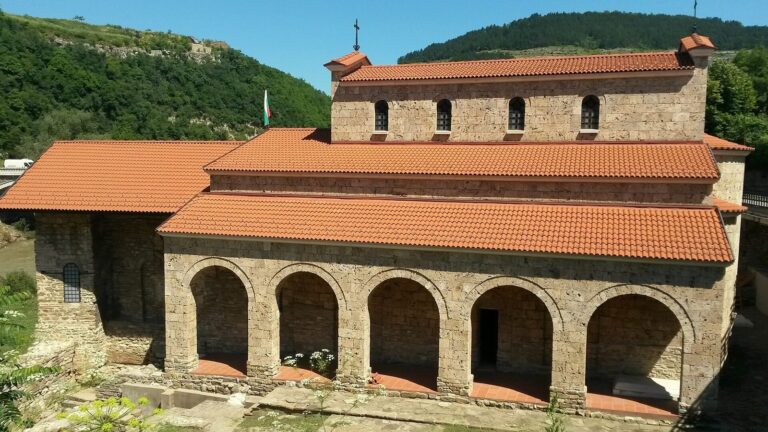
The Transfiguration Monastery near Veliko Tarnovo is an Orthodox monastery in Bulgaria, founded in the thirteenth or fourteenth century during the Second Bulgarian Empire, the medieval Bulgarian state that flourished from the late twelfth century until the Ottoman conquest. It began as an outlying house governed by Vatopedi, a major Orthodox monastery on Mount Athos in Greece, and became independent in 1360. The complex is described as Byzantine-Balkan, a regional blend of Byzantine forms and Balkan traditions; its principal church is a Bulgarian National Revival building, from a movement of cultural and political renewal under Ottoman rule. The monastery became an important religious center of the empire’s capital, Tarnovo, and was the largest in the surrounding area and the fourth largest in Bulgaria.
Medieval monastery
The monastery’s medieval development was associated with Sara, the second wife of ruler Ivan Alexander, and her son Ivan Shishman. Both contributed substantially to its rebuilding and repair. The medieval monastery stood south of the present complex. After the Ottoman conquest of Tarnovo in the late fourteenth century, it was attacked, looted, and burned, and the monastic community abandoned it. The site was eventually destroyed completely.
Rebuilding in the nineteenth century
Monastic life resumed at the present location in 1825 under Father Zotik, a monk from Rila Monastery who led the community during the 1820s and 1830s. In 1832, an Ottoman sultan issued a decree allowing the principal church to be rebuilt. Ottoman forces destroyed the monastery again during the 1830s, after which construction continued. Work on the main church began in 1834 under Dimitar Sofiyanliyata. Kolyu Ficheto and the builder Ivan Burnata completed it in 1837, and it was consecrated in 1884. The complex took its familiar form between 1858 and 1863, with further buildings added after Bulgaria’s liberation.
Religious and revolutionary center
The monastery supported the Bulgarian struggle for church and national independence and became a center of cultural and revolutionary activity in the Tarnovo region. From the Velcho Conspiracy of 1835, an anti-Ottoman action, through the April Uprising of 1876, it provided shelter to activists including Filip Totyu, Angel Kanchev, and Pop Hariton Halachev. Matey Preobrazhenski, a monk and revolutionary associated with Vasil Levski, lived there, and Levski repeatedly found refuge at the monastery.
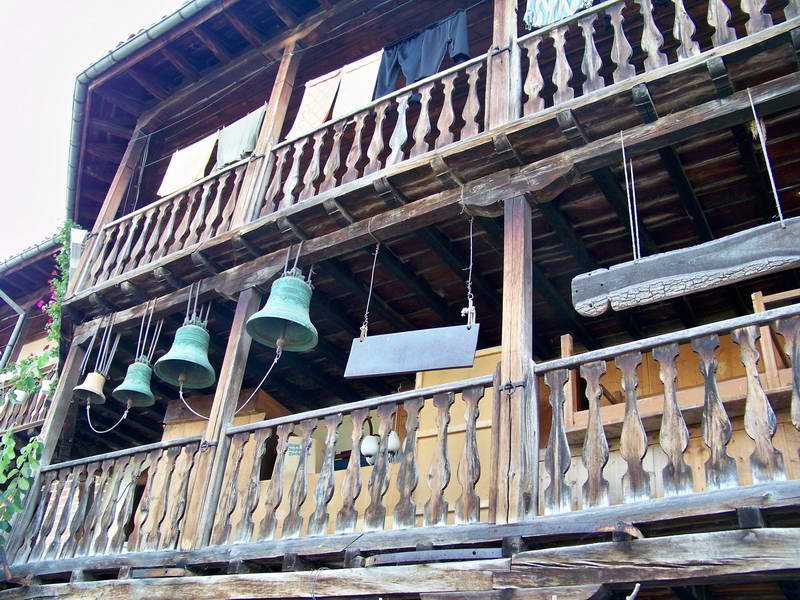
During the Russo-Turkish War of 1877–1878, the monastery served as a hospital. Russian soldiers later presented the community with bells, chandeliers, and books for worship. The monastery remains active.
Remains
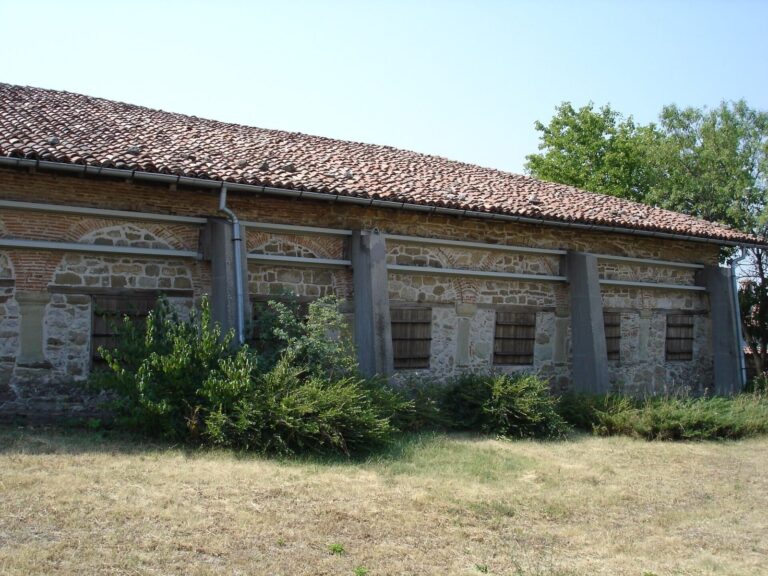
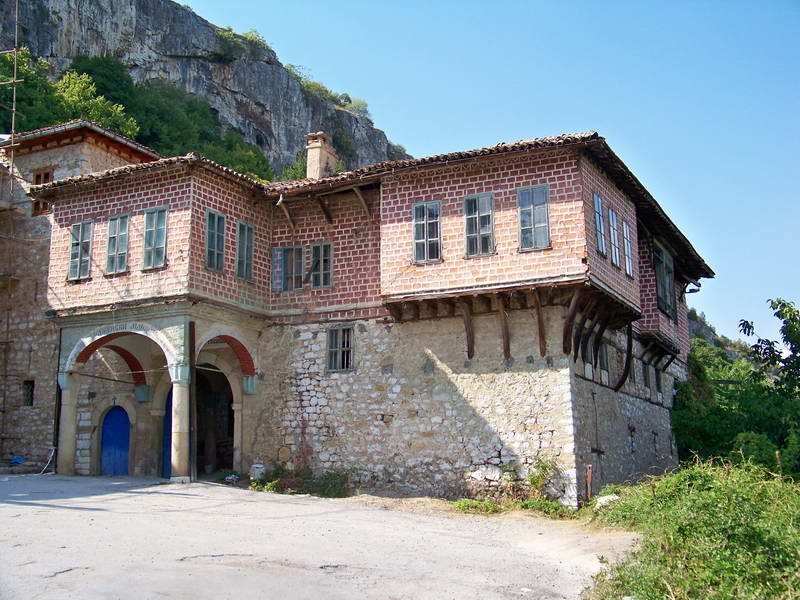
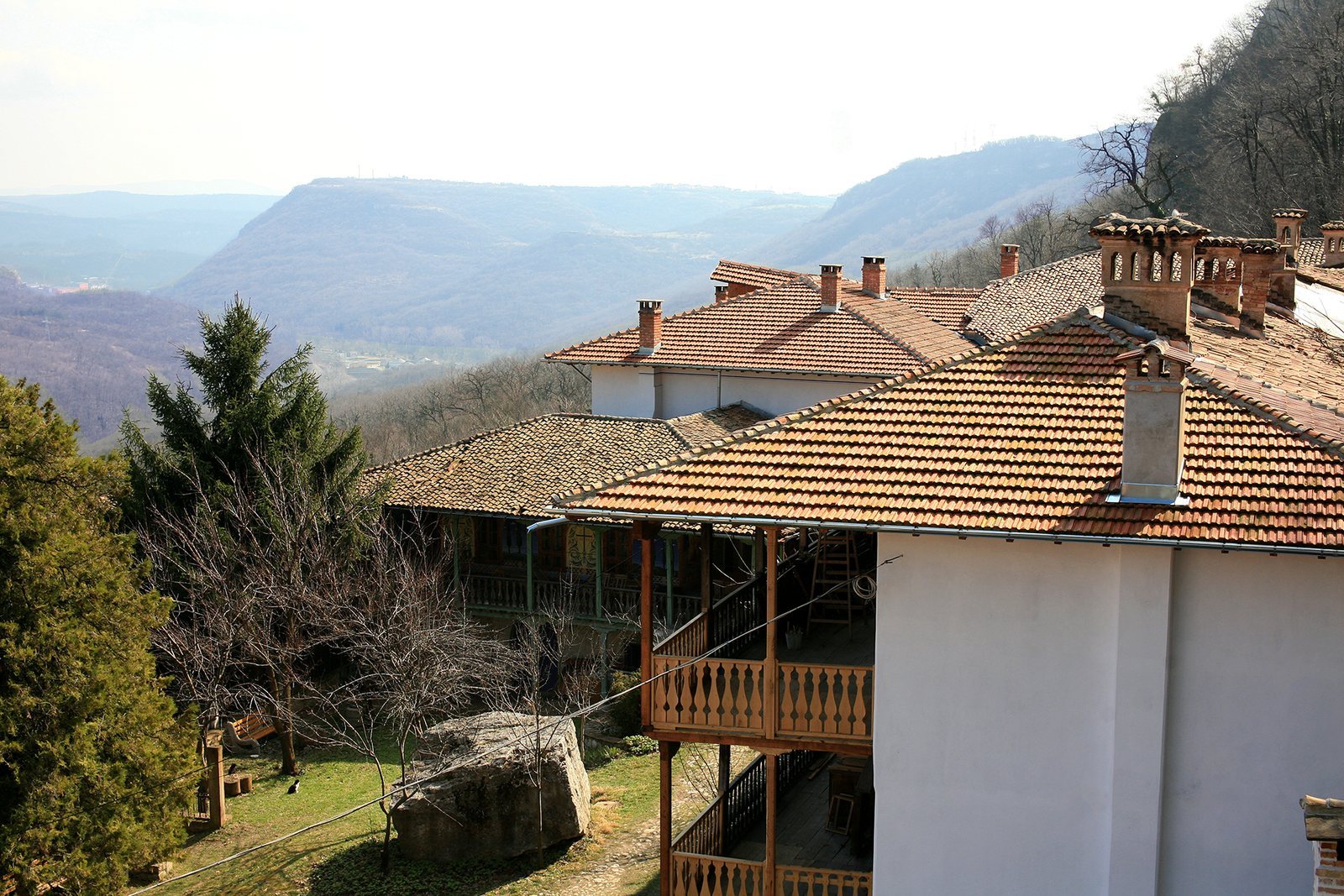
The monastery occupies the Dervent Gorge of the Yantra River, about seven kilometres north of Veliko Tarnovo. Its buildings enclose an elongated rectangular courtyard and follow the slope of the ground. The lower storeys are built of stone, while the upper levels are adapted to the incline.
Monastic buildings
Church of the Transfiguration
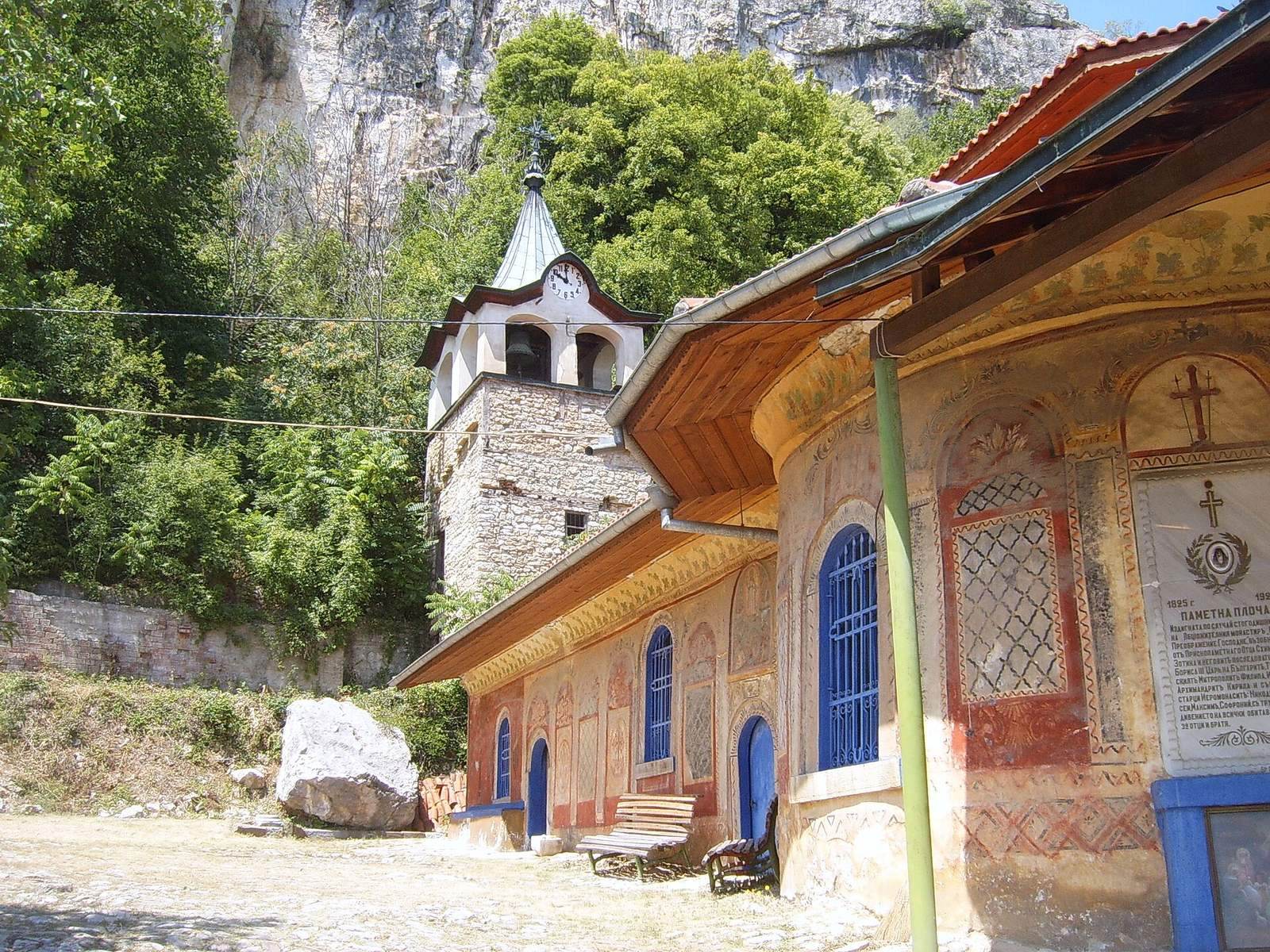
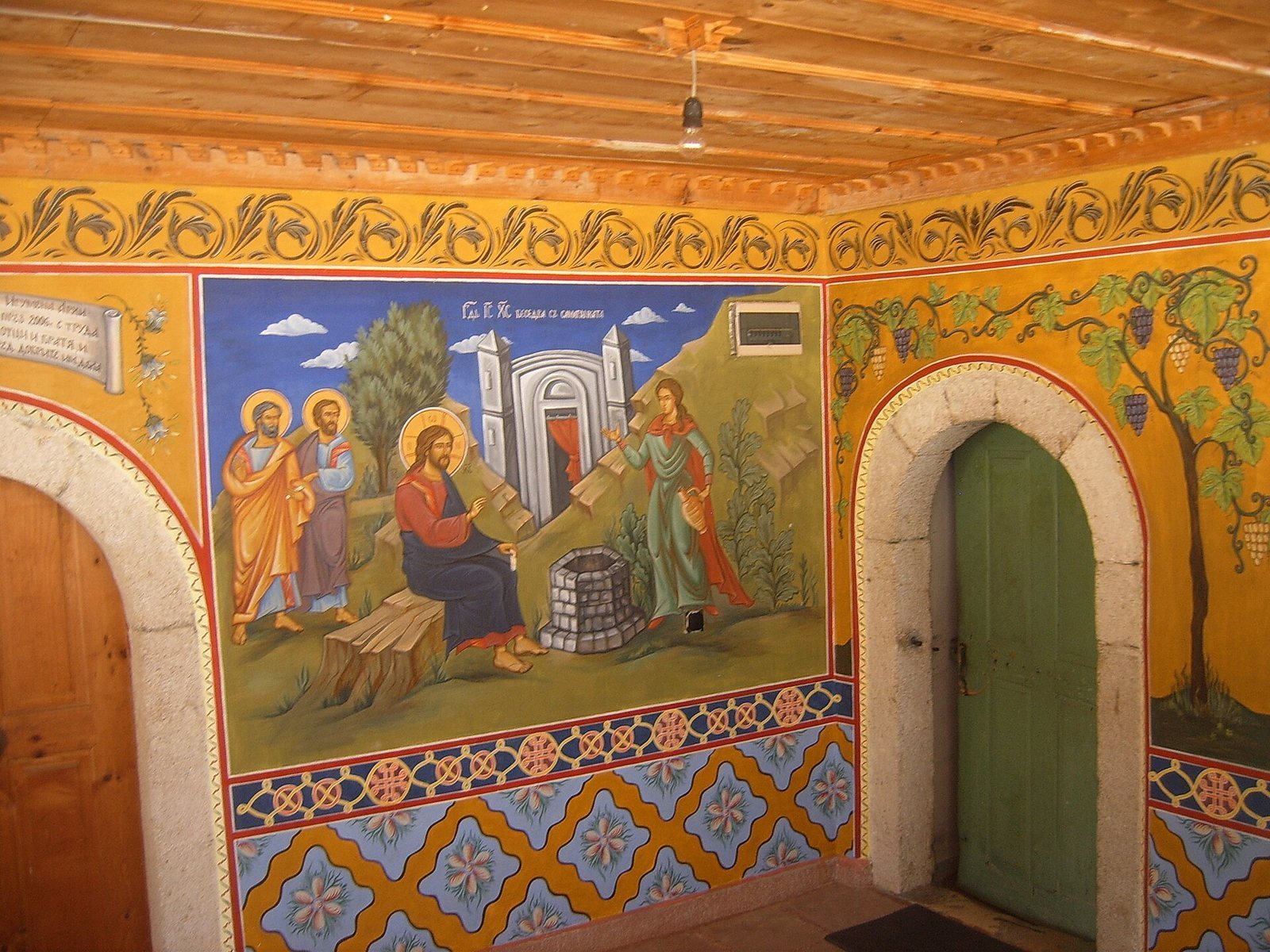
The principal church has a cross-shaped plan, one dome, and three apses, recesses at the sanctuary ends. Bulgarian painter Zahari Zograf covered its interior and exterior walls with frescoes, wall paintings made on wet plaster, between 1849 and 1851. The work includes a portrait of Zograf beside Saints Cyril and Methodius, as well as scenes of the Nativity of the Virgin and the Last Supper. On the east wall of the narthex, the church’s entrance area, a large Last Judgment scene depicts sinful men and women in contemporary urban clothing, alongside fortune-tellers and healers in rural dress. The Wheel of Life appears on the exterior south altar wall. Zograf also signed the church’s main icon of the Transfiguration.
The iconostasis, a screen of icons separating the sanctuary from the main worship area, was made in 1838 by master woodcarver Kolyu Ficheto and his teacher, Stanyu Marangozina of Belitsa. Its icons include works by Zograf and painter Stanislav Dospevski. Subjects include Archangel Michael, the Merciful Virgin, Christ Pantocrator, an image of Christ as ruler of all, the Transfiguration, John the Baptist, and Saint Andrew.
Wings and service buildings
The southeast wing includes a small guesthouse and a large entrance gate built in 1857. A bell tower with a clock dates to 1861, and the small Annunciation Church was built in 1863. The refectory, kitchen, and the abbot’s residence with its library date to 1894. Other buildings added after Bulgaria’s liberation also belong to the complex.
Cemetery and chapel
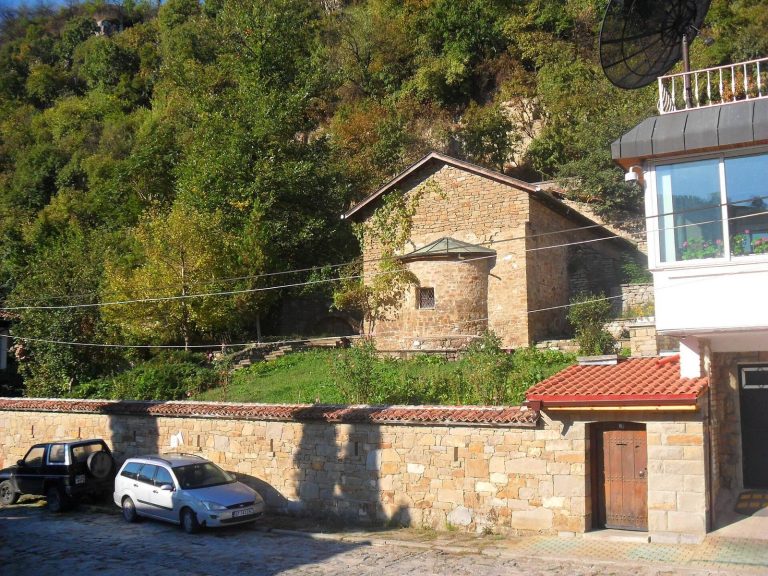
The cemetery lies south of the monastery. Its chapel, dedicated to the Resurrection of Lazarus, was built in 1891. The folk healer Neofit Kalchev is buried in the cemetery.
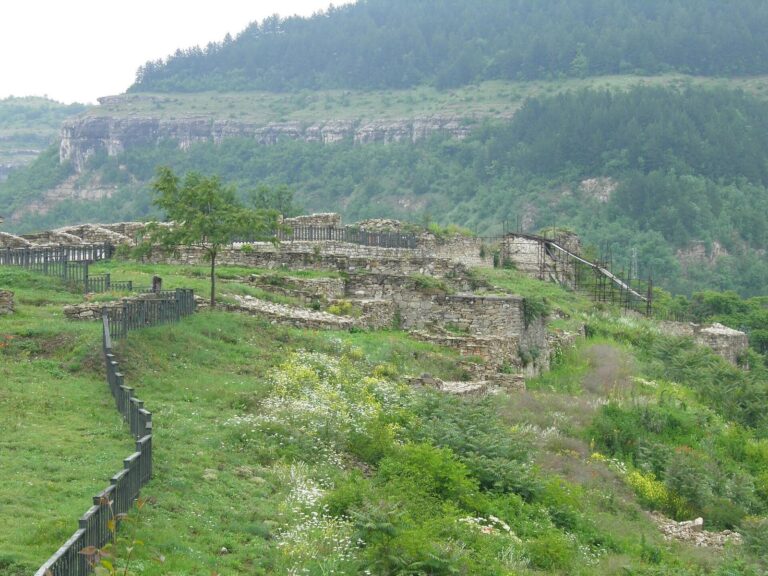
Medieval monastery site
Archaeological work at the former site uncovered part of a rubble-stone wall joined with white mortar, pottery dating to the thirteenth and fourteenth centuries, and part of a church apse bearing paintings in the Tarnovo style, a medieval Bulgarian tradition of church painting. An investigation in 1952 uncovered remains there, and excavations in 1992 exposed the church foundations fully.
Collections and later damage
Library and museum
The monastery’s library and museum preserve papers, historical documents, valuable medieval Bulgarian books, icons, and other works of applied art.
Rockfall damage
A rockfall in 1991 destroyed part of the old wing, including some of the monastic cells.