Indrapura: Champa’s Capital in Central Vietnam
Site at a Glance
- Popularity
- High
- Country
- Vietnam
- Primary era
- Medieval
- Eras represented
- Medieval
- Civilizations
- Champa
- Site type
- Settlement
- Remains
- City
On this page10 sections
History
Indrapura, a Cham capital identified with the ruins at Đồng Dương in Quảng Nam province, central Vietnam, was established in 875 by ruler Indravarman II. Champa was a Cham kingdom in what is now central and southern Vietnam. Indrapura served as its principal capital until around 982 and may have retained that role into the twelfth century, when political power shifted to Vijaya in Bình Định.
Foundation and Buddhist patronage
Before Indravarman II’s succession, a Cham ruler governed from a capital in present-day Phan Rang. Without an heir, he chose a prince from a northern royal lineage, who moved the capital north to Indrapura. Indravarman II and his successors belonged to the Bhrgu dynasty, also known as Champa’s sixth dynasty. During their rule, Mahayana, a major Buddhist tradition, became the religion of the state and court, although most of the population remained Hindu.
Indrapura’s rulers maintained relations with the Khmer Empire, Champa’s western neighbor, and Java between 875 and 982. These connections influenced Cham architecture. Around 911–912, a high-ranking Cham court official traveled from Indrapura to Java. Buddhist temples also spread across northern Champa, reaching as far as present-day Quảng Bình. In the thirteenth century, the Vietnamese emperor Trần Nhân Tông spent nine months traveling in Champa and visiting Buddhist sacred sites.
War and political transition
Wars with the Khmer Empire in 945 and Đại Cồ Việt, the Vietnamese state to Champa’s north, in 979 weakened the kingdom. In 982, forces of Lê Hoàn, ruler of Đại Cồ Việt, sacked a city in northern Champa, in present-day Quảng Bình, and killed the Cham king Paramesvaravarman I. The attack is not identified as the destruction of Indrapura. A successor retreated about 700 li, a Chinese distance unit of variable length, or roughly 300 kilometres, to Indrapura.
Lưu Kế Tông seized the Cham throne in 983 and proclaimed himself king in 986, prompting many Chams to flee to Hainan. In 988, a Cham ruler identified as Harivarman II sent an envoy to China’s Song dynasty. Harivarman, chosen by the Chams to overthrow Lưu Kế Tông, ruled from 989 to 997. A Cham envoy in 1007 described the kingdom’s earlier flight south to Fóshì, identified as Indrapura rather than Vijaya. This differs from an older interpretation that associated Fóshì with Vijaya.
Identifying Indrapura
The location of Indrapura has been debated. Louis Finot and Gaston Maspero identified it with Đồng Dương; Léonard Aurousseau proposed Trà Kiệu; Georges Coedès suggested Banteay Prei Nokor; and Michael Vickery placed it near Kompong Thom. The ruins associated with the Cham capital are at Đồng Dương. A separate inscription at Sdok Kok Thom refers to an Indrapura or Amarendrapura as the first capital of Khmer ruler Jayavarman II around 781, before the Khmer Empire’s founding in 802.
Later conflict and abandonment
Invasions by the Khmer Empire between 1145 and 1203 may have led to looting and limited damage at Indrapura. Đại Việt occupied the city briefly in 1402, and Champa recovered it in 1407. Đại Việt probably plundered Indrapura in 1471, after which the city was abandoned, though the timing of its decline is uncertain.
Wartime damage and archaeological work
In August 1969, during the Vietnam War, US Air Force carpet bombing struck Indrapura and the surrounding area in an effort to hit Viet Cong hiding places. Đồng Dương and nearby sites were National Liberation Front activity hotspots and contained bunkers. Archaeological research on Champa resumed in the late 1980s and 1990s, and Indrapura was subsequently re-excavated.
Remains
Urban layout and building materials
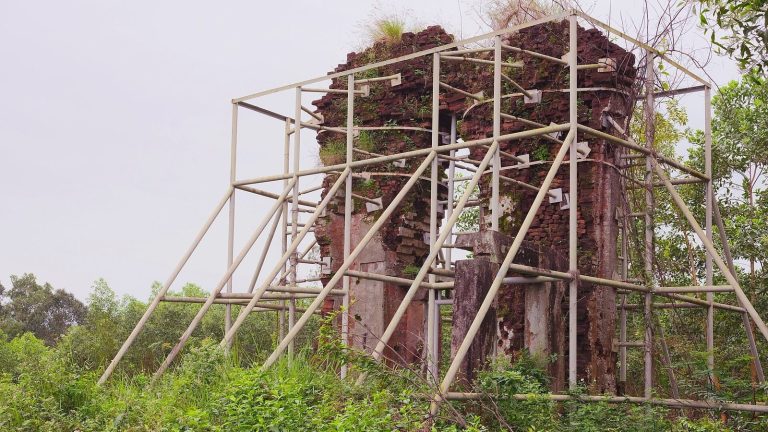
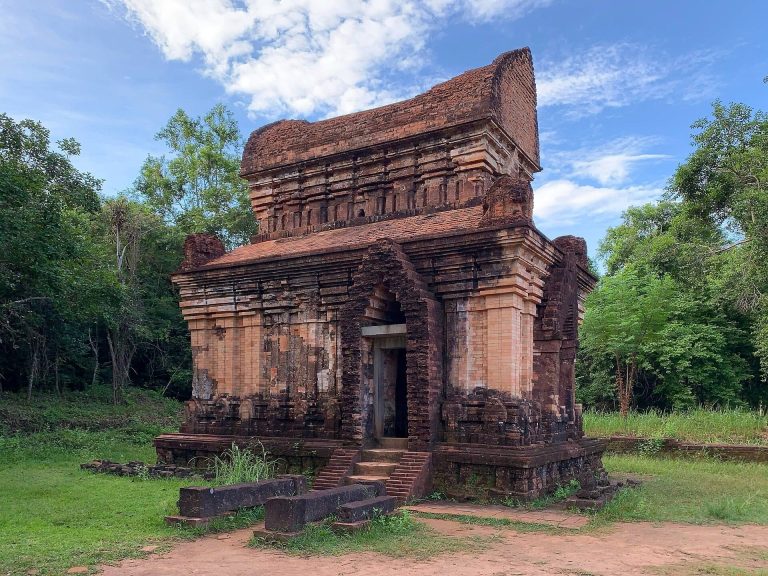
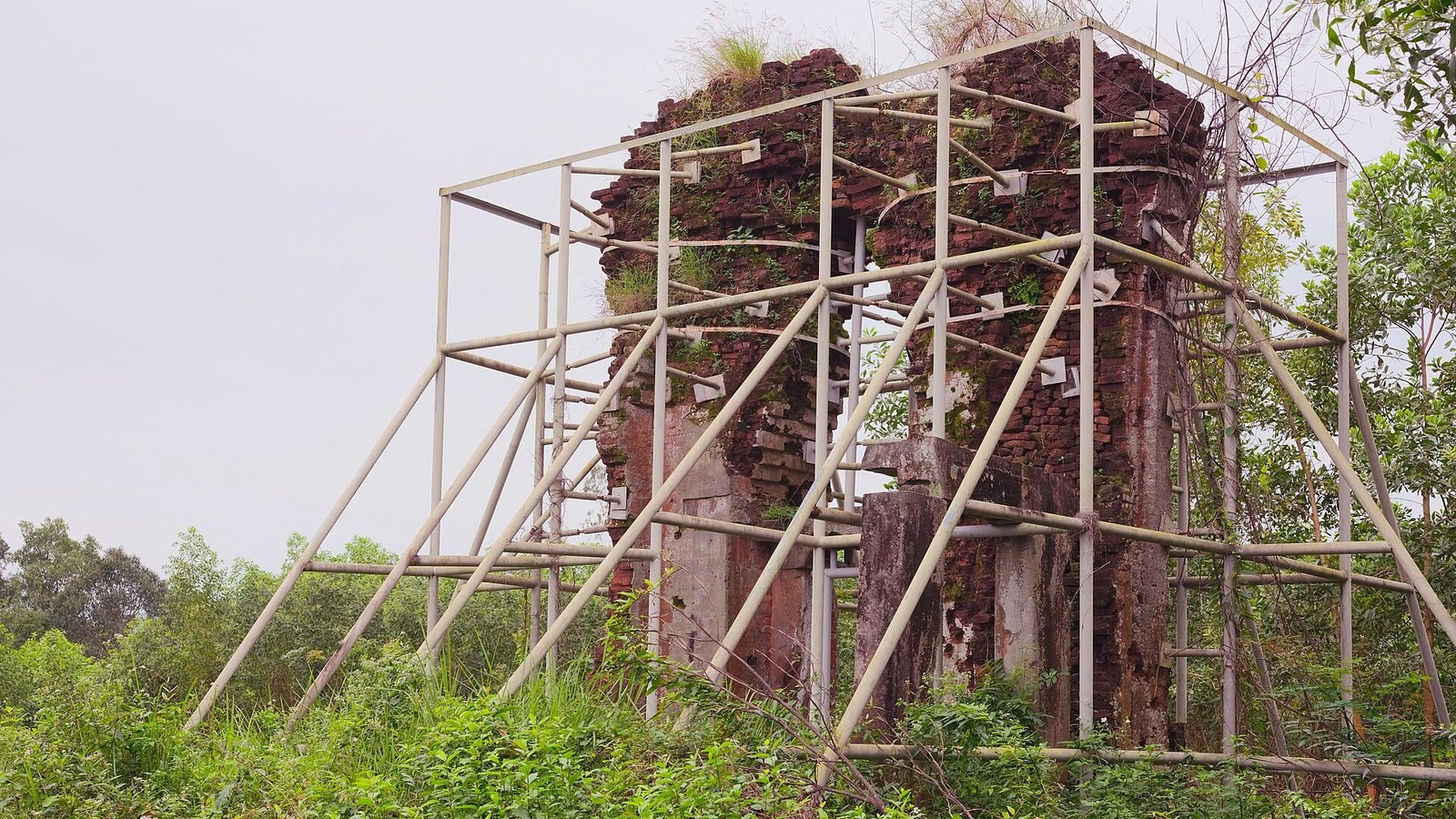
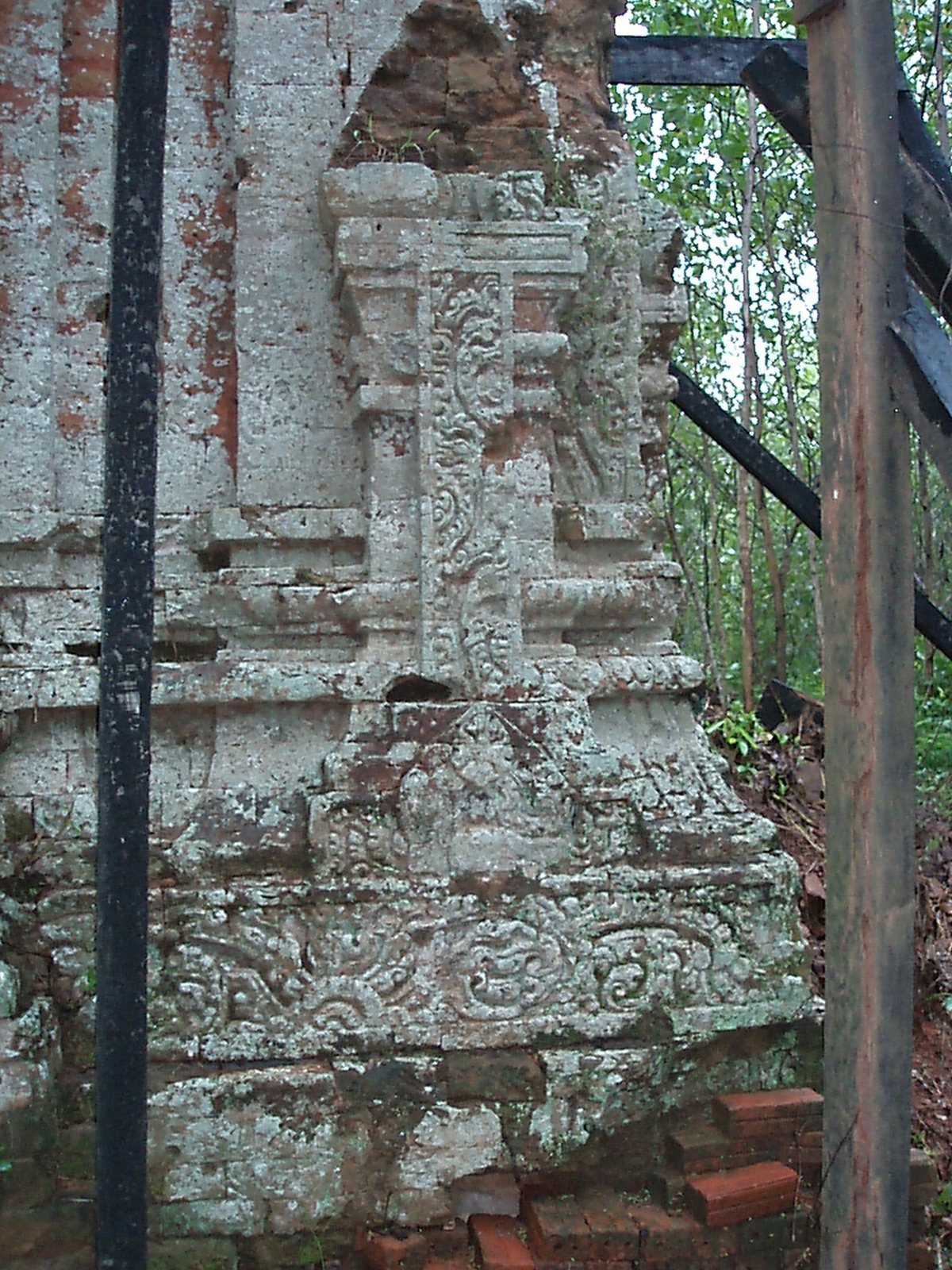
The remains at Đồng Dương include an eroded citadel, the royal palace area, watchtowers, monastery ruins, temples and shrines, paved roads, bridges, and a sewer system. Together, these features indicate an organized urban settlement, although the ruins are now barely recognizable. Except for temples and shrines, most medieval buildings were probably made of wood, including logs or bamboo. The removal of bricks has also contributed to the site’s deterioration.
Lakshmindra-Lokesvara monastery
The large Buddhist monastery complex, Lakshmindra-Lokesvara, was begun by Indravarman II around the time the city was established. It was regarded as the largest Buddhist monastery in Southeast Asia at the time, and its ruins form part of the surviving complex.
Cham sculptures
Cham sculptures excavated at Đồng Dương are held at the Cham Sculpture Museum in Đà Nẵng, alongside sculptures from other archaeological sites.