Trafalgar Park: A Georgian Country House and Nelson Family Estate
Site at a Glance
- Rating
- 4.7
- Popularity
- Low
- Country
- United Kingdom
- Primary era
- Early Modern
- Eras represented
- Early Modern, Modern
- Civilizations
- British
- Site type
- Domestic
- Remains
- Manor House
On this page8 sections
History
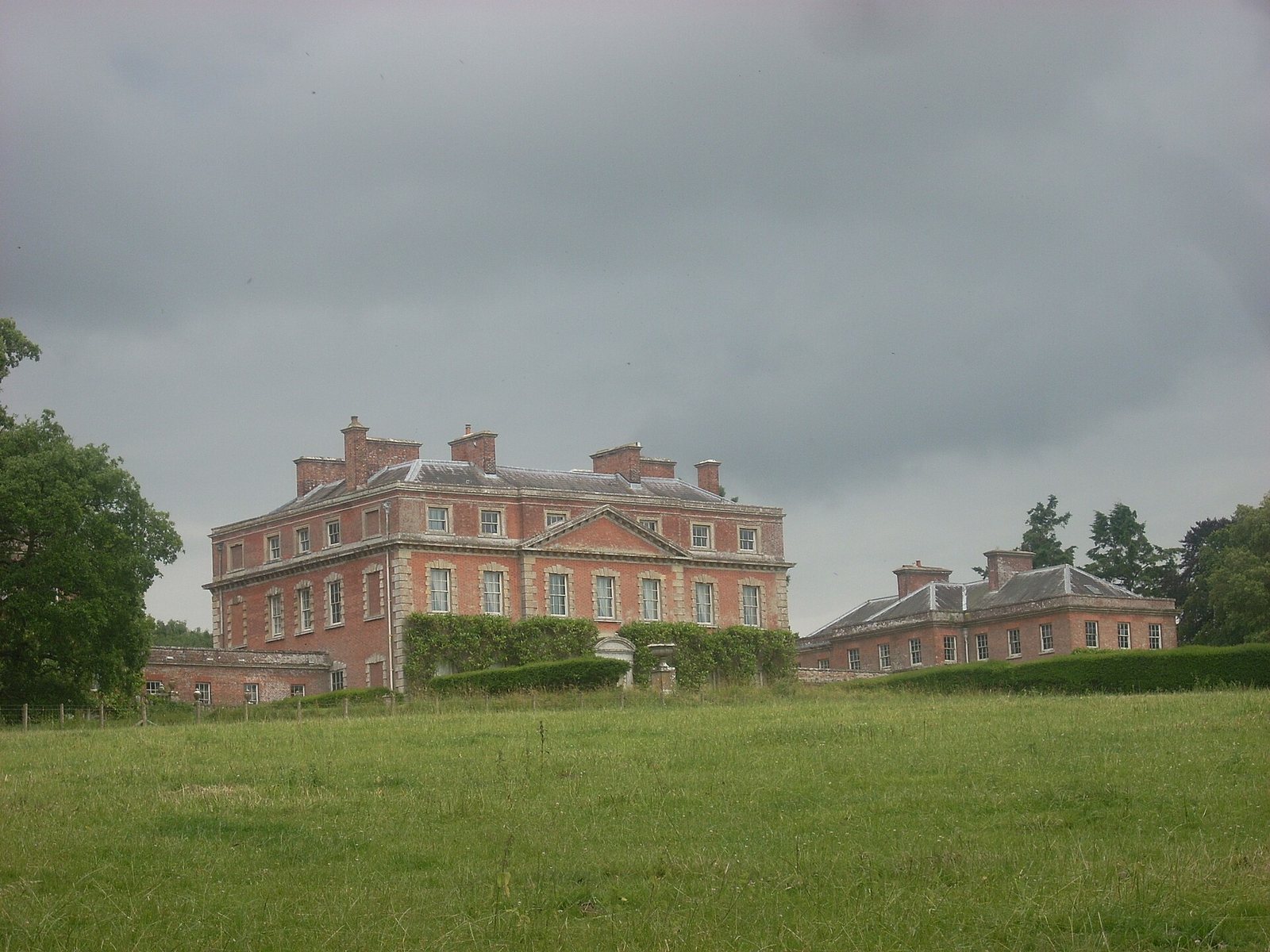
Trafalgar Park is a Georgian country house in the United Kingdom, built in 1733 in the British architectural style associated with the reigns of George I through George IV. It began as the principal house of the Standlynch estate and became the home of the Nelson family in 1815, when the estate was renamed in honour of Admiral Horatio Nelson.
Standlynch before Trafalgar Park
The manor of Standlynch appears in the Domesday Book, the 1086 survey of English landholding. The Beauchamp family held it during the Tudor period (1485–1603), before it passed to the Greene family, who kept it until the seventeenth century. The Buckland family then acquired the manor.
Sir Peter Vandeput bought Standlynch Manor in 1726 and commissioned architect John James to design a house in 1729. The house was completed in 1733. After Vandeput died in 1748, his son George inherited the estate and sold it to Sir William Young in 1752. Henry Dawkins bought it from Young in 1765 for £22,000. As the estate expanded, the old settlement of Standlynch was erased.
The Nelson family estate
Horatio Nelson, 1st Viscount Nelson, died after being shot at the Battle of Trafalgar on 21 October 1805. He had a widow but no legitimate children. His elder brother, the clergyman William Nelson, became Earl Nelson in 1806 and sought an estate to commemorate him. Standlynch Park was chosen in 1814 and purchased for £90,000 under an Act of Parliament in 1815, after which it took the name Trafalgar Park. William also acquired Redlynch House and its 25-acre park for his son-in-law, Samuel Hood, 2nd Baron Bridport.
After William’s death, his nephew Thomas Bolton inherited the estate as the 2nd Earl Nelson and adopted the Nelson surname. Thomas died less than a year later. In 1836, his 12-year-old son Horatio became the 3rd Earl Nelson and inherited the property. He commissioned a new garden and renovations to Standlynch Church. By 1884, the Nelson family’s landholdings had reached 7,196 acres.
Twentieth-century ownership
During the Second World War, tenants occupied the North and South Wings, while Lord Nelson and his younger brother, Edward Agar Nelson, lived in the main house. In 1948, the 5th Earl Nelson sold the house and its remaining 3,415 acres to John Osborne, 11th Duke of Leeds, for an estimated £58,000. Oliver Lyttelton, 1st Viscount Chandos, lived there while serving as an MP and became the duke’s tenant; he later bought the house with 10 acres. The rest of the estate was sold to the neighbouring Longford Castle estate in 1953. Trafalgar Park received Grade I listing in 1960, the highest English category for buildings of exceptional interest.
Banker Jeremy Pinckney bought the house in 1971 and sold the estate to Tertius Murray Thriepland in 1978. Swedish hotelier Gunnar Bengtsson acquired it in 1992, followed by Michael Wade of Besso Limited in 1995. Wade changed the name from Trafalgar House to Trafalgar Park. Extensive restoration began after about 33 acres of parkland were returned from the Longford Castle estate.
Remains
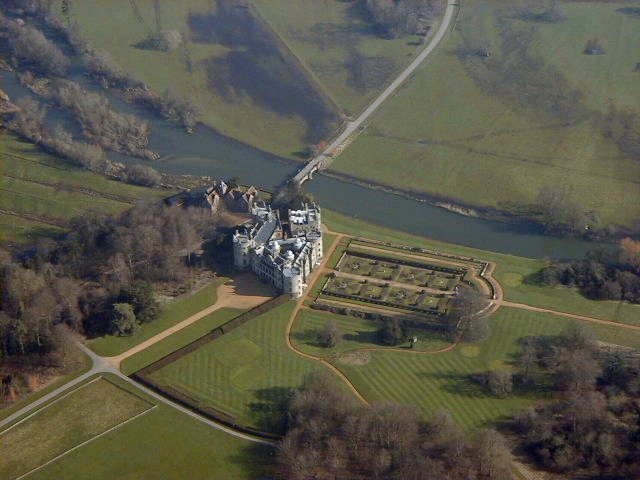
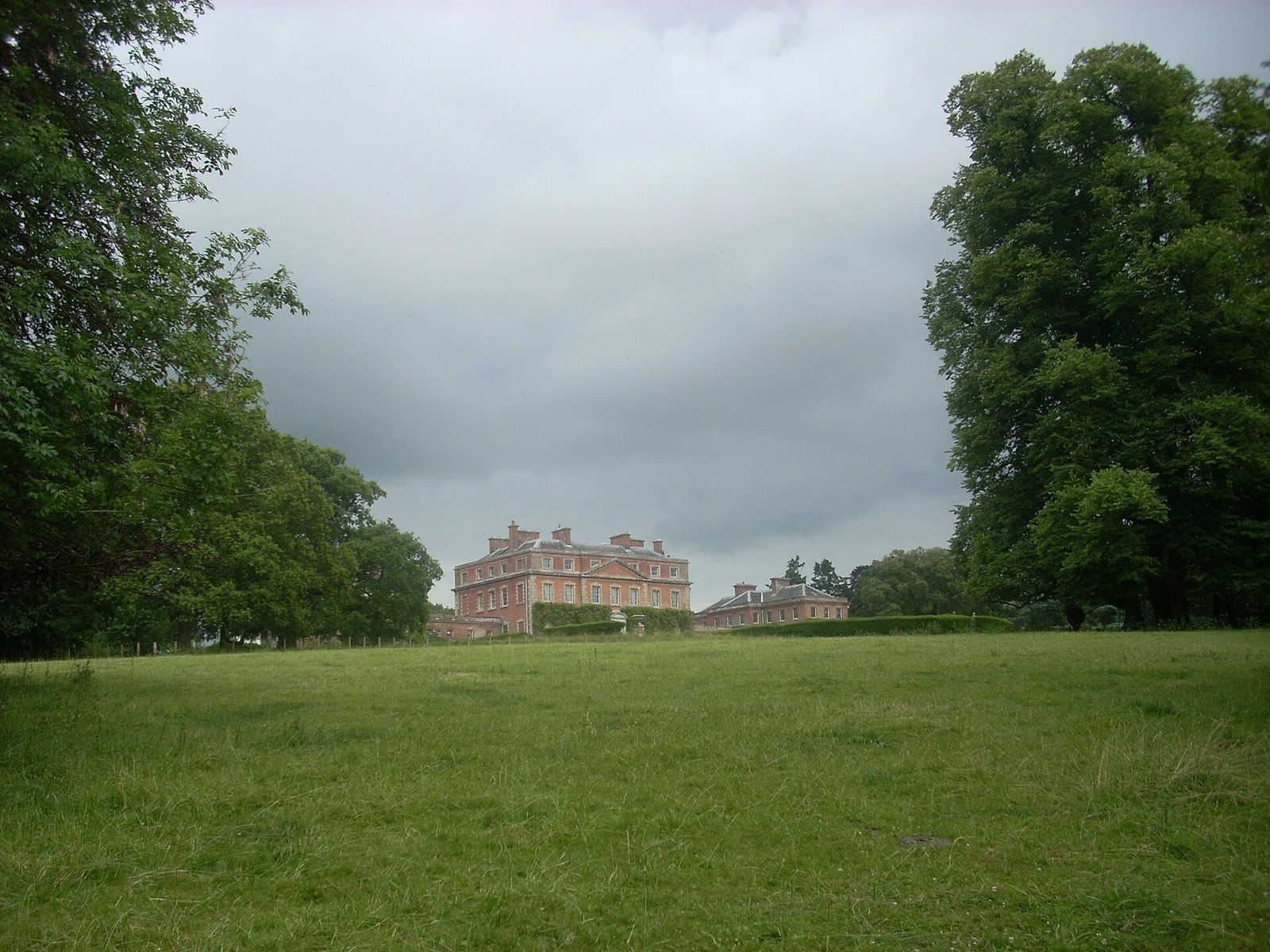
The main house is a large Georgian composition within extensive grounds on the left bank of the River Avon, opposite Charlton-All-Saints. Its North and South Wings form part of the house. Later architectural plans and alterations added to the original design.
House and wings
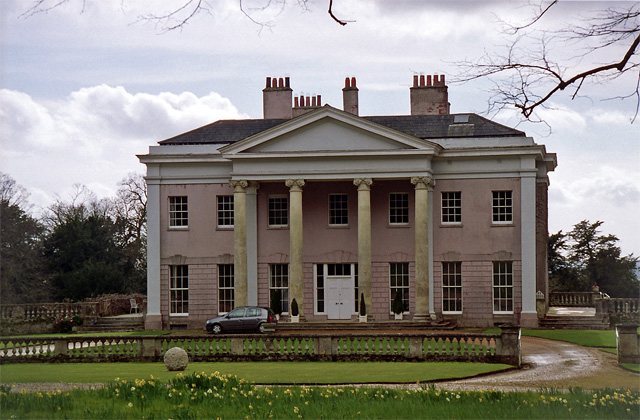
John Wood’s 1766 designs included pavilions, subsidiary structures within an architectural composition, to the north and south of the house. Nicholas Revett added a stone portico, a covered entrance supported by columns, and remodelled the interior of the north wing.
Interiors
Giovanni Battista Cipriani redecorated the music room. A principal room on the top floor contains panelling taken from the captain’s cabin of HMS Ganges, a Royal Navy ship built in 1821. The 4th Earl Nelson bought the panelling in 1930 while the ship was being broken up and had it installed in the house.
Church and former stable
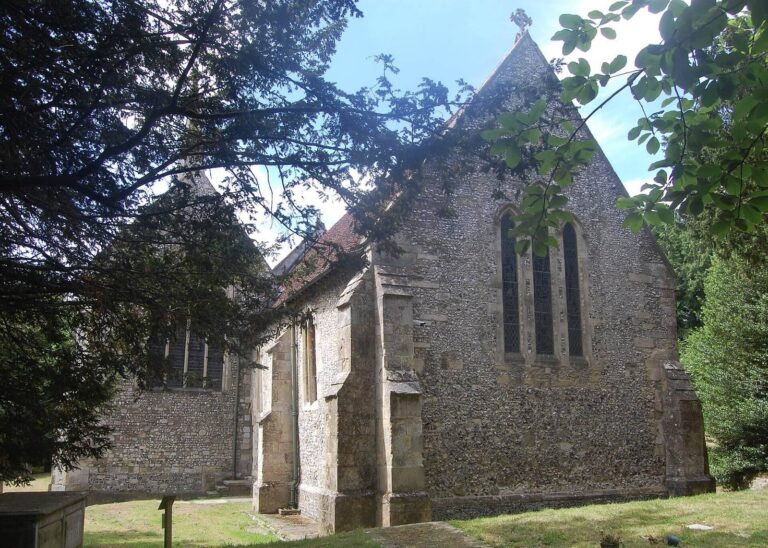
Standlynch Church is associated with the estate and was renovated at the commission of the 3rd Earl Nelson. The south stable has been converted into offices.