Torre di Castruccio: A Medieval Military Tower in Avenza, Italy
Site at a Glance
- Rating
- 4.3
- Popularity
- Medium
- Country
- Italy
- Primary era
- Medieval
- Eras represented
- Medieval, Early Modern
- Civilizations
- Holy Roman Empire, Republic of Lucca
- Site type
- Military
- Remains
- Castle
On this page10 sections
History
Torre di Castruccio is a medieval military tower in Avenza, Italy, dated to about 1320 and thought to be the last surviving remnant of a fortress built by Castruccio Castracani between 1319 and 1328. Castracani, a 14th-century military commander and ruler of Lucca, expanded and strengthened Avenza’s defenses to protect the town and control commercial traffic.
A fortress under changing authorities
A 1311 register of fortresses commissioned by Holy Roman Emperor Henry VII identifies Avenza as Castrum Aventia, using castrum, Latin for a fortified place. The Torre di Castruccio is thought not to have formed part of that earlier complex. After Castracani’s death in 1328, authority over the fortress territory changed hands. The Duchy of Milan governed it from 1343 to 1403, while military use was associated with Castracani’s lordship, the Republic of Lucca, the Spinola family, the Rossi family of Parma, Mastino I della Scala, the Malaspina and Cybo-Malaspina families, the Duchies of Massa and Carrara and of Modena and Reggio, the Kingdoms of Sardinia and Italy, and the Municipality of Carrara.
Malaspina rule and military decline
From 1473 to 1829, the Malaspina and Cybo-Malaspina families held the territories around the fortress. These were governed in succession as the Marquisate of Massa and Lordship of Carrara, Moneta, and Avenza; the Principality of Massa and Marquisate of Carrara; and, later, the Duchy of Massa and Principality of Carrara. During this period, the tower and the wider fortification were adapted for firearms. Their role in protecting the town and regulating commercial traffic ended in the 18th century. From the following century, changes in military technology made the defenses less useful, and the fortress fell into disuse.
Demolition and wartime damage
After the Unification of Italy, the 19th-century political process that brought the Italian states together under the Kingdom of Italy, the fortification was sold to private owners for 2,000 lire. They demolished nearly all of it and reused its stone in construction. In 1883, the German historian Theodor Mommsen protested to local authorities, and the surviving tower was bought back for 6,000 lire.
Allied bombing of Avenza from 12 to 22 May 1944 further damaged the tower. Graffiti made by prisoners held there between the 16th and 18th centuries came to light in 2013, and two more passages were uncovered in 2015. The Municipality of Carrara is the tower’s current owner.
Remains
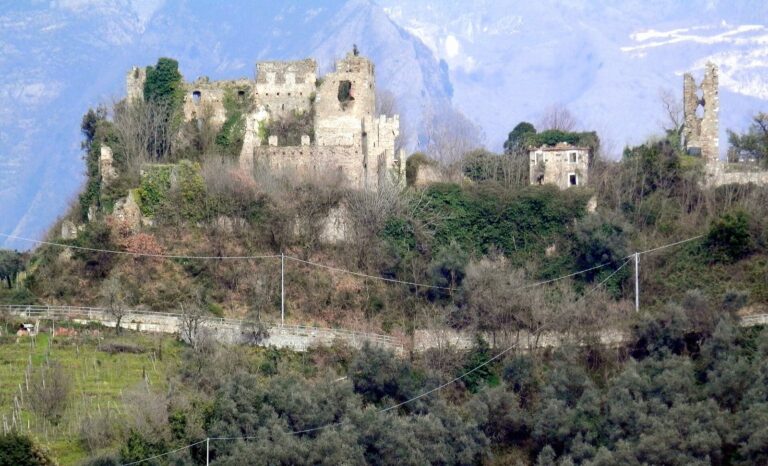
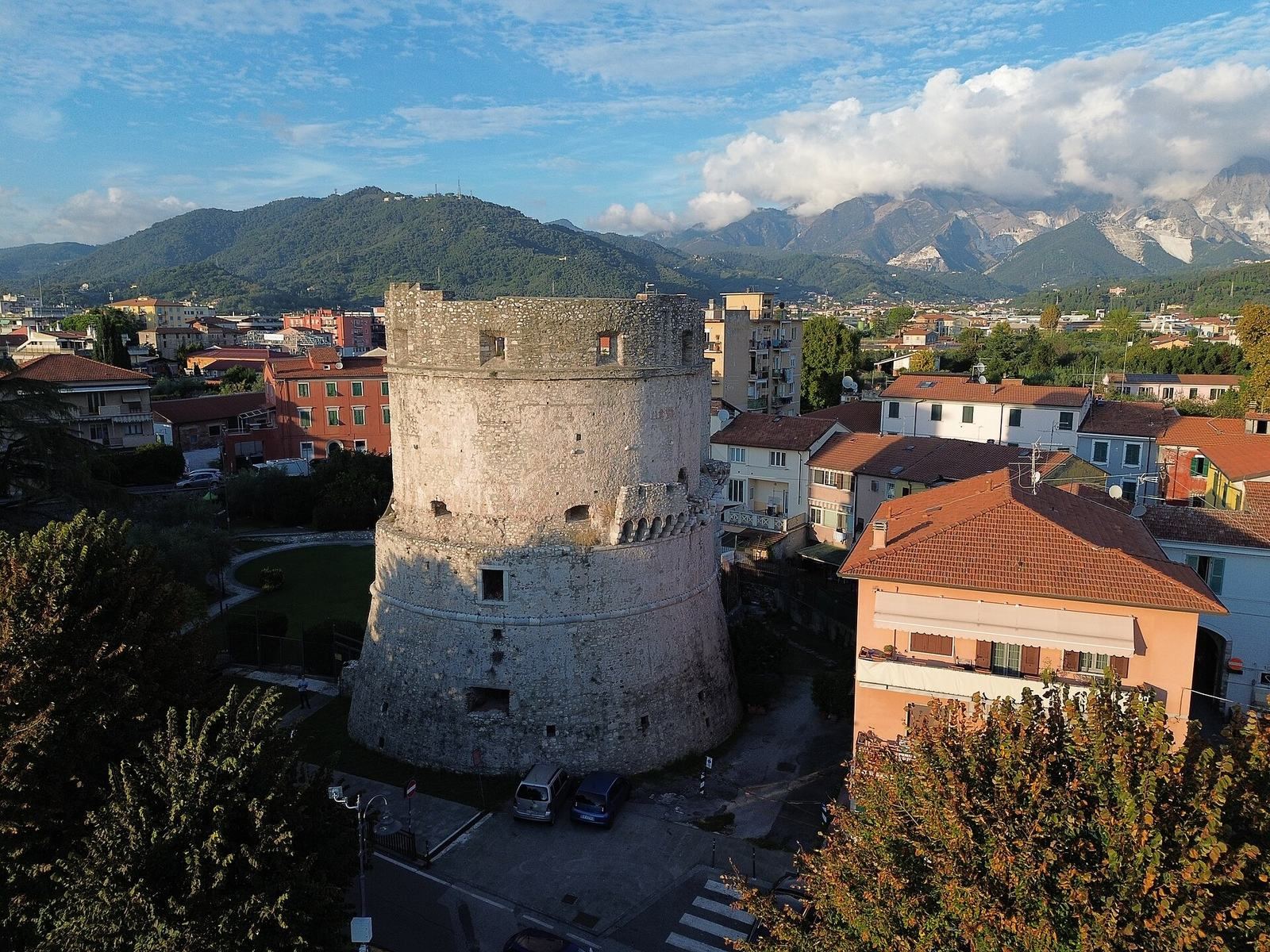
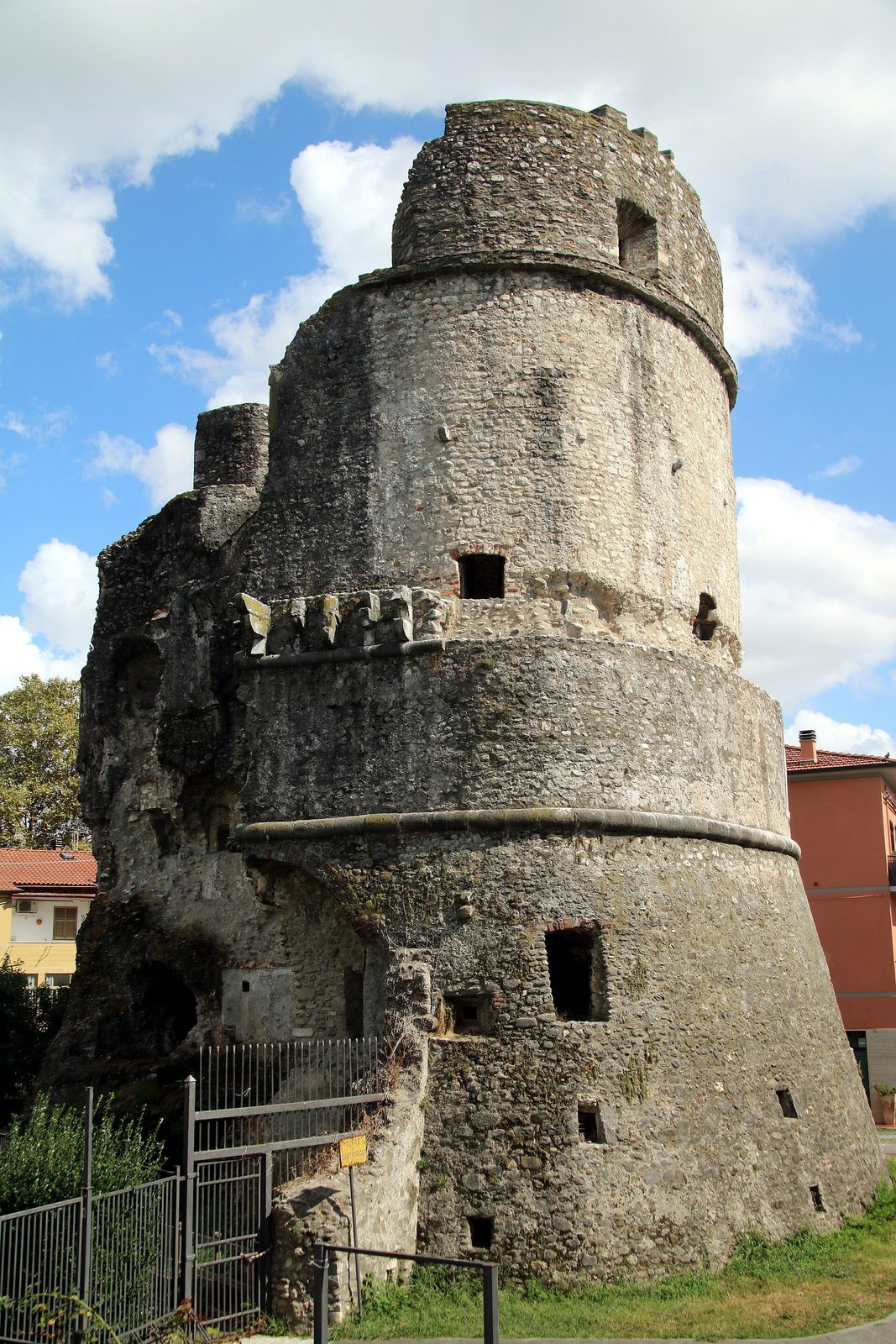
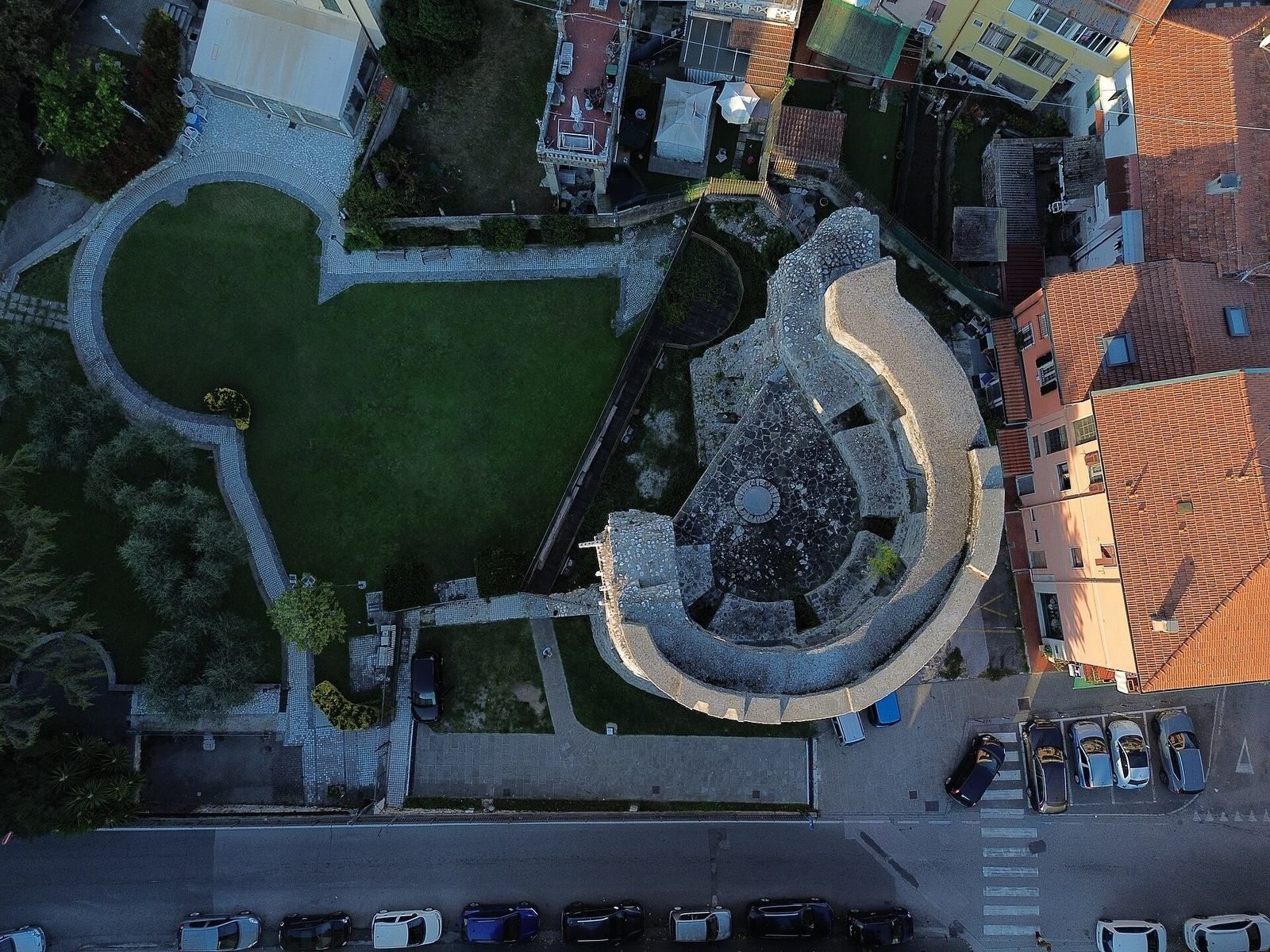
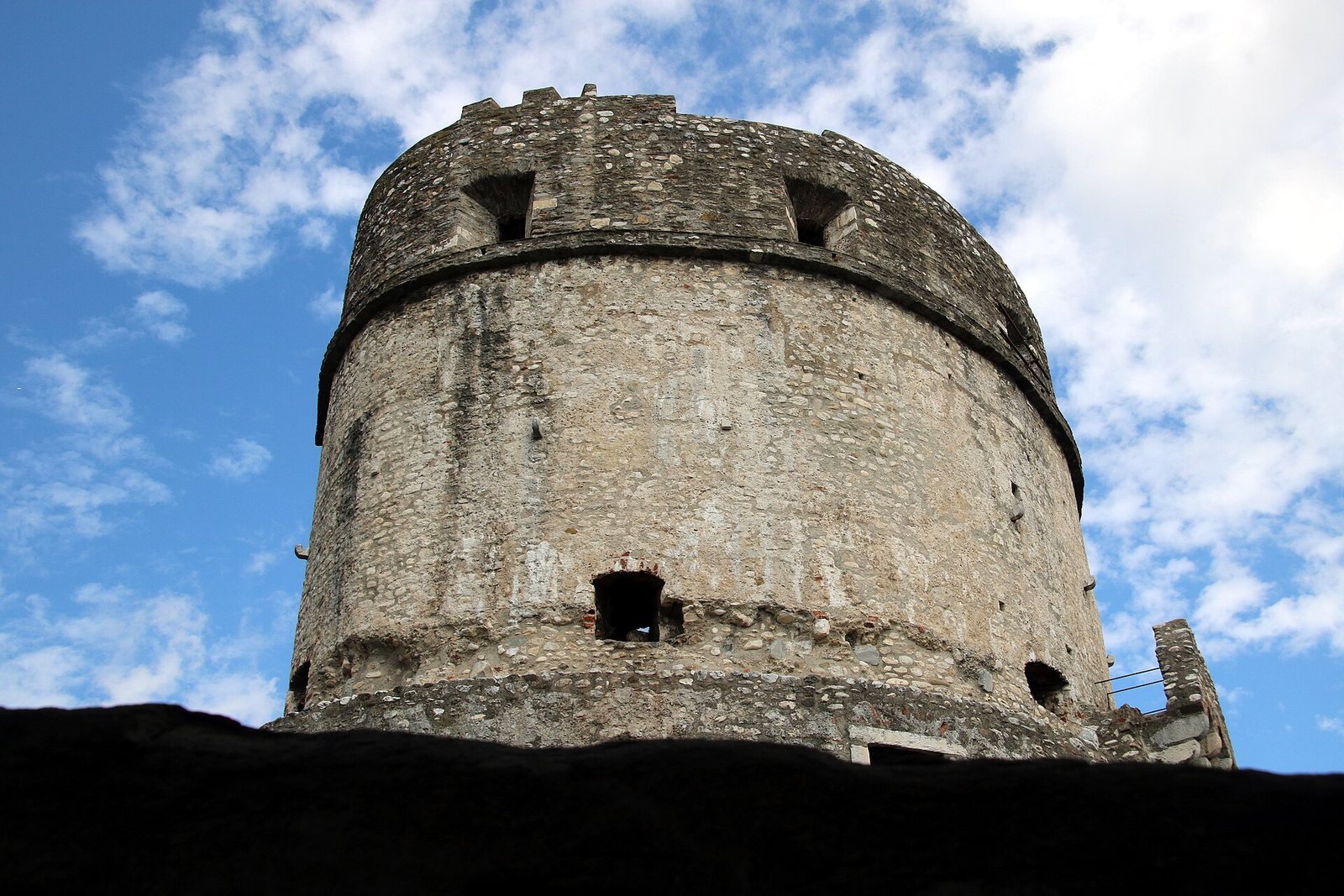
The surviving remains are centered on a cylindrical tower whose base is slightly wider than its upper section. Part of the original structure is missing. The tower stands near the Carrione stream and the Via Francigena, a historic pilgrimage route leading to Rome.
The tower
Form and defenses
A breach in the tower reveals marble cornices with a twisted-rope pattern, set into later masonry. The structure also bears signs of a heightening, probably carried out in the 17th century, and a crown of openings for firearms.
Passages
A passage visible inside the tower once connected it with nearby Piazza Carlo Finelli. Two other passages link the tower respectively to the banks of the Carrione and the center of the old village. Local legends have encouraged conjecture about a much denser network of tunnels around the tower.
Graffiti
Graffiti inside the tower depict symbols of the Passion of Christ, the Christian account of Jesus’ suffering and death.
The former fortress
In 1848, John Murray’s guide to northern Italy described the Castle of Avenza as a large building, with round towers flanking the fortress and a substantial outer gallery.