Tomb of Turpio: A Roman Funerary Monument in Lyon
Site at a Glance
- Popularity
- Medium
- Country
- France
- Primary era
- Classical
- Eras represented
- Classical
- Civilizations
- Roman
- Site type
- Burial
- Remains
- Tomb
On this page7 sections
History
Turpio and Roman Lugdunum
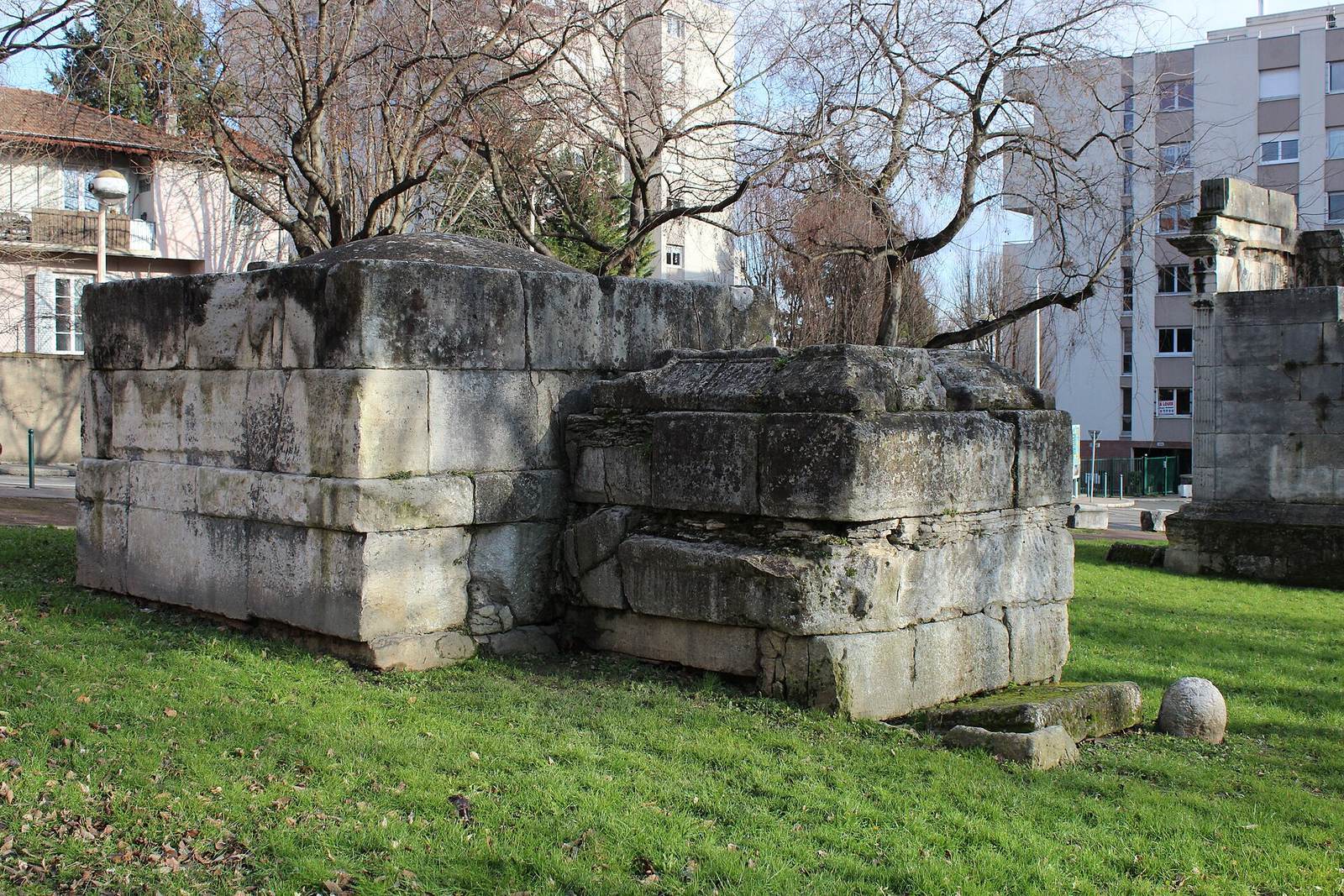
The Tomb of Turpio is a Roman funerary monument in Lyon, France, probably dating to the early years of Lugdunum before the Common Era. The lettering of its inscription supports this approximate dating but does not establish a precise construction year. It is the best-preserved of the Roman tombs retained after clearance work uncovered a group of funerary monuments in 1885.
Turpio was a wealthy freedman, a formerly enslaved person who had gained legal freedom, and a member of the Seviri Augustales, a civic college associated with the worship of Rome and Augustus, Rome’s first emperor. Membership represented the highest social advancement available to a freedman in a Roman province. Turpio’s nickname, meaning “the Shameful One,” dated from his enslavement; he later became wealthy and respected in his city.
In antiquity, the tomb stood beside a Roman road connecting Lugdunum with the province of Aquitania and Gesoriacum, the ancient name for Boulogne-sur-Mer.
Rediscovery and preservation
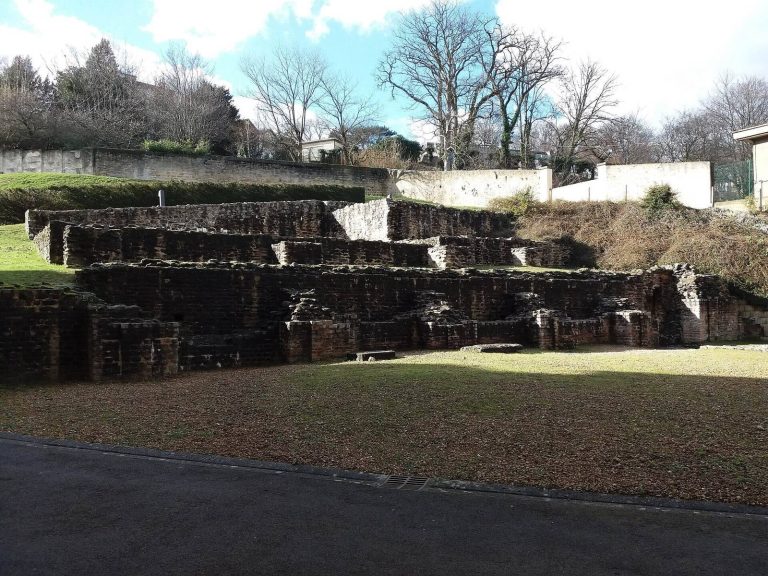
The 1885 clearance in the Saint-Just district revealed ten Roman funerary monuments associated with the ancient burial grounds of Trion. Five tombs were dismantled and rebuilt slightly lower down at Place Eugène-Wernert, while other remains were destroyed. The monuments retained included a triple mausoleum containing the tombs of Julius Severianus and Quintus Valerius and one attributed to Julia, as well as the mausoleums of Satrius and Turpio. France designated the Tomb of Turpio a protected historic monument in 1905.
Remains
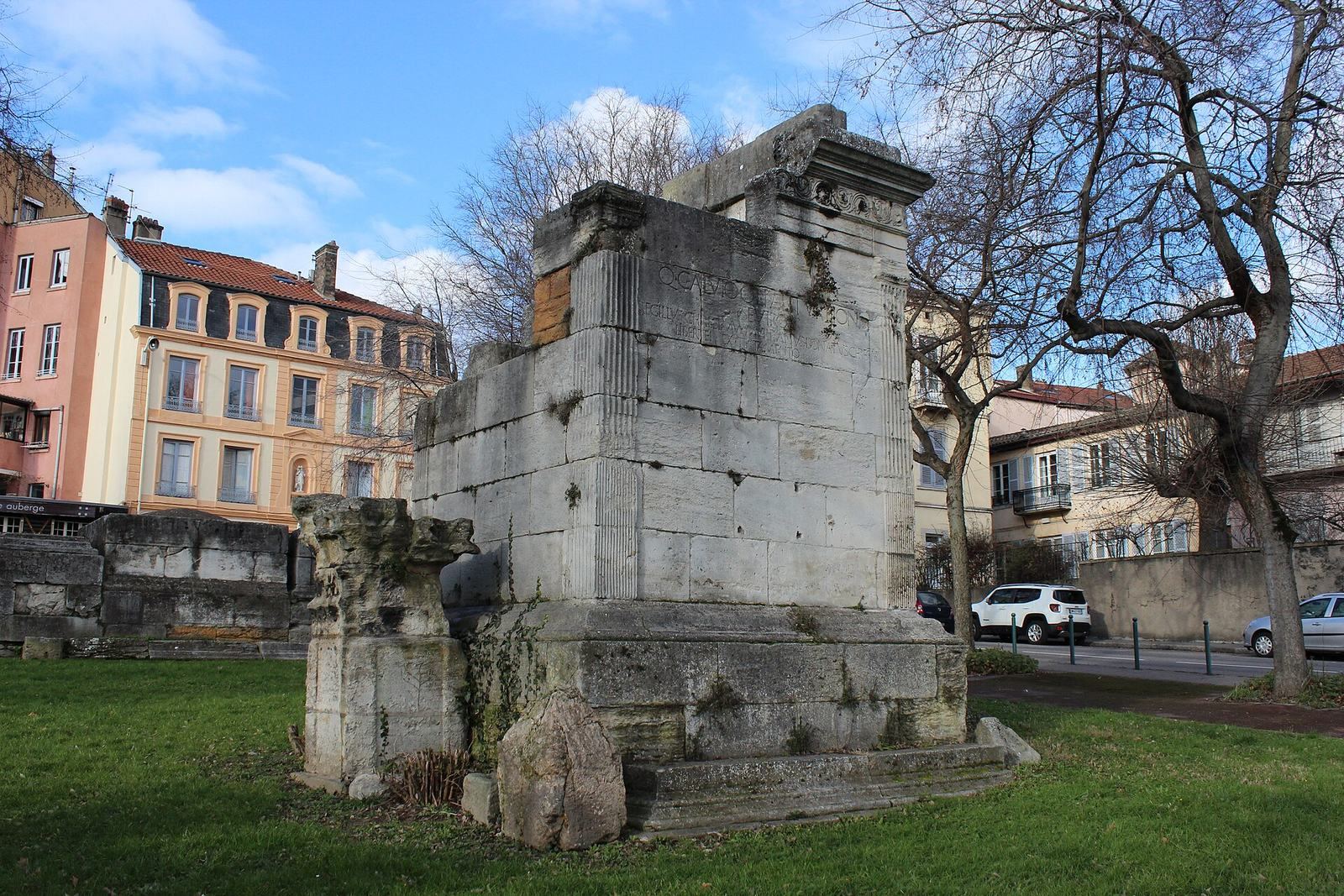
The surviving monument is a square block of large squared stones set on a raised base. Its preserved height is 5.80 metres, and the base measures 3.93 metres on each side at its foot.
The surviving monument
Stonework and architectural features
Each corner of the block has a carved, fluted pilaster, a shallow column-like projection, topped by an Ionic capital, the decorated top of the pilaster. A horizontal decorative band and projecting cornice survive on one face. The block may have supported a lighter structure above it, perhaps a roofed colonnade sheltering a statue of the deceased. This interpretation draws on comparisons with Roman funerary monuments at Beaucaire and Glanum.
The tomb and adjacent monuments were built from a soft, high-quality limestone known as Midi stone, found in the Rhône Valley and Languedoc. This stone was commonly used at Lugdunum during the first half of the first century BC, before Seyssel stone replaced it.
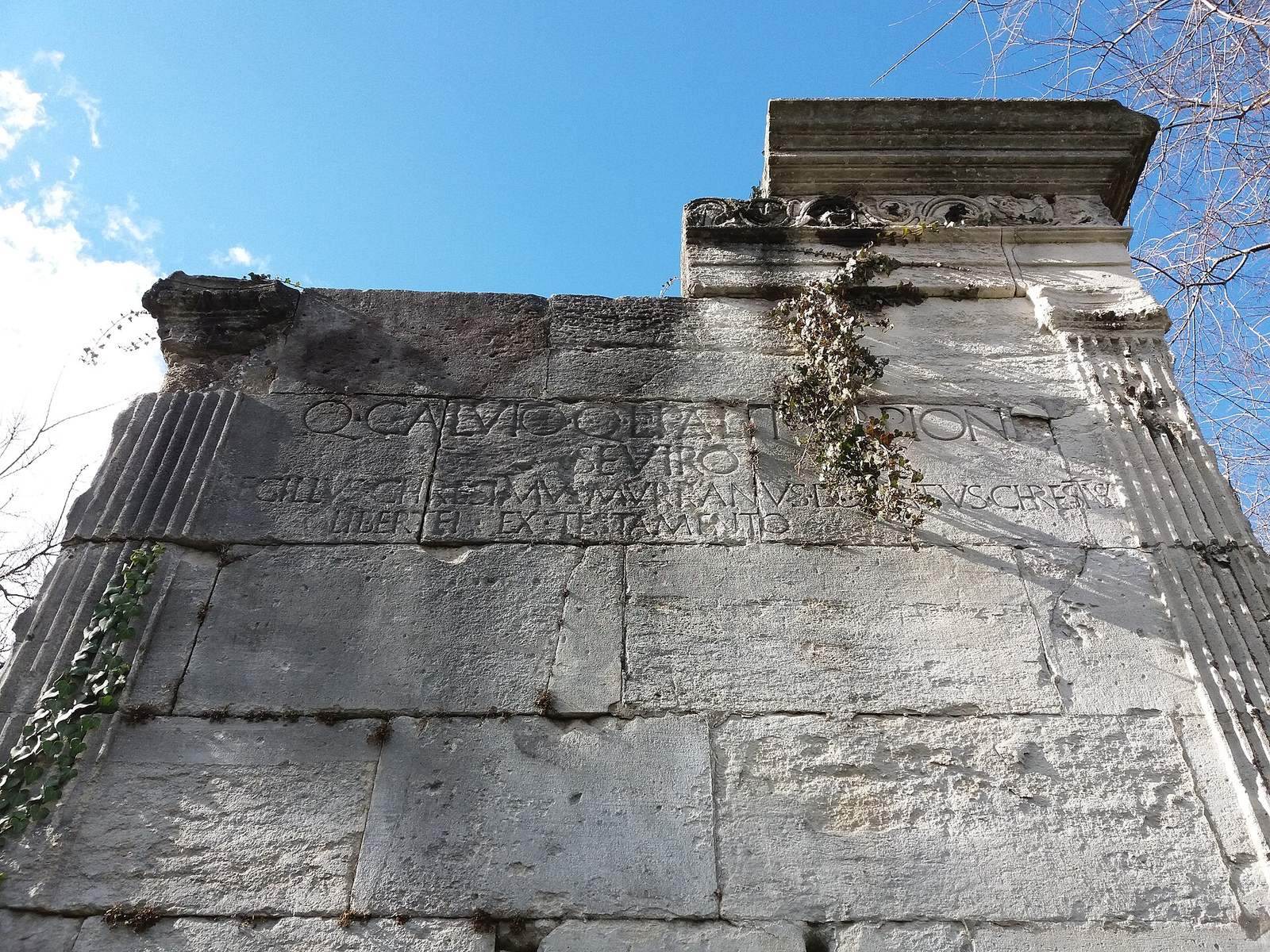
Dedicatory inscription
A dedicatory inscription is carved on the southeast face: SEVIRO REGILVS CHRESIMVS MURRANVS DONATVS CHRESTVS
. Its first two lines use large capital letters, while the freedmen’s names are smaller. The final name is crowded into the remaining space, with the letters TVS
nearly overlapping.