Tomb of Son Olivaret: A Bronze Age Collective Burial Monument
Site at a Glance
- Popularity
- Very Low
- Country
- Spain
- Primary era
- Bronze Age
- Eras represented
- Bronze Age
- Civilizations
- Unclassified
- Site type
- Burial
- Remains
- Tomb
On this page8 sections
History
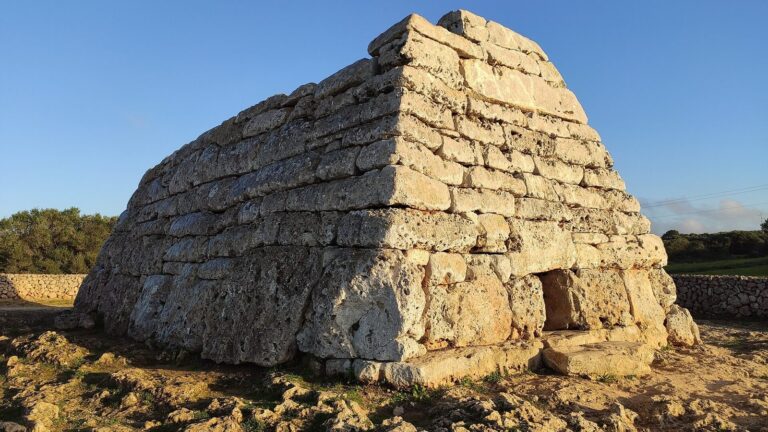
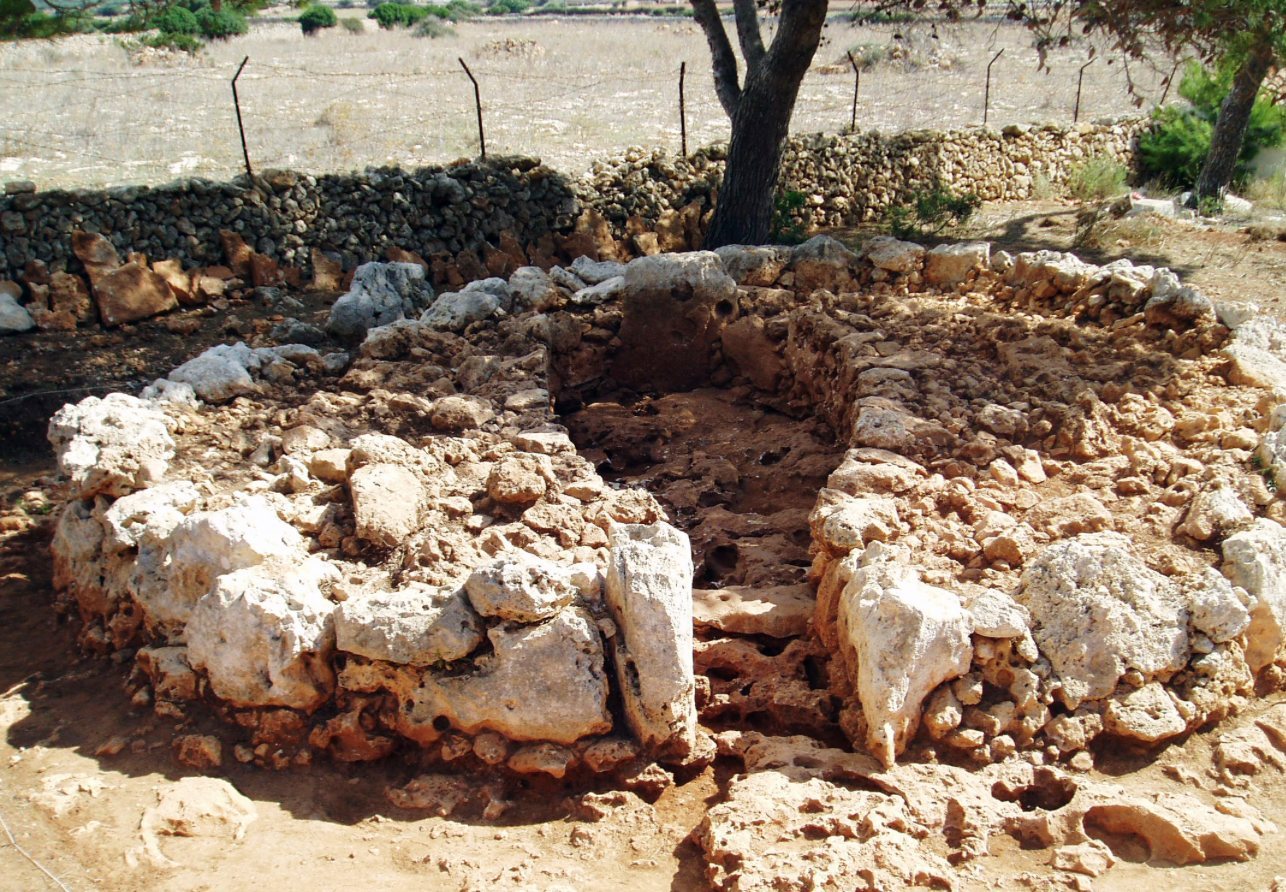
The Tomb of Son Olivaret is a collective Bronze Age burial monument in Ciutadella de Menorca, in Spain’s Balearic Islands. It is a protonaveta, a collective prehistoric tomb type between a dolmen, a tomb of upright stones supporting a capstone, and a naveta, a Balearic funerary monument.
Bronze Age burial phases
Charcoal from the site dates to around 2000 BC, while the earliest human remains belong to the pre-Talayotic phase, an earlier period in Menorca’s prehistoric sequence, beginning around 1600 BC. The tomb was used over an extended period. An early phase lasted from about 1600 to 1050 BC, and use continued broadly until around 800–600 BC. A later Talayotic phase, a succeeding Menorcan prehistoric period, began around 850 BC and lasted about 200 years.
During a later Talayotic phase, people placed burials on the remains of the roof, which had already collapsed in prehistoric times. The tomb may also have been reused around 350–150 BC, during the final Talayotic or post-Talayotic period.
Discovery and heritage recognition
The monument became known in 1999. A survey and electromagnetic prospecting followed in 2000, and a Museu de Menorca team excavated it during the summers of 2003–2005. The work was led by archaeologist and museum director Lluís Plantalamor Massanet, with archaeologists Sílvia Villalonga and Josep Marquès. Spain designated the tomb an Asset of Cultural Interest, a protected cultural property, in 2008. It was among 32 archaeological sites in Spain’s 2016 proposal for UNESCO World Heritage listing as the Talayotic Culture of Menorca. The World Heritage Committee deferred the proposal in 2017 and requested revisions. When 24 sites were inscribed in 2023, Son Olivaret was not included.
Remains
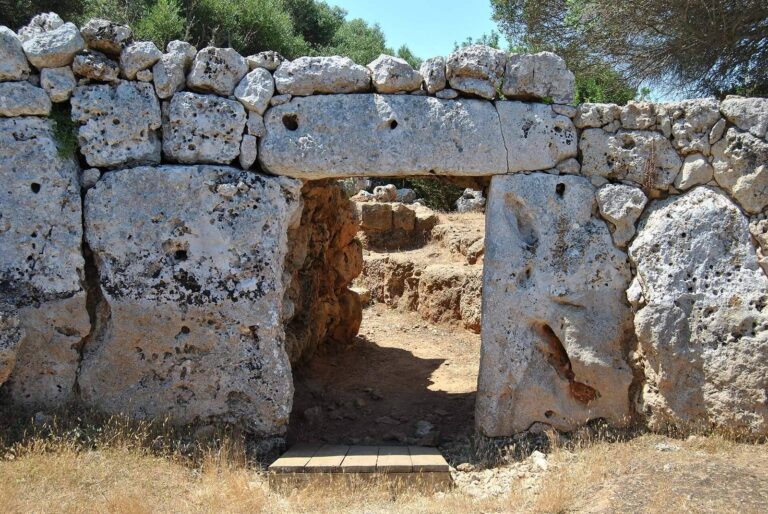
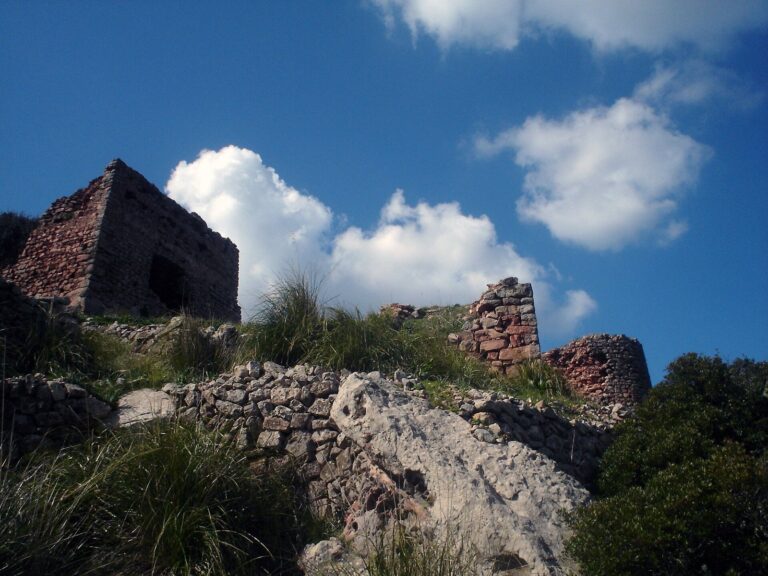
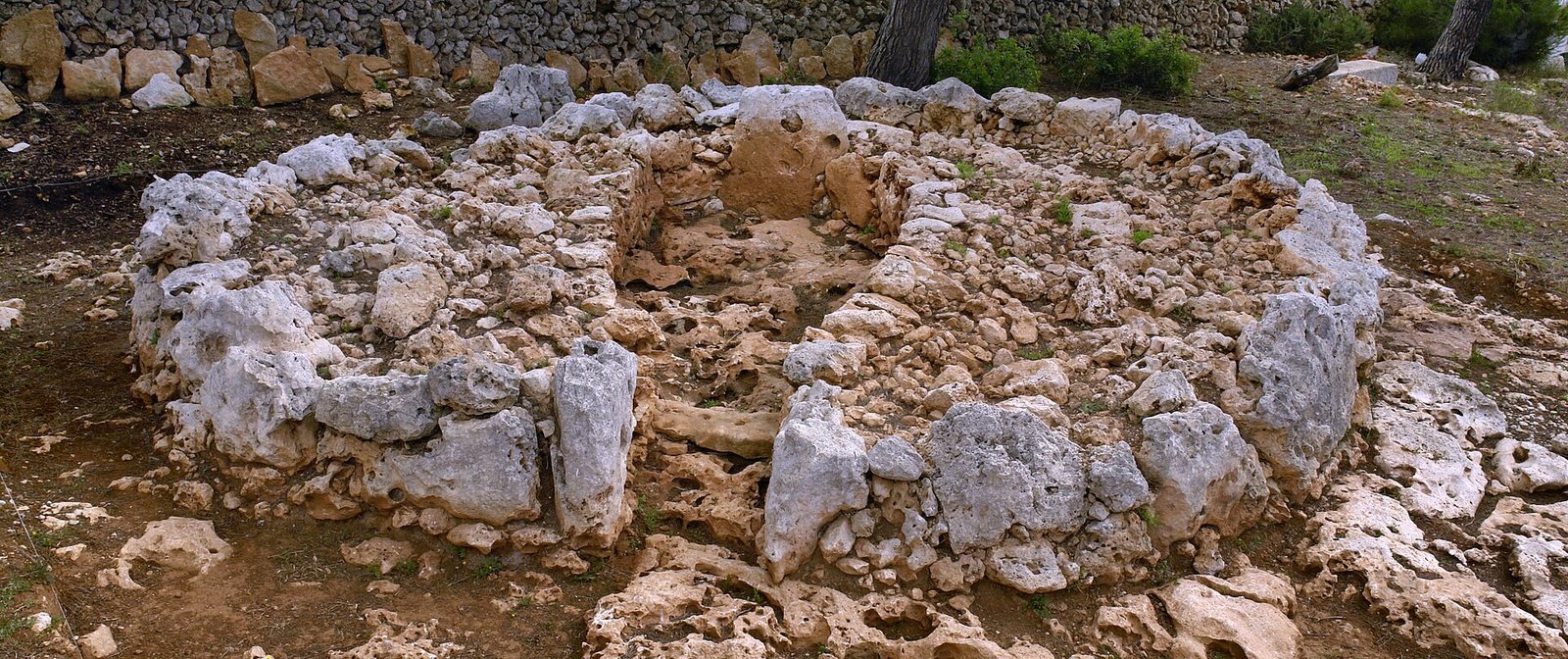
The tomb has a nearly circular outer plan enclosing an oval chamber, reached through a short entrance passage. Its triple-wall construction has an inner and outer wall with a third wall between them. It lies within the military battery of the same name, southwest of Ciutadella and about 6.5 km south of the town. The Talayotic settlement of Son Olivaret Nou is 1,350 m to the northeast.
Construction and plan
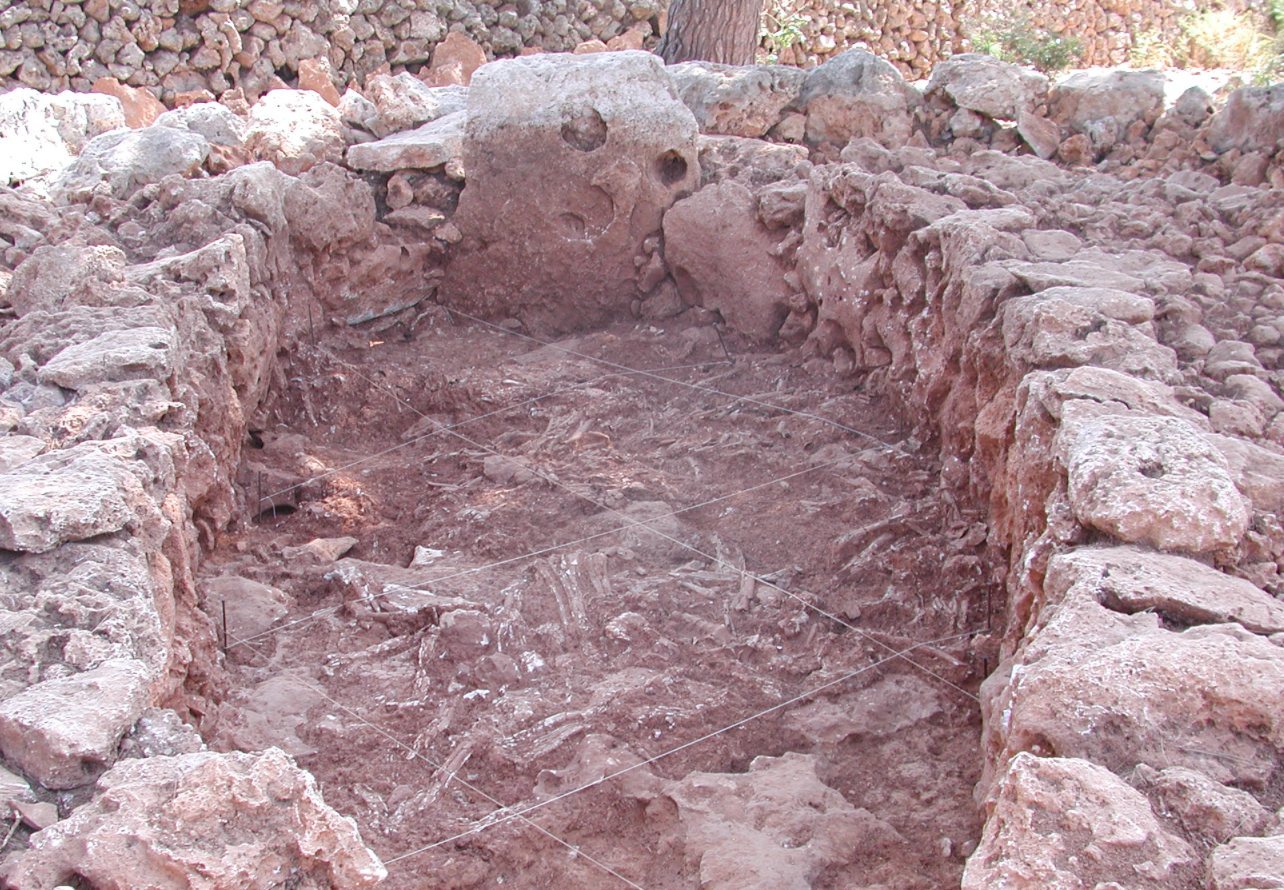
A large upright slab stands opposite the entrance. Smaller stones fill the spaces between the walls, and the middle wall helps stabilize the structure. Although the outer wall is made of large stones, most stones in the monument are not exceptionally large, unlike those typical of megalithic tombs. Earth once covered the tomb to form a hemispherical mound. Its roof collapsed in prehistory. The basal course survives, and the monument is considered one of the best-preserved examples of a protonaveta.
Burials and finds
Human remains
Dental study identified the remains of at least 91 people: 64 from Talayotic-period layers and 27 from pre-Talayotic layers. Of the Talayotic group, 58 were older than seven and six younger; in the pre-Talayotic group, 24 were older than seven and three younger. The bones were badly fragmented, with acidic soil contributing to their deterioration. Earlier remains appear to have been moved toward the back of the chamber to make room for later burials, and few skeletons remained in anatomical connection.
Light wear on the teeth suggests that most people buried here were not old when they died and that life expectancy was relatively low. Caries affected 3.5 percent of the dental sample. The remains also show enamel hypoplasia, a disruption in tooth enamel formation that can be associated with nutritional deficiencies or infection. Its low frequency was interpreted as indicating that developmental problems were not usual in this population.
Grave goods and pottery
Burial goods included ceramic vessels of different types and dates, bronze and bone objects, and stone artifacts. Finds included bone and bronze awls, while bone buttons had fastened garments worn by the dead. Numerous prehistoric Menorcan pottery fragments lay outside the tomb, in front of the entrance passage. The Bronze Age fragments belong to Naviform I, dated 1700–1400 BC, and Naviform II, dated approximately 1400–1200 BC, two named phases of Menorca’s Bronze Age.