Todmorden Unitarian Church: A Memorial to John Fielden
Site at a Glance
- Rating
- 4.8
- Popularity
- Medium
- Country
- United Kingdom
- Primary era
- Modern
- Eras represented
- Modern
- Civilizations
- British
- Site type
- Religious
- Remains
- Church
On this page12 sections
History
Congregation and construction
Todmorden Unitarian Church is a nineteenth-century Unitarian church in Todmorden, West Yorkshire, United Kingdom, built for a growing congregation and in memory of John Fielden. Unitarianism is a Christian tradition that does not accept the doctrine of the Trinity and emphasizes the unity of God. The congregation built its first chapel and school in 1823, but growth eventually left the chapel too small.
After Fielden died in 1849, his sons Joshua, John Fielden junior, and Samuel funded a new church on family land at Honey Hole. Fielden had been a local mill owner and social reformer, and later served as a Member of Parliament. Construction began in 1865, and the church was completed in 1869 at a cost of more than £35,000. Architect John Gibson, who had previously worked for the family, also designed Dobroyd Castle across the valley for John Fielden junior. The church opened in April 1869, when the Unitarian minister and educator William Gaskell preached to 800 people. Its associated lodge was built at the same time.
Closure and renewed use
The church received Grade I listing in 1966, a designation for buildings of exceptional architectural or historic interest. The congregation continued to flourish into the twentieth century, but later declined. The church closed in 1987, and services continued in the lodge until 1992. The church fabric then deteriorated through decay and vandalism.
The Historic Chapels Trust acquired the building in 1994 and undertook repairs to the roofs, stained glass, clock, and bells, as well as work on the lodge and tower interiors. The programme also included a new heating system and the restoration of the surrounding historic landscape and burial ground. Regular services resumed in 2008, and the church remains in the Trust’s care. The congregation is a member of the General Assembly of Unitarian and Free Christian Churches, an umbrella body for British Unitarians.
Remains
Main church
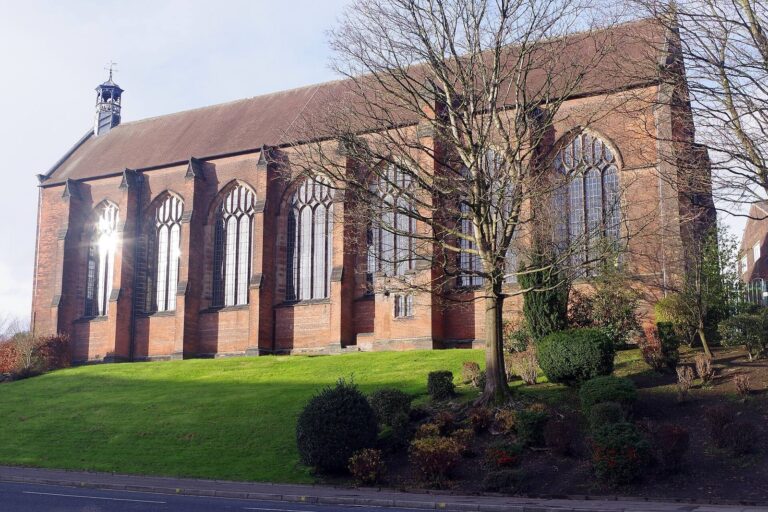
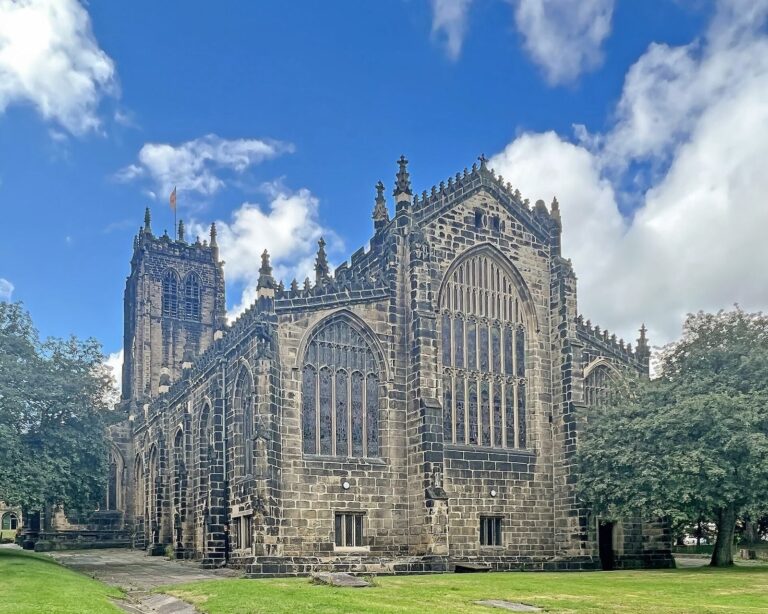
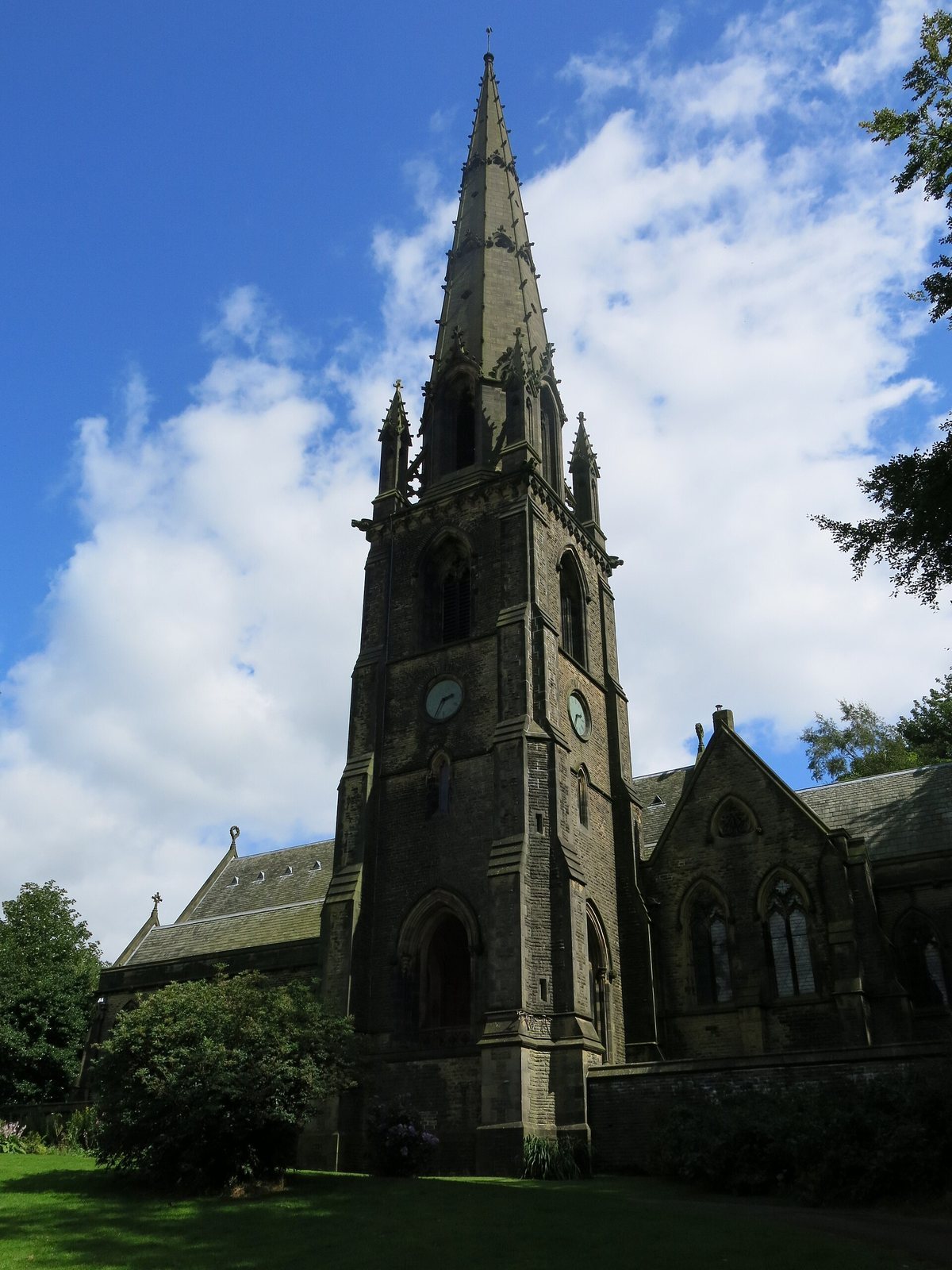
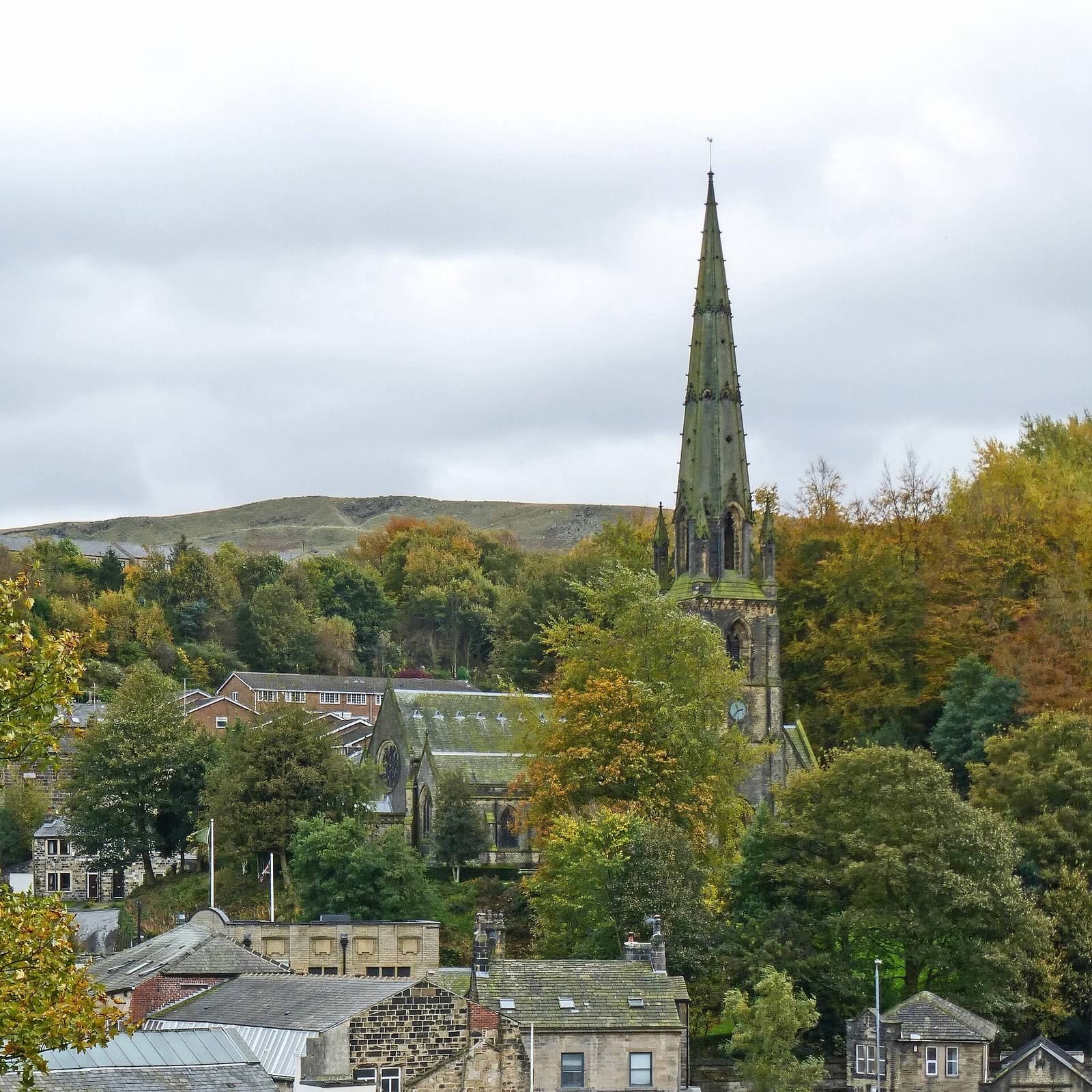
Built of stone beneath a slate roof, the church stands on a steep slope at Honey Hole. Its plan combines a seven-section nave, the main central space, with aisles alongside, transepts crossing it, and a single-section chancel around the altar. A porch and a large tower topped by a spire complete the main structure.
Exterior
The west end has an elaborate rose window, while the east end contains a five-opening window. Along the nave, two-opening windows have heads filled with ornamental stone patterns, or tracery. Supporting buttresses line the walls, with a horizontal band carved with flowers running between them.
Interior
Inside, pointed arches rest on columns of Devonshire marble. Carved patterns and poppyheads, ornaments carved at the ends of pews and choir stalls, decorate the seating. The pulpit combines marbles of different colours, and the baptismal font has a carved bowl of white marble. Belgian artist Jean-Baptiste Capronnier made the chancel’s stained-glass window, which depicts scenes from the life of Christ. Memorial tablets to the founders are set in the aisles. Gas lighting brackets there have been adapted for electric use, and candelabras stand in the choir stalls.
Tower and bells
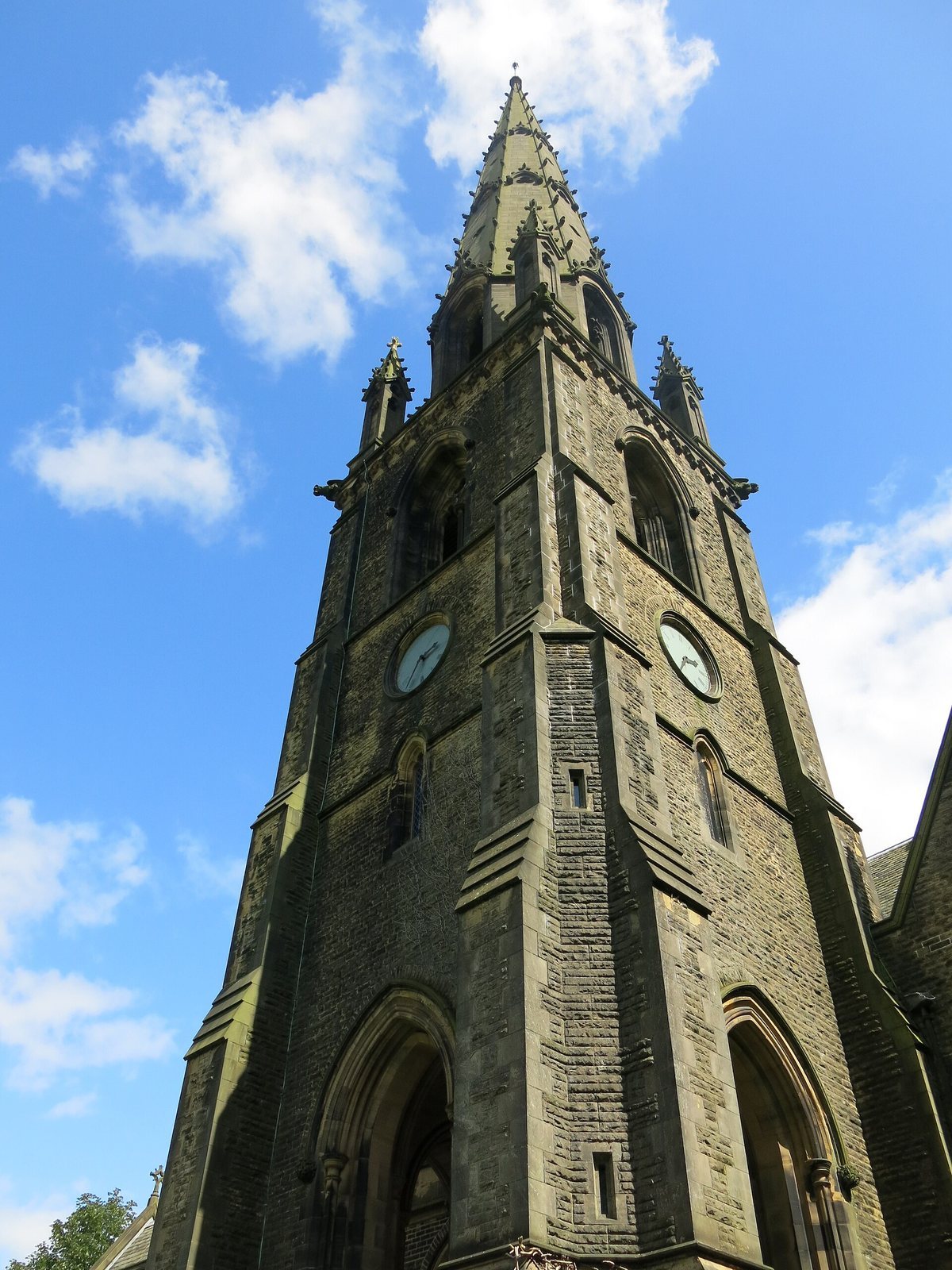
The tower has three stages, buttresses at its corners, and openings for bells. Its lowest stage forms an open porch; pinnacles crown the tower, and the octagonal spire has tall small openings. The tower holds eight bells, all cast in 1868 by Mears and Stainbank of the Whitechapel Bell Foundry. It also contains a clock and a carillon, a set of bells arranged to play music.
Associated lodge
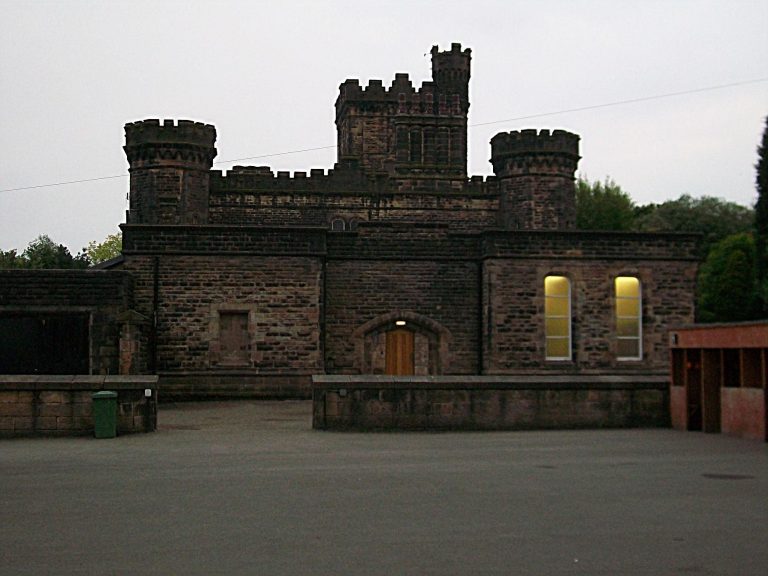
The single-storey lodge is built of stone beneath a slate roof and has a T-shaped plan. Its projecting wing has two steep gables, a Gothic-style doorway, and an angled projecting window.
Grounds and earlier burial place
Church grounds
Ornamental gardens and a wooded, landscaped burial ground surround the church.
Wellfield Terrace burial ground
The earlier Unitarian chapel and Sunday school at Wellfield Terrace had a separate burial ground. John Fielden is buried there.