Tikona: A Hill Fort in Maval, India
Site at a Glance
- Popularity
- High
- Country
- India
- Primary era
- Classical
- Eras represented
- Classical, Medieval
- Civilizations
- Satavahana
- Site type
- Military
- Remains
- Fort
On this page8 sections
History
Tikona is a ruined hill fort in Maval, near Kamshet in western India. Its origins are poorly understood, but it later became a strategic center for control of the Pawana Mawal region.
Nizam Shahi Rule
In 1585, Malik Ahmad Nizam Shah I, founder and first ruler of the Ahmadnagar Sultanate, captured Tikona and annexed it to Nizam territory. The sultanate was ruled by the Nizam Shahi dynasty.
Maratha and Mughal Contests
In 1657, Chhatrapati Shivaji Maharaj, founder of the Maratha kingdom, took Tikona along with Karnala, Lohagad, Mahuli, Songad, Tala, and Visapur. He was extending his authority over the Konkan, which was then under Nizam control. Tikona served as a strategic center for the Pawana Mawal region. In 1660, responsibility for the fort’s security went to the Dhamale family, regional Deshmukhs, an administrative and landholding office. The family retained control for a long period.
In 1665, Jaysingh, a Rajput ruler and general serving the Mughals, invaded the region and attacked local villages, while the forts held out. Under the Treaty of Purandar, an agreement in the Mughal–Maratha conflict signed on 12 June, Tikona was surrendered to the Mughal warrior Kubadkhan, who had attacked with Halal Khan and others. Kubadkhan took control on 18 June, and Maratha forces later recaptured the fort.
In 1682, the Maratha ruler Sambhaji met the Mughal prince Akbar, son of Aurangzeb and distinct from the earlier Mughal emperor of the same name. Sambhaji offered him a stay at Tikona, but Akbar was moved to Jaitapur because the climate did not suit him.
British Capture
A small battle between Maratha forces and the British preceded the British capture of Tikona in 1818.
Remains
Hill and Fort Fabric
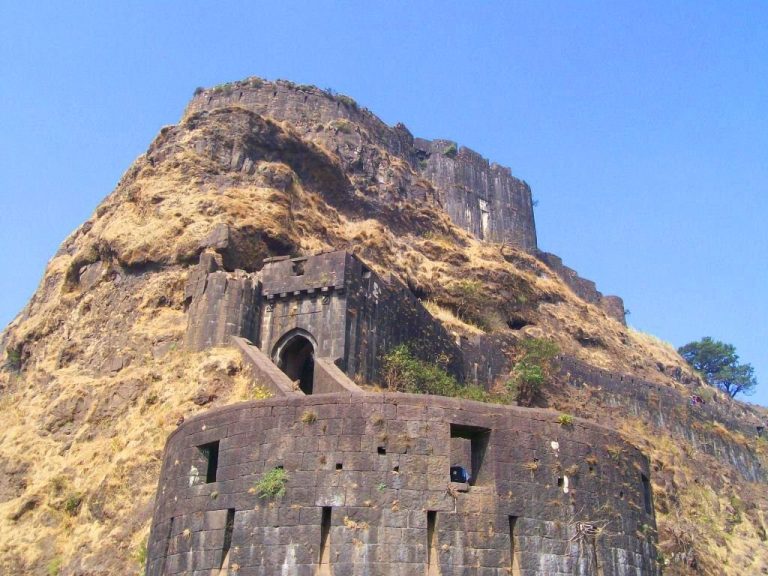
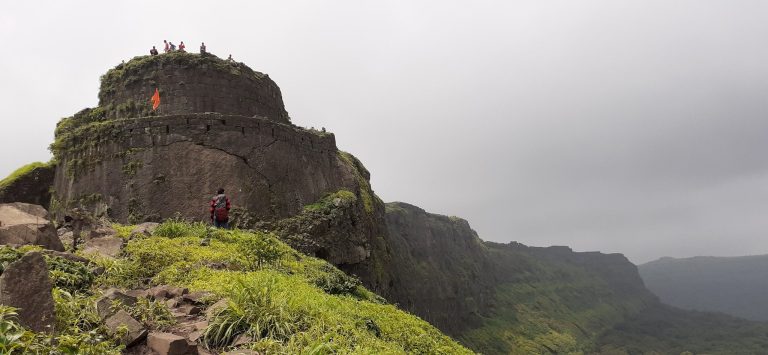
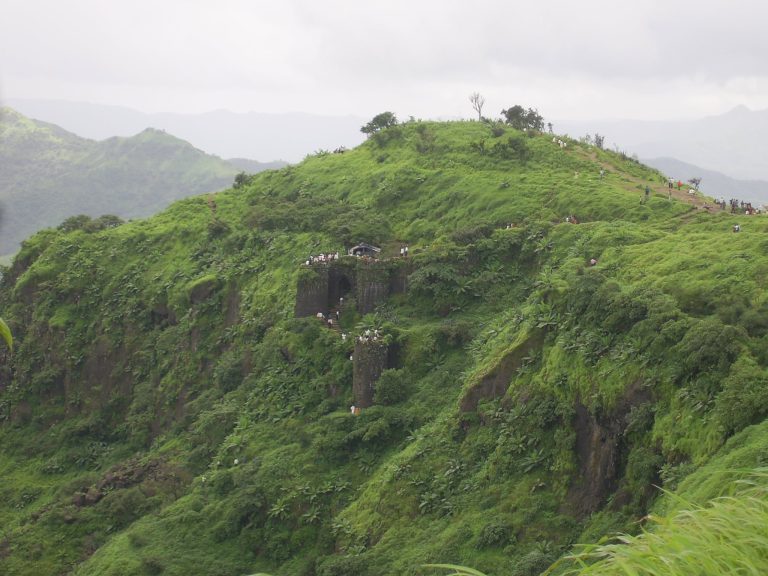
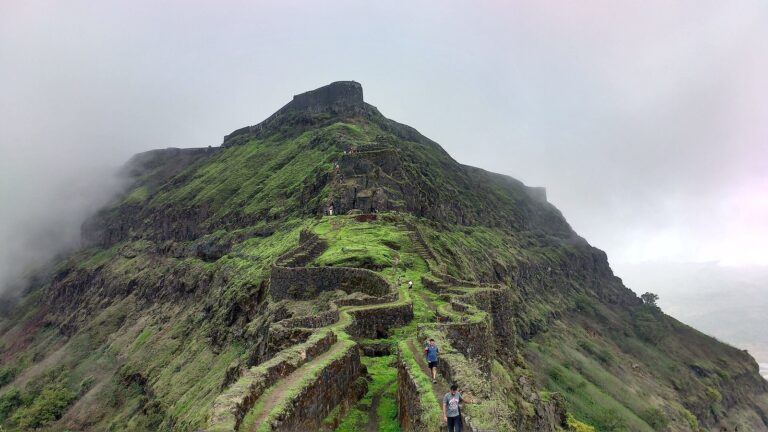
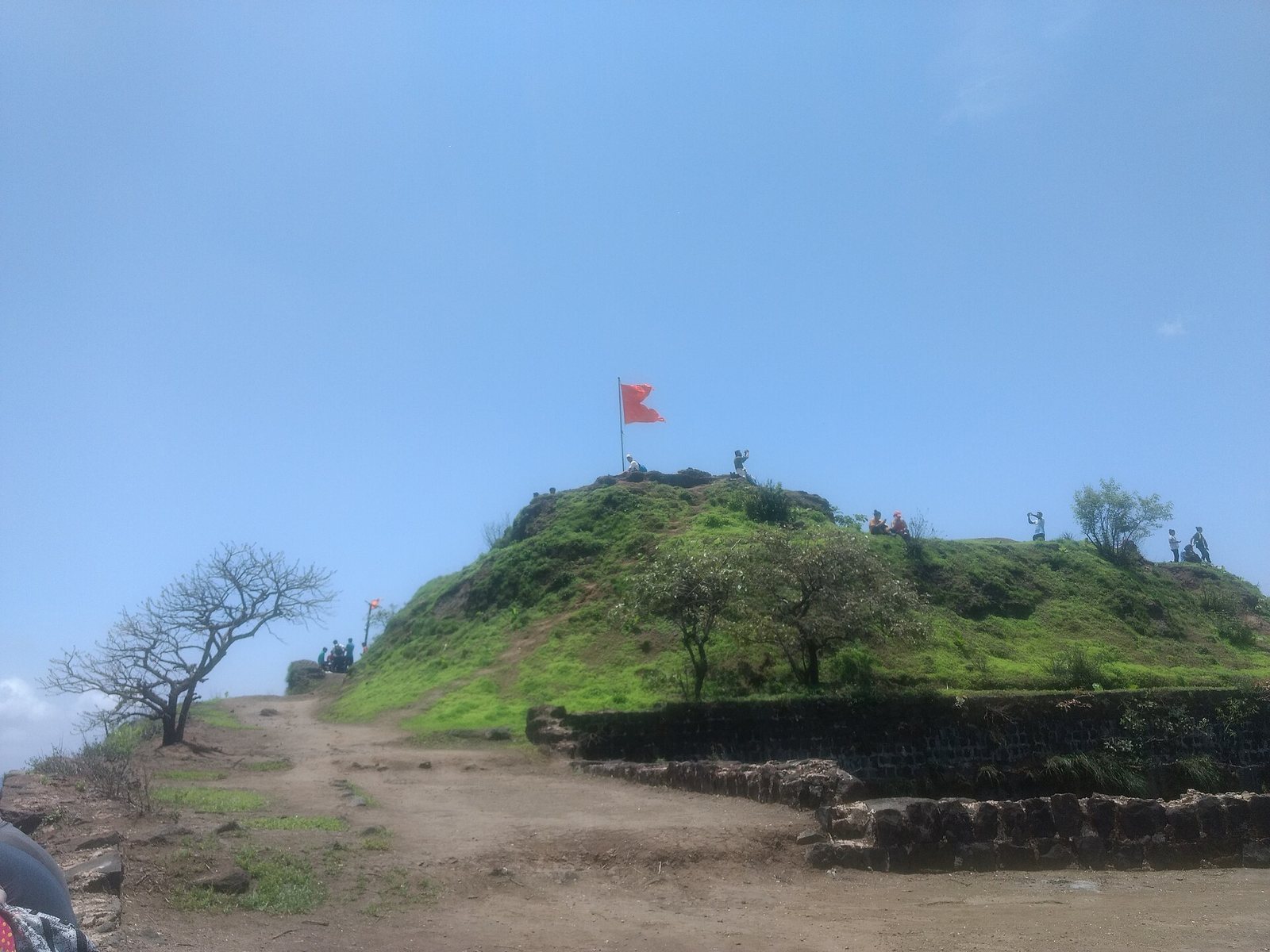
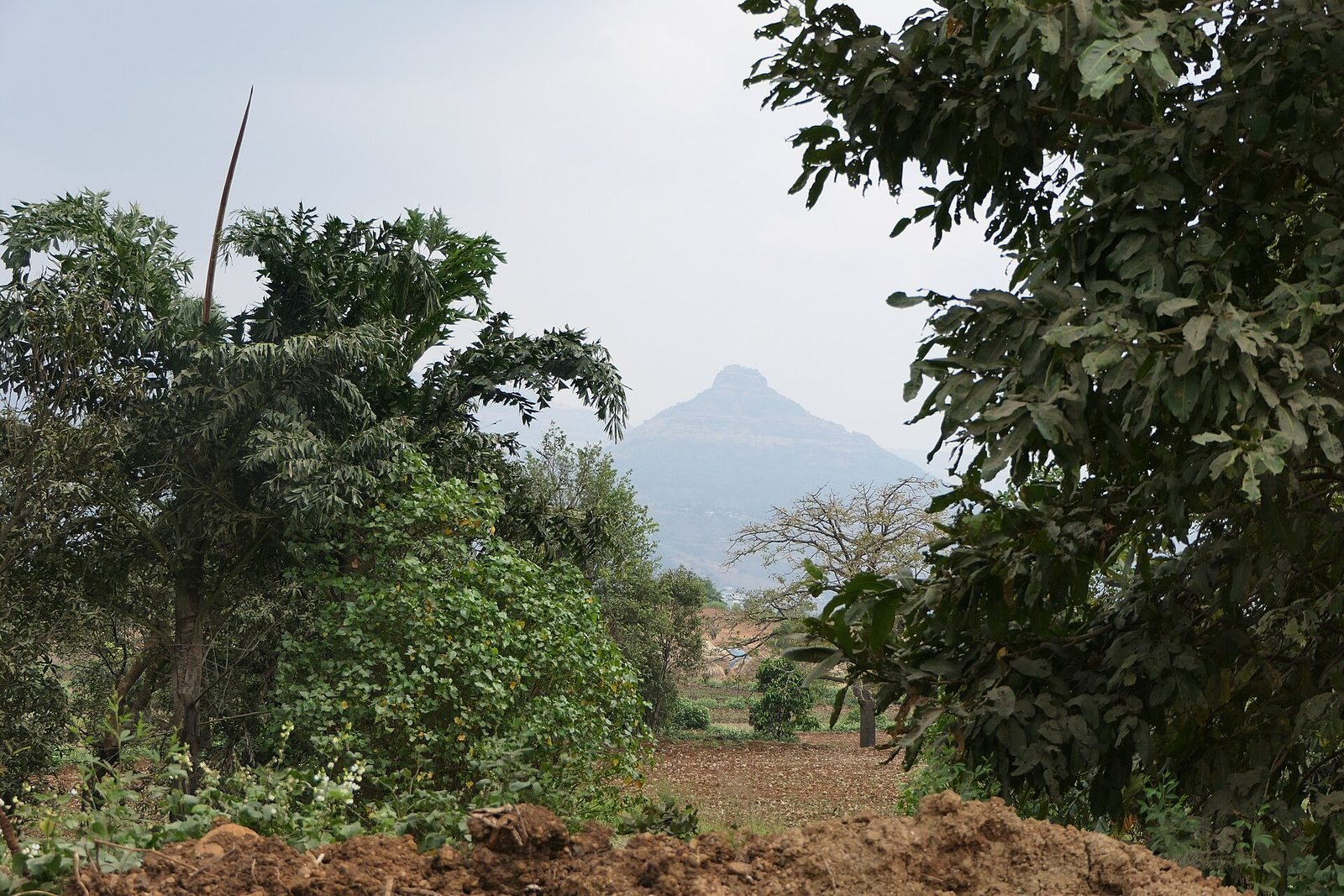
The fort occupies a pyramidal hill that rises to about 3,500 feet. Tikona means triangular. Its ruined fabric is made of stone and mortar, and large doors are among its notable features. The ascent includes steep, high steps narrow enough for only one person to climb at a time, while the fort’s interior has little space. From the summit, views include Pavana Lake and its dam, as well as the nearby forts of Tung, Lohagad, and Visapur.
Buddhist and Cave Remains
A vihara, or Buddhist monastic building, on the fort dates to around the seventh or eighth century. Other caves are called Satavahana caves, a name referring to an ancient Indian ruling dynasty. Caves lie near the entrance and at the summit.
Temple and Water Tanks
The fort contains a temple of Trimbakeshwar Mahadev, a name for Shiva, and seven water tanks.