Thurnham Castle: A Medieval Castle Ruin in Kent


Site at a Glance
- Rating
- 4.1
- Popularity
- Low
- Country
- United Kingdom
- Primary era
- Medieval
- Eras represented
- Medieval
- Civilizations
- English
- Site type
- Military
- Remains
- Castle
On this page5 sections
History
Thurnham Castle is a medieval castle ruin in the United Kingdom, north of Thurnham village near Maidstone in Kent. Robert de Thurnham built its motte in the 12th century during the reign of Henry II, the king of England from 1154 to 1189 who established the Angevin royal dynasty in England. The castle stood on a flint-built hill at the edge of the North Downs, a chalk ridge extending across southeastern England.
De Say and De Thurnham Ownership
During the 12th century, the fortress belonged first to the De Say family and later to the De Thurnham family. Robert and Stephen de Thurnham became trusted royal followers. They accompanied Richard I, known as Richard the Lionheart, during the Third Crusade, the campaign led by the English king from 1189 to 1199.
Robert de Thurnham received a military command and was later appointed governor of Cyprus. Stephen was entrusted with escorting the queen mother, the mother of a reigning monarch who was herself a queen dowager. Robert may never have returned from the crusades, and the castle subsequently fell into decay. A charter of 1215 refers to land within the castle walls, suggesting that the fortress was already ruined by that date. Its ruined condition was also reported in the early 19th century.
Clearance and Public Protection
Kent County Council later acquired the site and incorporated it into the White Horse Millennium Wood and Country Park Project. Most of the castle grounds were cleared of undergrowth, leaving the site publicly accessible and making the surviving earthworks and wall remains easier to recognize.
Remains
Thurnham Castle occupies elevated ground at approximately 183 metres above sea level. Its central motte, a raised earthwork mound that typically supported a keep or another defensive structure, was constructed from flint. The wider surroundings are predominantly agricultural, with mainly level terrain around a more immediately hilly site.
Motte and Enclosing Wall
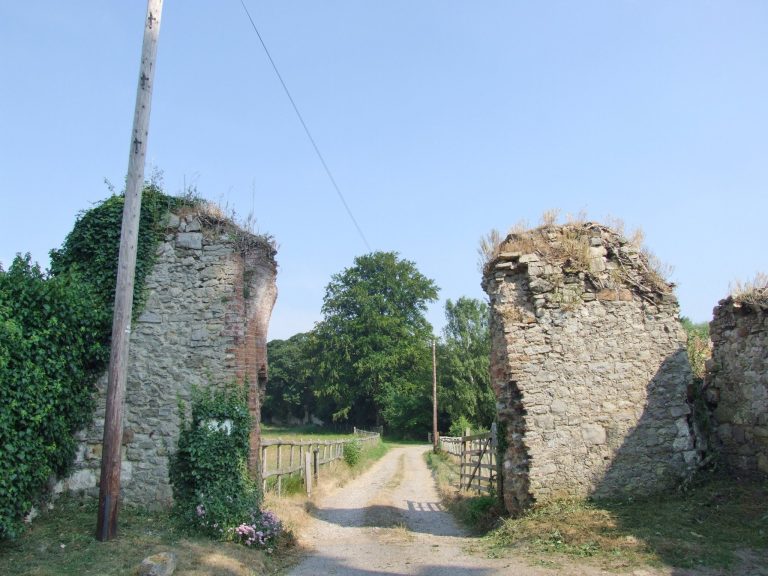
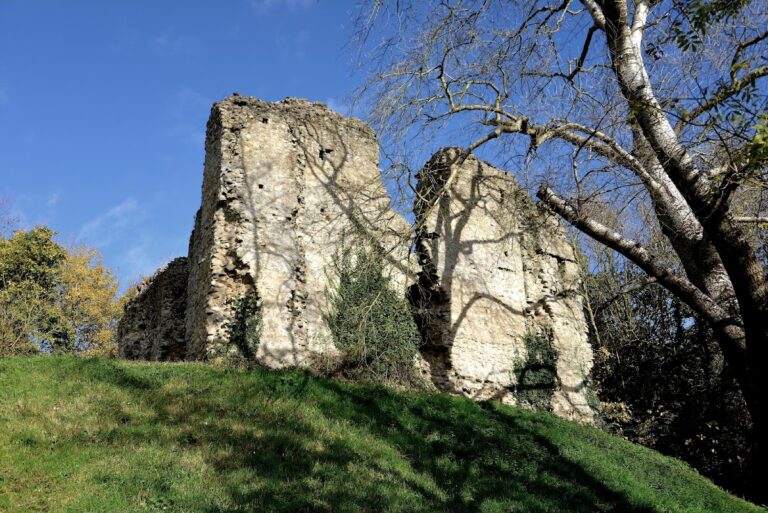
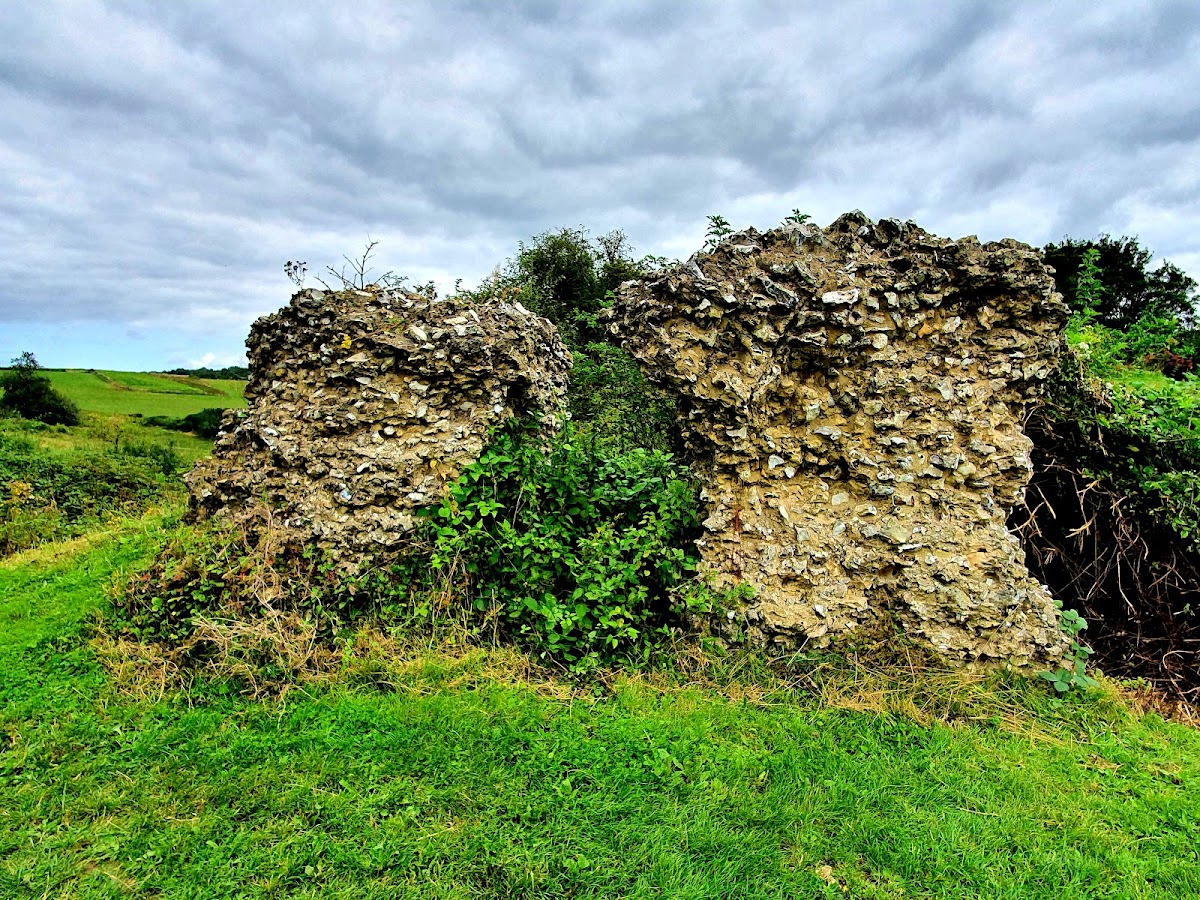
The original castle wall enclosed approximately 1,000 square metres around the fortified site. A surviving section of the wall reaches up to 3 metres in height, providing the principal standing structural remains of the enclosure. The mound and wall belong to the castle’s medieval defensive arrangement, while the later clearance of vegetation has helped preserve the site’s physical form as an accessible ruin.