The Great Mosque of Tinmel: An Almohad Mosque and Pilgrimage Site
Site at a Glance
- Rating
- 5
- Popularity
- Very Low
- Country
- Morocco
- Primary era
- Medieval
- Eras represented
- Medieval
- Civilizations
- Almohad
- Site type
- Religious
- Remains
- Mosque
On this page12 sections
History
Tinmel as an Almohad center
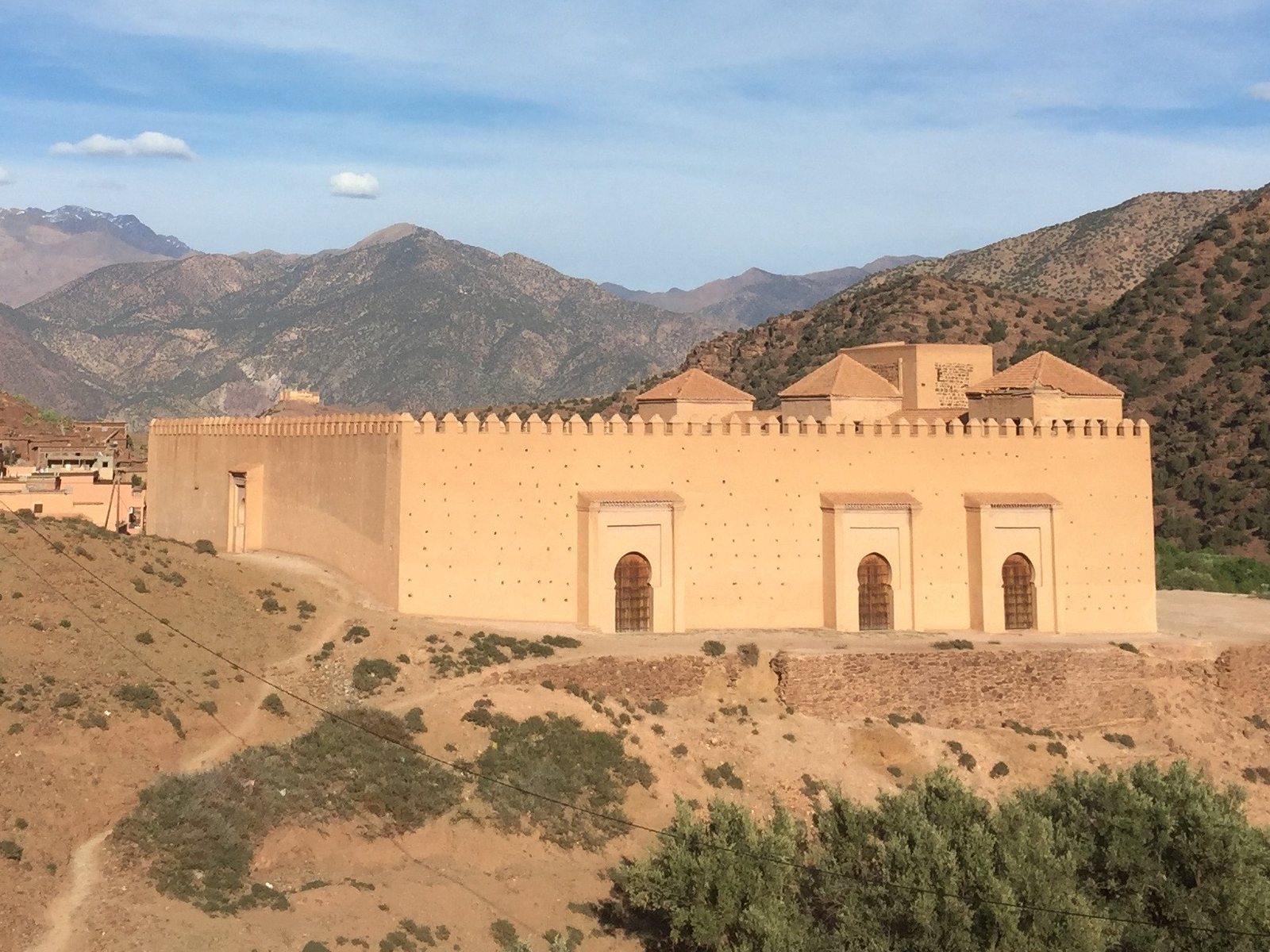
The Great Mosque of Tinmel is a 12th-century mosque in Tinmel, Morocco, built in the Almohad architectural tradition. It stands at the heart of the settlement that became the Almohad movement’s first capital and an important religious center.
Tinmel became the Almohads’ base after their founder, Ibn Tumart, established his followers there in 1124 or 1125. The Almohads were a North African religious movement that became a ruling dynasty. From Tinmel, they launched attacks against the Almoravids, who then ruled the region. A first mosque was built in the settlement around this time or soon afterward.
Ibn Tumart died in 1130 and was buried at Tinmel. A sanctuary and pilgrimage destination grew around his tomb, shaping the religious importance of the settlement.
The commemorative mosque
After the Almohads conquered Marrakesh in 1147, their leader Abd al-Mu’min commissioned a new mosque at Tinmel in 1148, near or on Ibn Tumart’s burial place. Abd al-Mu’min succeeded Ibn Tumart and became an Almohad caliph, a ruler claiming leadership over the Muslim community. The new building was intended to honor Ibn Tumart and probably replaced the earlier mosque. A chronicle gives a foundation date of 1153–1154, so the precise chronology remains uncertain.
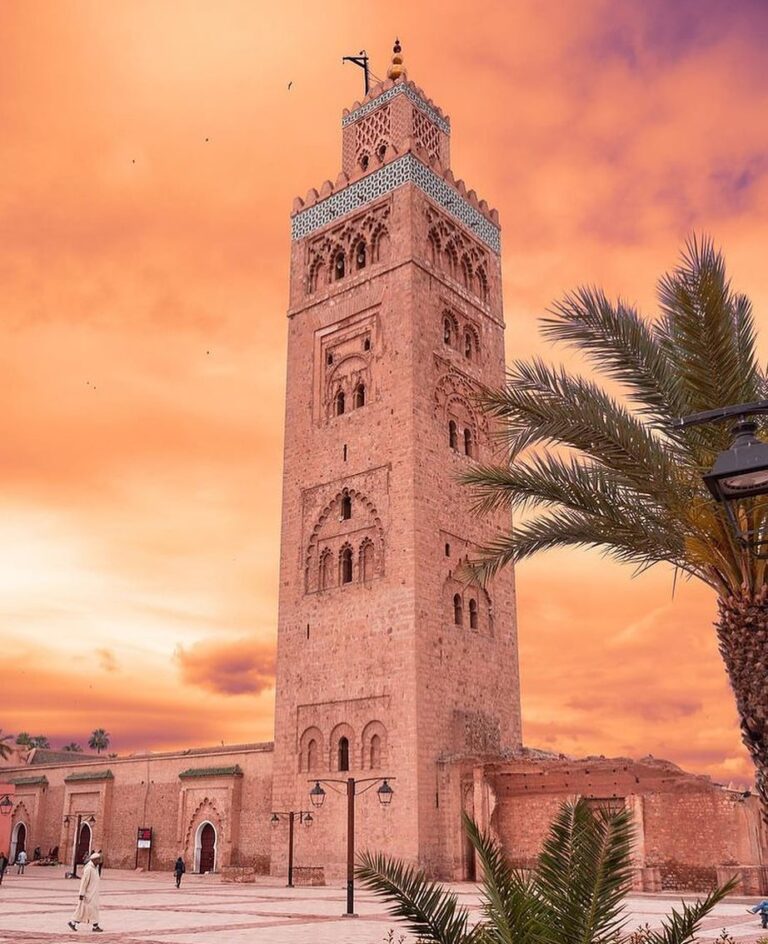
Work at Tinmel began soon after the conquest of Marrakesh and the start of construction on the Kutubiyya Mosque there. The similarity between the two buildings suggests that craftsmen from Marrakesh designed and built the Tinmel mosque. It was smaller than other major Almohad mosques because it served a small town, yet it became a pilgrimage site. Later Almohad rulers were also buried nearby.
The Almohad defeat
After the Marinids took control of Morocco from the Almohads, Almohad forces based in Marrakesh made their final stand at Tinmel. Their last leaders were defeated and captured there in 1275.
Restoration and earthquake damage
The mosque fell into ruin and received partial restoration in the mid-20th century, followed by further work in the 1990s. It ceased to serve as a place of worship and was opened as a historic site. Tinmel was added to UNESCO’s World Heritage Tentative List in 1995, a list of places proposed for possible nomination rather than inscription as World Heritage Sites.
Another restoration, overseen by Morocco’s Ministry of Habous and Islamic Affairs, was underway in January 2023 and nearing completion before the September earthquake. The earthquake severely damaged the mosque. Morocco’s Ministry of Culture pledged restoration, and UNESCO indicated that it would send a team to assess the damage. Debris removal prompted allegations that historic fragments could be lost without proper archaeological supervision; the president of Morocco’s ICOMOS branch disputed this, saying fragments were being collected and stored, including pieces that might be reused. At Morocco’s request, Italy’s Ministry of Culture arranged restoration assistance in May 2024, sending architect Aldo Giorgio Pezzi.
Remains
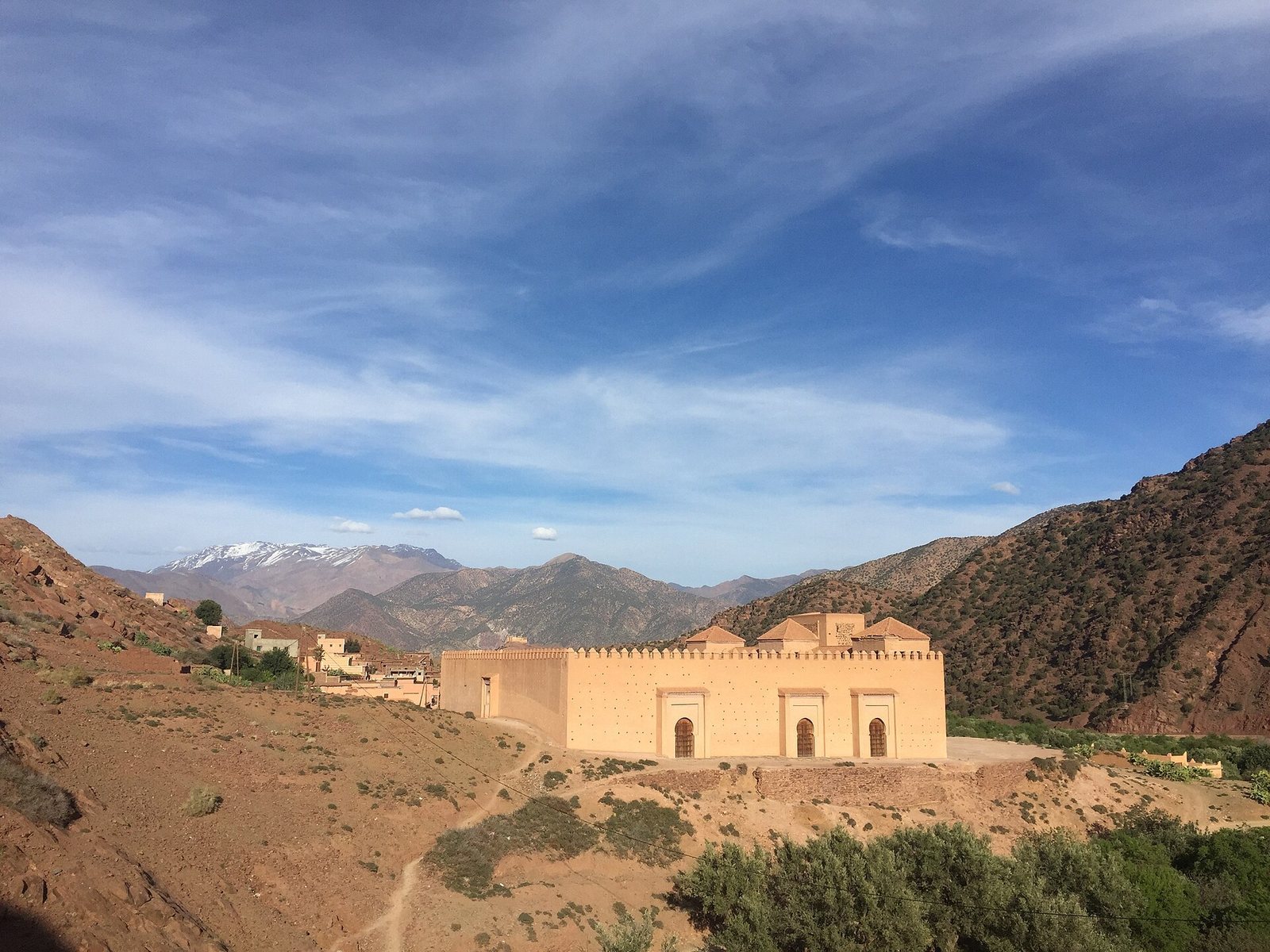
The mosque stands on a terrace in Tinmel, in Morocco’s High Atlas Mountains, near the Tizi-n-Test pass through the range. Built of brick, it has a roughly rectangular plan measuring about 48.1 by 43.6 metres.
Outer form
Thick, plain walls give the exterior a fortress-like appearance, while a high surrounding wall is topped with battlements. Seven entrances pierce the building: three on each of the east and west sides, and one centered on the north. A single minaret rises from the middle of the south wall above the prayer niche. Its rectangular base projects beyond the outer wall, and the tower has a truncated or unfinished appearance.
Prayer hall and courtyard
Courtyard
A rectangular courtyard occupies the northern part of the mosque. It corresponds in width to the five central naves and in length to three cross-aisles. Arches from the prayer hall and its extensions surround it.
Prayer hall and cupolas
The prayer hall is a hypostyle space, a large interior supported by rows of columns or piers. Pointed horseshoe arches divide it into nine naves running roughly north to south. A wider aisle runs east to west along the south, or qibla, wall, which faces the direction of prayer. Together with the broader central nave leading to the mihrab, the niche that indicates the direction of prayer, this aisle creates a T-shaped plan.
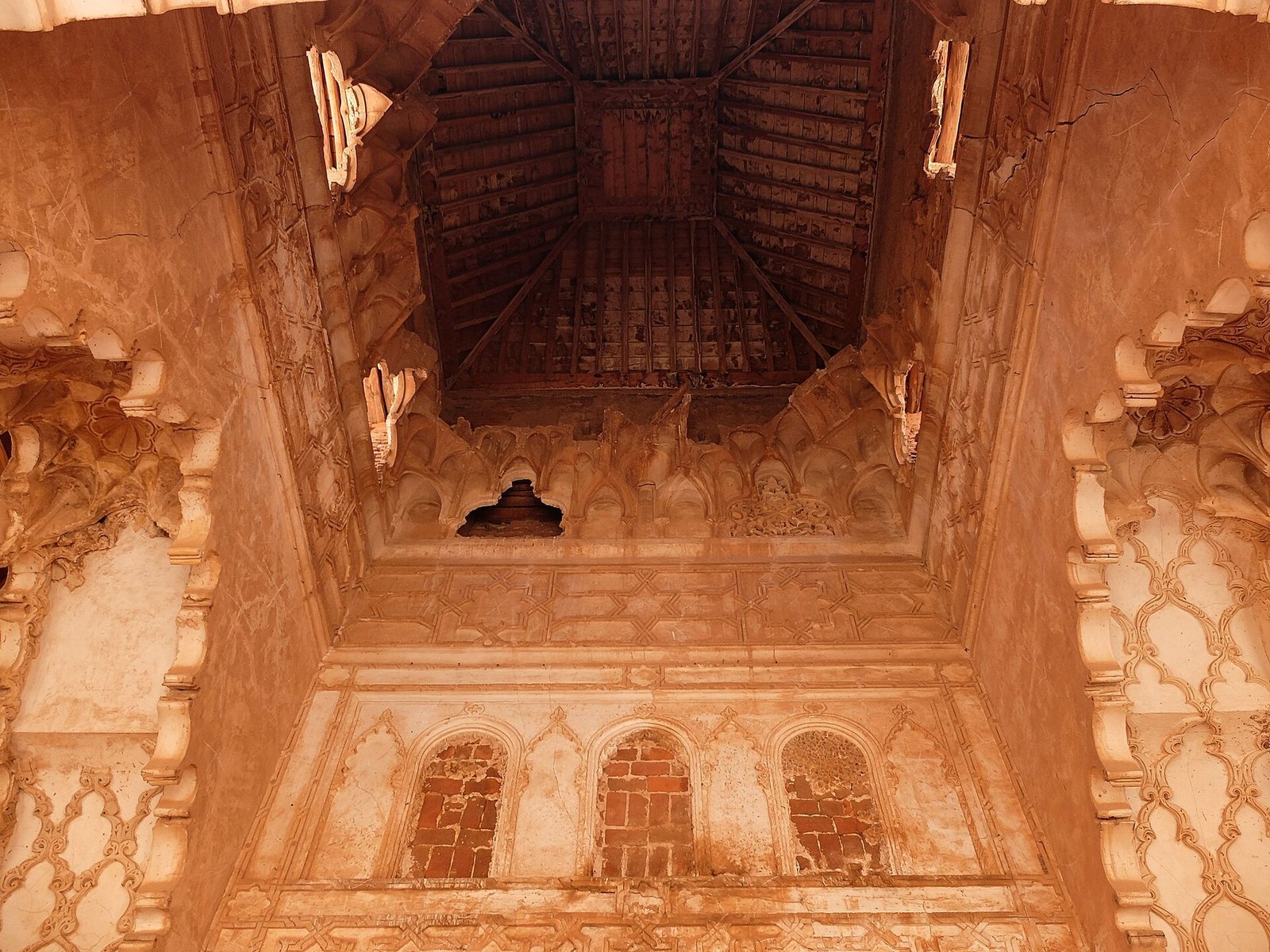
Three cupolas formed from muqarnas, layered niche-like shapes, were arranged along the southern aisle: one before the mihrab and one at each southern corner. The cupola at the southeast corner survives, and remains of the one before the mihrab are also identified. Lambrequin arches, with ornamental hanging lobes, or muqarnas arches frame the cupolas. Their undersides carry carved net-like sebka patterns, muqarnas, and palmette or shell motifs. Multi-lobed and lambrequin arches also mark the northern edge of the southern aisle.
Mihrab and adjoining openings
Centered in the south wall, the mihrab consists of a small octagonal chamber beneath a muqarnas cupola. Carved geometric and interlacing stucco patterns surround its opening, and the attached columns have stucco-carved capitals. Two tall arched openings flank it. One led to a small chamber for storing the minbar, or pulpit; the other gave the imam access to the eastern base of the minaret. The mihrab’s shape and ornament resemble those of the Kutubiyya and other Almohad mosques. Its octagonal chamber also continues a form found in the 10th-century mihrab of the Great Mosque of Córdoba in Spain.
Earthquake damage
The September 2023 earthquake brought down parts of the minaret and some walls. A preliminary assessment in October estimated that about 75 percent of the building had been destroyed. The terrace remained intact, helping limit further destruction. The mosque was considered unsafe for a full inspection, and collapsed-roof debris obscured the mihrab, leaving the extent of its damage undetermined.