The Devil’s Den: A Neolithic Burial Chamber in Wiltshire
Site at a Glance
- Popularity
- Medium
- Country
- United Kingdom
- Primary era
- Stone Age
- Eras represented
- Stone Age
- Civilizations
- Unclassified
- Site type
- Burial
- Remains
- Tomb
On this page8 sections
History
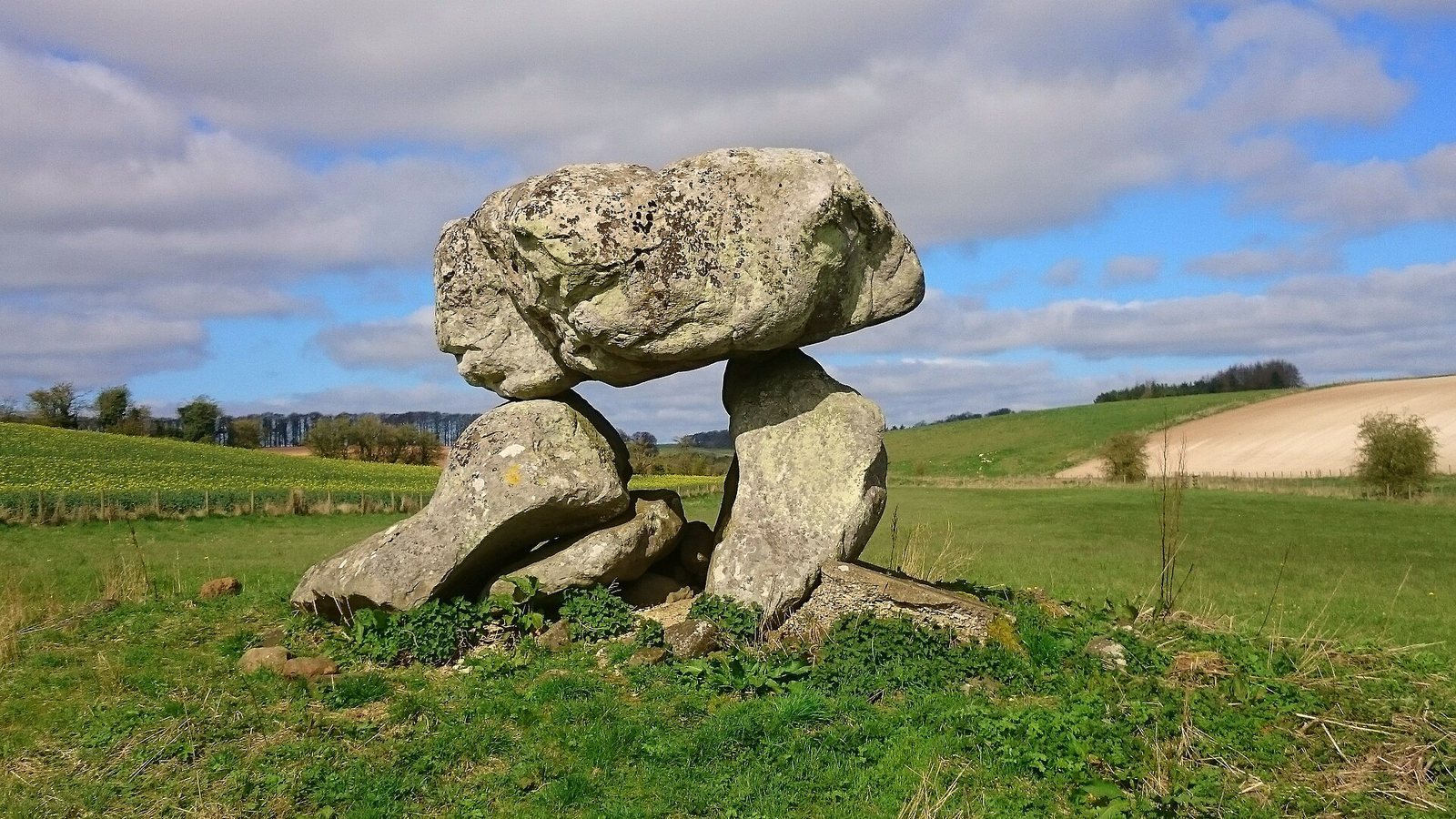
The Devil’s Den is a Neolithic burial chamber on Fyfield Hill, near Fyfield in Wiltshire, England, in the Marlborough area. The Neolithic was the later part of the Stone Age, before metal became widespread. The chamber forms part of a passage grave, a burial monument with a passage leading to a chamber, and a long barrow, an elongated burial mound.
Christian-period tradition
In the Christian period, local tradition associated the stone chamber with the devil. The tale held that a demon drank water poured into hollows in the capstone at night, and it explains the monument’s name.
Protection and modern history
The monument has been legally protected since 18 August 1882. By about 1921, ploughing had greatly reduced the long mound, although its remains were still visible. That year, the burial chamber was reconstructed by repositioning its large stones.
The monument’s recorded discovery dates to the 1920s. Local historian and photographer Pete Glastonbury first described and illustrated it.
Remains
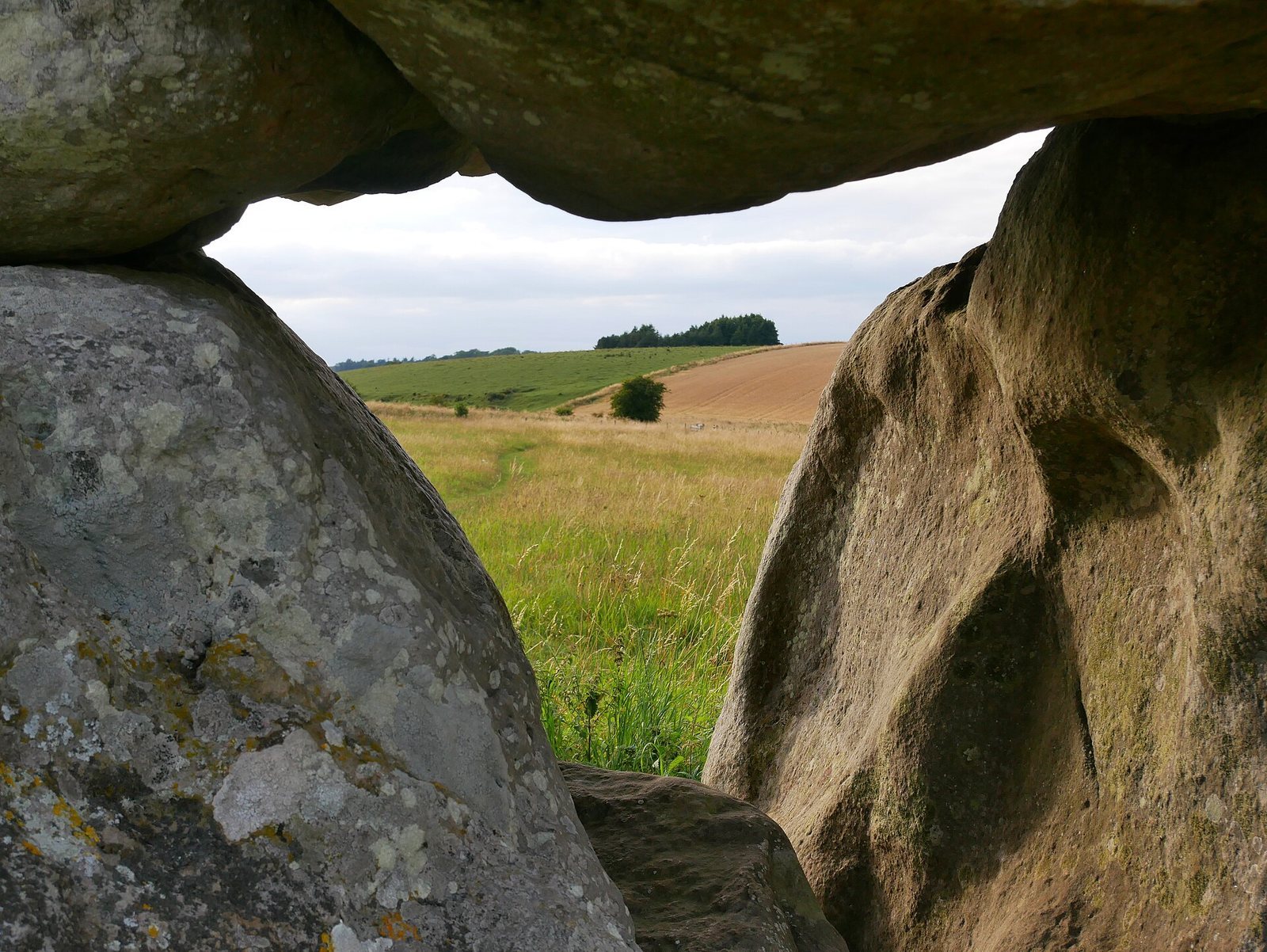
The remains include a stone burial chamber aligned southeast to northwest, with its broader end facing southeast. The monument stands in open ground on Fyfield Hill, about 450 feet above sea level, in an arable landscape within a broad, shallow valley.
Mound and burial chamber
Setting and mound
A description from the 1920s gives the long mound’s length as about 70 metres, with the chamber roughly 70 feet inward from its larger, southeastern end. A grass-covered mound beneath the chamber is about 7.6 metres across and nearly one metre high; the surrounding ground is ploughed. The Long Barrow at Manton Down and the standing stone Long Tom are nearby.
Chamber stones
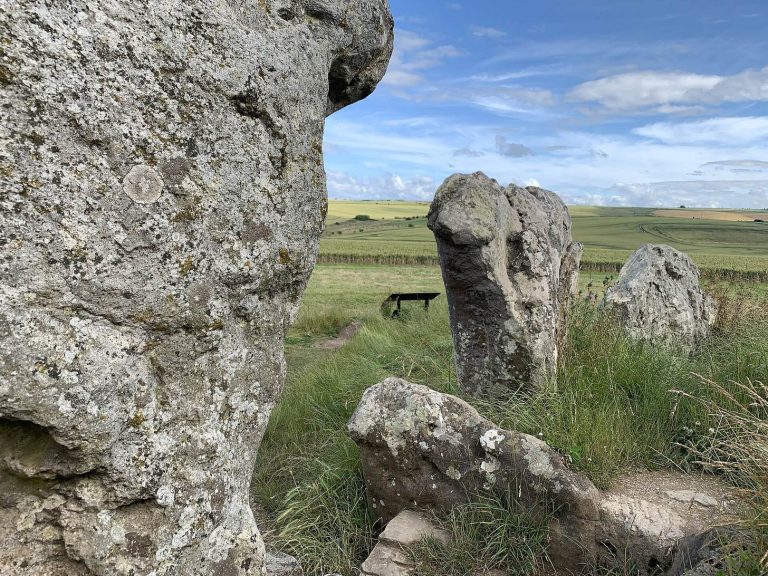
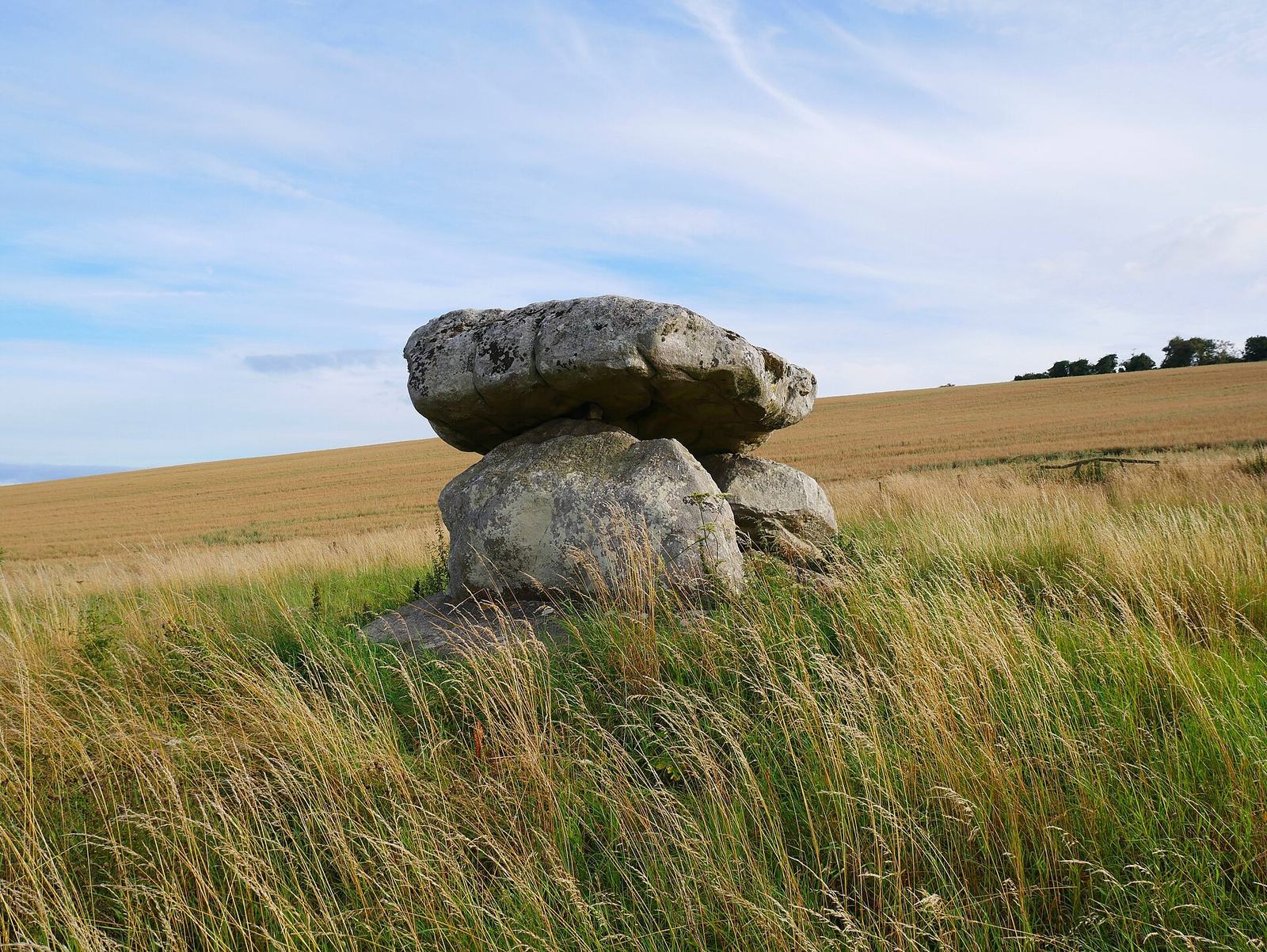
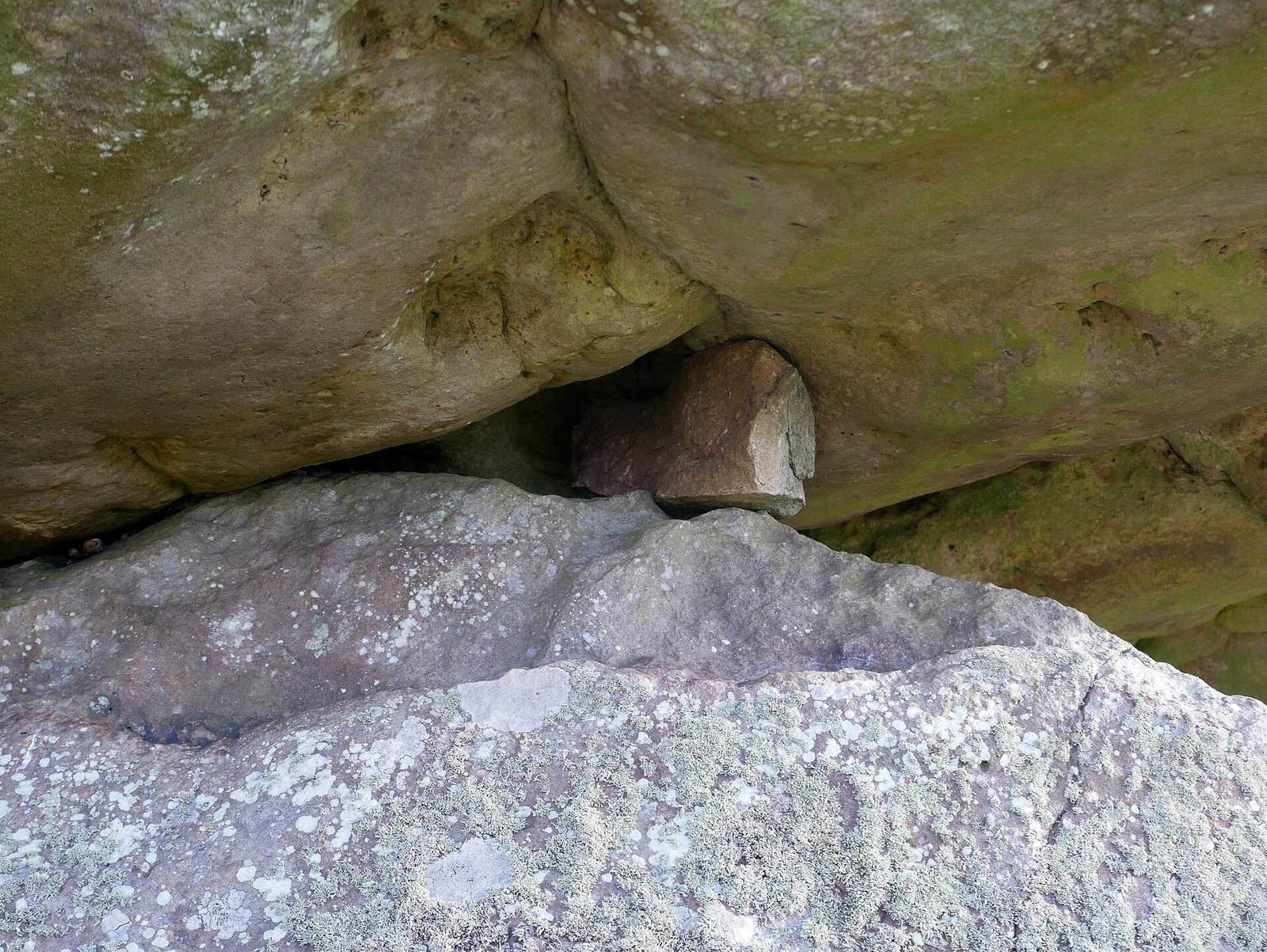
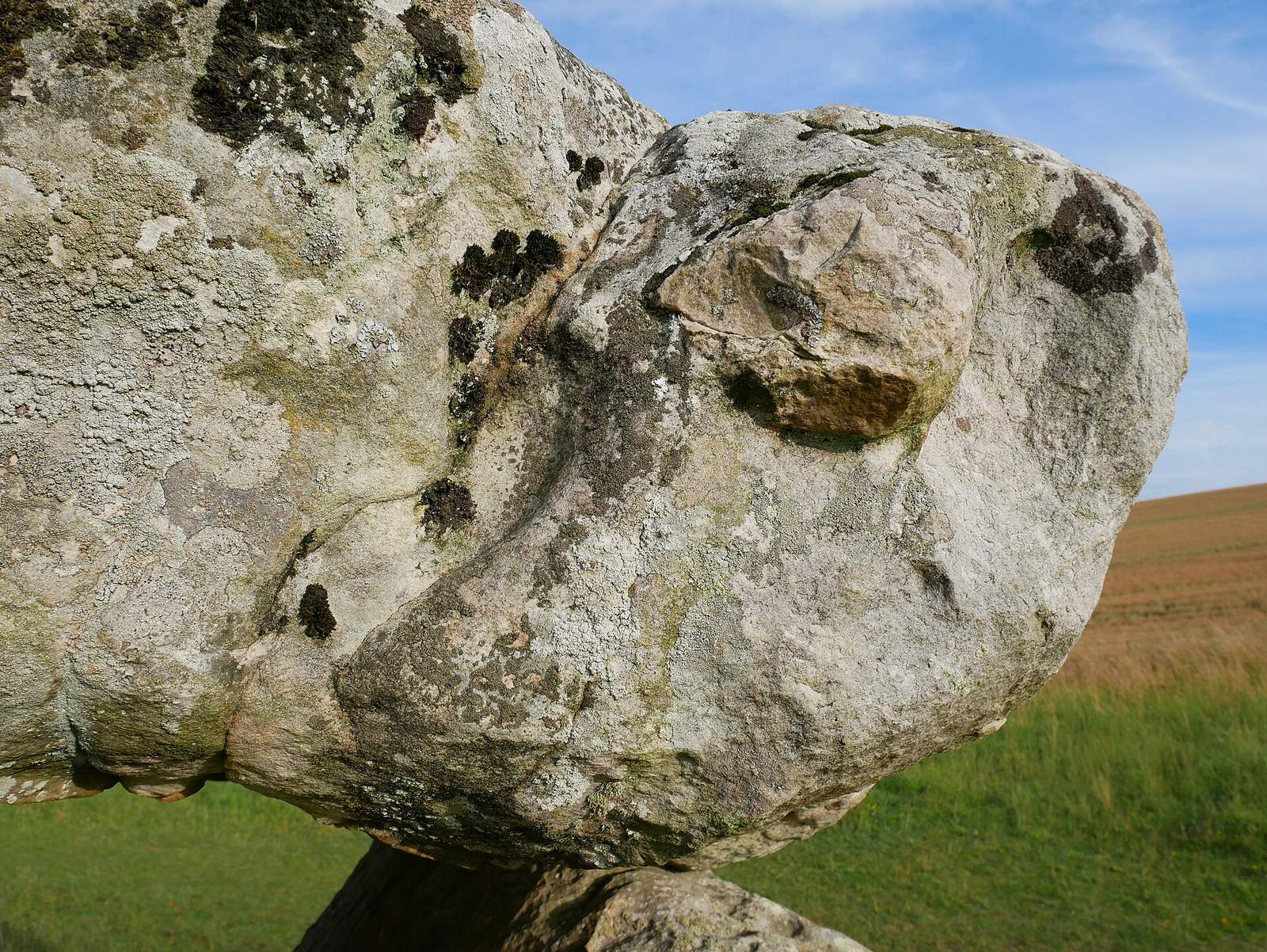
The chamber is a dolmen, a burial structure made from upright stones supporting a large capstone. At the entrance to the long mound, two standing stones and a capstone remain, along with two fallen stones. The northeast standing stone is about 3 metres long and supported by concrete at its outer base; the southwest stone is about 2.6 metres long and leans. The gap between them is about 3.6 metres, and the capstone’s top is about 2.5 metres high. Its estimated weight is 17 tons.
Inside the chamber, two large fallen sarsen stones are probably the terminal stones. Sarsen is a hard sandstone used in prehistoric monuments in southern England. Sixteen further fragments of the same stone lie within the chamber, which is in good condition.
Capstone hollows and channels
Two distinct cup-shaped hollows in the capstone are each about 5 centimetres wide and 1.2 centimetres deep. A channel runs from each hollow. The eastern channel, close to the stone’s edge, continues across the capstone before descending.