Temple Saint-Martial: A Protestant Church on a Medieval Palace Site in Avignon
Site at a Glance
- Rating
- 4.5
- Popularity
- Medium
- Country
- France
- Primary era
- Medieval
- Eras represented
- Medieval, Early Modern
- Civilizations
- County of Provence, Papal States
- Site type
- Religious
- Remains
- Church
On this page8 sections
History
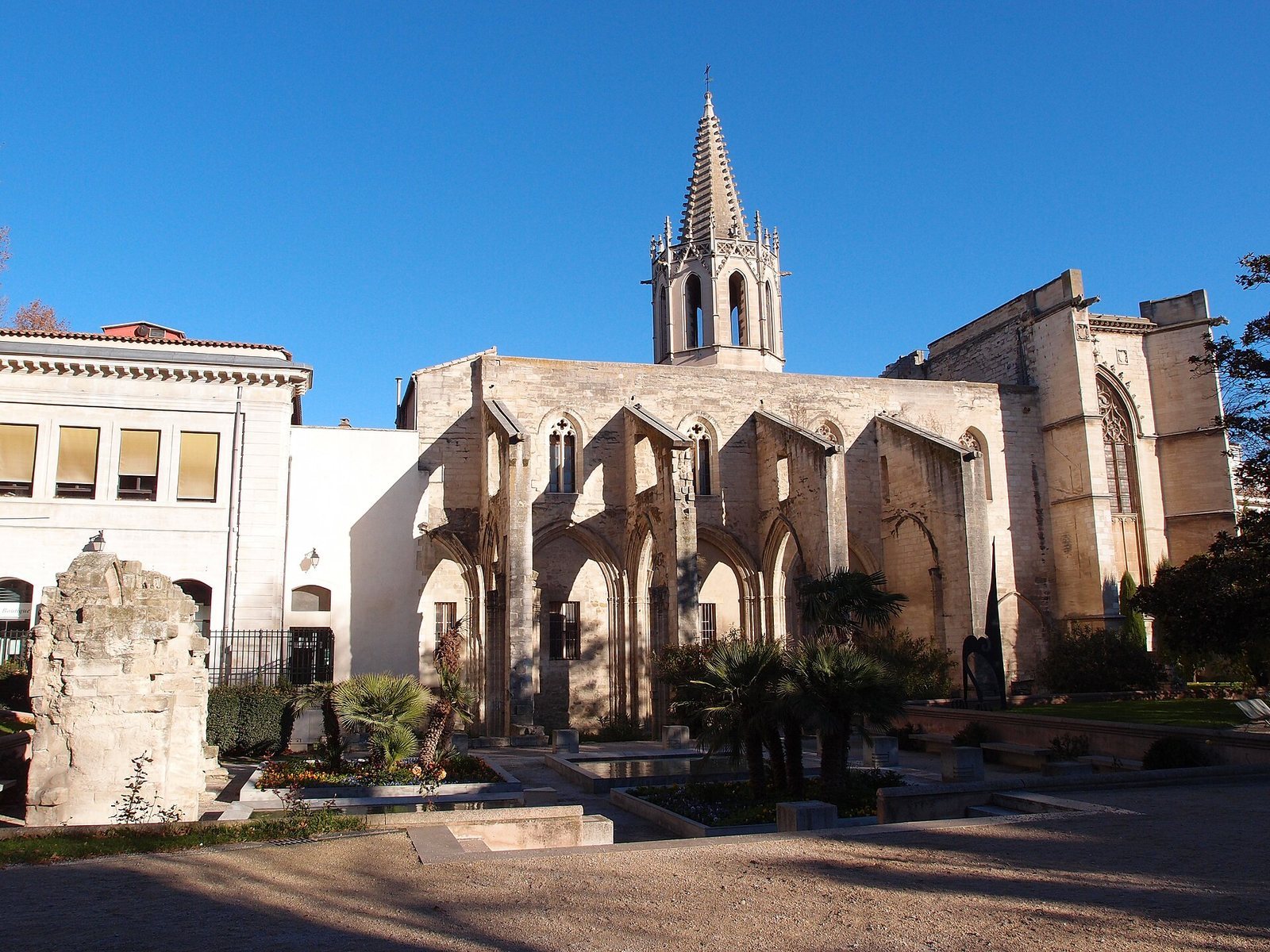
Temple Saint-Martial is a Protestant place of worship in Avignon, France. Its church was built between 1383 and 1402 in the Flamboyant Gothic style, known for elaborate, flame-like tracery. The site later served monastic, educational, and Protestant communities.
Palace and monastic establishment
Hugues IV des Baux, a Provençal noble who served as seneschal, a senior administrative officer, began building a palace here in 1346 for Joanna I of Naples, queen of Naples and countess of Provence. She stayed there on a single occasion, during her 1348 visit to Avignon amid the Black Death. A grant issued in 1362 described the palace as built by Hugues des Baux, Count of Avellino, on behalf of King Louis and the Queen of Sicily.
In 1362, Pope Urban V transferred the palace to Cardinal Androin de la Roche, a senior Catholic official and abbot of Cluny. The grant compensated him for the priory of Notre-Dame de Belvédère, which Pope John XXII had annexed while building the papal palace at Sorgues. De la Roche first used the palace as his residence, then moved to accommodation associated with Cardinal Annibal de Ceccano. The site subsequently became an establishment linked to Cluny’s Benedictine tradition and a priory, a dependent monastic house.
Later in the fourteenth century, Cardinal Pierre de Cros, a papal chamberlain serving in the pope’s household and archbishop of Arles, converted the priory into a college for twelve Benedictine novices under a rector. Jacques de Damas Cozan, a great-nephew of Pope Gregory XI and abbot of Cluny, appointed its first rector. The rector also administered the priories of Piolenc, Sarrians, and Pont-de-Sorgues. Robert de Chaudesolles, one of the rectors, led the Cluniac congregation as abbot general from 1416 to 1423.
The priory church served as a chaplaincy connected with the families of Popes Clement VI and Gregory XI. Cardinals Pierre de Cros, Guillaume d’Aigrefeuille the Younger, and Jean de La Grange were buried there. Guillaume had supported the church’s chapel dedicated to Saint Stephen. Raymond de Beaufort, Count of Beaufort and Viscount of Valernes, was also buried there, in 1420.
Revolution and Protestant worship
The religious establishment was dissolved during the French Revolution. During the Renaissance, Protestantism spread in the region, including in Orange and Nîmes, but was suppressed in Avignon, then under papal authority. Article 10 of the 1789 Declaration of the Rights of Man and of the Citizen secured freedom of worship. From 1830, Avignon’s Protestant community was based at the Hôtel de Sade.
Saint-Martial was assigned to Reformed Protestant worship in 1881, part of a Protestant tradition shaped by the Reformation. It remains a place of Protestant worship, and its parish belongs to the United Protestant Church of France. A decree of 23 April 1911 classified the building as a French historic monument.
Museum and public education
When the church was disused, it housed Avignon’s natural-history museum, known as the Muséum Requien since 1851. In 1866, the municipality appointed naturalist Jean-Henri Fabre as curator. He worked on dyes and gave public chemistry lessons there. Historian and education minister Victor Duruy visited Fabre in 1867 and later asked him to teach evening classes for adults, open to all. Fabre’s botanical lessons attracted young women from nearby villages, who brought him flowers, as well as farmers and other learners.
Poet Stéphane Mallarmé also taught in the municipal classes. After taking health leave from his post as an English instructor at the boys’ lycée in January 1870, he taught young women there until May 1871. Duruy’s 1867 education law aimed to widen access to secular education, including secondary schooling for girls; opposition from clerical and conservative groups contributed to his resignation. Fabre was denounced for explaining flower fertilization to young women, and the evening classes ended after two years. In late 1870, after 28 years of service, Fabre resigned from his lycée post and left teaching without a pension.
Remains
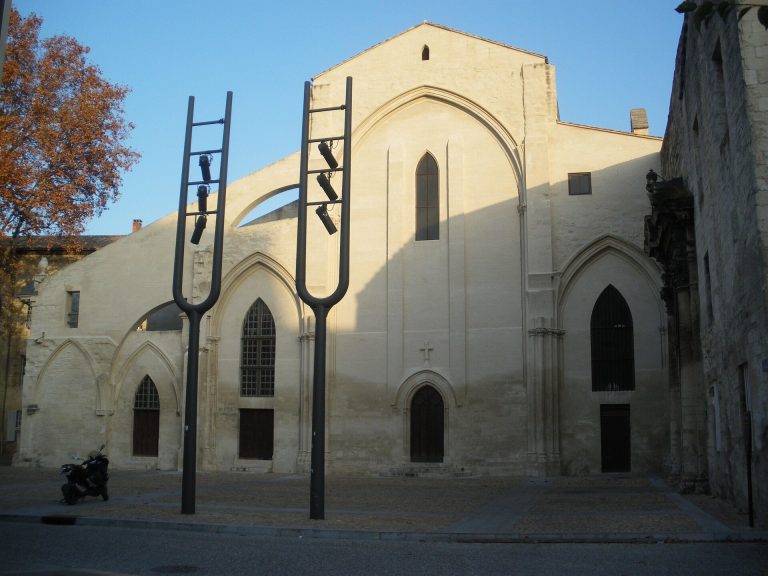
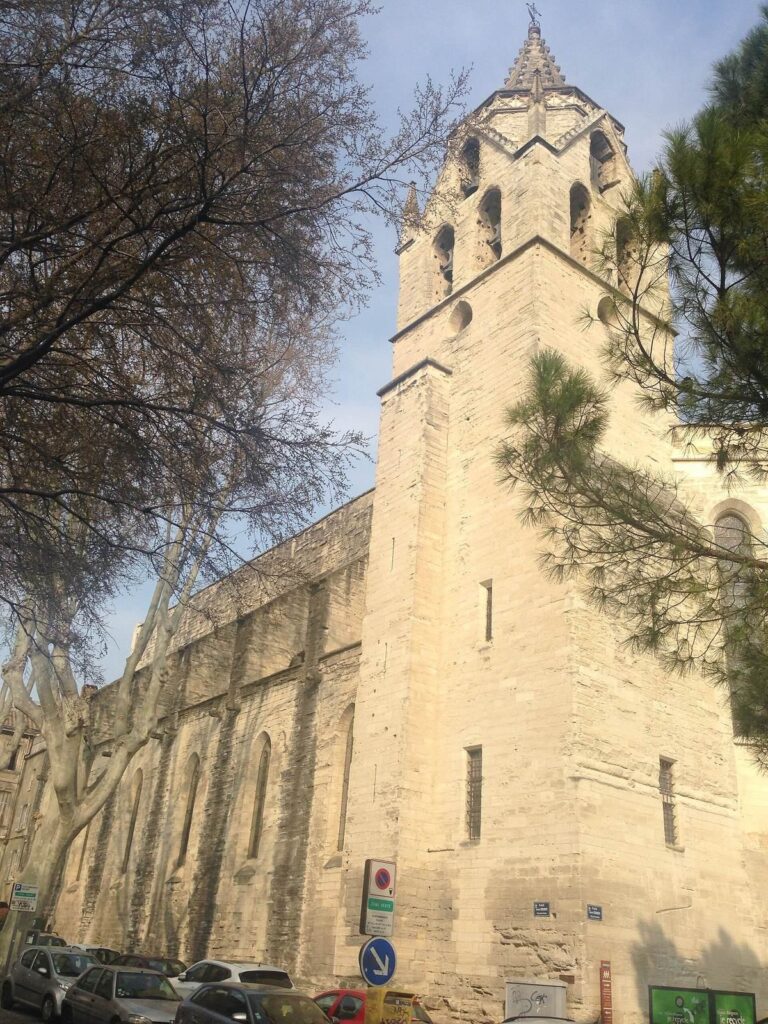
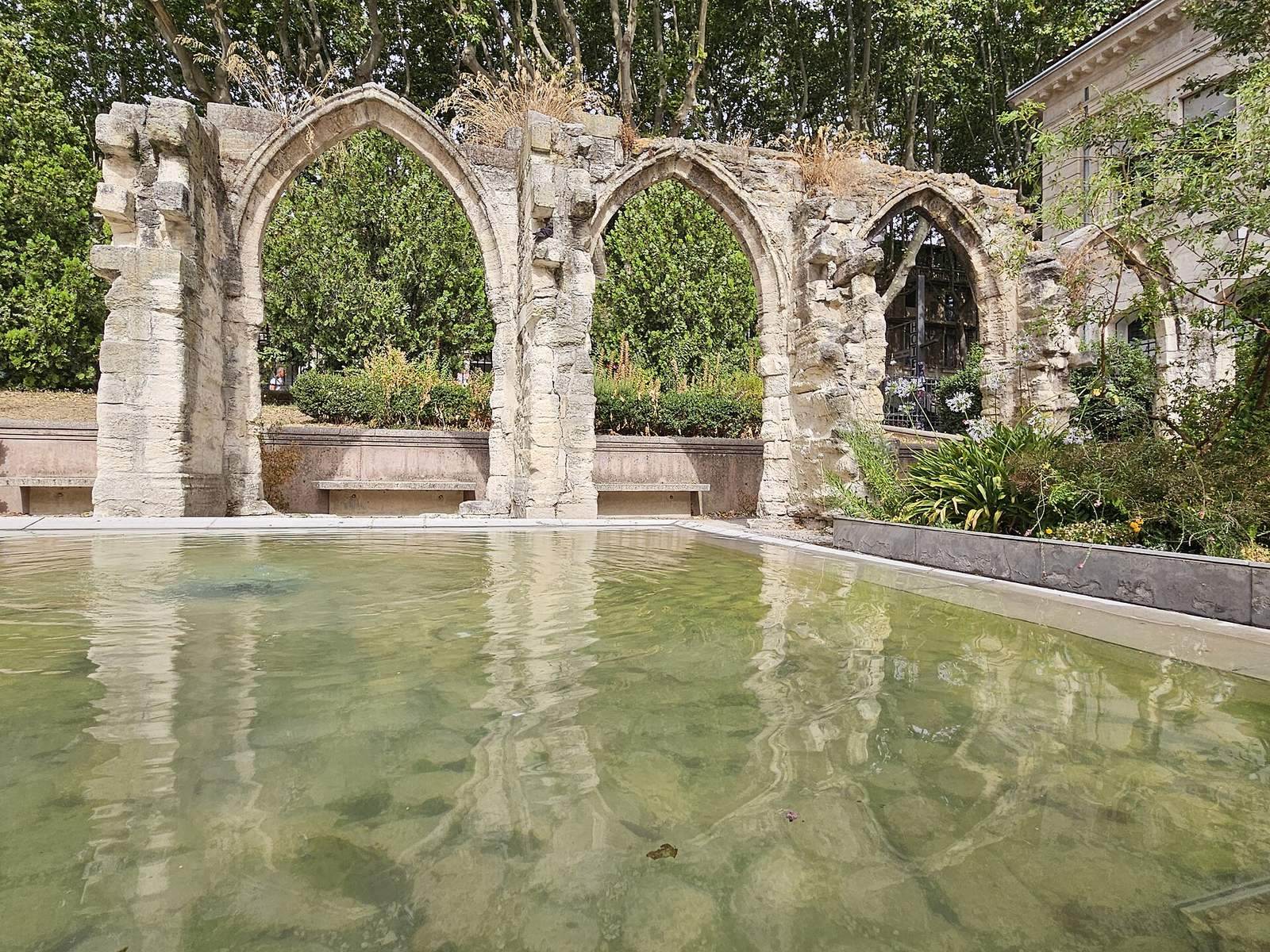
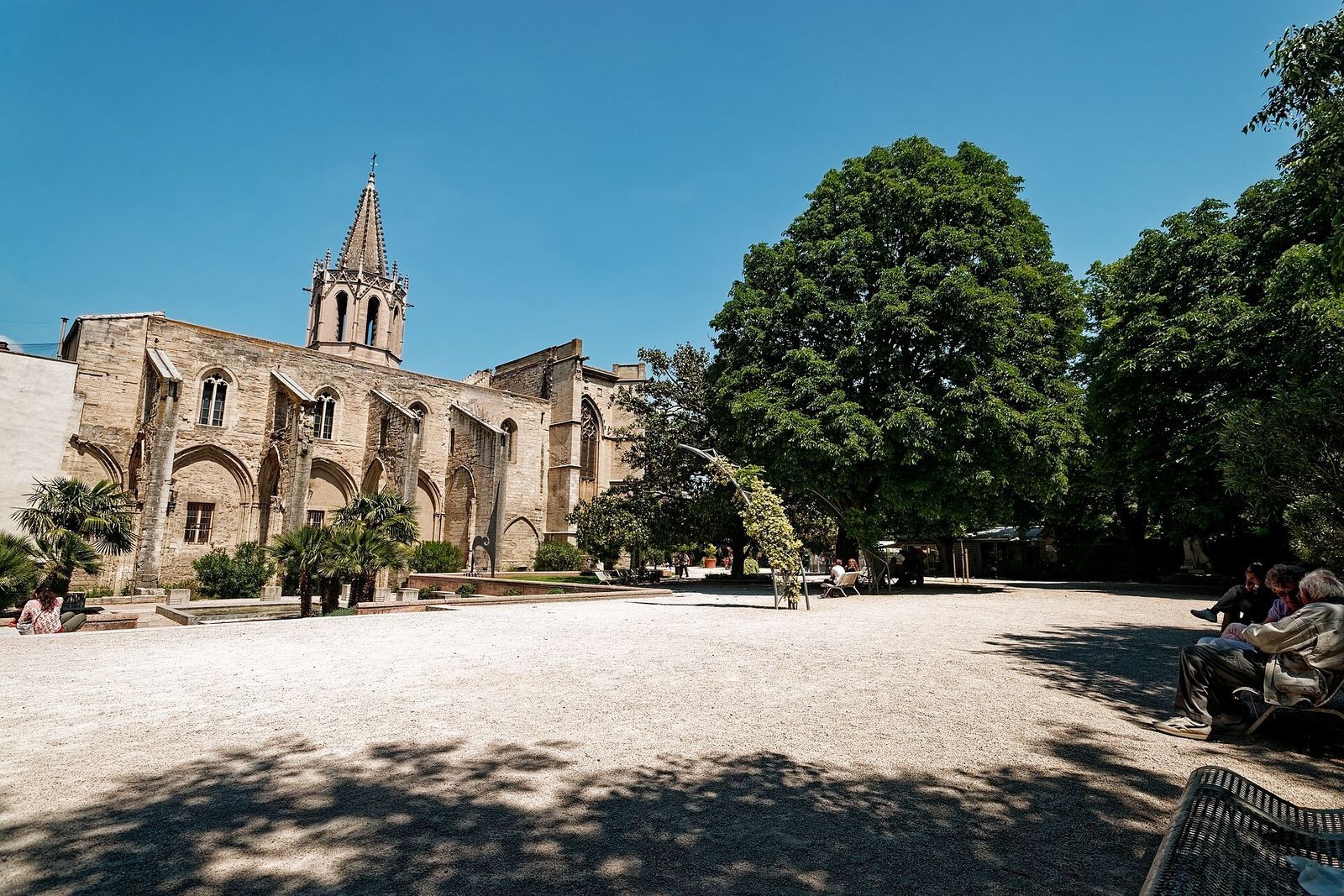
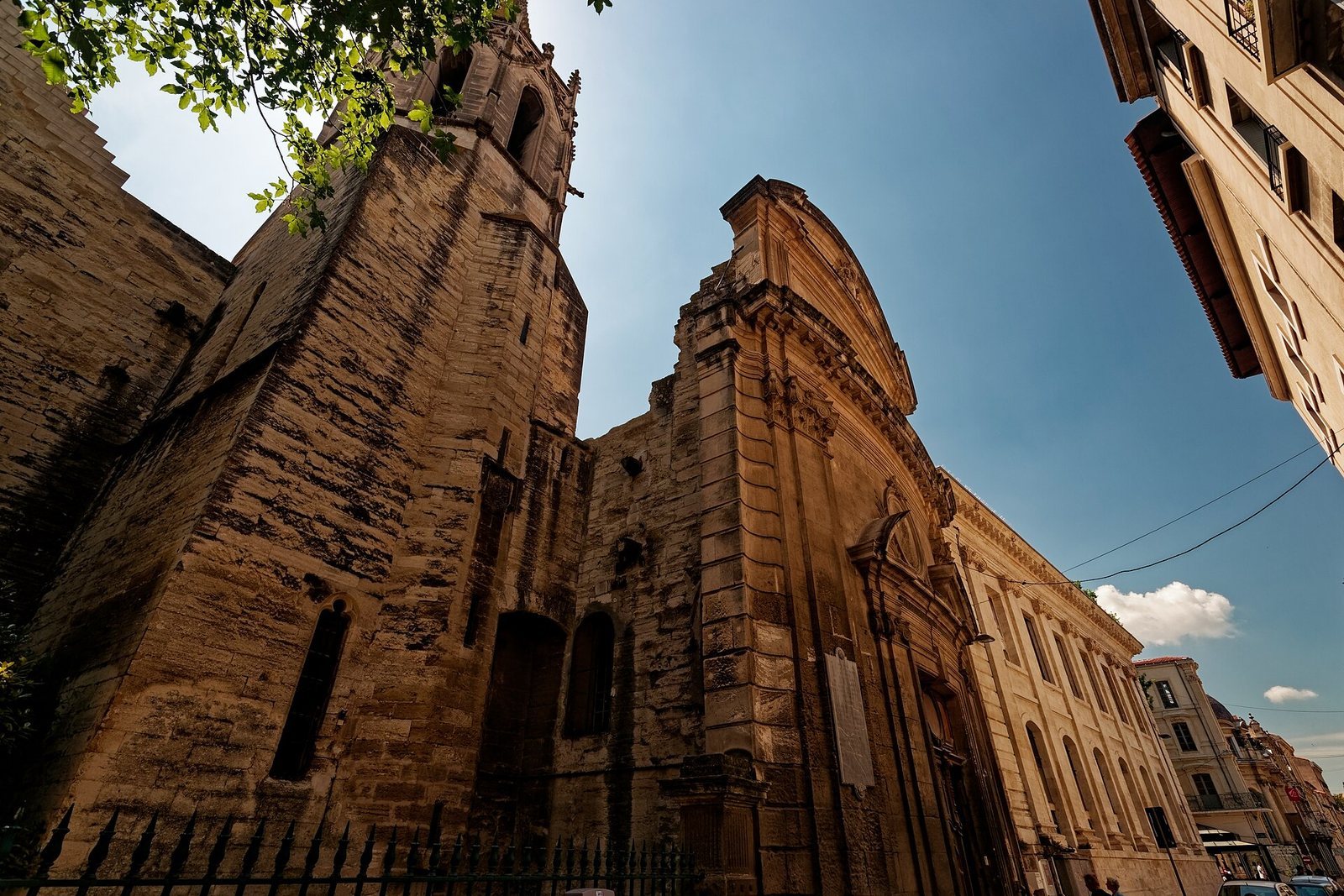
The surviving church stands at the corner of Rue des Lices and Rue de la République. Its built form combines Gothic work with a Baroque façade added later. The palace site lay in Avignon’s southern suburb, beside the old city ramparts.
Surviving features
Church
The church includes a Saint Stephen’s chapel. Its organ was made in 1984 by organ builder Pascal Quoirin.
Raymond de Beaufort’s tombstone
In the mid-nineteenth century, Raymond de Beaufort’s tombstone was set into the Canillac chapel near the Benedictine cloister. After its removal, the stone entered Avignon’s Lapidary Museum, which displays stone objects, and is now exhibited at the Musée du Petit Palais.