Kargopol Fortress: A Wooden Fortification of the Time of Troubles
Site at a Glance
- Popularity
- Low
- Country
- Russia
- Primary era
- Early Modern
- Eras represented
- Early Modern
- Civilizations
- Russian
- Site type
- Military
- Remains
- Fort
On this page7 sections
History
Kargopol Fortress was a wooden defensive enclosure in northern Kargopol, Russia, established in 1612 during the Time of Troubles, a period of political crisis and conflict in early seventeenth-century Russia. It sheltered residents after Vologda was sacked that year, as Polish-Lithuanian forces approached Kargopol three times.
Establishment and rebuilding
Kargopol had been important to Russia’s sixteenth-century White Sea trade, yet it remained without fortifications for a long period. Heinrich Staden, a sixteenth-century German writer and adventurer associated with Muscovy, noted the town’s vulnerability. A land register from 1614–1615 placed the new fortress on an earlier fortified-settlement site.
By 1631 the defenses had fallen into disrepair, and Prince Dmitry Seitov supervised their rebuilding. A regional official with military and administrative duties, a voivode, Seitov held both princely and official roles. A register from 1648 counted 128 households and 283 people within the fortress, including clerks, gunners, townspeople, and bobyls, members of a poor, often landless group. After the fortress deteriorated again, it was rebuilt on its earlier ramparts thirty-three years after the 1631 reconstruction.
Fire destroyed the wooden fortress on 18 May 1731. Kargopol Fortress is designated a cultural heritage monument of federal significance in Russia.
Remains
Layout and defenses
Earthworks and setting
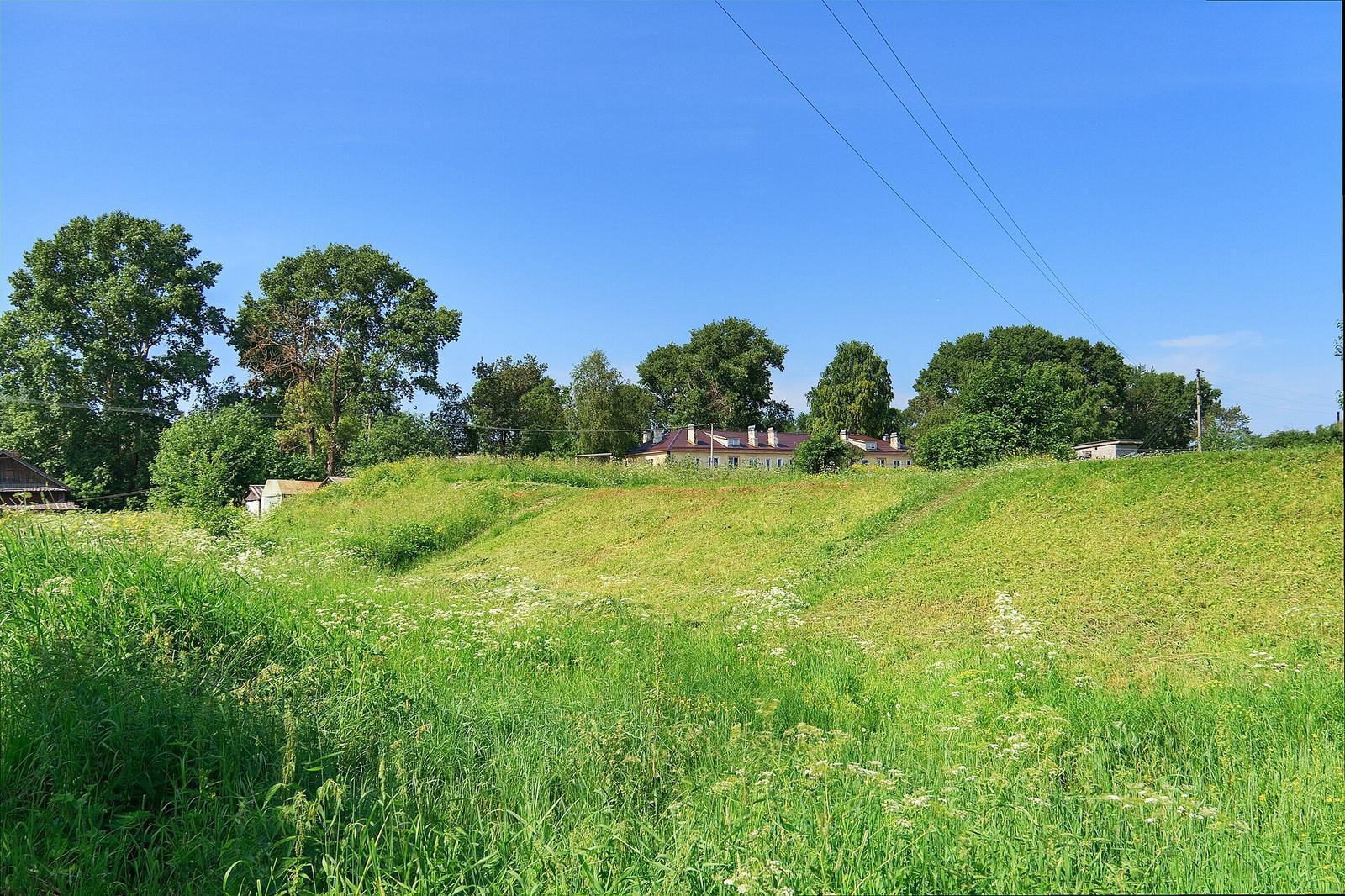
The fortress had a nearly square plan, with each side about 270 metres long. Three sides stood on an earthen rampart, with a ditch beyond it that reached up to 7 metres deep. The southeast side faced the Onega River. Fragments of the ramparts survive and are known locally as Valushki (The Ramparts) or Gorodok (The Little Town).
Timber walls and towers
During the 1631 rebuilding, logs formed the wall facing the river, while palisades made up the other three sides. The later reconstruction was somewhat smaller and used logs throughout, with walls built from framed timber sections. A roofed plank fighting walk ran along the walls, and projecting defensive galleries allowed defenders to fight from positions extending beyond them.
Nine towers formed part of the defenses. Named examples included the Resurrection, Stream, Exaltation of the Cross, Trinity, Middle, and Great Gate towers. The Great Gate Tower was also known as the Interrogation Tower, and two other towers stood at the corners.
Buildings within the enclosure
The enclosure contained a local administrative office, compounds for the voivode and clerks, a storehouse, and a prison. Its four churches were the Church of the Savior Not Made by Hands, named for an image of Christ traditionally understood as not created by human hands; All Saints Church; Vladimir Church; and the Church of Saint Paraskeva of Friday, named for a saint associated with Friday in East Slavic tradition. Households associated with townspeople, the church, and bobyls also formed part of the settlement.