Tejada la Vieja: A Pre-Roman Mining Settlement in Huelva, Spain
Site at a Glance
- Rating
- 4.8
- Popularity
- Medium
- Country
- Spain
- Primary era
- Iron Age
- Eras represented
- Iron Age
- Civilizations
- Tartessian
- Site type
- Settlement
- Remains
- Town
On this page7 sections
History
Tejada la Vieja is a pre-Roman settlement near Escacena del Campo in Huelva, Spain, which probably emerged in the eighth century BCE and became one of Andalusia’s principal pre-Roman archaeological sites.
Formation and Phoenician connections
Close to the mining districts of the Tejada and Aznalcóllar ranges, the settlement developed an economy based on mining, metalworking and trade in mineral products. Its inhabitants lived there, stored goods and initially processed mineral and metal products. Tejada la Vieja arose near the earlier settlement of Peñalosa, where farming and livestock raising were more important and mineral processing was little or nonexistent.
The settlement’s emergence is linked to Phoenician trade in Lower Andalusia. The Phoenicians, an ancient eastern Mediterranean people known for maritime commerce, brought material and social changes to the Guadalquivir Valley. These changes formed part of the cultural process associated with Tartessos, an ancient culture of southwestern Iberia.
Later occupation and abandonment
Ways of life at Tejada la Vieja changed over its roughly four centuries of occupation. Its final urban phase was Turdetanian, associated with the Turdetanians, an ancient people of southwestern Iberia. As mining and metalworking probably declined, the settlement was gradually abandoned around the fourth century BCE. Much of its population probably moved to the separate settlement of Tejada, also known as Tejada la Nueva, where conditions better suited agriculture and livestock raising.
Early abandonment and limited later alteration helped preserve the site’s archaeological remains. In 2007, Tejada la Vieja received Spain’s Asset of Cultural Interest designation as an archaeological zone, a formal category of protected cultural heritage.
Remains
Settlement layout
Tejada la Vieja occupies a plateau hill of roughly 6.5 hectares at the first foothills of the Sierra de Tejada, near the Pata del Caballo natural area. The Barbacena ravine borders the site to the east and north and marks the Huelva-Seville provincial boundary. The smaller Sequillo ravine bounds it to the west, while the southern slope is gentler. A stone-and-earth enclosure follows the terrain around the settlement.
Defensive wall
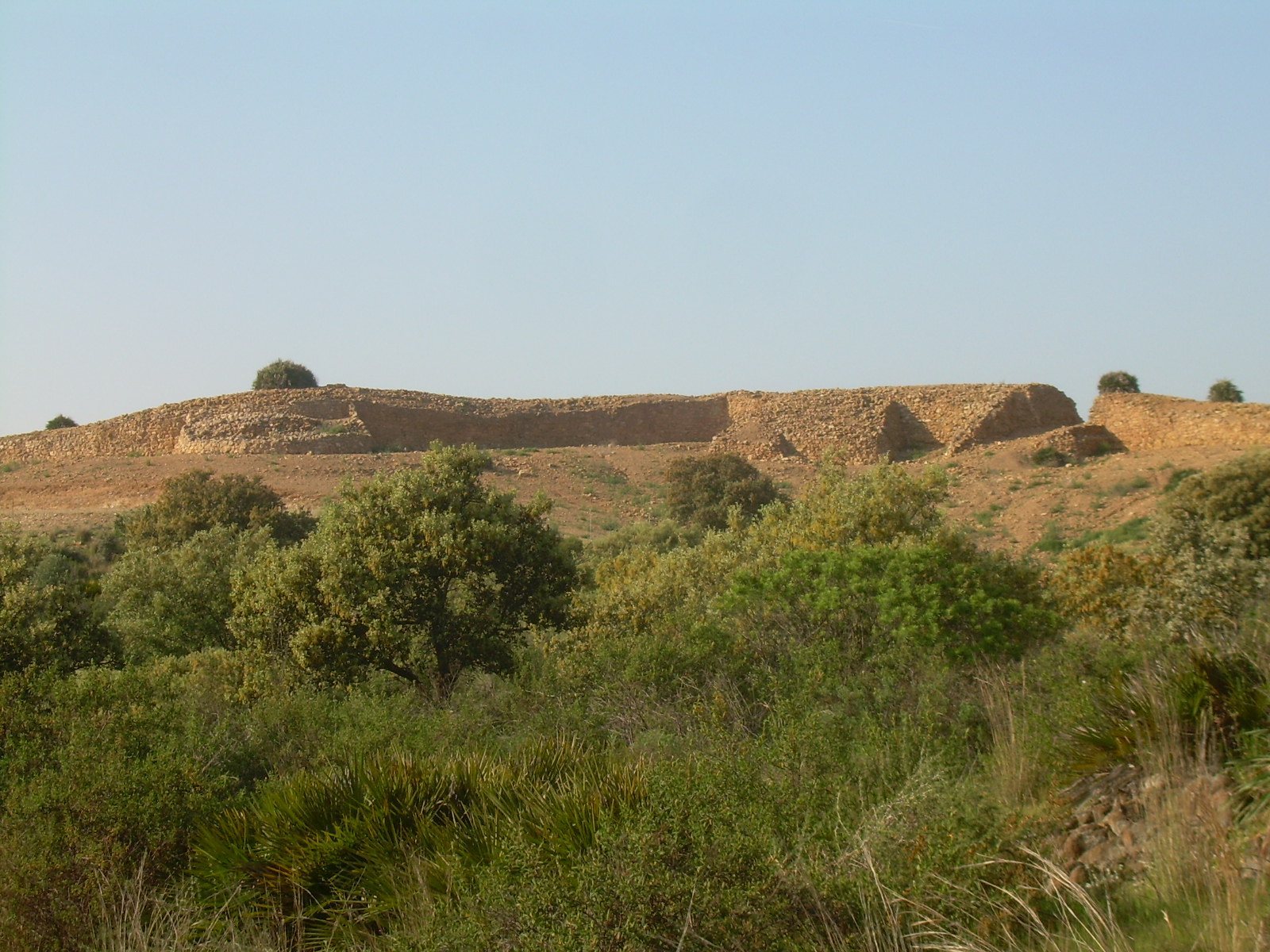
Dated to the eighth century BCE, the wall has a trapezoidal outline, a four-sided shape with one pair of parallel sides. It follows the natural ground with little leveling and rises higher where the terrain provided less protection. Some surviving stretches reach about four metres. Two limestone facings enclose a packed core of stones, earth, sand, pottery debris and smaller stones; a binding material joined the facing stones. Most of the surviving structure is its lower stonework.
Clay on the ground indicates the collapse of an upper earthen section, which may have been made using rammed earth, a method of compacting soil to form walls. Openings for defenders may have been set into this upper part. Residues of white clay or lime suggest that the stone and earthen sections may once have been plastered and painted white. Circular projections from the wall belong to its initial construction, while square ones were added during later repairs. A projecting bench at the foot of the stonework is also possible. Some projecting stones served as supports, although they may have formed either an attached wall section or a tower connected to the upper structure for surveillance. One possible access arrangement used removable ramps leading to an opening high in the earthen wall, a route that would have made it harder to bring in pack animals carrying minerals.
Houses and streets
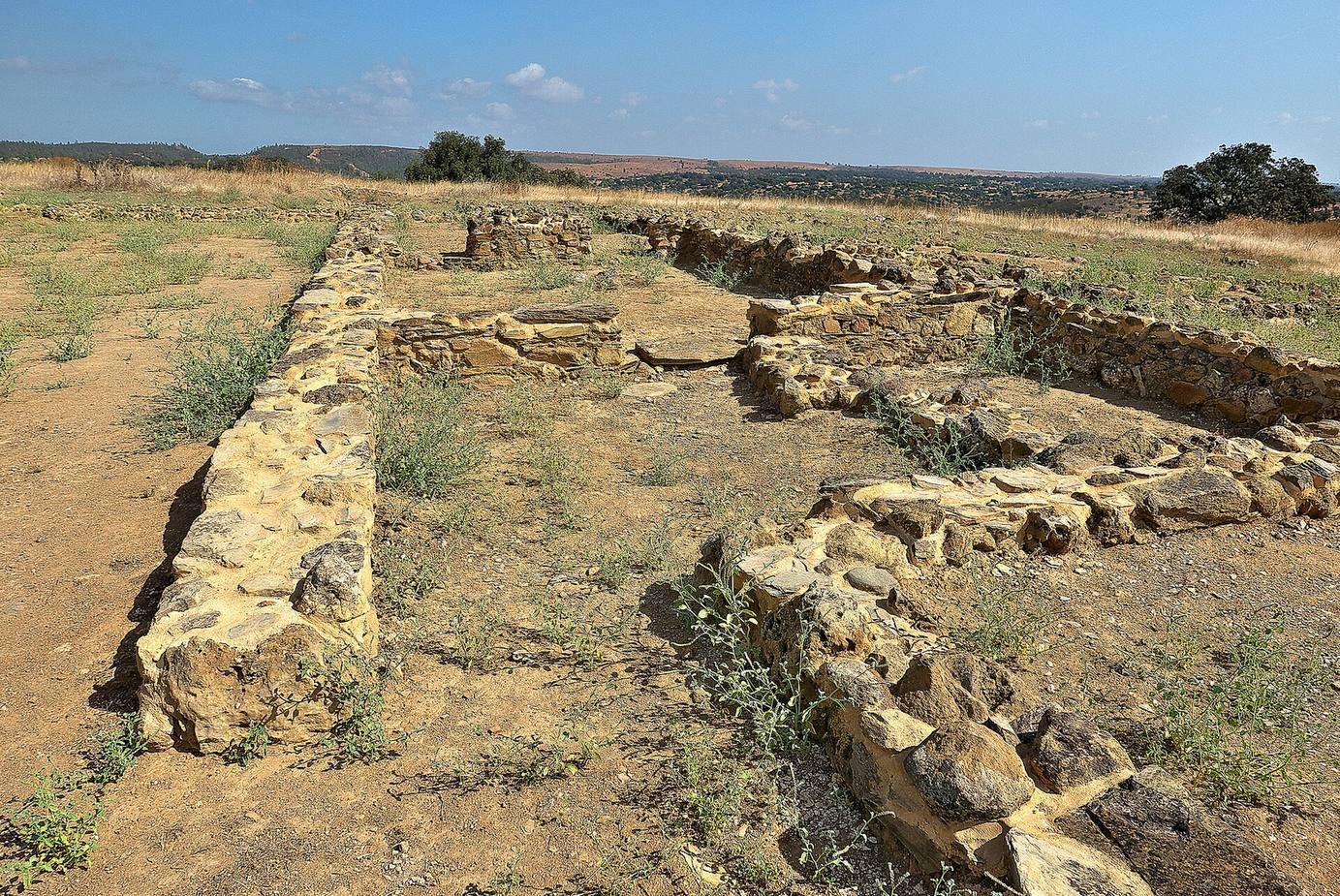
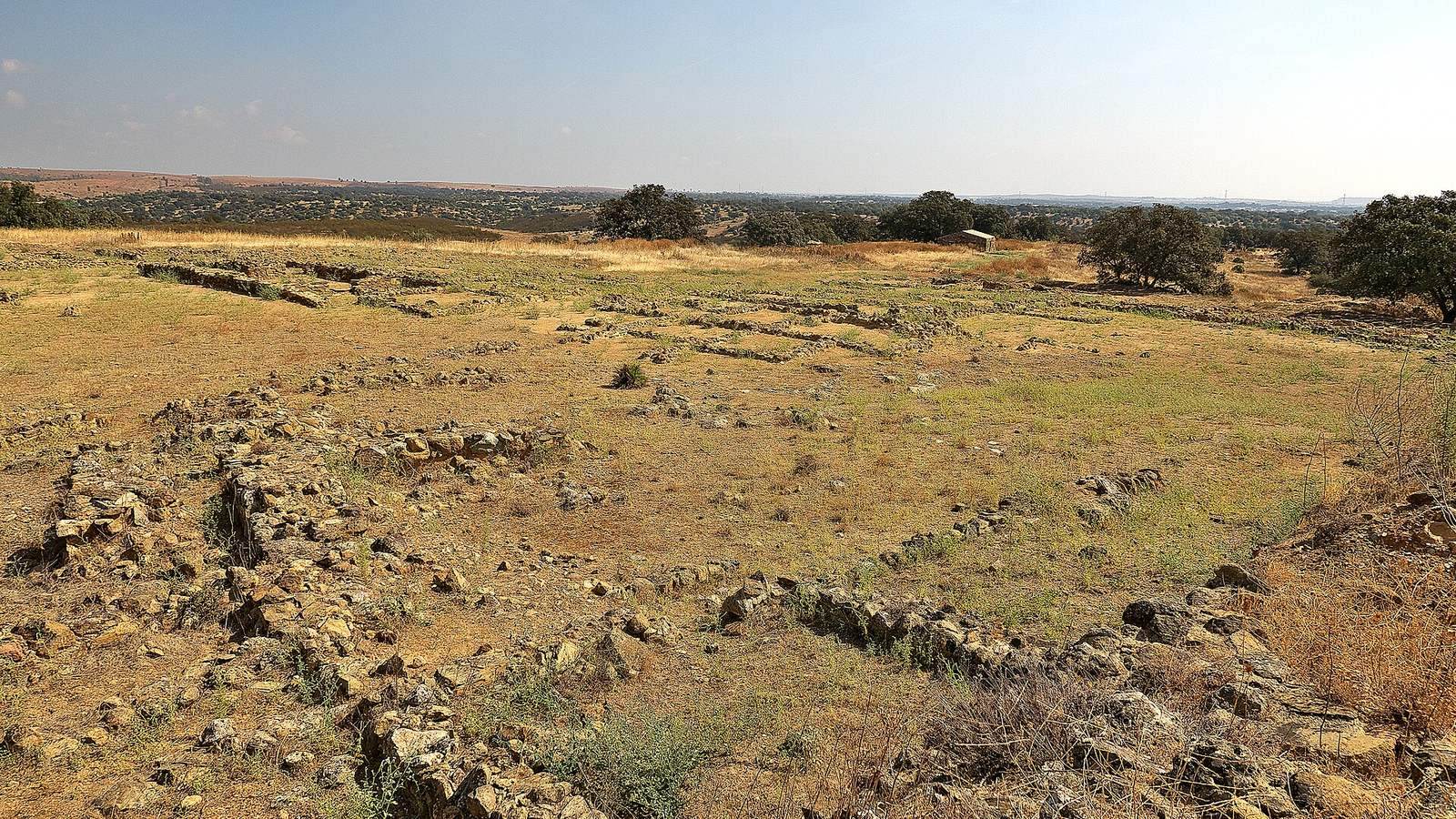
In the excavated area, stone foundations mark the houses and the internal streets are clearly defined. Houses were arranged within blocks, though their placement within those blocks was less regular. Their upper walls would have been built of rammed earth. Pottery is the principal archaeological material associated with the settlement.