Sucidava: A Roman Fort and Settlement in Romania
Site at a Glance
- Rating
- 4.7
- Popularity
- High
- Country
- Romania
- Primary era
- Classical
- Eras represented
- Iron Age, Classical, Medieval
- Civilizations
- Byzantine, Dacian, Roman
- Site type
- Settlement
- Remains
- Town
On this page11 sections
History
Sucidava was a fortified settlement near Corabia in Romania and served as a political, military, and economic center of the Getic Suci. In the 270s, during Rome’s withdrawal from Dacia, the Romans built a fort over an earlier Dacian citadel. It was among the largest Roman forts in Oltenia and was intended to protect a road and a pontoon bridge, a crossing supported by floating pontoons.
Roman rule and Constantine’s works
A continuous series of coins runs from the reign of Roman emperor Aurelian (AD 270–275) to that of Theodosius II (AD 408–450), indicating a sustained Roman presence. An inscription associated with Sucidava names a prefect, an appointed official, of the Fifth Macedonian Legion, a Roman military unit, during the reign of Diocletian or Constantine. Historian Cristian Găzdac has also proposed that the Third and Fourth Cohorts, subdivisions of a legion, may have been stationed there.
Sucidava’s civic status remains open to different interpretations. Some classify it as a vicus, or local settlement, or a pagus, a rural district or community. Others consider survey evidence consistent with an urban settlement. It stood at the end of a trade route and served as a transit point between the Roman provinces of Dacia and Moesia.
Under Constantine, the citadel was restored, the road to Romula was repaired, and a stone bridge to Oescus was inaugurated in AD 328. The bridge was intended to support Constantine’s effort to reconquer Dacia.
Attacks, rebuilding, and abandonment
In the mid-fifth century, around AD 443–447, the Huns, a people from the Eurasian steppe who became a major military power in Europe, attacked and sacked the city and fort. Sucidava was later restored or rebuilt, probably under Justin I (AD 518–527) or, alternatively, Justinian I (AD 527–565). Both ruled the Byzantine Empire, the eastern continuation of the Roman Empire.
A Christian basilica, a large hall used for worship, was built at Sucidava in the fifth or sixth century and is identified as the first Christian basilica in Romania. Around AD 600, the Byzantine garrison departed and the settlement was abandoned.
Romanian archaeologist Pamfil Polonic excavated at Sucidava in 1900. Further excavations took place from 1936 to 1964.
Remains
The site covers about 250,000 square metres on the upper terrace of the Danube’s north, or left, bank. It lies opposite Oescus, across the river in present-day Bulgaria. The remains include the later town’s defensive circuit, traces of an earlier Roman town beneath later layers and a modern neighborhood, and structures connected with water supply and the river crossing.
Defensive perimeter and town fabric
Later Roman walls
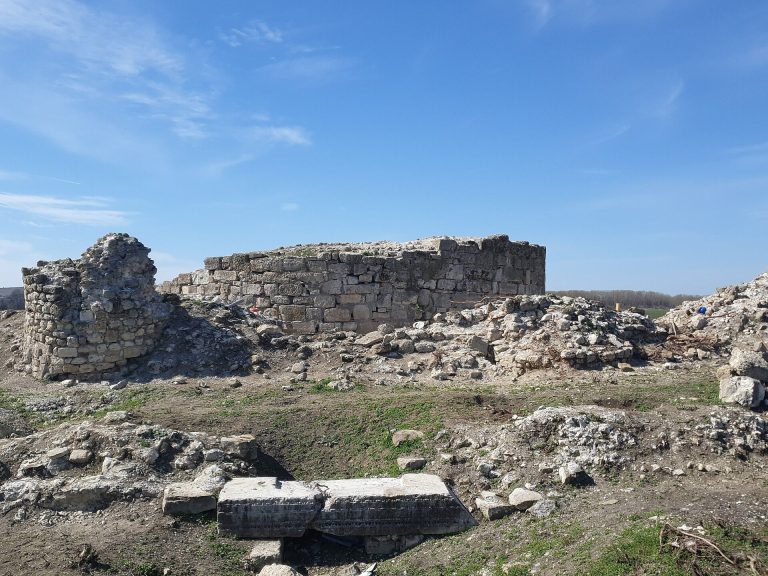
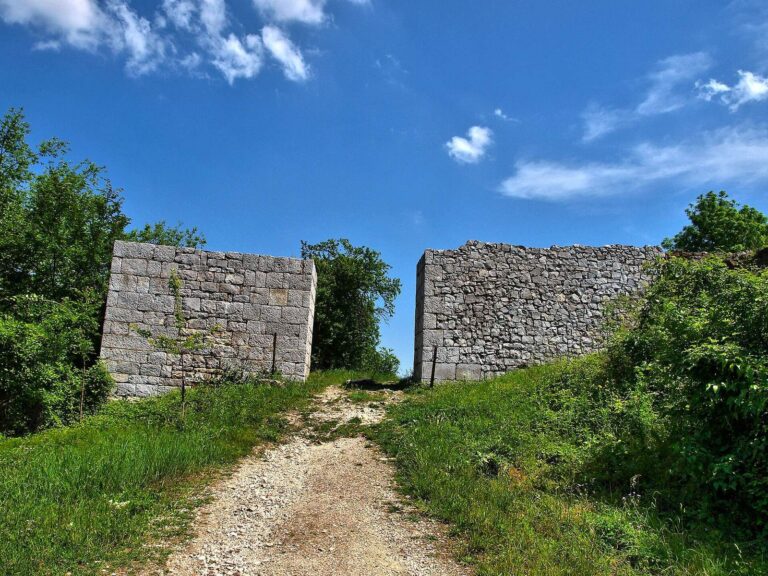
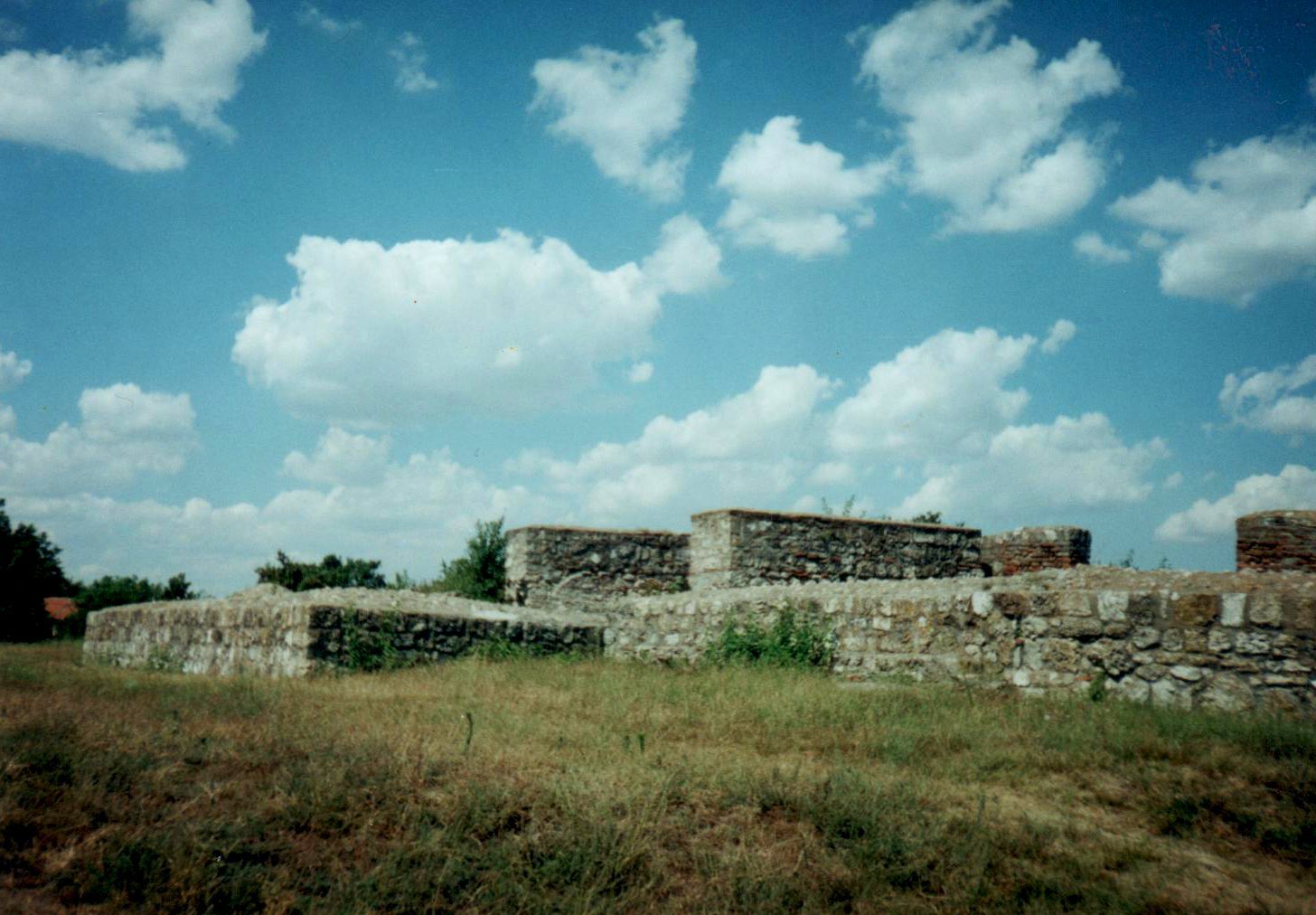
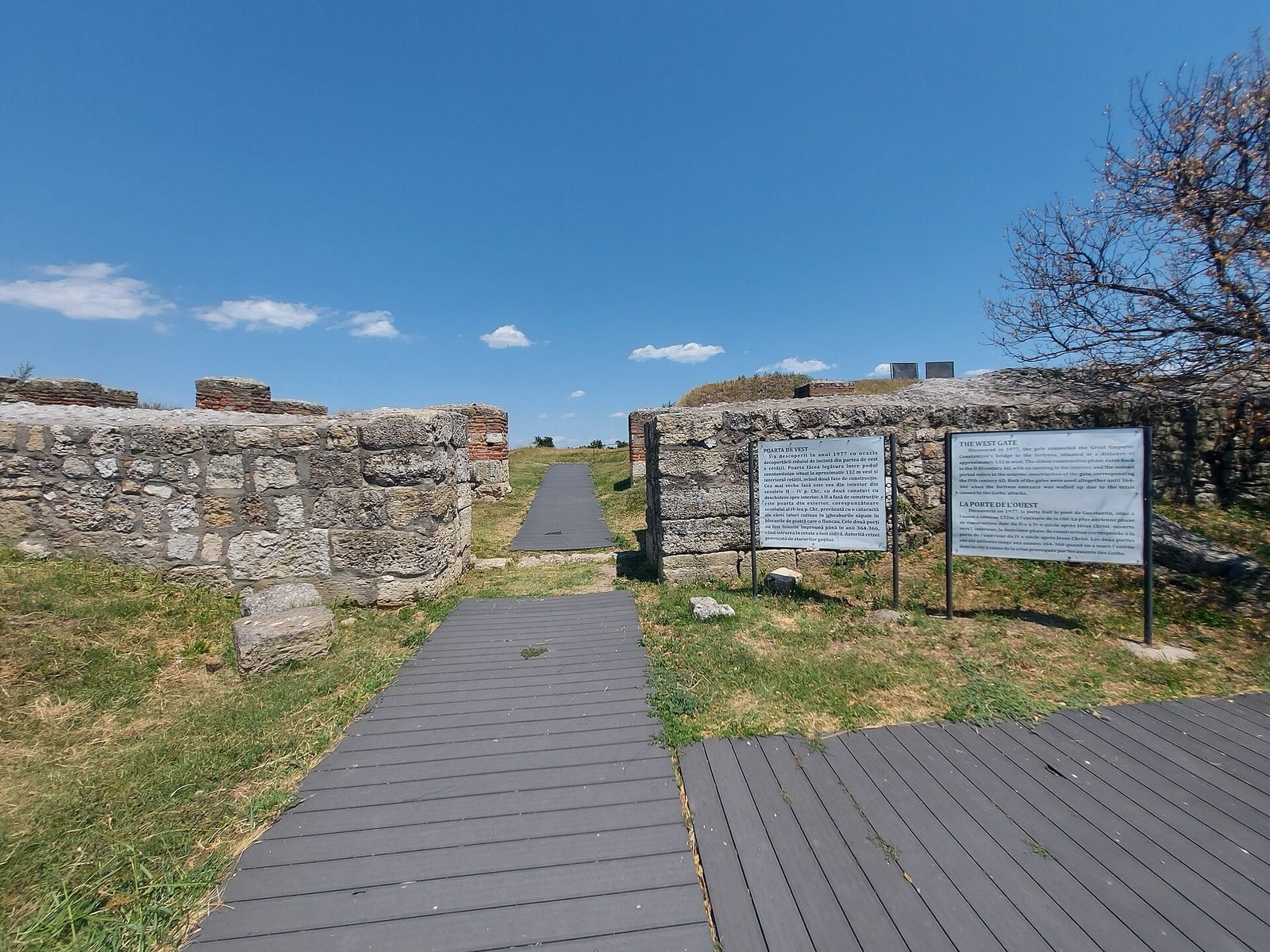
The later Roman town, dated to the fourth through sixth centuries, had defensive walls with eight towers. The walls have been fully uncovered, and the towers remain visible.
Earlier town and workshops
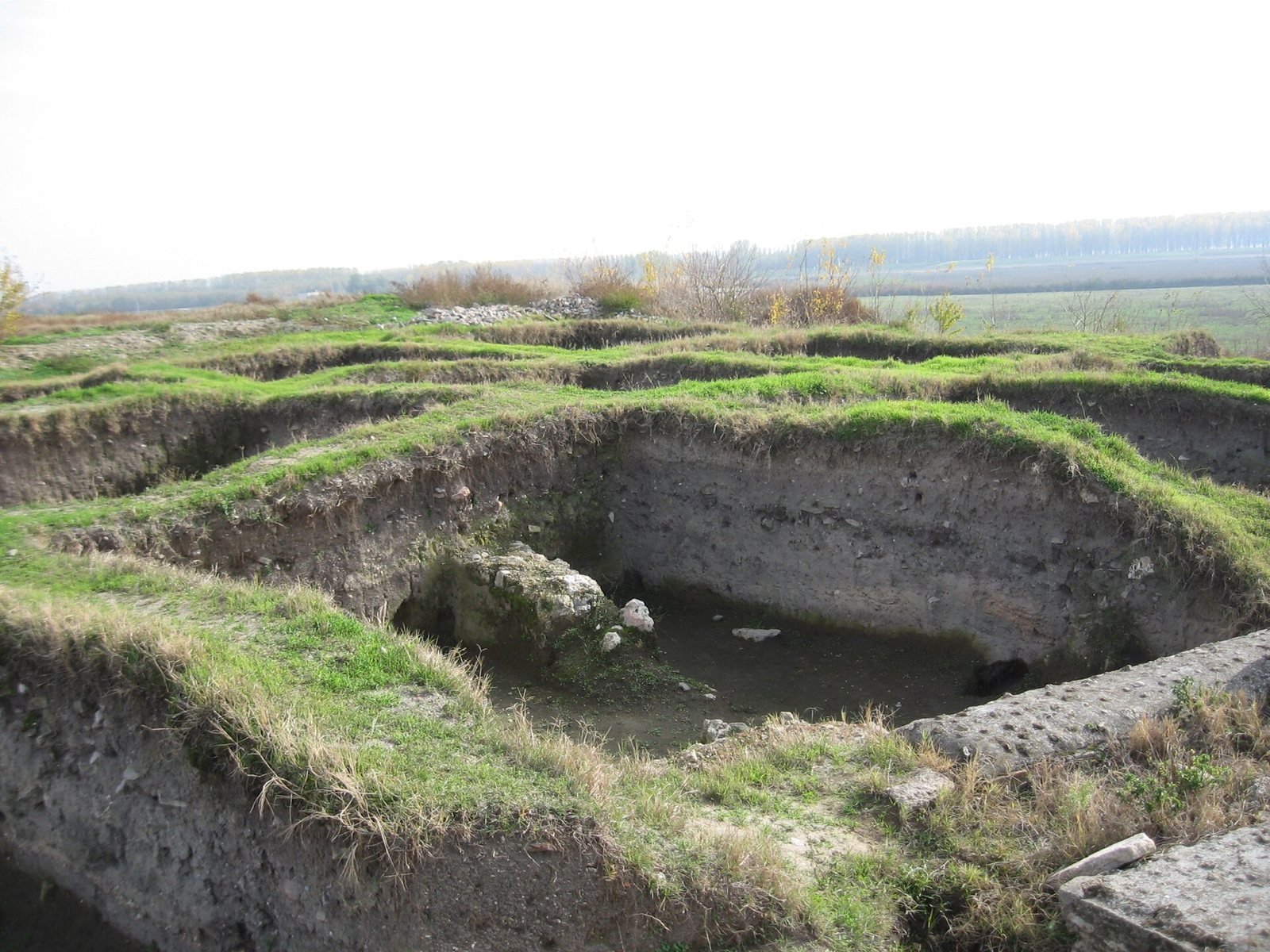
Part of the Roman town of the second and third centuries lies beneath the later remains and the modern neighborhood. Its identified features include baths and paved streets. Pottery from the site includes local forms and imports from the Aegean region, Asia Minor, and North Africa. Lead plates point to workshops where metal objects were made.
Christian basilica
The early Christian basilica is among the identified structures at Sucidava. It dates to the fifth or sixth century.
Water supply and river crossing
Underground fountain
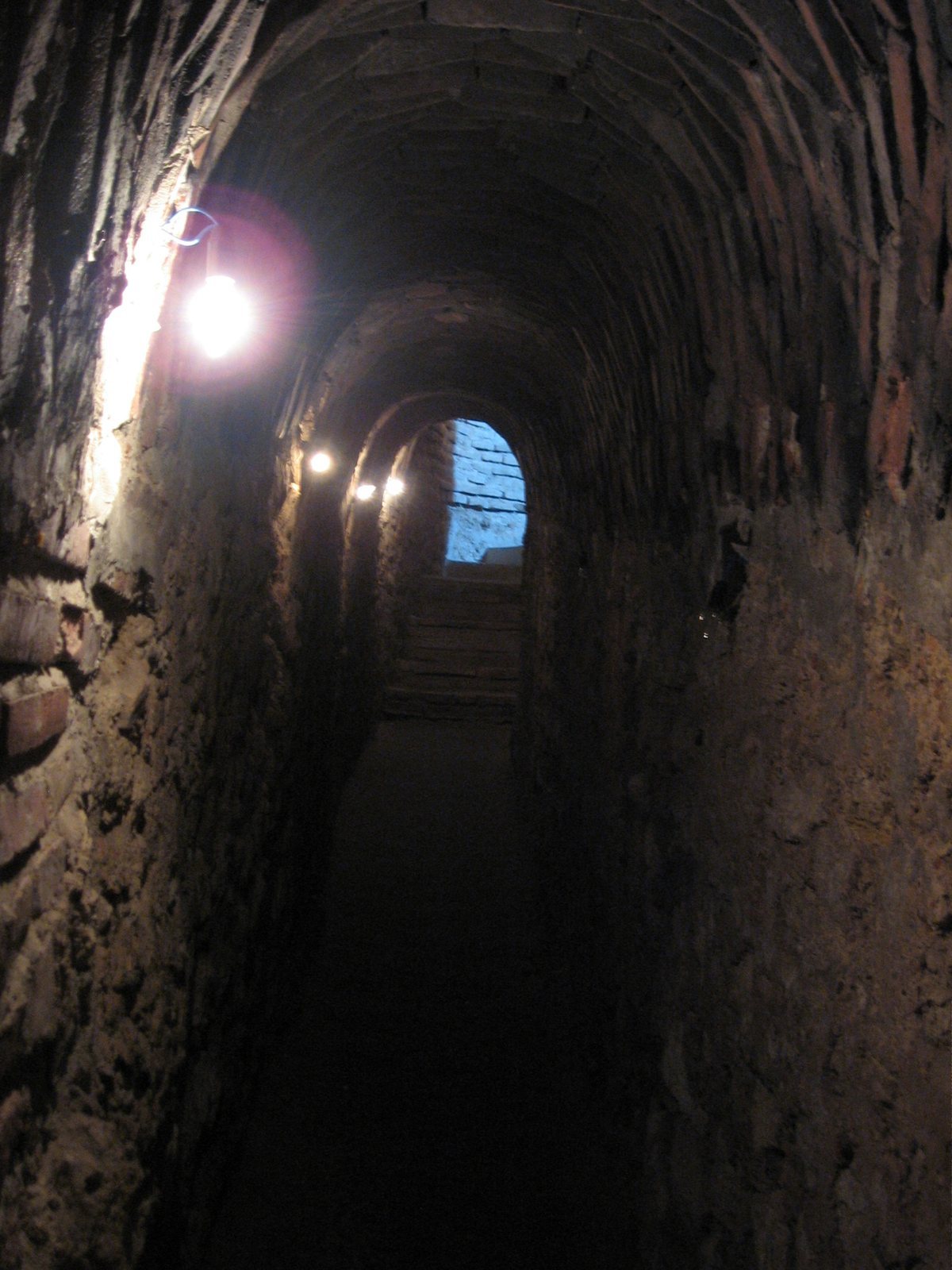
The underground structure known as the secret fountain passes beneath the town walls and reaches a spring outside them. It was engineered to provide water during sieges.
Bridge to Oescus
A pier, a support for a bridge span, survives at Sucidava. The stone bridge crossed the Danube and extended for more than 2,400 metres. It was considered one of antiquity’s longest bridges, though its existence was short-lived.