Ulpia Oescus: A Roman Colonia on the Lower Danube
Site at a Glance
- Rating
- 4.4
- Popularity
- Very Low
- Country
- Bulgaria
- Primary era
- Classical
- Eras represented
- Classical, Medieval
- Civilizations
- Byzantine, Roman
- Site type
- City
On this page16 sections
History
Ulpia Oescus is the remains of a Roman city near Gigen in Bulgaria, founded within the Danubian frontier system during the early Roman imperial period. It began as a military base and legionary fortress, developed into a civilian settlement, and became a colonia, a privileged Roman colonial city, under Emperor Trajan between AD 106 and 112. During the second and third centuries, it grew into an economic and cultural centre of Lower Moesia, before repeated invasions brought its ancient urban life to an end.
Military origins and the growth of a city
The city took its name from the nearby Oescus River, now called the Iskar. The name probably meant “water” in the local Thracian dialect. A permanent fortress at the site was occupied intermittently by the Fifth Macedonian Legion from AD 10 to 101. During periods when that legion was away, the mounted Fourth Gallic Cohort probably occupied the camp, while the Fourth Scythian Legion was also stationed there until AD 101.
A civilian settlement grew alongside the fortress. Retired soldiers, merchants, craftsmen, publicans, and other people connected with the army lived in this community, known in Roman usage as a canaba. A nearby Thracian settlement also benefited from trade with the military population. Together, the fortress and its associated settlements formed the basis for the later city.
The Fifth Macedonian Legion left Oescus in AD 62 to take part in Nero’s Parthian War, a Roman campaign against the Parthian Empire. It later served in the Jewish-Roman War of AD 66–67 and briefly at Alexandria in Egypt, returning to Oescus in AD 71. Archaeological evidence also points to the later settlement of veterans from the Sixth Macedonian and First Italian Legions.
Colonia Ulpia Oescensium
Following Trajan’s victory in the Second Dacian War, Oescus received colonia status between AD 106 and 112. Trajan, who ruled from AD 98 to 117, gave the city the official name Colonia Ulpia Oescensium. The element “Ulpia” came from the emperor’s family name, Ulpius. The new urban centre was built over the earlier legionary fortress, transforming the military settlement into a formally organized Roman city.
In AD 167, Oescus received the exceptional privilege of full Roman civic rights. Its position on the Danube and beside the navigable Iskar River supported commercial and cultural development. Three principal routes connected it with the wider empire: one linked the Via Egnatia through the central Balkans with the Danube, another connected Philippopolis with Oescus, and a third followed the Danubian frontier from Singidunum and Viminacium through Oescus toward Novae, Durostorum, and the river’s mouth.
The city’s prosperity during the Antonine and Severan dynasties was reflected in manufacturing and trade. Local production included jewellery, bronze statuettes, brooches, vessels, glass, ceramics, and objects made from metal and bone. Oescus also supported one of the region’s largest sculpture workshops, while rural villas and workshops around the city produced glass and pottery. Estimates have placed the urban area at about 280,000 square metres and the population at nearly 100,000.
Religion, expansion, and Constantine’s bridge
In AD 190–191, Oescus dedicated a temple to Fortuna, the Roman goddess associated with fortune and destiny, and adopted her as its protecting deity. The city also maintained a Capitol dedicated to the Capitoline Triad, the three central Roman state deities Jupiter, Juno, and Minerva.
After AD 271, the Fifth Macedonian Legion returned and established a second fortress, known as Oescus II. The city later revived under Constantine I, the fourth-century Roman emperor also called Constantine the Great. His bridge across the Danube improved military movement and trade between Oescus and Sucidava, the ancient settlement at modern Corabia in Romania.
On 5 July AD 328, Constantine personally inaugurated and consecrated the bridge. It remained in use for approximately 27 years, until a barbarian invasion led to its destruction in AD 355. The bridge formed part of a wider period of renewed imperial activity at Oescus, including the construction of an elaborately decorated great hall that may have been prepared for Constantine’s visit.
Destruction and later settlement
The Goths destroyed Oescus in AD 376–378. The city was burned and looted, and the fortress walls fell into ruin. Thereafter, until the end of antiquity, only an internal fortification system continued to be maintained. Further attacks followed in the fifth century. The Huns destroyed the city in AD 411, and an attempt was made in AD 444 to resettle it as a Hun settlement called Hunion.
Emperor Justinian I, a sixth-century ruler known for restoring and reorganizing parts of the eastern Roman Empire, rebuilt the city’s defensive wall in an effort to restore Oescus as a stronghold of the Danubian defensive system. Avar invasions in late AD 585 and early AD 586 halted this effort, and the city was abandoned.
A Bulgarian village occupied the site from the tenth to the fourteenth century. Its inhabitants reused ancient ruins to build houses and constructed a church over the former Temple of Fortuna. The settlement was later displaced by the Ottoman invasion. The ruins then remained forgotten for centuries until an Italian military engineer identified them as ancient Ulpia Oescus in the seventeenth century.
Excavation and interpretation
Archaeological excavation began in 1904 under Vaclav Dobruski. Later work included the discovery of the Achaeans mosaic building in 1948–1949, and investigations continue. Excavation has revealed parts of one of the largest and most continuously studied ancient cities of the Lower Danube. Finds from the site are held or displayed in the Regional Historical Museum in Pleven and the National Archaeological Museum in Sofia.
Remains
Fortifications and urban layout
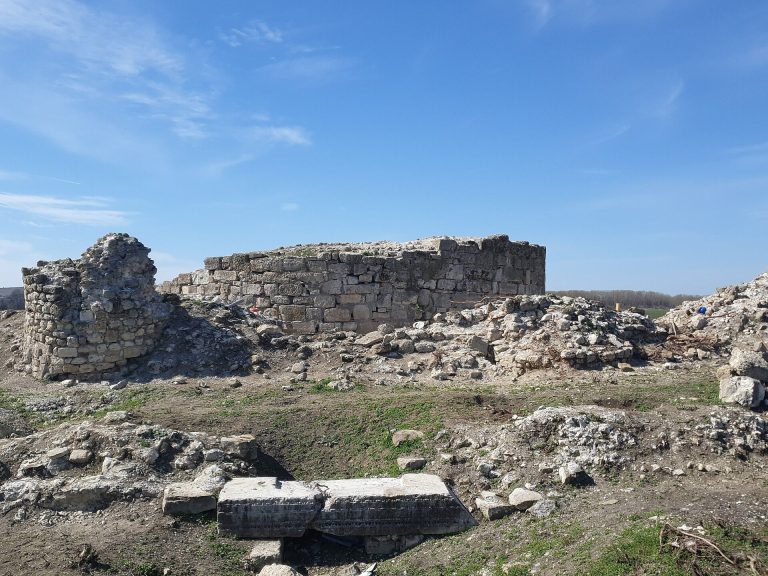
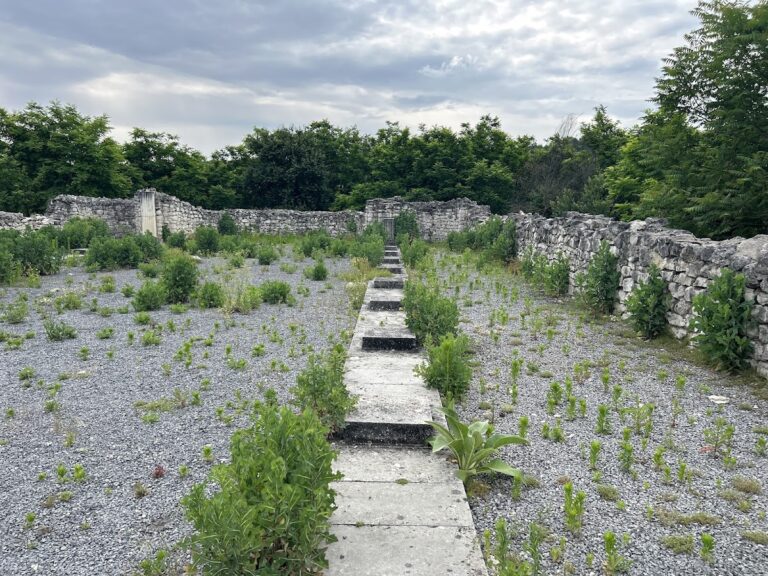
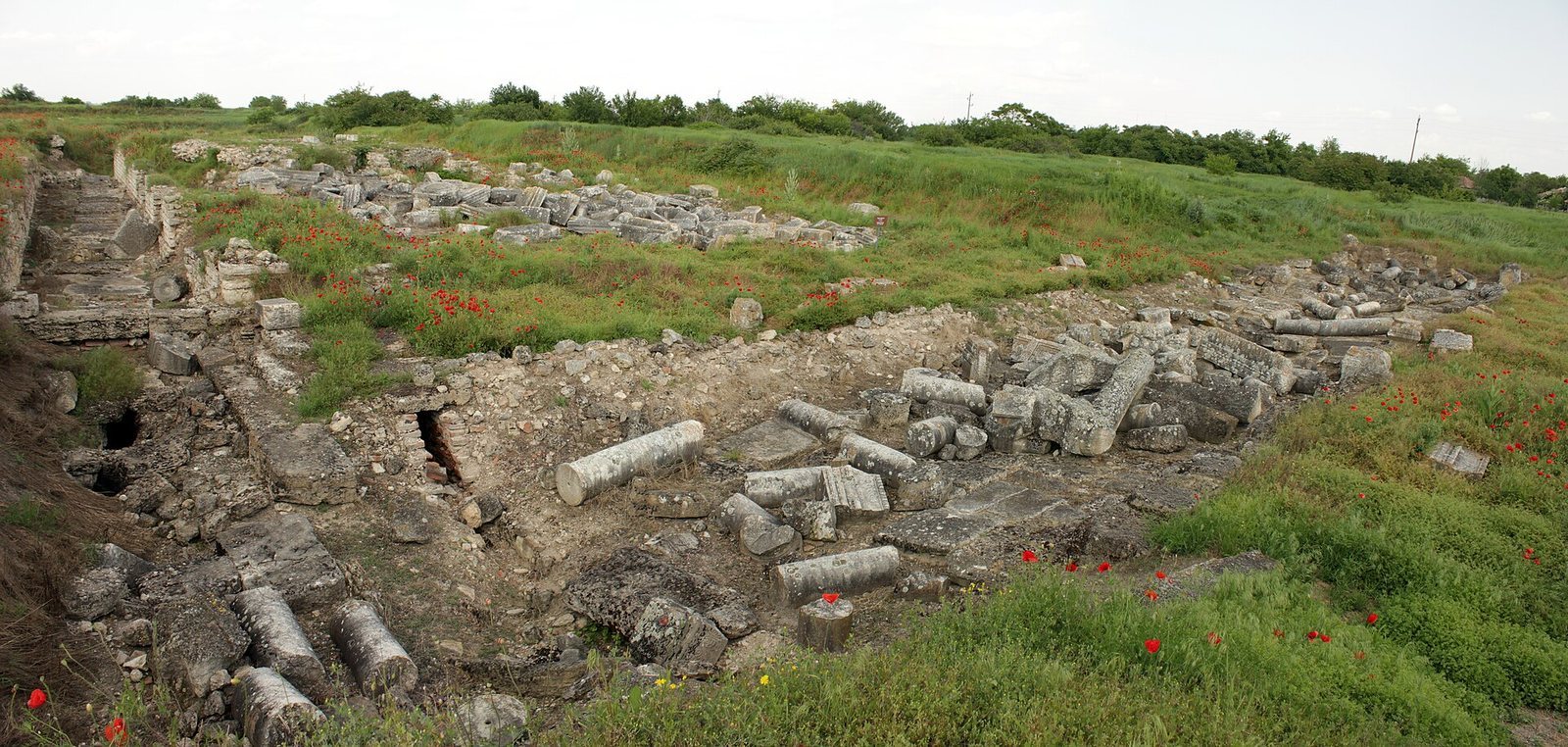
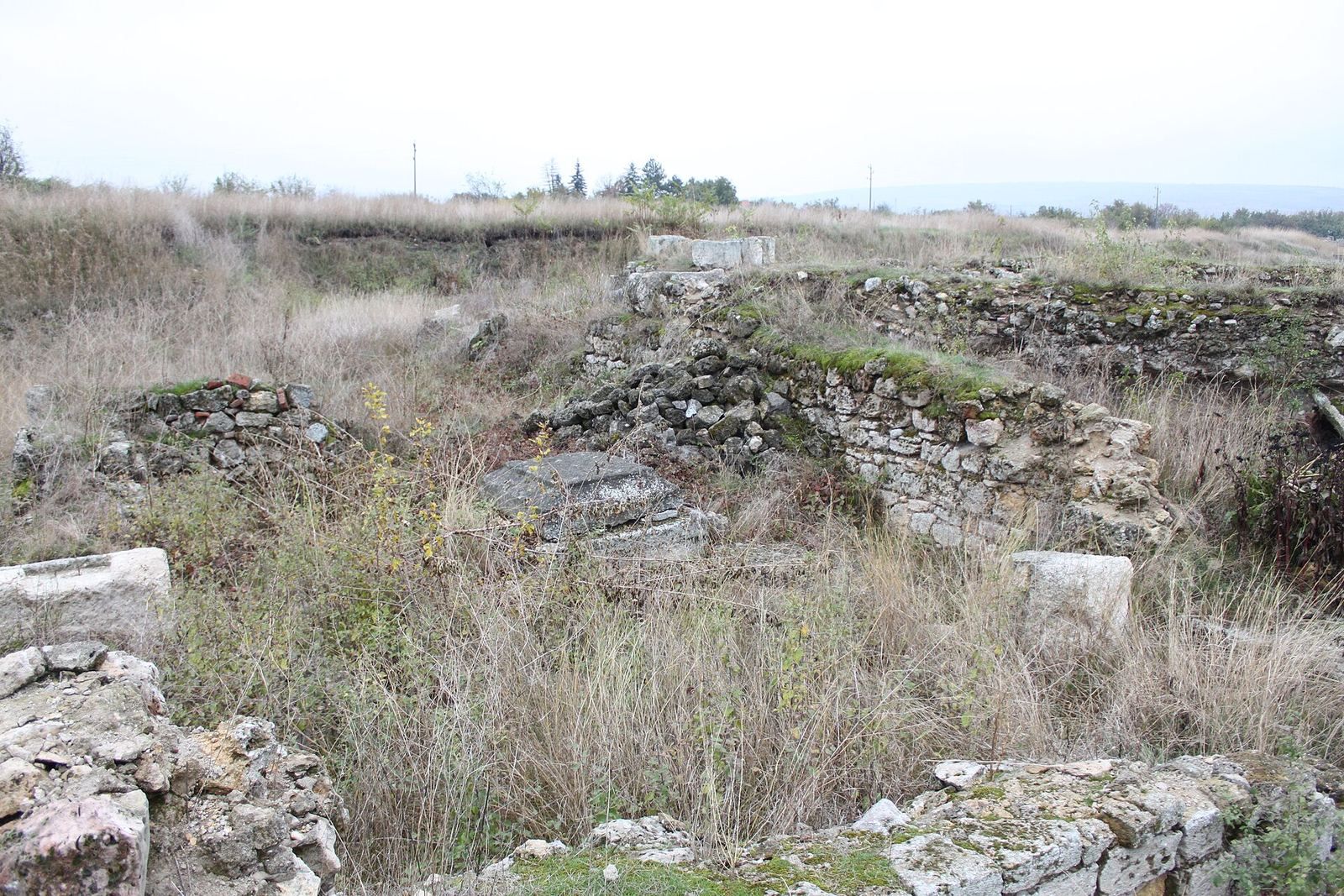
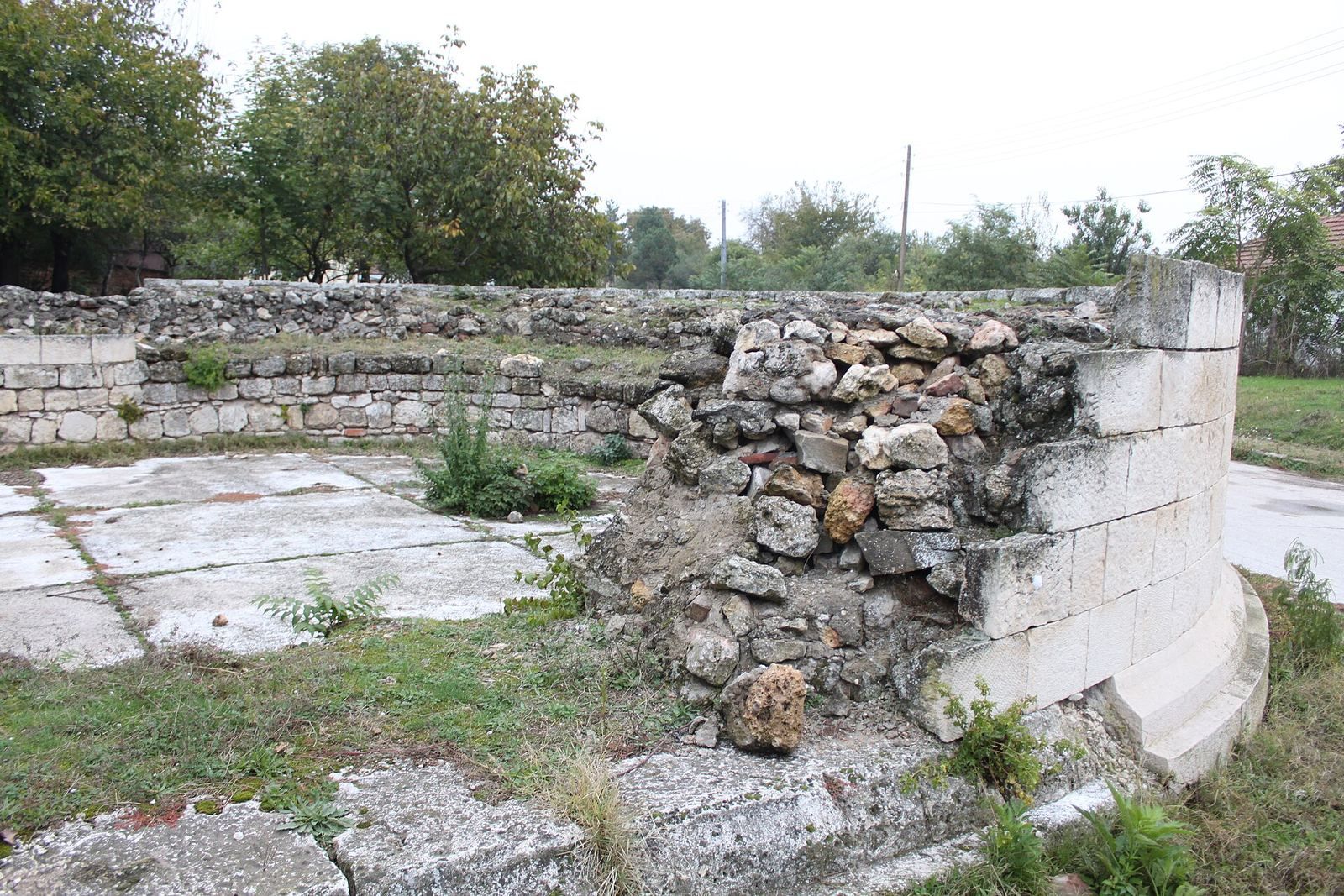
The walled city formed an irregular pentagon. Its first enclosed area covered about 18 hectares, while the later expansion after AD 271 added approximately 10 hectares to the east. Surviving remains include the defensive wall of the earlier legionary fortress, a principal gate, administrative buildings, a civil basilica, a forum, three public baths, wells, workshops, temples, a necropolis, and a paved road. A stone wall protected the settlement from invading forces and from flooding by the Danube.
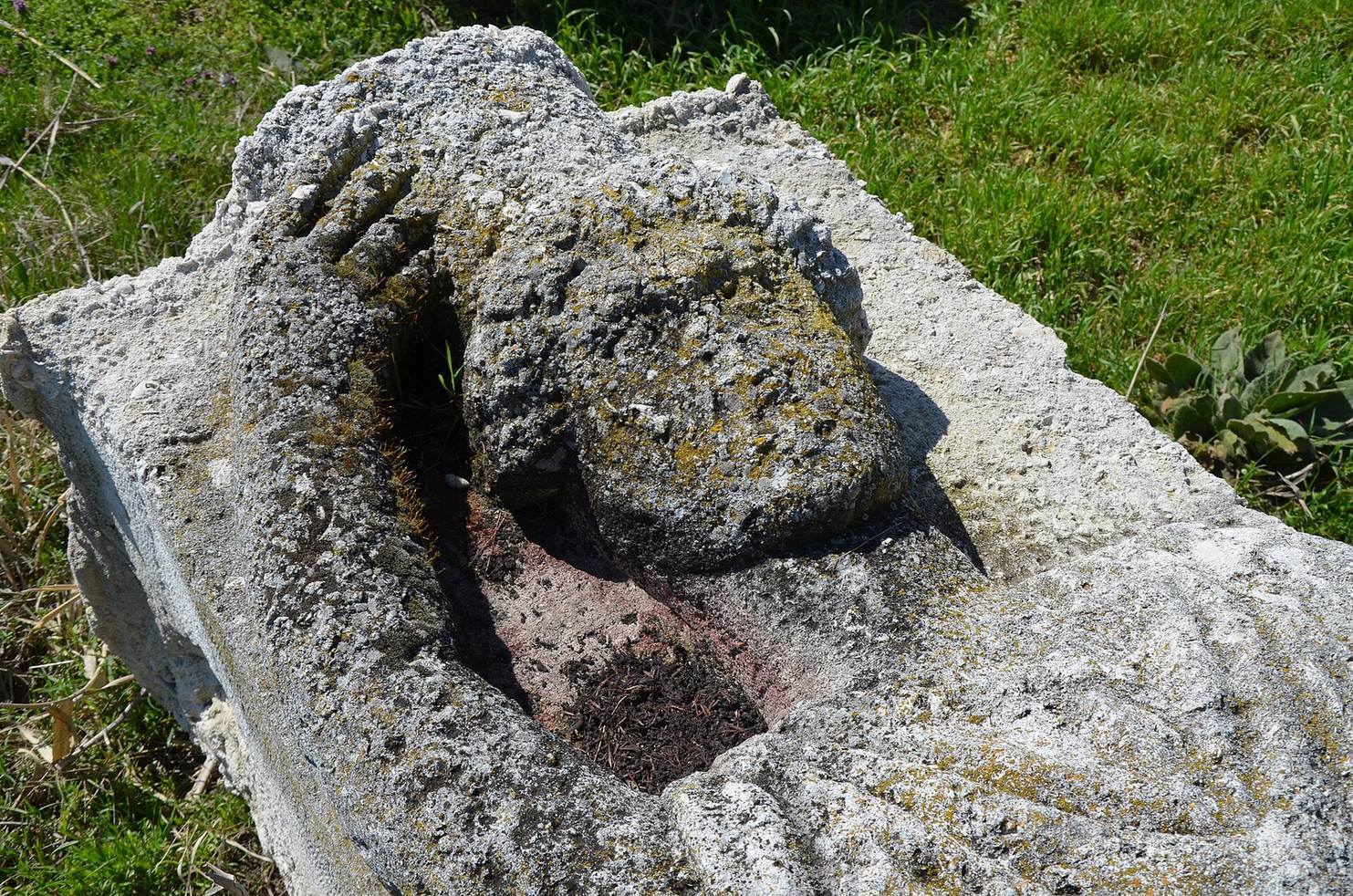
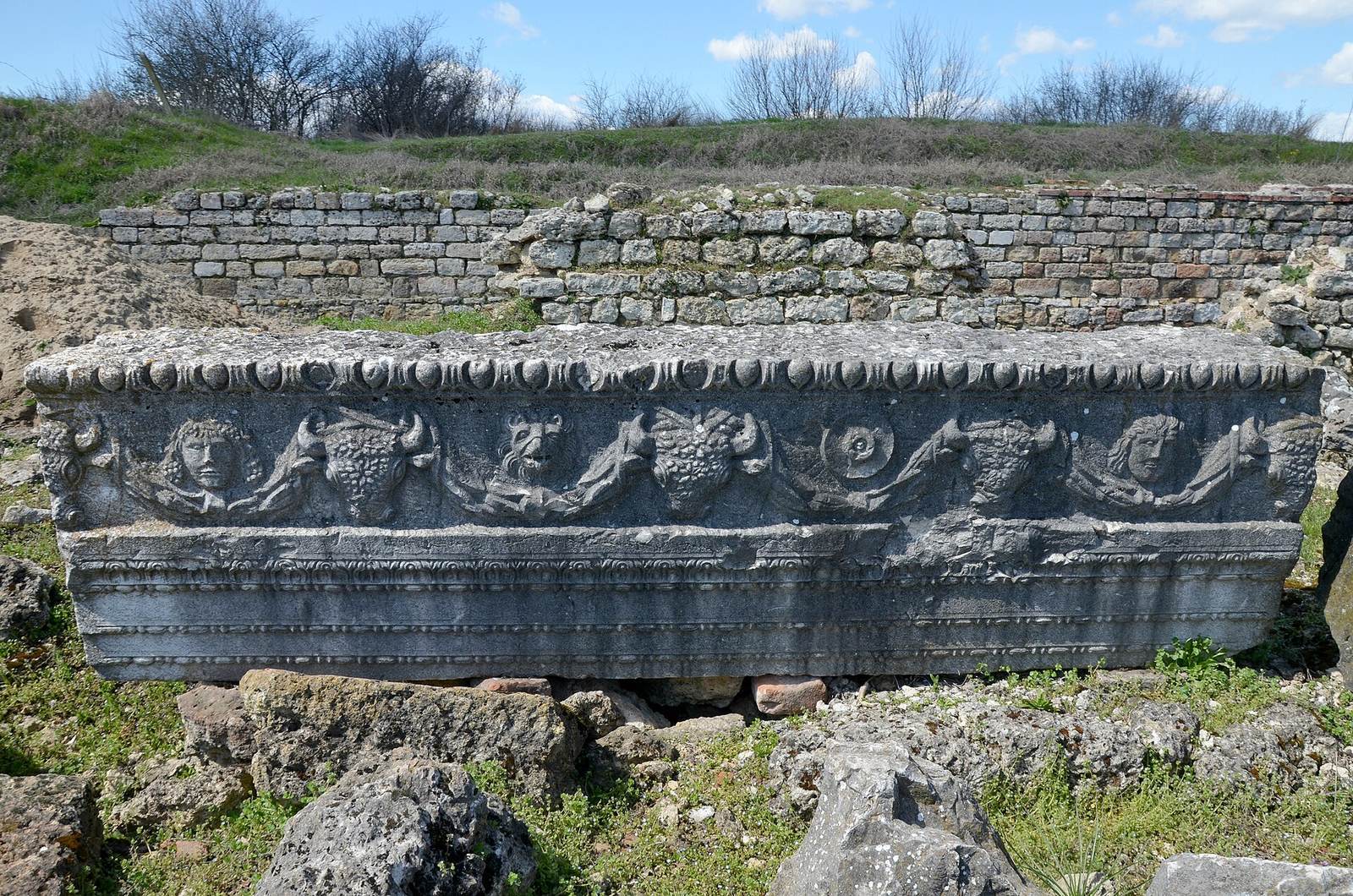
An aqueduct brought fresh water from springs about 20 kilometres away. Excavated remains also include a large urban water and sewage system, showing how the settlement’s public and domestic buildings were supplied and drained. Streets, architectural fragments, columns, relief fragments, and other remains survive among vegetation within the excavated and fenced area.
Oescus II and domestic buildings
The eastern extension associated with Oescus II contains houses from the Principate, the early Roman imperial period from Augustus to the later third-century transformation of imperial rule. Some were substantial buildings decorated with mosaics that may date to the reign of Septimius Severus, who ruled from AD 193 to 211. The excavated domestic area forms part of the wider urban complex of houses, villas, workshops, and public structures.
Religious and civic buildings
Temple of Fortuna
The Temple of Fortuna was one of the city’s religious buildings. A statue of Fortuna nearly three metres high was found at Oescus and is now displayed in the National Archaeological Museum in Sofia. It is described as the largest statue of its kind found in Bulgaria. The building was later incorporated into the medieval settlement, which placed a church over the former temple.
Capitol and public architecture
The Capitol contained temples to Jupiter Optimus Maximus, Juno, and Minerva, the three deities of the Capitoline Triad. Other pagan temples, administrative buildings, the forum, the civil basilica, and public baths formed part of the civic centre. In 2020, the remains of the aula regia, a formal great hall used for imperial or ceremonial functions, were identified as a fourth-century building decorated with 14 types of rare, multicoloured marble. Its date and decoration suggest that it may have been built for Constantine’s visit in AD 328.
Necropolis and archaeological finds
Eastern and northeastern necropolis
A necropolis extended east and northeast of the city in areas known as Pyasutsite and Prez Livada. It contained inscribed monuments associated with veterans, linking the burial ground with Oescus’s military population and its long history as a legionary centre.
Achaeans mosaic
The Achaeans mosaic was discovered in 1948 on the floor of a large public building. Dating to the third century AD, it depicts three masked actors performing a play. An inscription above the figures identifies the scene as “Menander’s Achaeans.” The mosaic is displayed in the Regional Historical Museum in Pleven.
Other excavated material includes statues, inscriptions, coins, and artefacts associated with the city’s public, religious, domestic, and industrial life. These finds are preserved in museums in Pleven and Sofia, while the site itself retains the architectural remains of its streets, water system, baths, workshops, villas, temples, administrative buildings, and houses.
Constantine’s Bridge
Constantine’s Bridge linked Oescus on the southern bank of the Danube with Sucidava on the northern bank. It was built with stone piers and wooden beams and measured approximately 2.5 kilometres overall, including about 1.3 kilometres across the river. The bridge was approximately 5.7 metres wide. Its surviving remains can be seen only from the northern bank of the Danube.