Church of Saints Theodore Tyron and Theodore Stratelates, Dobarsko: A Bulgarian Orthodox Church
Site at a Glance
- Popularity
- Medium
- Country
- Bulgaria
- Primary era
- Early Modern
- Eras represented
- Early Modern, Modern
- Civilizations
- Bulgarian, Ottoman
- Site type
- Religious
- Remains
- Church
On this page15 sections
History
The Church of Saints Theodore Tyron and Theodore Stratelates is a Bulgarian Orthodox church in Dobarsko, Bulgaria, built in 1613–1614. It is dedicated to two distinct early Christian military saints: Theodore Tyron, also called Theodore the Recruit, and Theodore Stratelates, or Theodore the General.
Tradition and earlier site
A local legend links the church grounds’ spring with Dobarsko’s founding. In 1014, after the Battle of Belasitsa, blinded soldiers of Tsar Samuel I were travelling toward Rila Monastery when they found the spring and were healed by its water. Samuel was a medieval Bulgarian ruler whose reign is usually dated to 997–1014. The legend associates the spring with the settlement’s beginnings, and belief in the water’s healing properties continues; local residents still visit it.
A church may also have stood on this site in 1122, although that possibility is uncertain.
Construction and later changes
Hasija Bogdanov commissioned the present church after returning from a pilgrimage to Jerusalem. A fresco near the entrance names the builders as Spas, Stanko, and Smilen. The western entrance area changed in two stages: an open porch was replaced during the nineteenth century, and a masonry vestibule took its place in the early twentieth century.
Restoration and present status
Restoration of the murals between 1973 and 1978 brought paintings hidden beneath a thick coating of soot back into view. The church remains active and belongs to the Bulgarian Orthodox Church–Bulgarian Patriarchate, within the Nevrokop Diocese and Razlog Episcopal Vicariate, a local district administered by an episcopal vicar. It has been protected as a nationally important cultural monument since 1977 and also receives UNESCO protection, though it is not inscribed on the UNESCO World Heritage List.
Remains
Church building
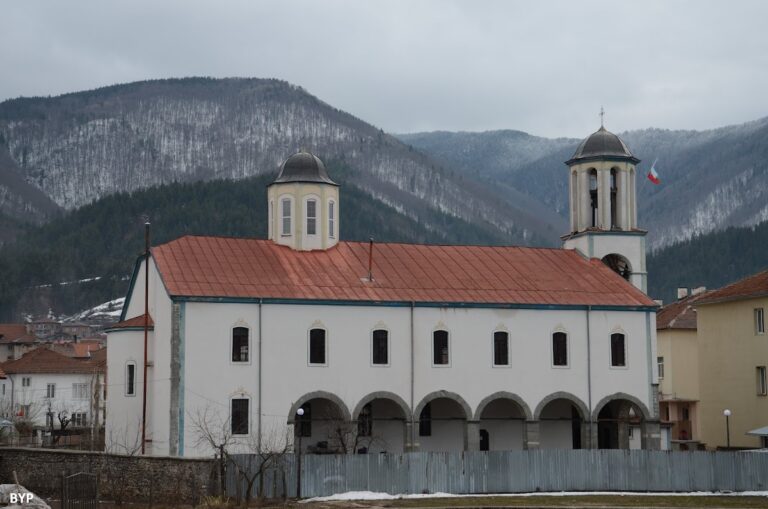
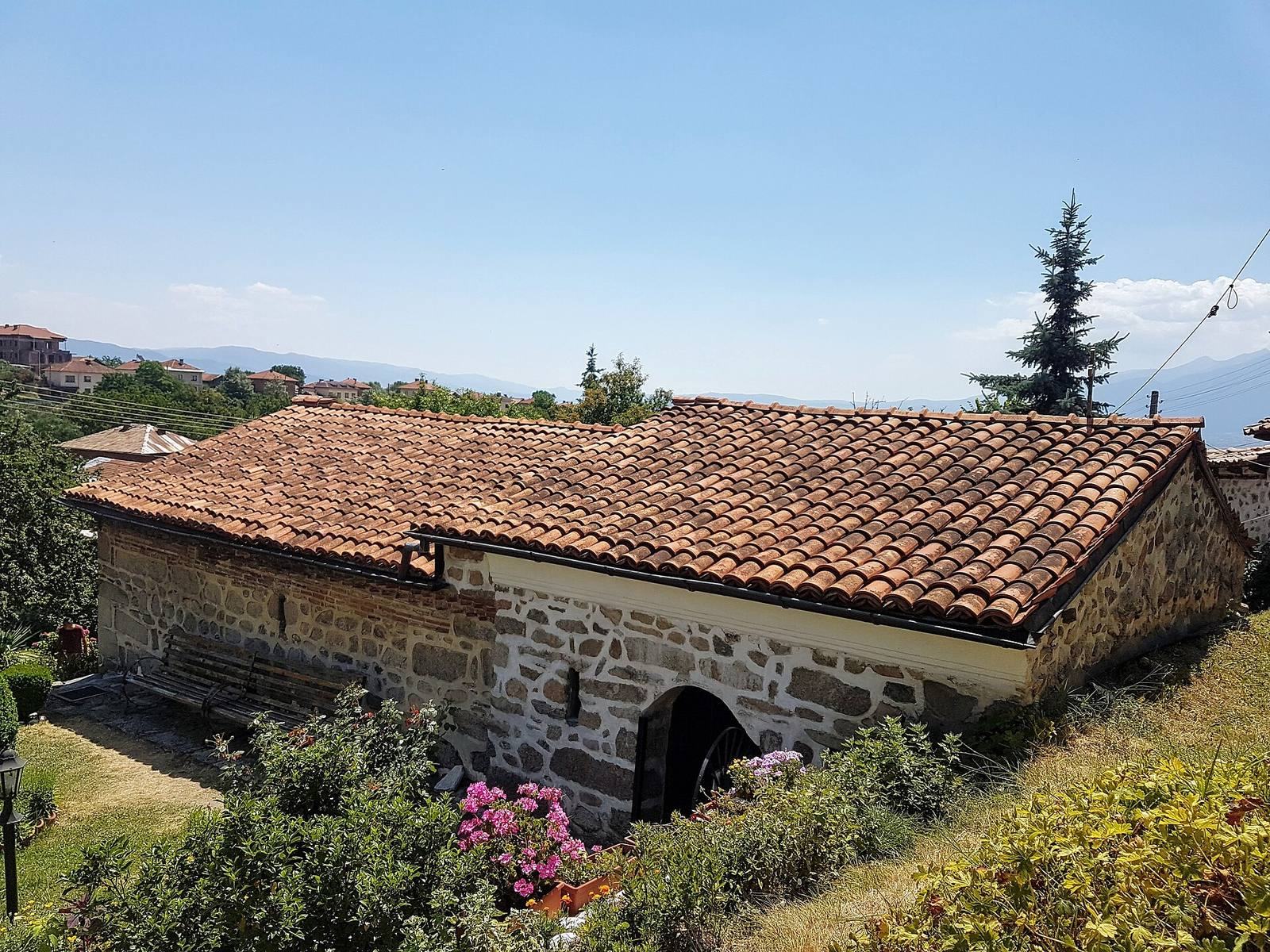
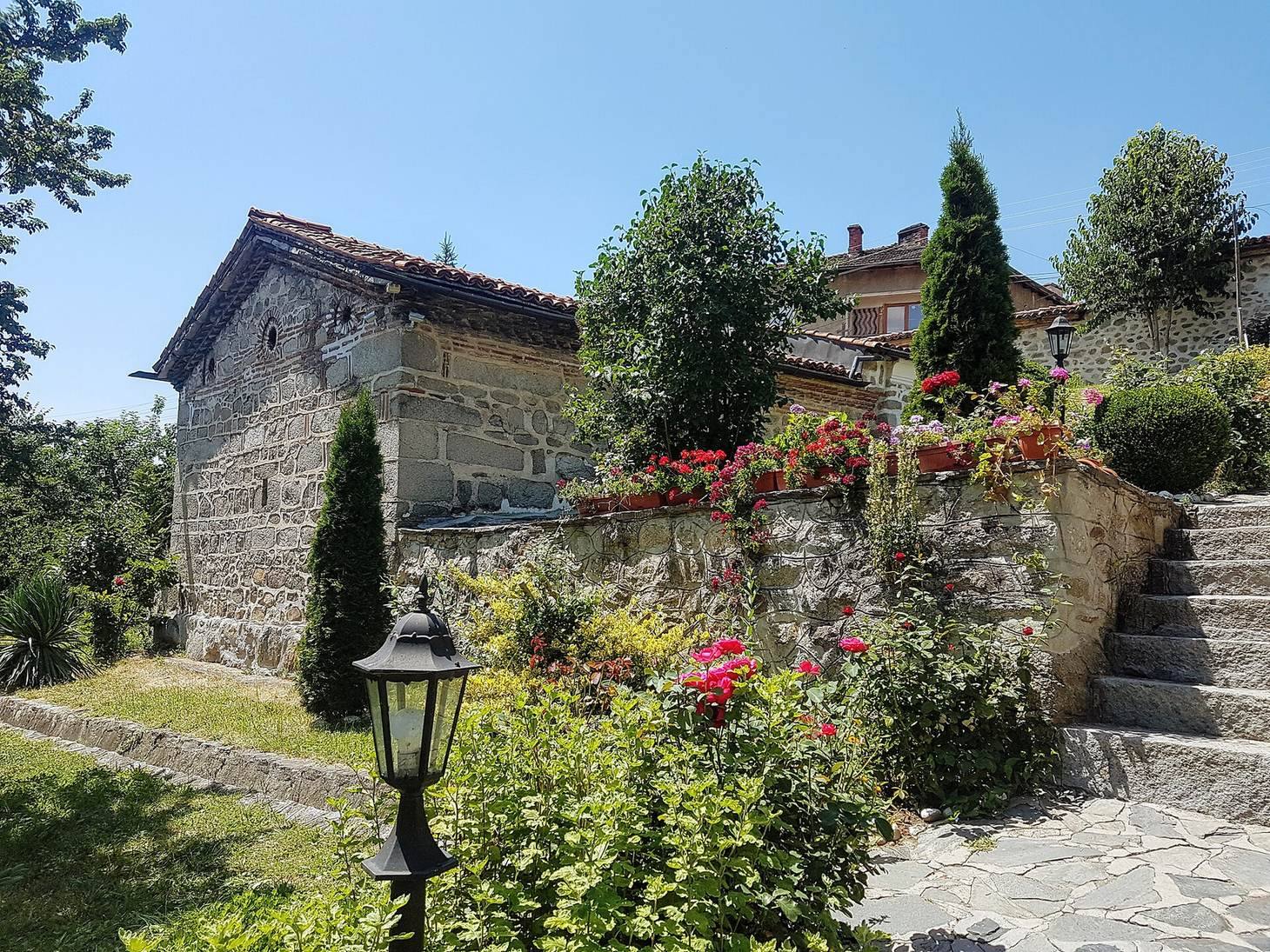
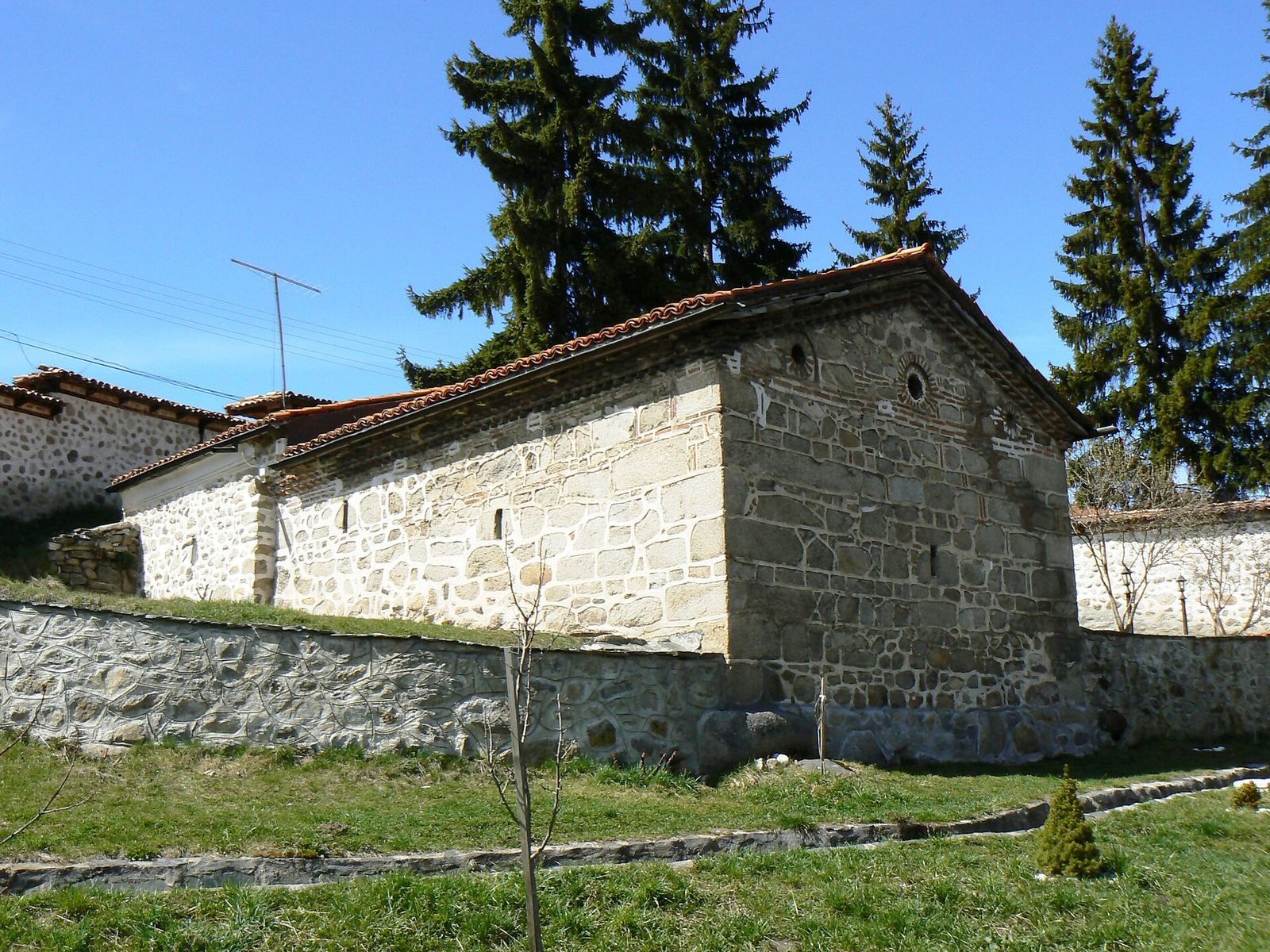
The church stands in central Dobarsko, south of the municipal office and the nineteenth-century Church of the Meeting of the Lord. It is a small, partly sunken, three-aisled basilica, meaning that a central aisle is flanked by two side aisles. The building measures 8.37 metres long, 6.5 metres wide, and 5.2 metres high. Its entrance is at the west end, while an apse, the rounded sanctuary end, closes the east. The apse is semicylindrical and does not extend beyond the outside wall.
Four large supports carry arches that divide the three aisles. The apse has three small windows, two to the south and one to the north; three more circular windows pierce the upper eastern wall. Cut stone forms the masonry, with brick decoration concentrated in the upper areas. At the east end, brick surrounds frame the windows beneath a two-row sawtooth band. The roof has two sloping sides and was originally covered with stone slabs, later replaced by Turkish tiles. The design reflects the influence of churches in the Melnik region and Aegean Macedonia. At the west entrance, the present structure includes a masonry vestibule.
Painted decoration
Interior murals
Murals dated to 1614 cover the interior walls and span about 160 square metres, with 460 images of saints and biblical scenes. The central nave presents the Great Feasts, the major celebrations of the Orthodox liturgical year. The side aisles include scenes of Christ’s Passion, events after Easter, the Divine Liturgy, and subjects from the Old Testament. The central vault contains four images of Christ: the Ascension, Emmanuel, meaning God with us, Pantokrator, or Ruler of All, and Angel of the Great Counsel. It also shows the Virgin Mary under the title Wider than the Heavens. One image of the Transfiguration, the manifestation of Jesus in divine glory to three disciples, is popularly nicknamed Christ in a Rocket because of the unusual shape surrounding it.
Donors and inscriptions
A six-figure donor portrait on the west wall of the south aisle is regarded as an exceptionally rich example within Bulgarian art of the Ottoman period. The donors’ names appear in a memorial list on the north side of the prothesis, the area used to prepare the Eucharistic gifts. The murals also portray Saints Prochorus of Pčinja, Joachim of Sarandapor, Gabriel of Lesnovo, Nicholas the New of Sofia, and Naum of Ohrid. Their inscriptions are in Church Slavonic.
Artistic attribution
The murals are unsigned and are attributed to the artistic tradition associated with Pimen Zograf, a Bulgarian Orthodox painter active in the late sixteenth and early seventeenth centuries. The name Iliya appears on a 1614 altar icon of Christ, prompting a possible attribution of the church paintings to an artist of that name. He may have been the painter associated with Slivnica Monastery in 1606–1607, and may also have been the Iliya linked to murals in the Church of the Holy Archangels in Kastoria and a 1622 altar icon at St. Demetrius in Bitusha.
Western facade
Above the west door, the two patron saints appear within a broad arch. Flanking arches contain Saints Demetrius and George on horseback. Below them are Saint John of Rila and Saint Petka of Bulgaria; both of these images are damaged.
Iconostasis and church furnishings
Iconostasis
The iconostasis, a screen of icons separating the sanctuary from the main church, takes the unusual form of a wall with two openings. Its principal icons depict the Archangel Michael, the Virgin and Child, Christ, John the Forerunner, and Saints Theodore Tyron and Theodore Stratelates. The donors’ names appear on the principal icons. An ornamental frieze as wide as the central nave sits above them, followed by full-length Deesis images, showing Christ with saints who intercede, and a carved upper section. Beneath the cross, two snakes release elaborate foliage from their mouths. The carved and gilded central doors show two prophets above the Annunciation and four Church Fathers below. The painted decoration also extends across the screen’s reverse and its otherwise unoccupied sections. The work resembles pieces attributed to Pimen Zograf and his workshop at Zograf Monastery on Mount Athos; the later iconostasis at Pustinja Monastery in Serbia is a parallel, as is the Deesis tier at Slepche Monastery.
Processional cross
A carved and painted processional cross from the church’s original inventory is preserved.
Spring and grounds
The spring associated with the local legend lies within the church grounds. A small flower garden occupies an adjoining plot.