Boitiner Steintanz: A Prehistoric Cult and Burial Site in Germany
Site at a Glance
- Popularity
- Medium
- Country
- Germany
- Primary era
- Unclassified
- Eras represented
- Unclassified
- Civilizations
- Unclassified
- Site type
- Religious
- Remains
- Sanctuary
On this page5 sections
History
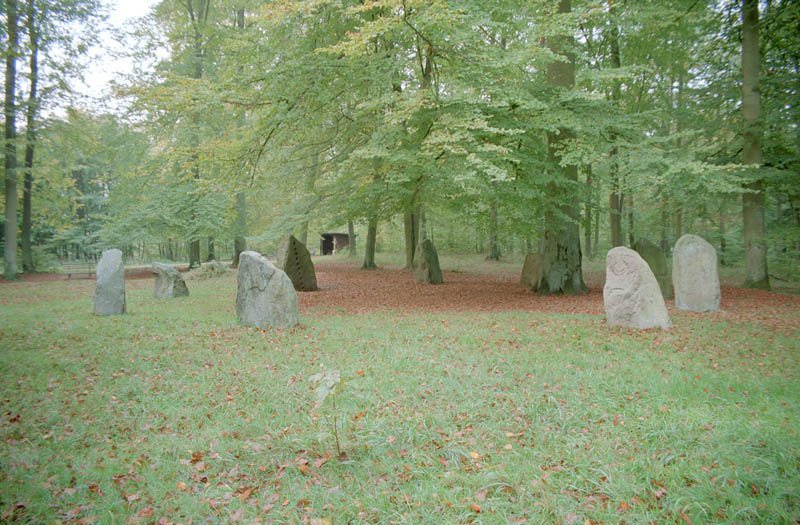
The Boitiner Steintanz is a prehistoric stone-circle complex at Tarnow in Germany, regarded as a cult and burial site. Its age is uncertain. Finds from the Iron Age, a broad period associated with the use of iron and dated differently across regions, may indicate that burials took place here later. The site was first mentioned in 1765.
Local stories explain the stones through a wedding in Dreetz. In one, farmers celebrating the wedding ignored an old man’s warning and bowled with food. He turned the guests and the bridal treasure to stone, forming the large circle. Another legend links the smaller circle to a shepherd, his dog, and his flock. The shepherd looked between his legs toward the wedding place, despite being warned not to look back, and all were turned to stone.
A further tradition says that on St John’s Night, the midsummer observance on 24 June associated with the feast of St John the Baptist, a red thread appears at the thirteenth hole of the Brautlade, or “bridal chest.” A sufficiently brave young man who pulls it can break the spell and claim the bridal treasure.
Remains
Stone-circle layout
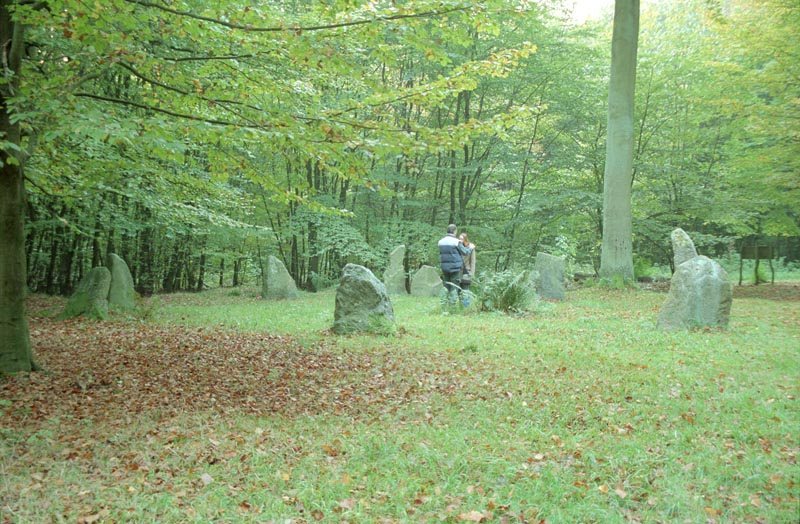
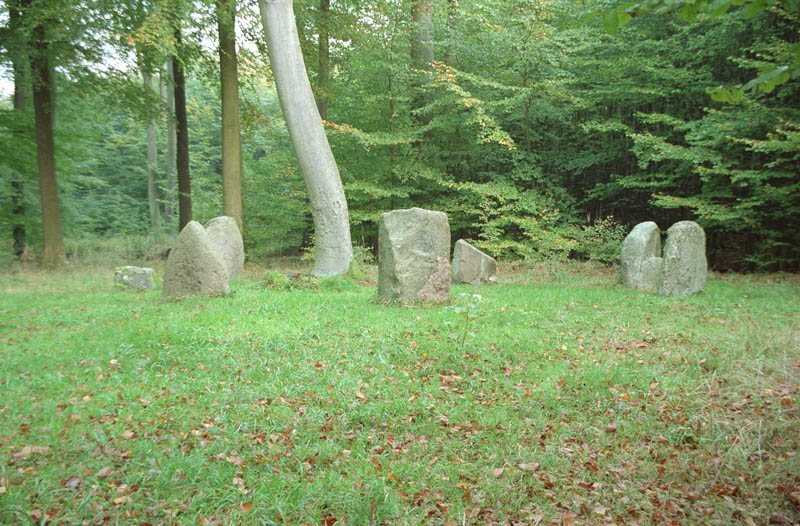
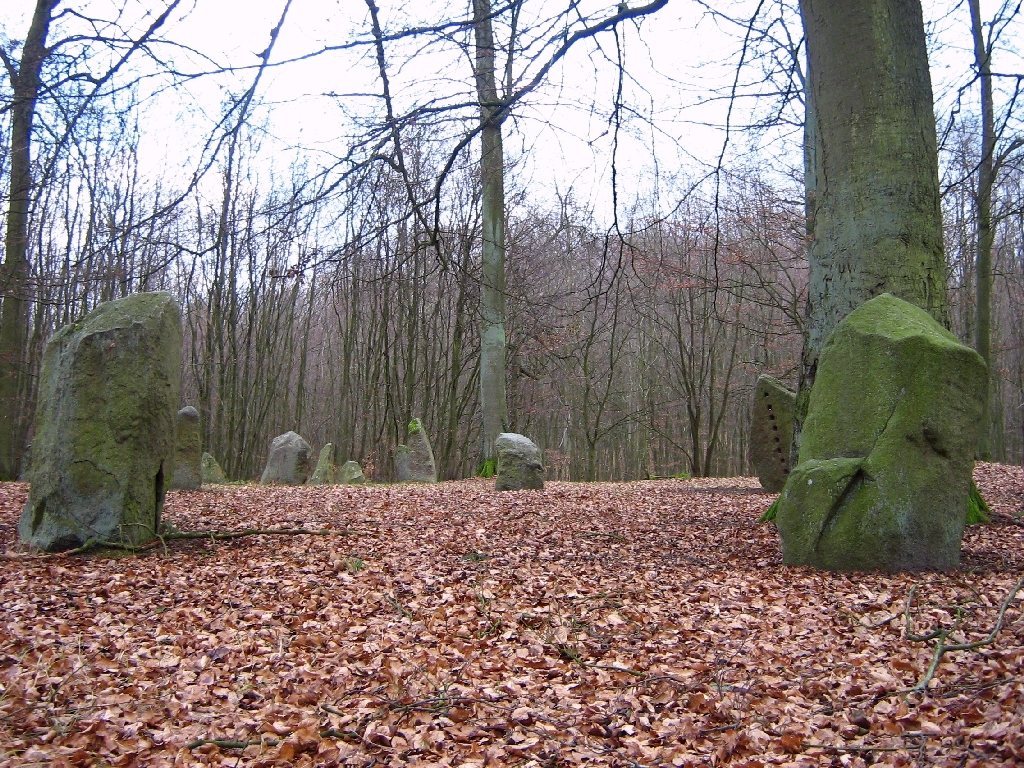
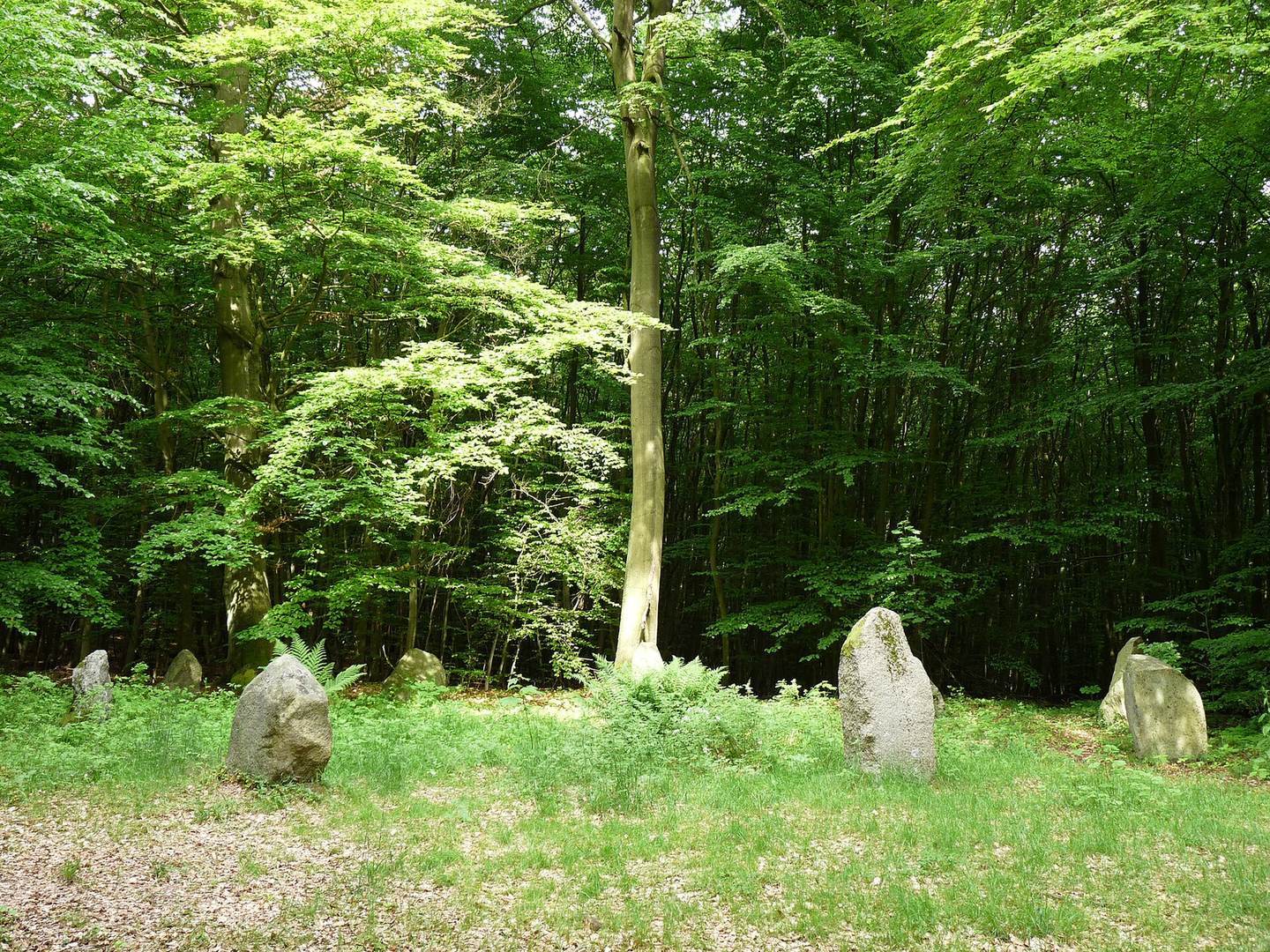
Three circles stand close together in woodland clearings, while a fourth lies about 140 m to their southeast, also in a clearing. Together, the circles contain 30 large upright stones, some reaching about 1.6 m high. Their diameters range from 8.0 to 13.6 m. The main stone in the largest circle is called the Brautlade. Its inner face has 13 square holes, of which 11 are visible; the holes are modern. A fifth circle may once have stood here, measuring about 6 m across and containing 10 stones.
Alignment between the circles
One stone in Circle III is split vertically, with the two parts standing close together. A sightline from the center of Circle I, apparently used as an observation point like those in Circles II and III, passes through the split and the center of Circle III toward the center of Circle IV. At least four stones, including the circle centers, lie along this alignment. Its angle to north is given as 133° 11′ 29″.
Proposed calendar interpretation
One interpretation calls Circles I–III the “Great Stone Dance” and Circle IV the “Little Stone Dance,” and reads the arrangement as a calendar. It assigns 28 days to the Great Stone Dance and links 13 stones in the Little Stone Dance to 13 lunar months, or cycles of the Moon’s phases. A separate stone outside the circles is interpreted as representing the year’s 365th day, or New Year’s Day. The same proposal treats four stones around Circle IV as a correction for the quarter-day difference in the year. It suggests that every fourth year the winter solstice, the year’s shortest-day point, was observed a day later or for an extra day, giving a year of 365¼ days.