St. Olav’s Church: A Medieval Parish Church in Norway
Site at a Glance
- Rating
- 4.6
- Popularity
- Very Low
- Country
- Norway
- Primary era
- Medieval
- Eras represented
- Medieval
- Civilizations
- Norwegian
- Site type
- Religious
- Remains
- Church
On this page8 sections
History
St. Olav’s Church, also called Skeidi Church, is a twelfth-century stone church ruin near Stathelle in Norway. Built before approximately 1150 in a Romanesque-Norman style influenced by English Norman architecture, it was dedicated to St. Olav, the eleventh-century king of Norway who became the country’s patron saint.
Medieval parish church
The church served as a center for the veneration of St. Olav by Gimsøy Abbey, a medieval monastic community. It was the principal church of the Grenland district and therefore held the highest status among the area’s churches. The building was consecrated on 4 October, although the year of consecration is unknown. Until 1738, the Skeidi parish included Sannidal, Skåtøy, Kragerø, and Bamble.
Parish and civic history
St. Olav’s Church belonged first to the Catholic Church and later became part of the Church of Norway under Evangelical Lutheran churchmanship. It was associated with the Agder og Telemark Diocese, Bamble deanery, and Bamble Parish.
In 1814, the church served as an election church and polling station during the elections to the Norwegian Constituent Assembly, the body that drafted the Constitution of Norway. The parish elected local electors, who then took part in choosing representatives for the assembly at Eidsvoll Manor.
Closure and revival
By 1840, the parish needed a new church. The old building was closed, and a new Bamble Church was constructed about 150 metres to the north and completed in 1845. A substantial quantity of stone from St. Olav’s Church was reused in the foundations of the new building. After closure, the old church deteriorated into ruins.
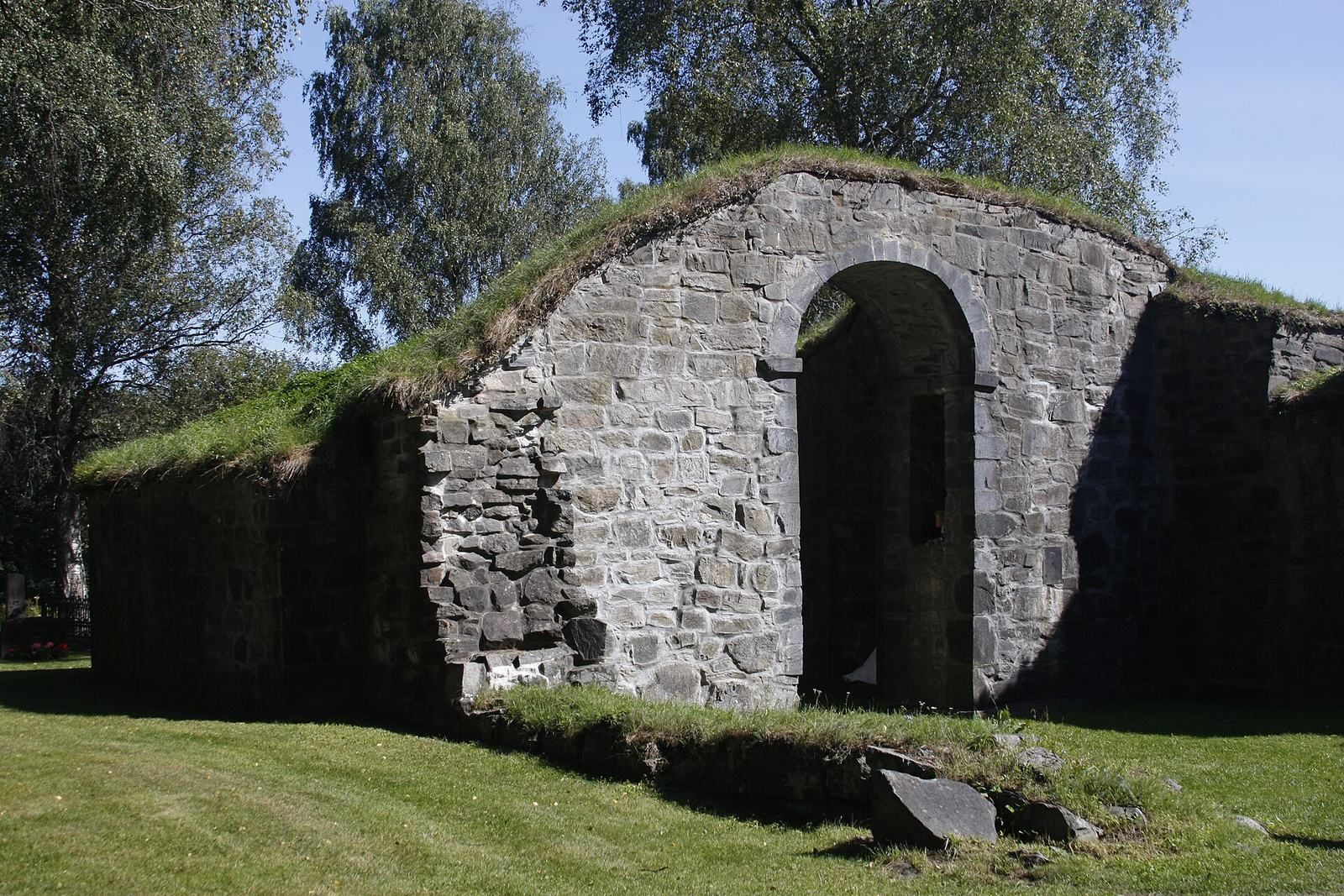
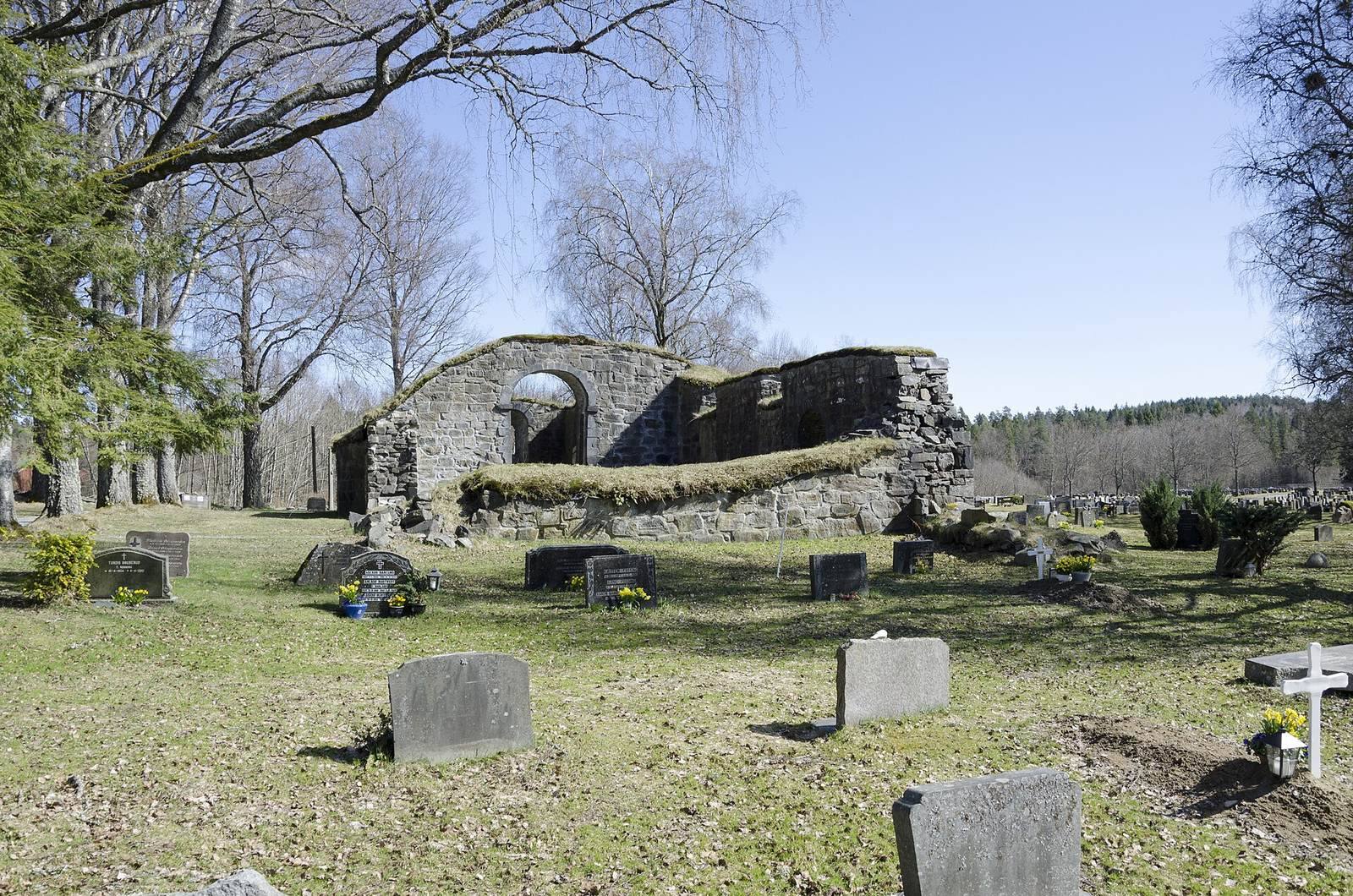
Proposals to rebuild the entire church were made during the 1950s, but they were not carried out. In the 1980s, the small chapel within the ruins was restored and rebuilt. Bishop Halvor Bergan consecrated it as Maria’s Chapel on 29 July 1988. The chapel has since hosted an annual Olsok service, the traditional commemoration of St. Olav on 29 July, as well as some weddings and baptisms. Since 1998, it has been heated, illuminated, and open throughout the year. The ruin is an automatically protected Norwegian cultural-heritage site.
Remains
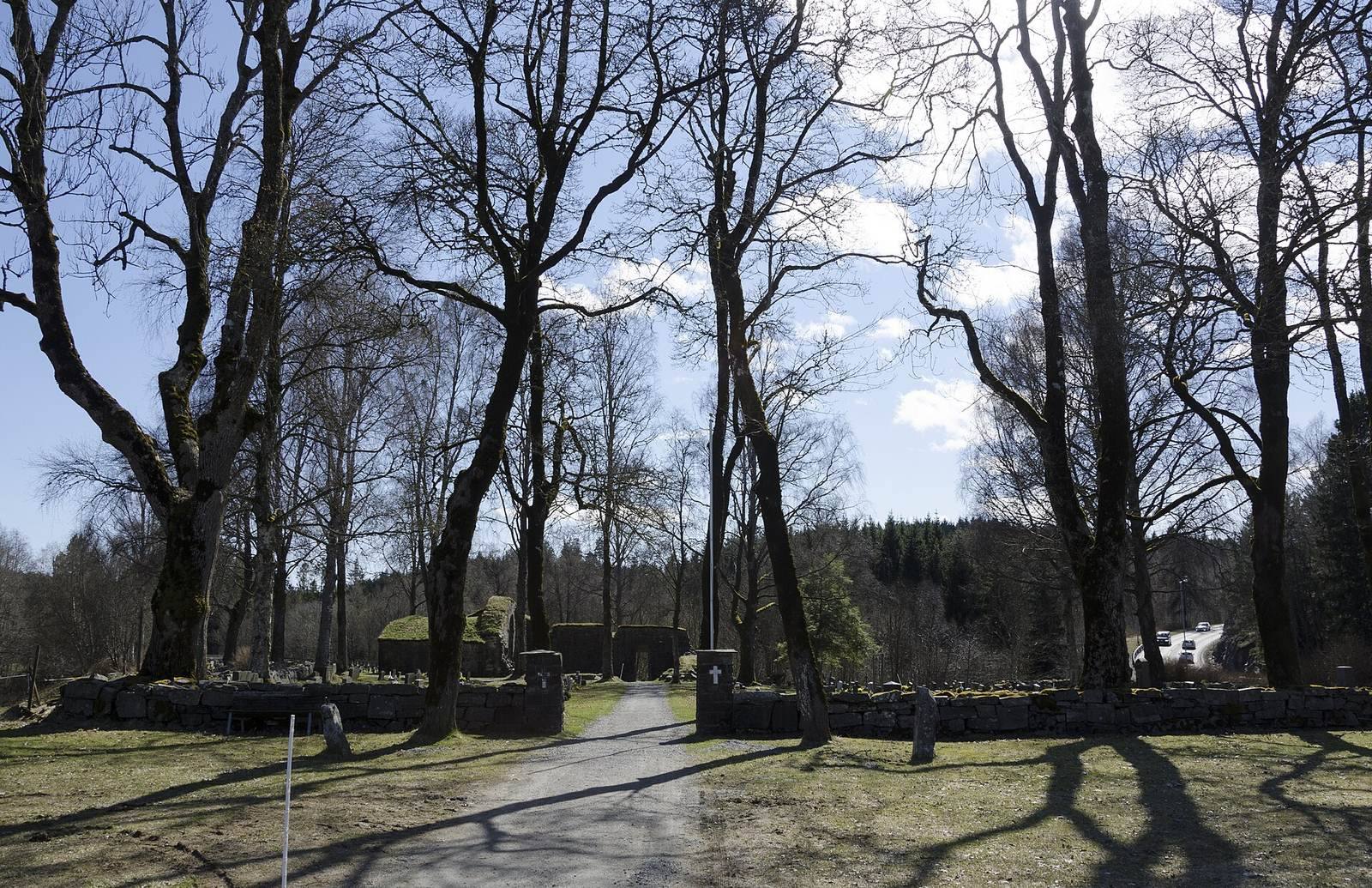
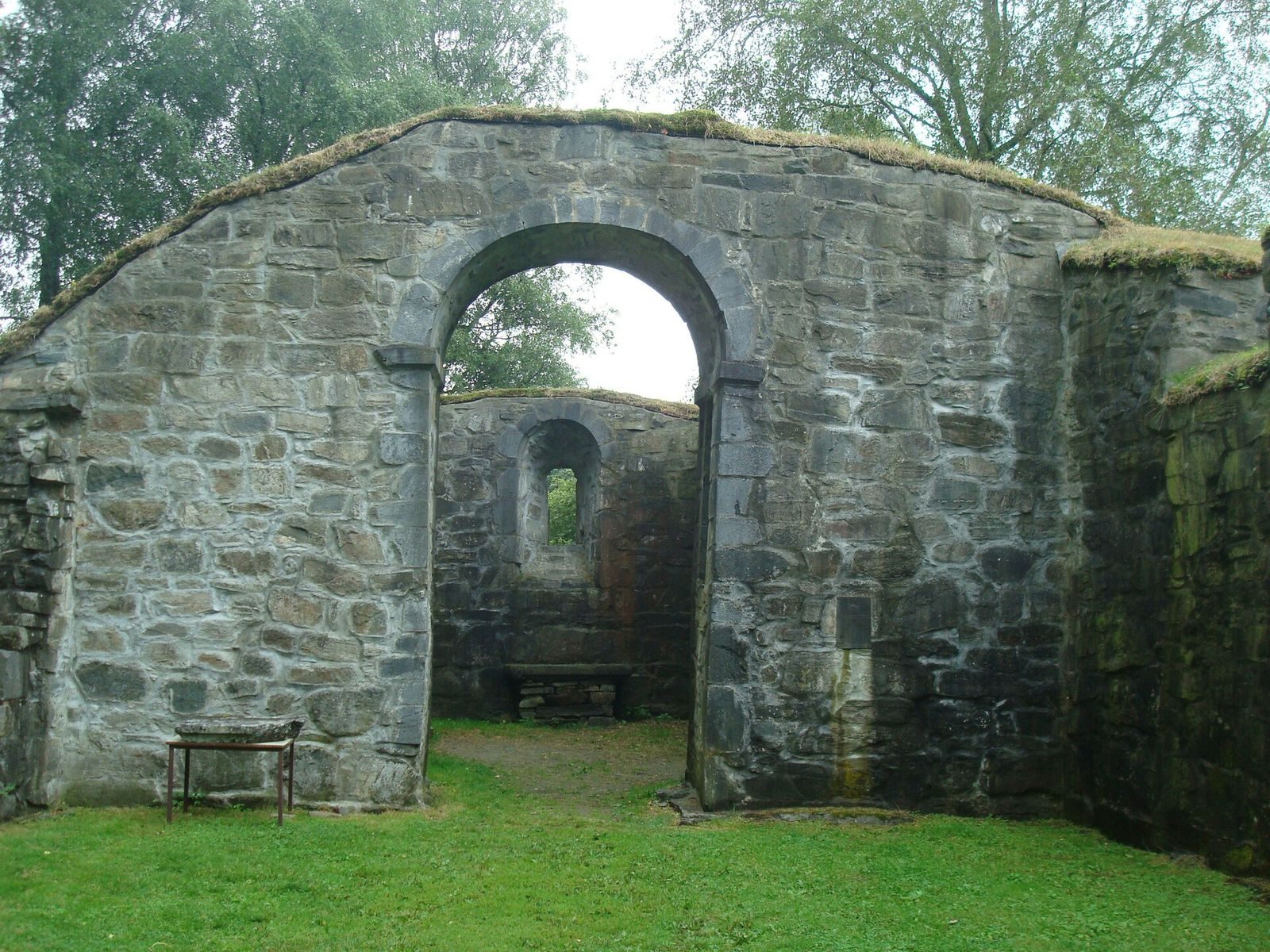
The surviving site consists of partly restored stone church ruins beside the European route E18, approximately 150 metres south of the newer Bamble Church. St. Olav’s was a long church with a rectangular nave and a narrower rectangular chancel. Only parts of the original walls remain, mostly on the south side, while the restored chapel occupies a room within the surviving structure.
Church layout and surviving fabric
Nave and chancel
The nave measured approximately 12.8 by 9 metres, and the narrower rectangular chancel measured about 5.2 by 4.1 metres. A medieval stone sacristy stood on the north side of the chancel. The church also included a lektorium, or chancel screen separating the congregation’s nave from the liturgical area around the altar. The western end is uncertain. The nave may have continued farther west than the visible remains indicate and may have included a west tower. If so, the church would have been the largest stone church in Telemark during its period.
Maria’s Chapel
The building contained a separate small room for worldly valuables, and this room now forms Maria’s Chapel. The chapel was restored and rebuilt within the ruins during the 1980s before its consecration in 1988. It remains part of the partly restored church complex, while the surviving walls preserve the outline and character of the medieval stone building.