St. Mary’s Church, Ystad: A Brick Gothic Parish Church in Sweden
Site at a Glance
- Popularity
- Medium
- Country
- Sweden
- Primary era
- Medieval
- Eras represented
- Medieval, Early Modern, Modern
- Civilizations
- Danish, Swedish
- Site type
- Religious
- Remains
- Church
On this page16 sections
History
Foundation and medieval development
St. Mary’s Church in Ystad, Sweden, began around 1200 as a Romanesque, three-aisled basilica, a long church divided into aisles. The building was dedicated to the Virgin Mary. Around 1275, it was expanded in the Gothic style, and further rebuilding followed during the 14th and 15th centuries.
A chapel dedicated to the Holy Cross was added on the south side in the 14th century. It served as both a sacristy, where clergy prepared for services and kept ritual objects, and a baptistery, a place for baptism. In the 15th century, the side aisles were extended toward the choir, the area near the main altar, to form a passage around it called an ambulatory. The present choir was also built during this period, giving the church much of its current form. The chapel was demolished around 1840, and some of its parts were reused. A south entrance porch, where armed men had to leave their weapons before entering, was demolished during the 1840s.
Storm damage and rebuilding
A storm in the mid-17th century toppled the tower and severely damaged the church’s western parts. Rebuilding included a Renaissance-style transept, the crosswise section of a church, in 1650. The tower was reconstructed toward the end of the century.
Church life and tower watch
The church was formerly Roman Catholic and is now part of the Church of Sweden, an Evangelical Lutheran church. It serves as the parish church of the Evangelical Lutheran Ystad parish, within the Diocese of Lund. A tower-watch tradition began in the mid-18th century. Through the night, a watchman looked out for fires and sounded a horn at regular intervals both to show he was awake and to call residents to fight a blaze. Neglect of this duty could be punished by death until the mid-19th century. The traditional fire-watch signal continues as a performance.
Alterations and restoration
Architect Carl Georg Brunius directed major alterations in the 1830s, including a partial reconstruction. In 1886, municipal architect Peter Boisen oversaw changes to the interior. A cement floor was laid, while old benches, epitaphs, decorated pew panels, and much of the interior decoration were removed for aesthetic reasons. A restoration led by vicar Sam Stadener in 1923–24 aimed to recover the church’s earlier appearance. Tomb slabs and epitaphs were returned to their former positions, and some old pews were reinstated.
Remains
Plan and medieval fabric
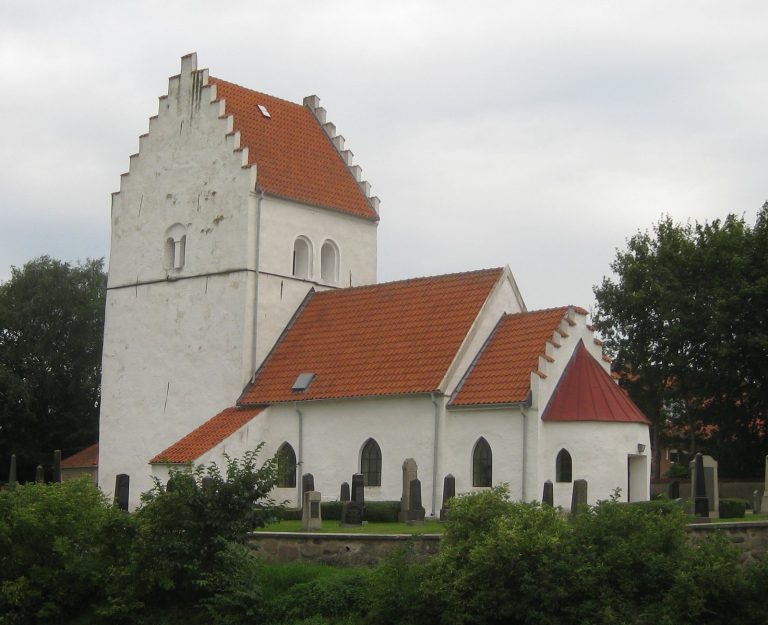
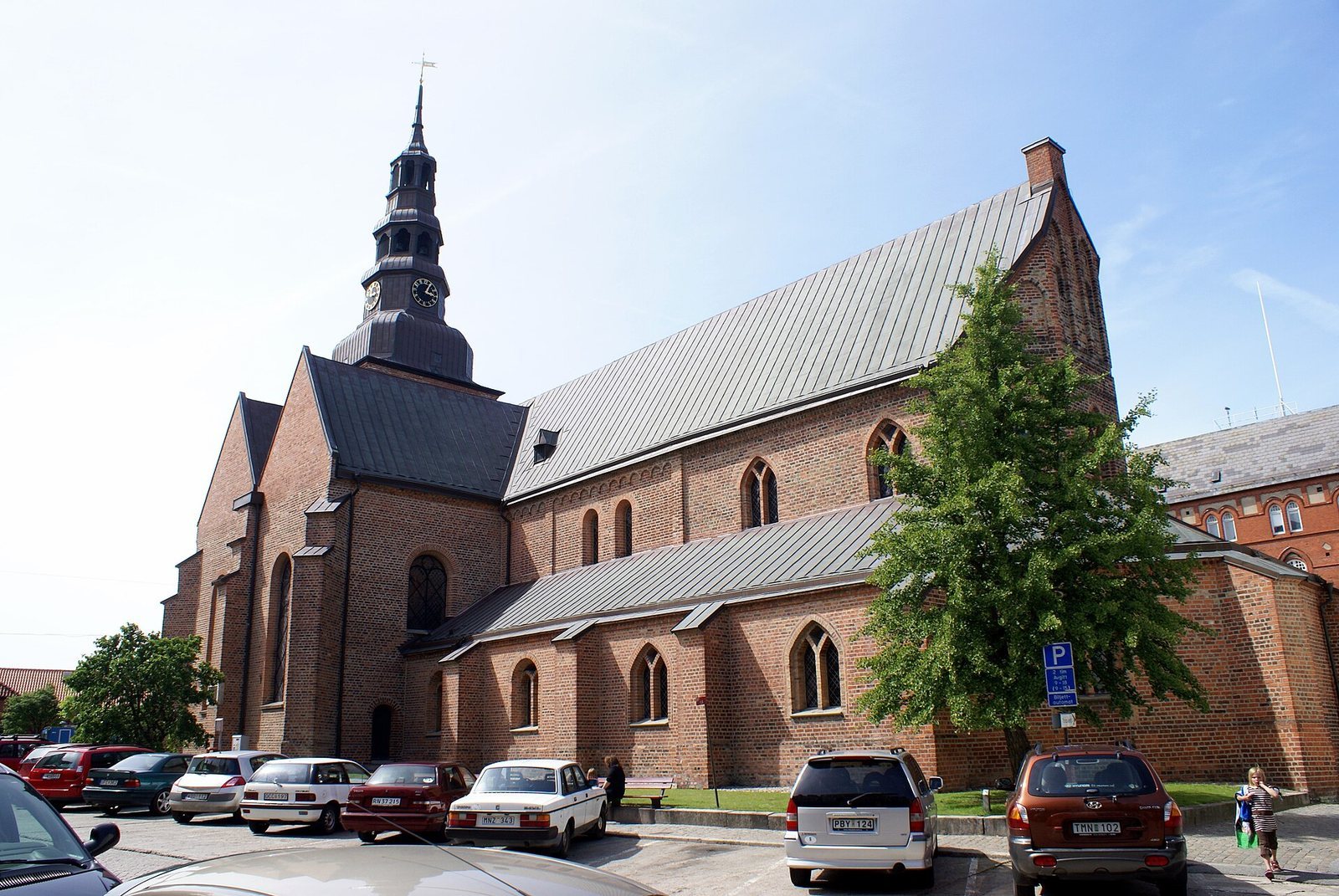
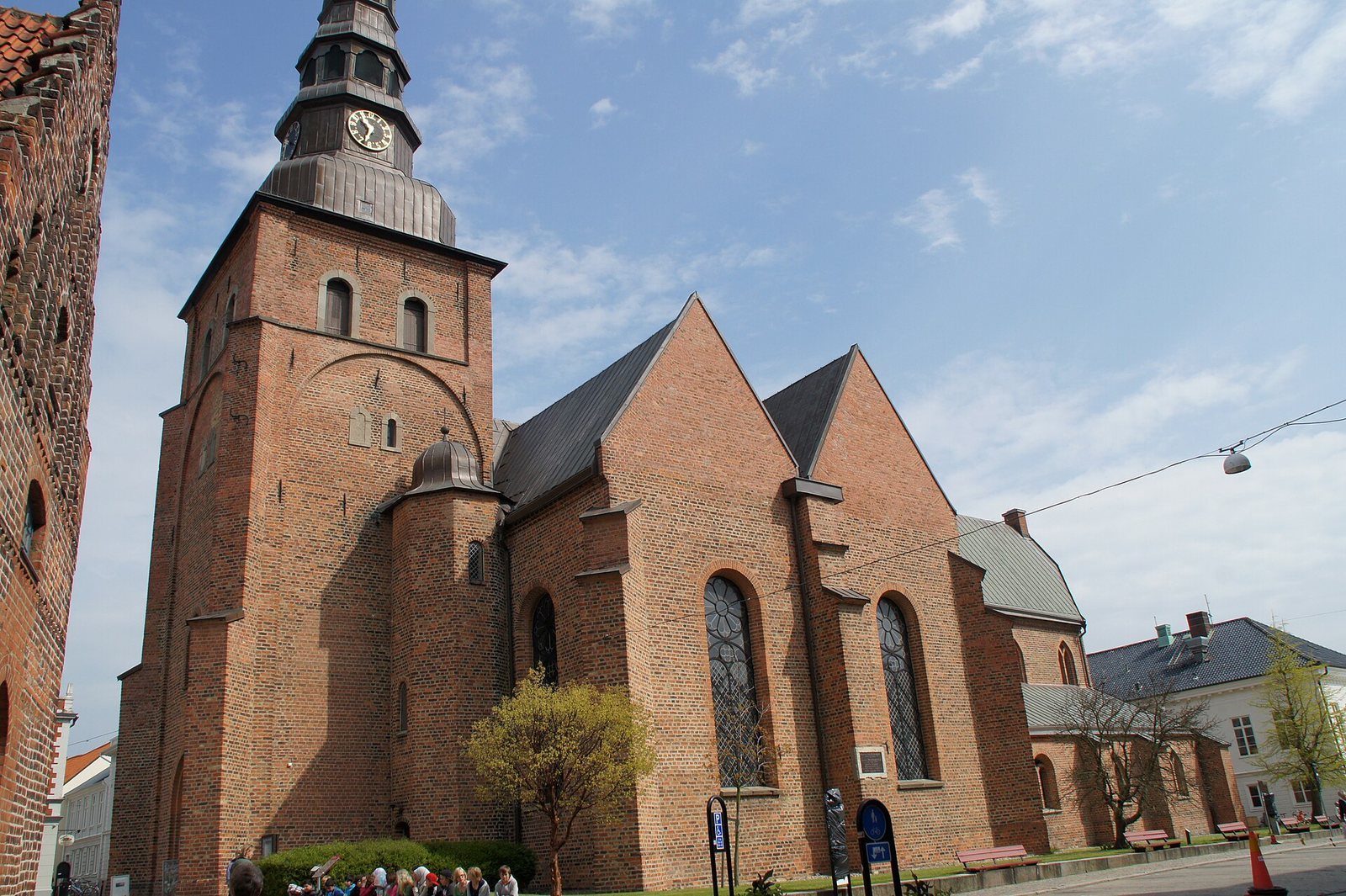
The brick church has three aisles, a transept, a choir with an ambulatory, and a single tower 51 metres high. Its original basilica, about 18 metres long, stood between the present choir and pulpit. The central nave first had a flat ceiling; around 1275, a pointed vault, or vaulted ceiling with a pointed profile, was added. A mural-decorated fragment of this vault is the oldest surviving part of the church, and other mural fragments remain among its interior features. The 15th-century choir and extended side aisles form a late Gothic arrangement with pointed arches. Brunius’s 1830s alterations added exterior buttresses, projecting supports against the walls, and larger windows.
Tower and transept
The church’s 51-metre tower has a Baroque form, while the transept is Renaissance in style. Together they reflect the rebuilding that followed the 17th-century storm damage.
Sculpture and preaching furnishings
The pulpit
Made of limestone between 1626 and 1631, the pulpit is a major Baroque work from Scania. A separate carved wooden canopy rises above it. Reliefs show the Annunciation, the Nativity, the Last Supper, the Crucifixion, and the Resurrection. Gilded angels surround the monogram CIV, interpreted as a tribute to Christian IV, king of Denmark and Norway from 1588 to 1648. A figure of Moses, with gilded hair and beard, supports the pulpit, and a sculpted face appears beneath it.
Crucifixes and figures
A medieval crucifix stands opposite the pulpit. King Charles XII ordered it placed there as a reminder of Christ’s suffering. The figure of Christ has real human hair donated by a 19th-century parishioner. Another crucifix, dated to 1523 and attributed to the German sculptor Hans Brüggemann, stands beneath the chancel arch, which marks the division between the nave and chancel. It originally stood in the Holy Cross chapel with figures of Mary and John; those figures now stand beside the altar. The organ front bears Charles XII’s monogram in commemoration of his stay in Ystad with his troops before their campaign toward Narva. The monogram does not establish that he visited the church.
Altar, organ, and baptismal furnishings
Altar and ambulatory
Johan Jerling made the Baroque wooden altar between 1718 and the early 1730s. Its surface imitates marble, and its two paintings by Carl Mört depict the Last Supper and the Baptism of Jesus. Mört included a portrait of himself among the thirteen figures in the Last Supper scene. A painting of Saint Dorothy hangs in the ambulatory.
Organ gallery and organ
Carl Mört created the organ gallery in the early 18th century and decorated it with biblical motifs. The present organ was made by the Hammarberg company of Gothenburg and installed in 1966.
Baptistery furnishings
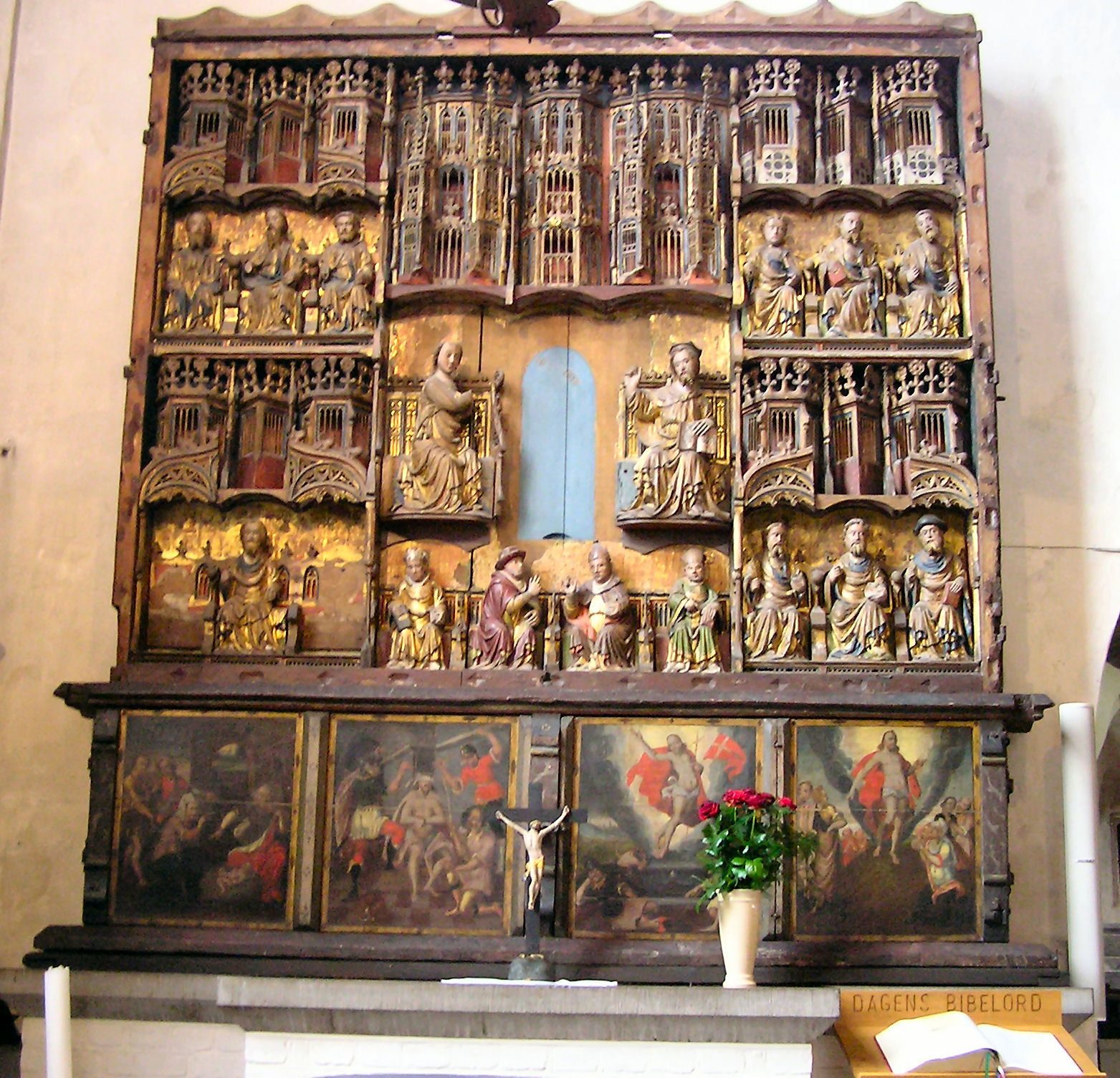
The baptistery holds an incomplete 15th-century altarpiece of painted and gilded oak, made in northern Germany. Its lower section is decorated with paintings. A bronze baptismal font, cast in Lübeck in 1611, is also preserved in the church.
Other furnishings and bells
An iron chandelier with five candles, made in an early Gothic style, dates to the 14th century. Green pews enclosed on either side of the entrance were intended for women who had not yet been readmitted to church after childbirth. The church has three bells: the large bell was recast in 1672, the middle bell dates to 1558, and the small bell to 1624. A carillon, a set of bells arranged to play melodies, was installed in the tower in 1970 and has 36 bells.