St. Marineh Church, Muş: The City’s Armenian Mother Church

Site at a Glance
- Rating
- 3.6
- Popularity
- Very Low
- Country
- Turkey
- Primary era
- Medieval
- Eras represented
- Medieval
- Civilizations
- Armenian
- Site type
- Religious
- Remains
- Church
On this page5 sections
History
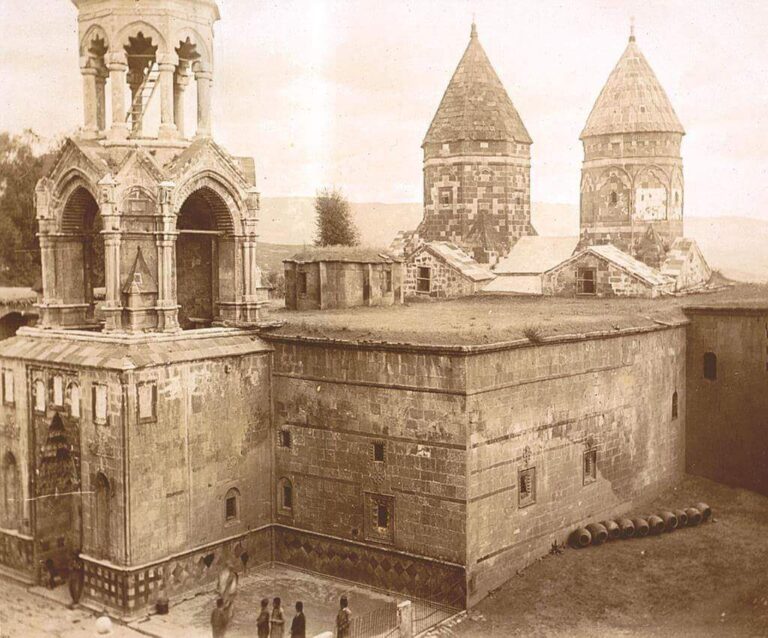
St. Marineh Church is a sixth-century Armenian Apostolic church in Muş, Türkiye, built in the Armenian architectural style and completed during that century. It served as the city’s mother church, meaning its principal Armenian church, and functioned until 1915. The church was regarded as the most splendid and beautiful in Muş and as the most notable church in the wider Tarawn region, the historical area associated with the city in eastern Anatolia.
The city’s cathedral
The church belonged to the Armenian Apostolic Church, the historic Christian church of the Armenians. It was sometimes called Katoghike, an Armenian ecclesiastical term meaning “cathedral.” St. Marineh was one of eight Armenian churches in Muş. Five of the city’s churches were standing and functioning during the nineteenth and early twentieth centuries, including St. Kirakos, St. Sarkis, Holy Saviour, Holy Gospels, St. Stephen, Holy Resurrection, and St. Gregory the Illuminator among the churches associated with Muş.
Destruction in 1915
During the 1915 Armenian genocide, the mass deportation, killing, and persecution of Armenians in the Ottoman Empire during the First World War, St. Marineh Church was destroyed. The building was also converted into a prison where Armenian fedayees, armed volunteers and irregular fighters active particularly in the late Ottoman period, were arrested and confined. Its surroundings were later used as rubbish dumps.
St. Marineh is described as the only Armenian church in Muş to have survived in any form. Its history therefore preserves the memory of the city’s Armenian ecclesiastical community and of the destruction that transformed the church from a functioning religious center into a ruin.
Remains
Surviving church fabric
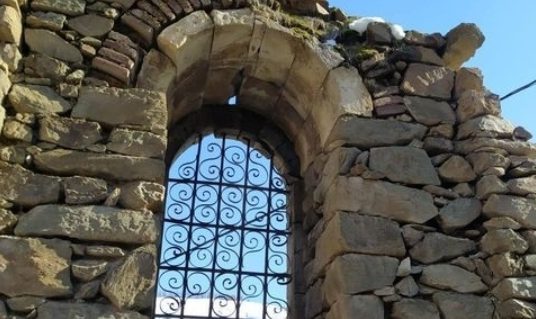
The church survives as a ruin or semi-ruined structure in Muş. Its remaining fabric consists of parts of the outer walls, which preserve a limited portion of the building’s Armenian architectural form. The surviving walls are the physical remains of the sixth-century church that served as the city’s mother church until its destruction in 1915.