St. Johannes Evangelist (Marburg): A Late-Gothic Catholic Parish Church
Site at a Glance
- Rating
- 4.6
- Popularity
- Very Low
- Country
- Germany
- Primary era
- Medieval
- External website
- Open
- Eras represented
- Medieval, Early Modern
- Civilizations
- Holy Roman Empire
- Site type
- Religious
- Remains
- Church
On this page9 sections
History
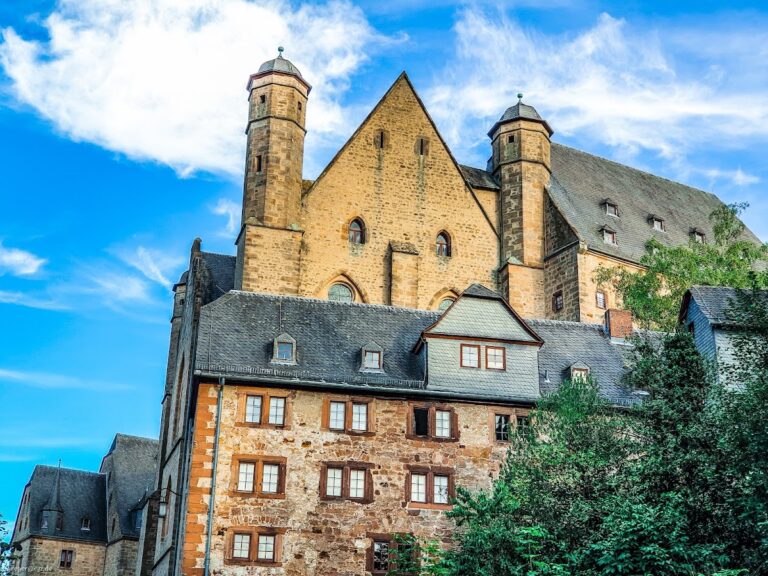
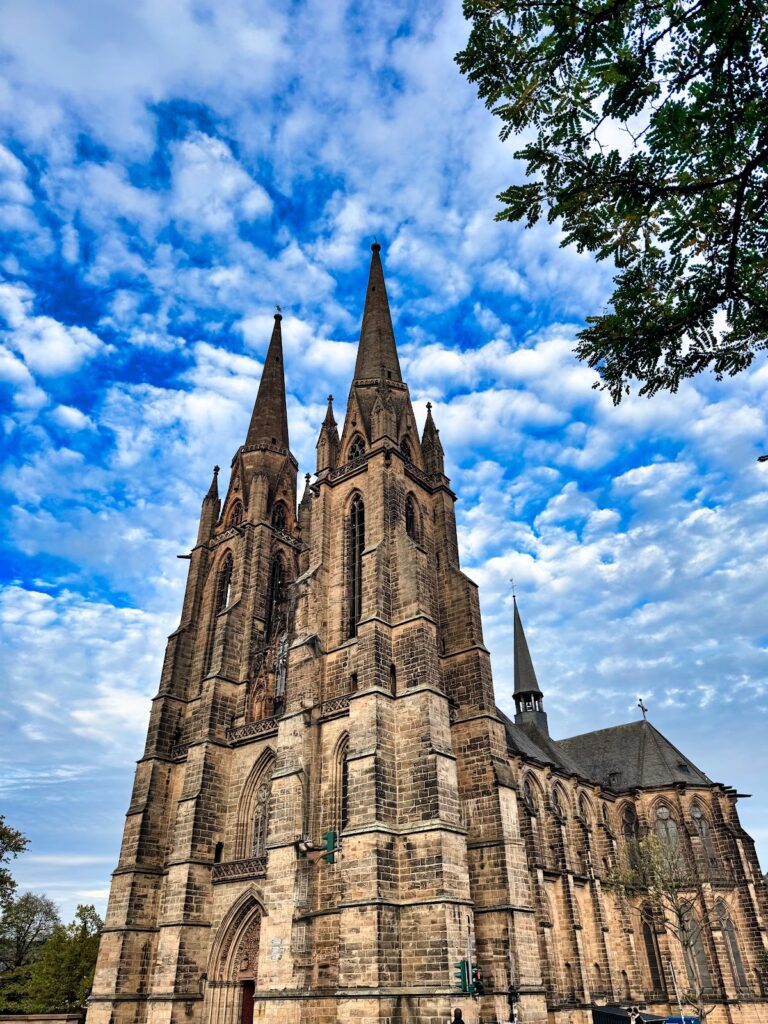
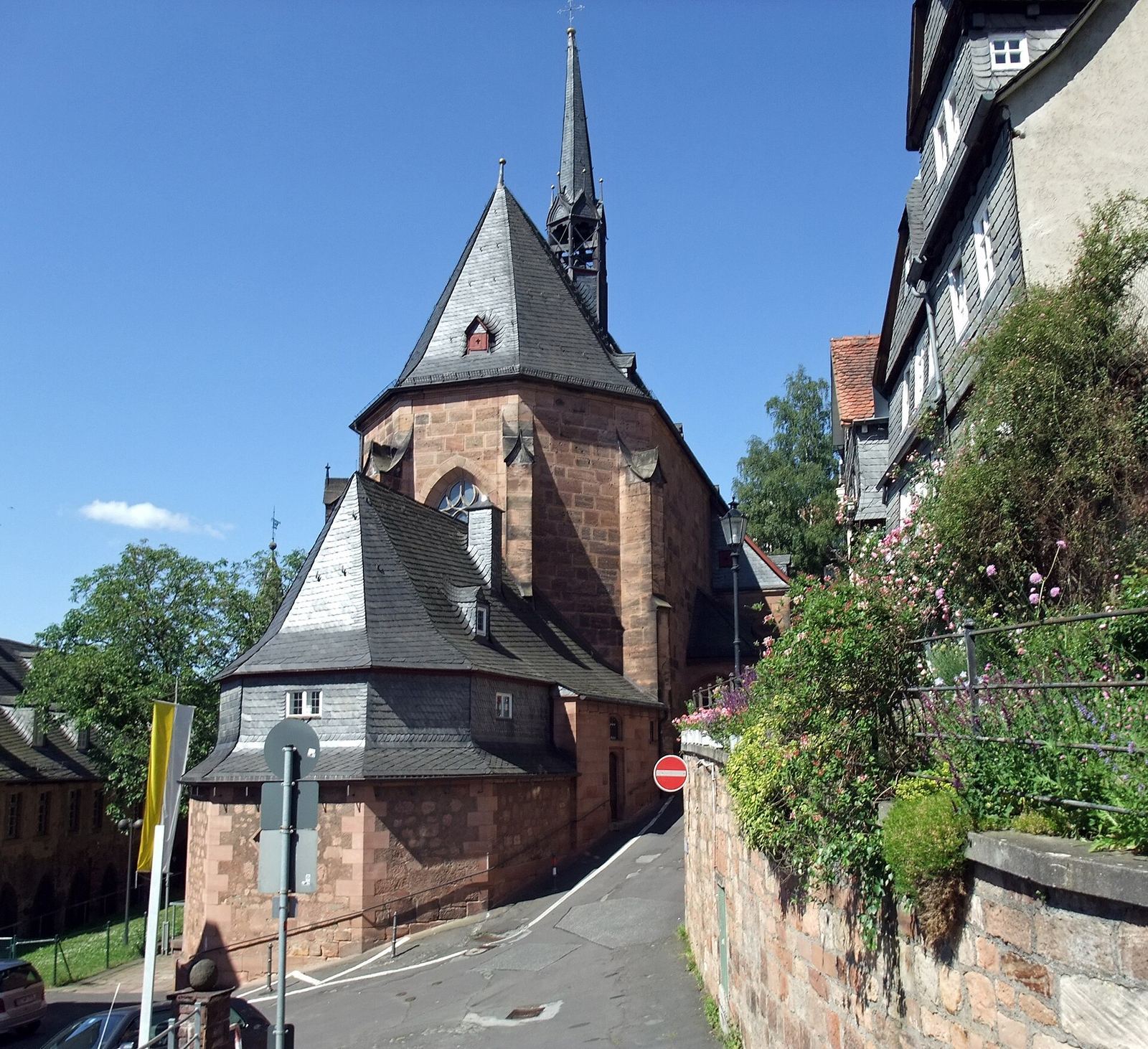
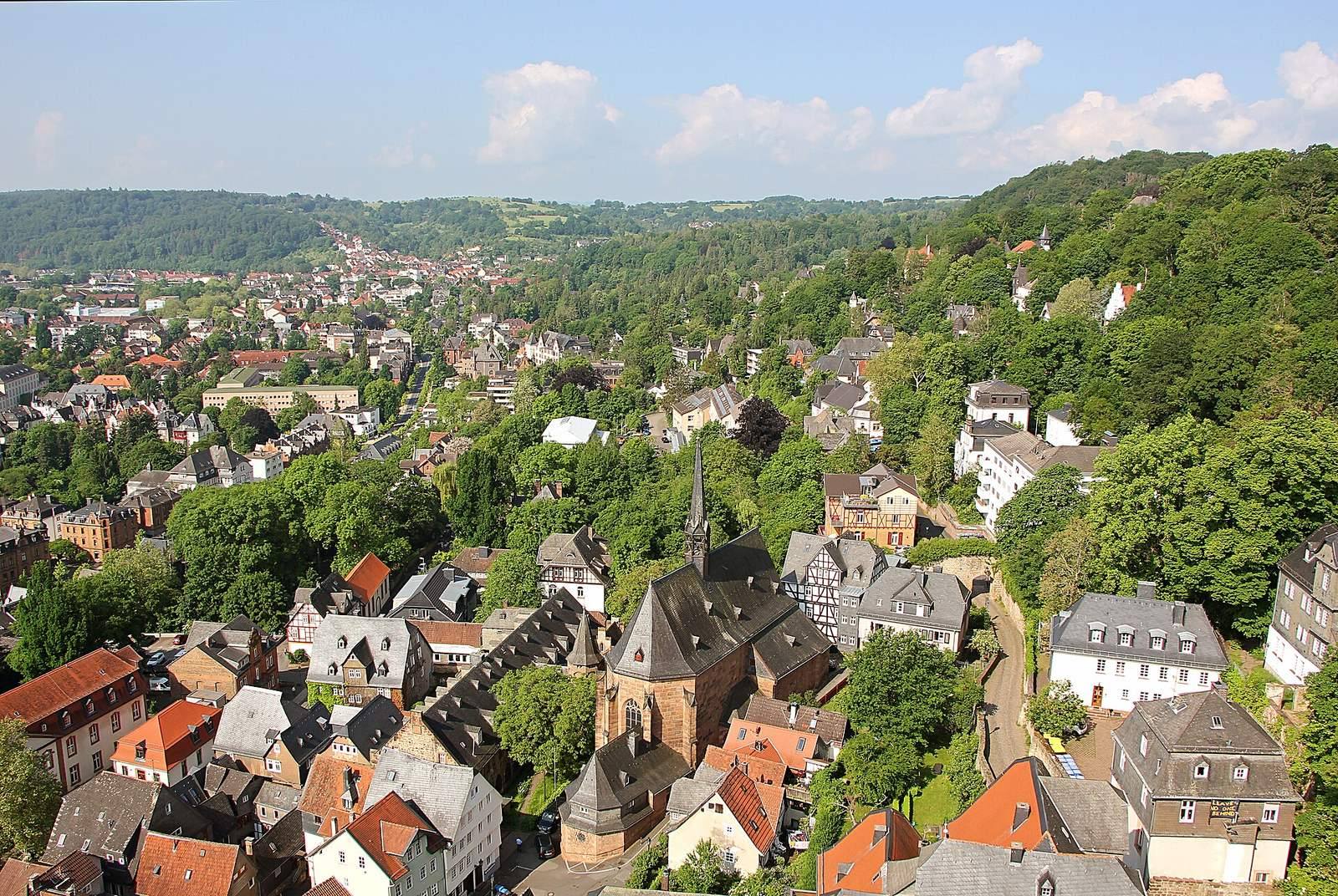
St. Johannes Evangelist is a Catholic parish church in Germany, in the upper town of Marburg. Built in the late Gothic period between 1492–1495 and around 1520, it is described as the city’s youngest medieval sacred building. The church originally formed part of the monastery of the Kugelherren, a community belonging to the Brothers of the Common Life, whose members lived communally and emphasized religious devotion, education, and disciplined daily life.
Foundation as a Kugelherren monastery church
Construction began between 1492 and 1495, and the church was completed around 1520. Its names, Kugelkirche and Kugelgasse, come from the gugel, a medieval hood or cap with a long, pointed extension worn by the brothers. The building therefore retained a direct connection with the community that established the monastery and shaped the identity of the surrounding street.
The church’s late-Gothic fabric belongs to the final medieval phase of sacred construction in Marburg. The net vault bears the date 1516, placing one of its principal architectural and decorative features within the period of construction.
University use after 1527
The monastery was dissolved in 1527, after which the church was bequeathed to the newly founded University of Marburg. The university later used the building for periods as an assembly hall and as a lecture hall for its theological faculty. This change transferred the church from a religious community to an academic institution while preserving its use as a substantial public interior.
Parish church and modern alterations
Since 1827, the Catholic parish has owned St. Johannes Evangelist and used it as its parish church. The Marburg architect Karl Rumpf added the sacristy in 1929. A fundamental restoration in 1967 primarily redesigned the choir to meet changed liturgical requirements resulting from the liturgical reform.
Remains
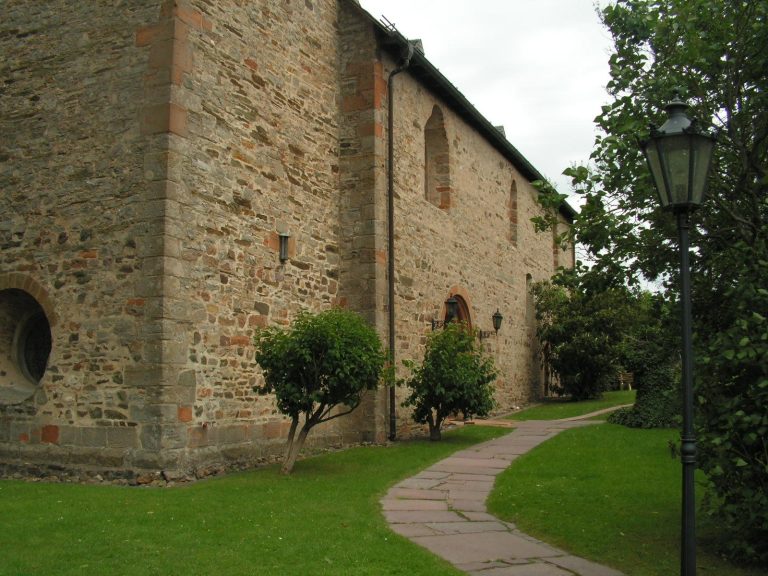
St. Johannes Evangelist is a single-nave church with six bays, a five-eighths termination, and a transept projecting at the west. A five-eighths termination is a polygonal choir ending based on five sides of an octagon. The two western bays have lower side spaces, whose interiors were altered by the insertion of galleries at the end of the nineteenth century. Large south-side and choir windows brighten the interior and contain late-Gothic tracery, the geometric stone framework within Gothic windows.
Nave and choir
The nave and choir are organized around slender wall shafts set slightly forward from the walls. In the nave, the shafts descend to just below the window sills and finish in smooth sloping surfaces. In the choir, they continue down to plinths. In both areas, they primarily articulate the walls rather than serve as direct supports. The choir also contains the sacristy added in 1929.
Net vault and Gothic painting
The elaborate net vault dates from 1516. A net vault is a Gothic rib vault in which intersecting ribs create a mesh-like pattern. Here, the ribs cross in the zone of the capitals, continue into the walls, and form the vault’s network without resting on corbels or wall shafts. After the first third of its length, each transverse arch divides into two arms directed toward keystones positioned laterally. Keystones, the stones at the meeting points of vault ribs or arches, carry coats of arms and, in some cases, stylized or naturalistic foliage.
A late-Gothic painting from 1516 covers the intersections of the vault with floral and ornamental lines. The decoration works together with the crossing ribs and carved keystones to emphasize the complex geometry of the ceiling.
Altars and sacramental furnishings
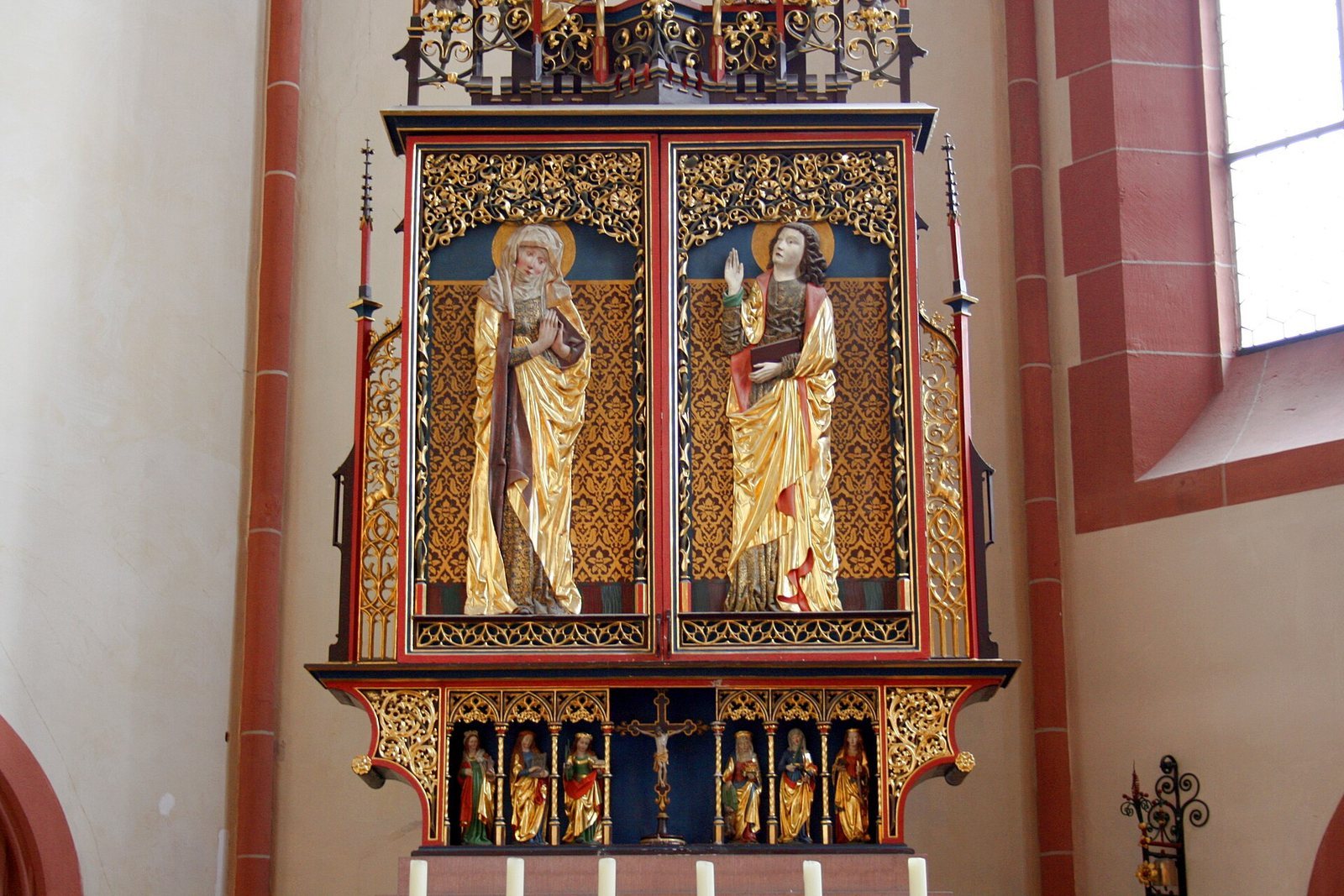
The north side contains a large tabernacle shaped like a delicate, openwork Gothic tower spire. A tabernacle is a Catholic receptacle for the consecrated Eucharistic elements. The Neo-Gothic high altar, made at the end of the nineteenth century, presents a Marian program focused on the Virgin Mary. Some of its wooden figures are late Gothic and date from the end of the fifteenth century.
A Neo-Gothic Elisabeth altar stands beneath the gallery, while the baptismal font has elaborate Neo-Gothic forms. Together, these furnishings represent later additions and arrangements within the medieval church interior.
Organ
Gerald Woehl of Marburg built the organ in 1976. The purely mechanical instrument has 38 stops distributed across four manuals and a pedal. Manuals are keyboard divisions, while the pedal is operated with the feet. Trumpet stops are placed in the fourth manual division rather than the main division, giving the instrument its distinctive arrangement. Its couplers link divisions I/II, III/II, IV/II, I/P, II/P, III/P, and IV/P. Shut-off valves control the main division and the pedal.