St Helen’s Church, Abingdon: An English Gothic Parish Church
Site at a Glance
- Rating
- 4.6
- Popularity
- Medium
- Country
- United Kingdom
- Primary era
- Medieval
- Eras represented
- Medieval, Early Modern
- Civilizations
- English
- Site type
- Religious
- Remains
- Church
On this page18 sections
History
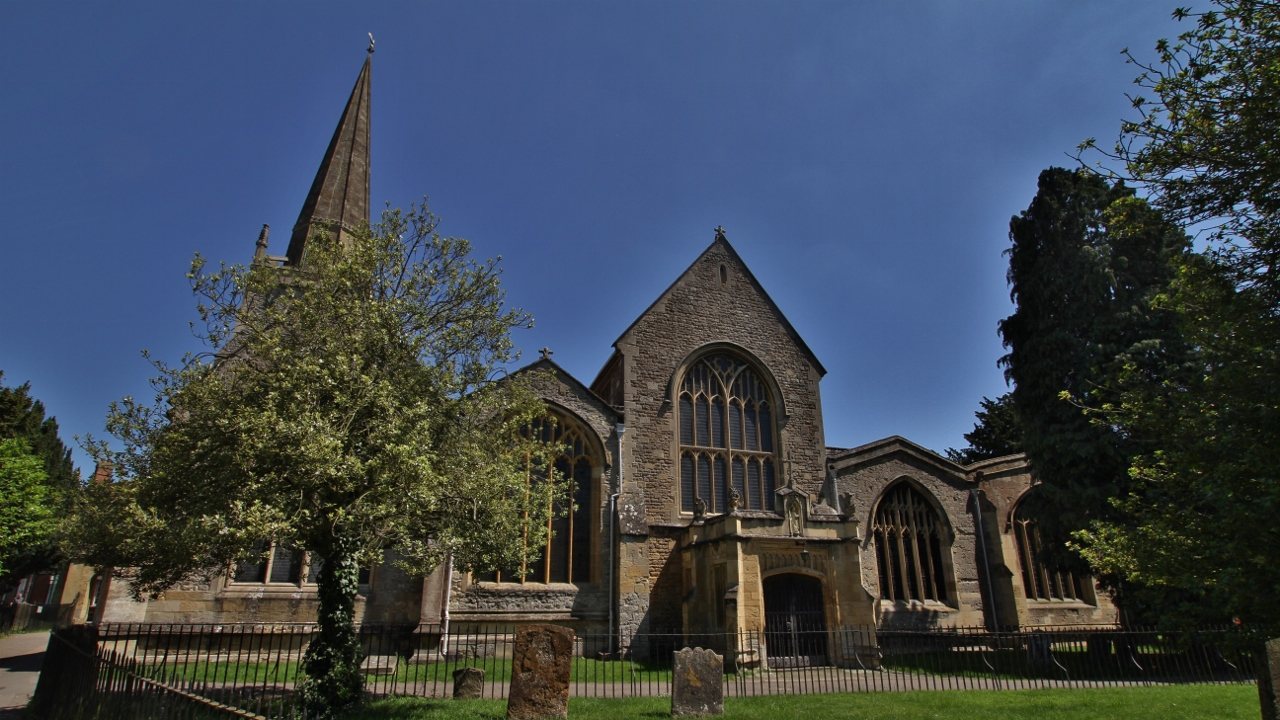
St Helen’s Church, Abingdon, is an English Gothic parish church in Oxfordshire, United Kingdom, with its earliest surviving fabric dating to the late twelfth or early thirteenth century. It is thought to occupy the site of Helenstowe Nunnery, an Anglo-Saxon religious community of women. Dedicated to Saint Helen, commonly identified with Saint Helena and traditionally regarded as the mother of the Roman emperor Constantine, the church remains an active Church of England parish church. It belongs to the parish of Abingdon-on-Thames, within the Diocese of Oxford and the Province of Canterbury.
Parish development
St Helen’s former parish reached beyond Abingdon to Shippon, Dry Sandford, Radley, Kennington and Drayton. In 1372, a separate ecclesiastical parish, or church district, was formed for St Nicolas. This divided Abingdon between two church parishes until they were reunited in 1989.
Radley, including Kennington, and Drayton remained nominally within St Helen’s parish until the nineteenth century, although they operated in practice as independent communities. Shippon and Dry Sandford became separate church parishes in 1865 and 1867. During the nineteenth century, Radley and Drayton also became separate civil parishes, which are local administrative districts. In 1894, the part of St Helen’s civil parish within Abingdon joined the civil parish of St Nicholas to form the civil parish of Abingdon; the remaining area became St Helen Without.
Restoration and listed status
From 1869 to 1873, the church was restored to plans by Henry Woodyer, an architect associated with the Gothic Revival, a later movement that returned to Gothic forms. St Helen’s received Grade I listed status on 19 January 1951.
Remains
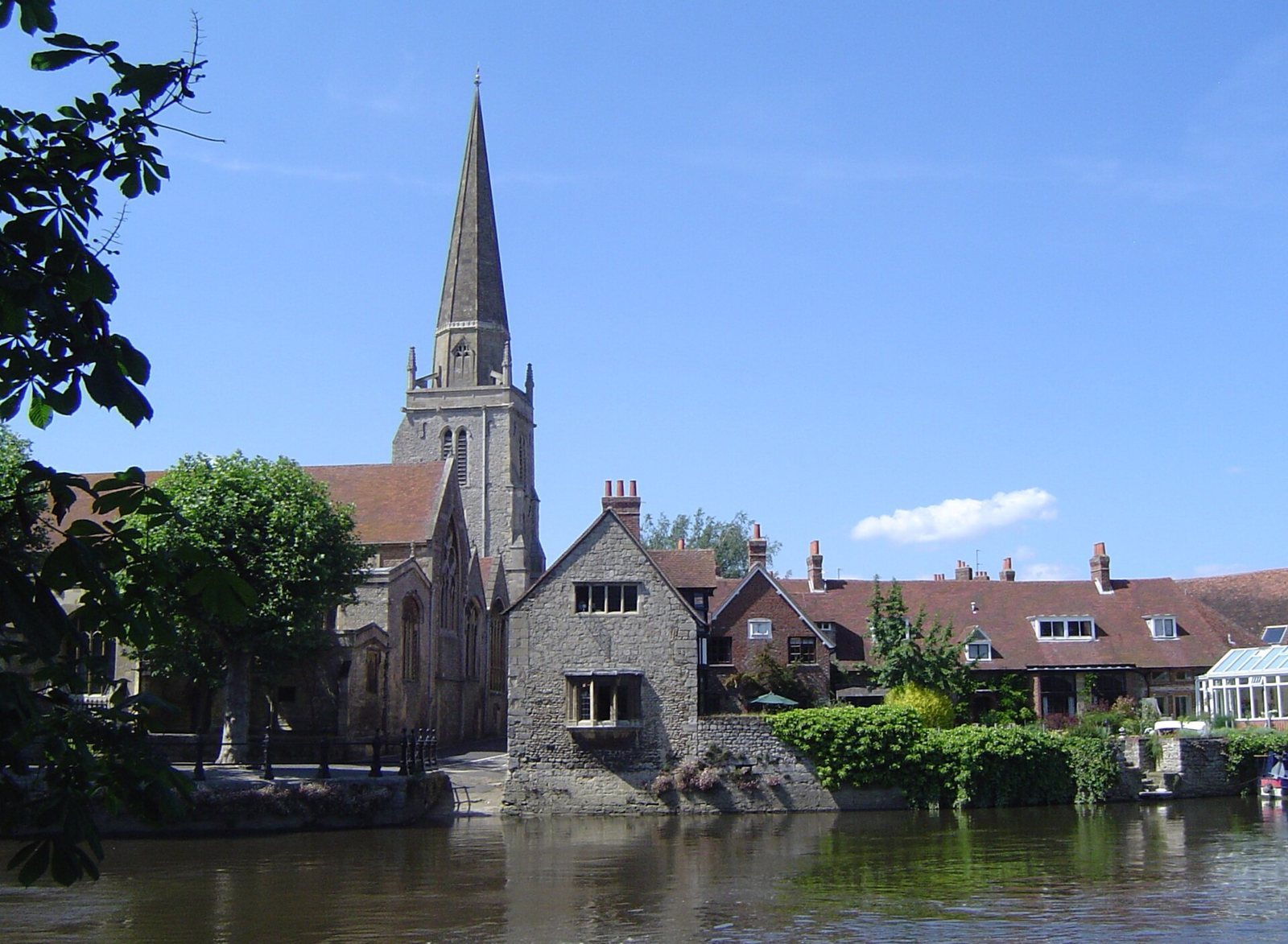
Built of stone on the bank of the River Thames, the church includes a north aisle and a northeast tower. Its spire is a landmark of the town.
Church fabric and decoration
Windows and spire
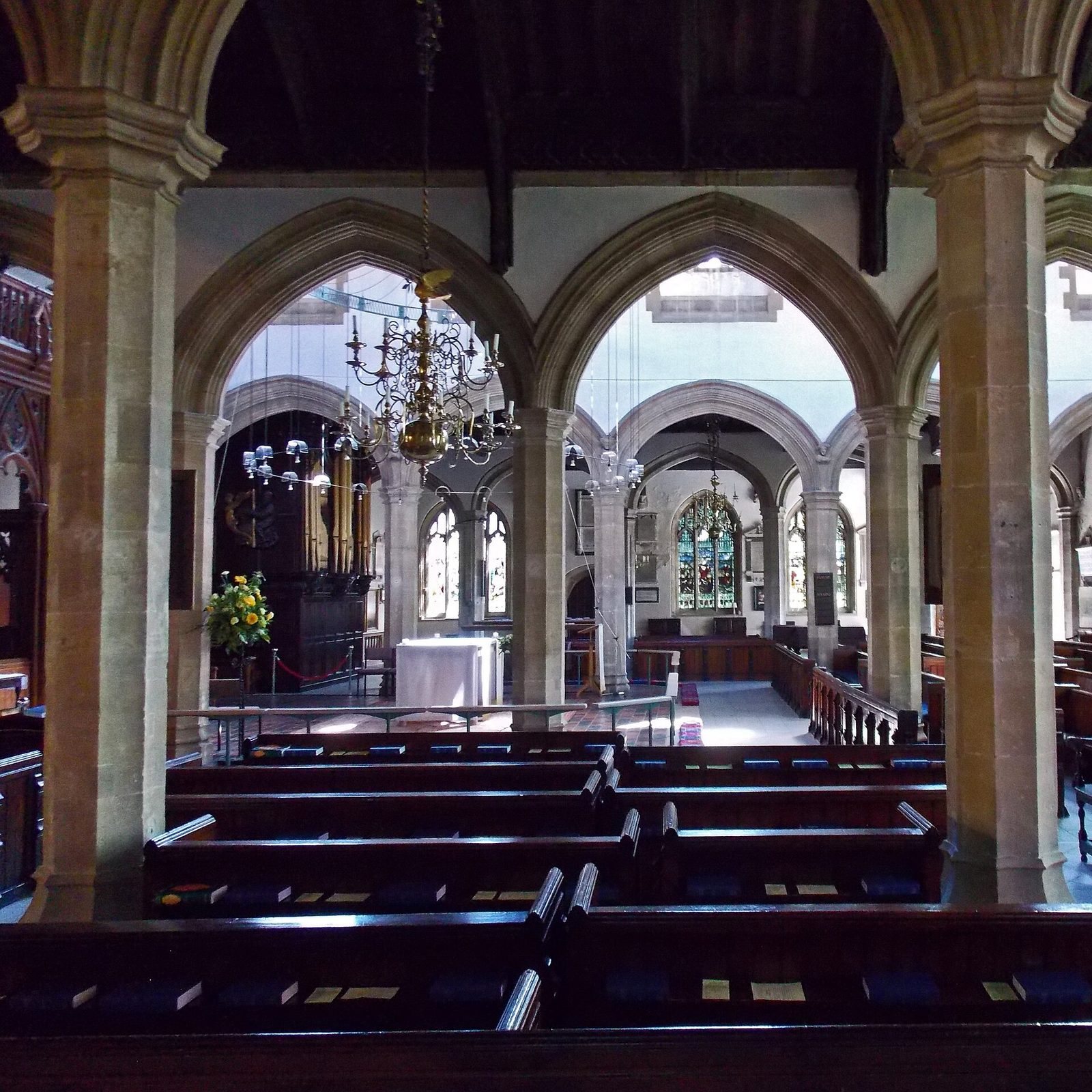
Some of the church’s windows date from the fourteenth century, and the building was remodelled in the fifteenth and sixteenth centuries. The spire remains a defining feature of its town setting.
North aisle ceiling
Painted panels in the north aisle ceiling date to about 1390. They depict the Tree of Jesse, a Christian image showing Jesus’s ancestry through Jesse, the father of King David.
Bells and clock
Ringing bells
The northeast tower holds a ring of ten bells, a set rung together in changing sequences. Cast by the Whitechapel Bell Foundry in 2005, they were hung by the local bellhangers Whites of Appleton. The earlier ring began with eight bells cast by Lester and Pack of Whitechapel in 1764. Several bells were later recast as the ring grew to ten, and its seventh bell was recast in 1970. One bell is recorded as weighing 1,790 pounds (0.81 tonnes). The previous bells were rehoused elsewhere when the new ring was installed.
Sanctus bell
A sanctus bell, a small bell associated with parts of the Christian communion service, was cast by Ellis I Knight of Reading, Berkshire, in 1641.
Clock bell
The church clock has a bell cast by Henry Bond of Burford in 1902. It had previously been the eighth bell in the ring of ten at Long Crendon, Buckinghamshire. The former eighth bell from Abingdon then took its place at Long Crendon.
Almshouses around the churchyard
Three groups of almshouses, charitable residences traditionally provided for people in need, stand around the churchyard. Architectural historian Nikolaus Pevsner considered this concentration unmatched among churchyards.
Long Alley Almshouses
The Long Alley Almshouses were built in 1446.
Twitty’s Almshouses
Twitty’s Almshouses were built in 1707.
Brick Alley Almshouses
Brick Alley Almshouses were built in 1718.
Painting and memorial
Turner’s Abingdon
J. M. W. Turner’s painting Abingdon, dating to about 1806, includes the church spire. Its principal scene is thought to show Dorchester-on-Thames, several miles away.
William Lee memorial tablet
A memorial tablet depicts the family tree of William Lee and his descendants. Lee, who lived from 1545 to 1637 and served five times as Abingdon’s mayor, is credited by its inscription with 197 offspring. Jerome K. Jerome refers to the memorial in Three Men in a Boat.