Sretenje Monastery: A Serbian Orthodox Monastery on Mount Ovčar
Site at a Glance
- Rating
- 5
- Popularity
- Medium
- Country
- Serbia
- Primary era
- Early Modern
- Eras represented
- Early Modern, Modern
- Civilizations
- Ottoman
- Site type
- Religious
- Remains
- Fortified Monastery
On this page13 sections
History
Sretenje Monastery is a Serbian Orthodox monastery on Mount Ovčar in Serbia, dating to the sixteenth century. It belongs to the Diocese of Žiča and is one of the ten monasteries of the Ovčar-Kablar gorge. Serbia designates it a cultural monument of great importance.
Origins and early destruction
The monastery’s first written mention is in a 1571 record at Jovanje Monastery. It was destroyed in 1623, then destroyed again in 1690 during the Great Migration of Serbs. This large movement took Serbian communities from Ottoman-controlled areas into Habsburg lands and was led by Patriarch Arsenije III Crnojević, the senior bishop of the Serbian Orthodox Church.
A foundation tradition connects the church’s location with a crown thrown from Mount Ovčar’s summit. The story says a church was to be built where the crown landed, and links the name of the hill above the monastery, Koronjsko Brdo, to the event.
Nićifor Maksimović and restoration
In 1818, the monk Nićifor Maksimović began a major restoration after completing work at Preobraženje Monastery. The work restored the church, monastic residences and defensive walls. At the request of Prince Miloš Obrenović, Maksimović was appointed archimandrite of Sretenje, a senior monastic cleric, in recognition of his service. He later became Bishop of Užice, a senior church leader responsible for a diocese. He died in 1853 and was buried in the monastery church.
War and later monastic life
German forces bombed the monastery in 1941. Sretenje has been a women’s monastery since 1948. Its abbesses have included Ana Adžić (1947-1951), Jovana Srbović (1951-1975), Minodora Šišović (1975-2005), Akvilina Stokić (2005-2020) and Nina Stokić from 2021. Conservation and restoration work on the buildings and wall paintings took place in 1988.
Remains
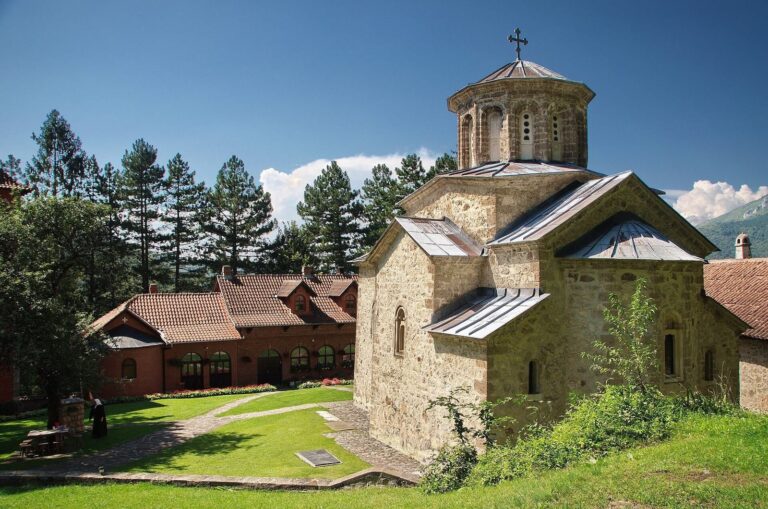
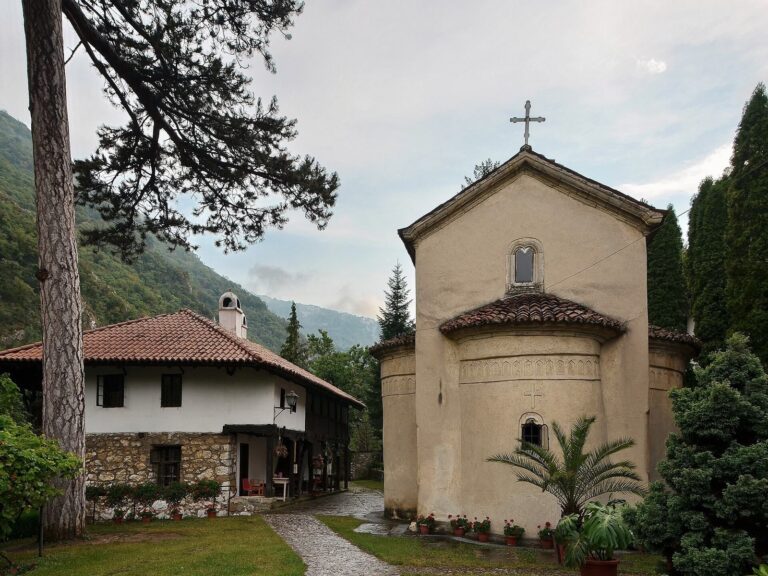
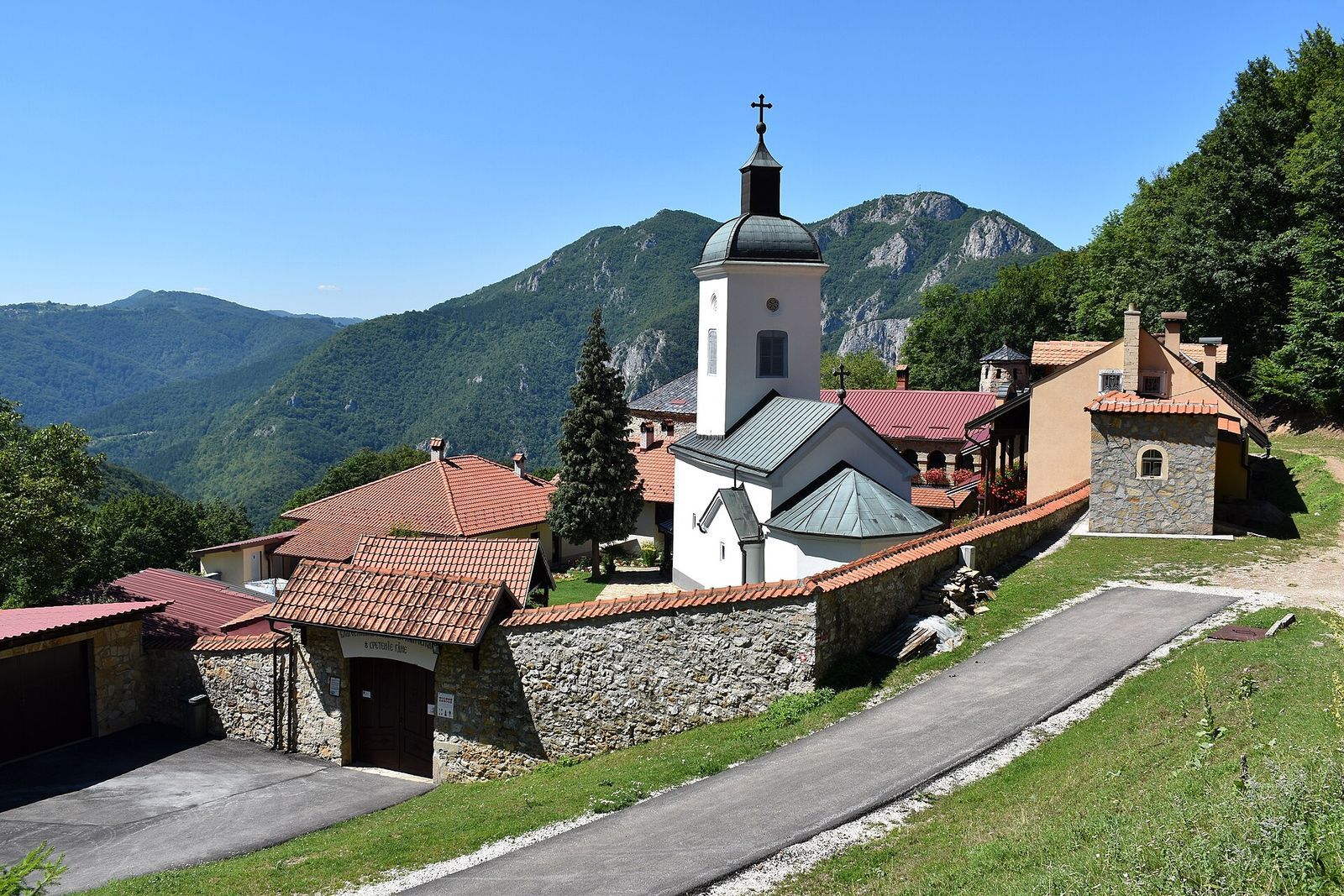
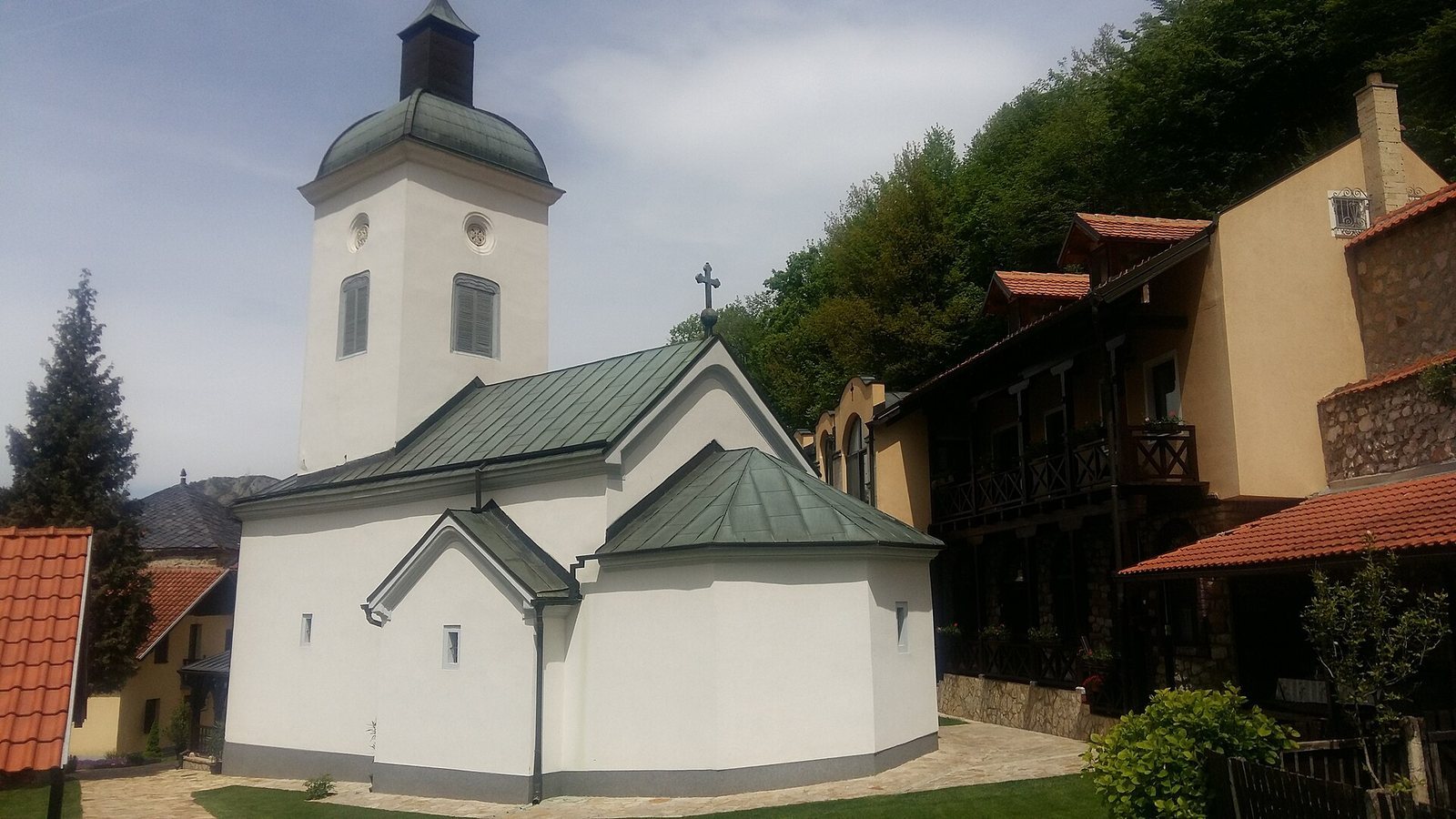
The monastery stands at about 800 metres above sea level, near Mount Ovčar’s summit and the spring of Koronjski potok. Its precinct includes the church, monastic residences and an enclosing wall. A later large residence within the precinct has an attached chapel.
The church
Plan and fabric
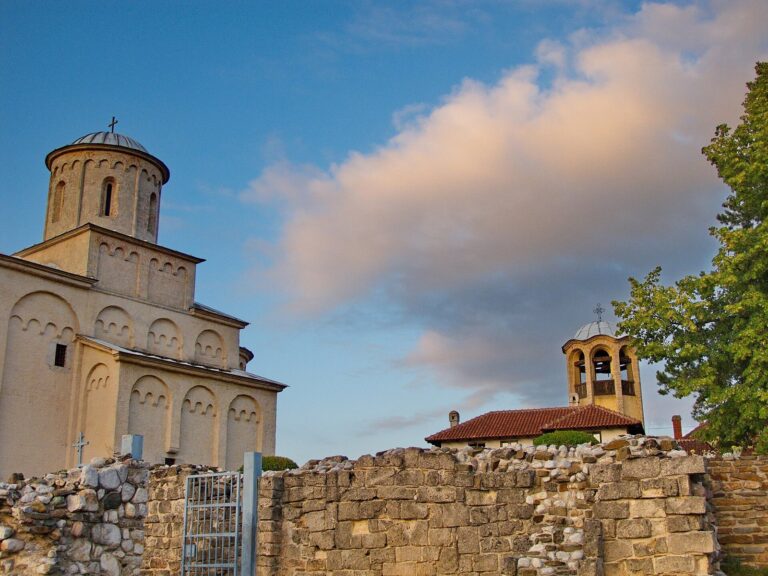
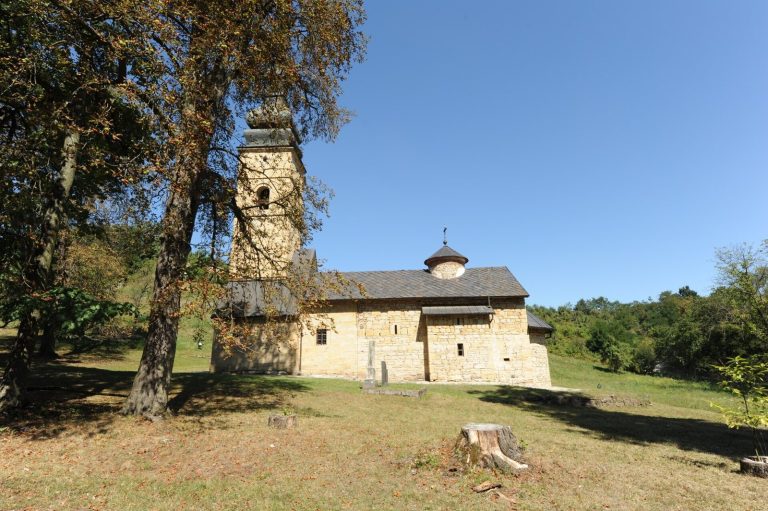
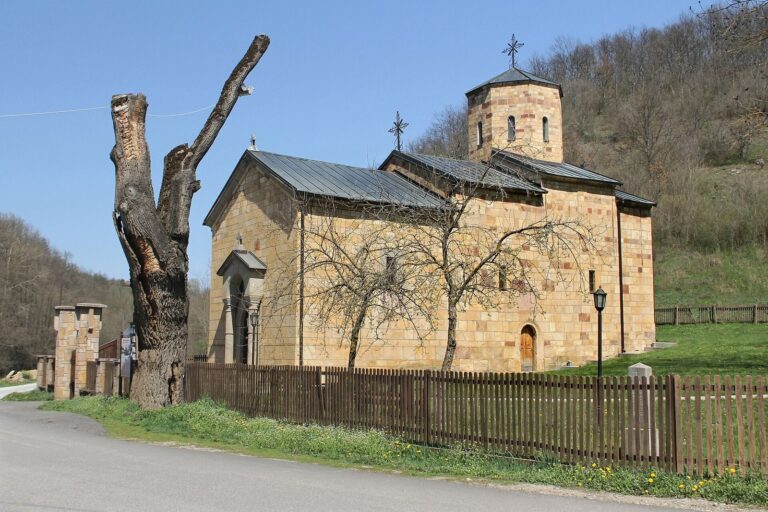
The church has a single nave, with shallow rectangular choir spaces at its sides and a deep altar section that is pentagonal on the exterior. An almost square entrance vestibule, or narthex, has a bell tower above it. A barrel vault, a continuous tunnel-shaped ceiling formed by an extended arch, covers the church; a closed dome rises over the vestibule.
The exterior is simply finished, with a stone base and a slightly shaped molding along the roof edge. The lower masonry of the nave and altar section, the masonry altar screen and a marble carving on the raised reading stand date to the late sixteenth century. The carving features a six-pointed star bordered by heart-shaped ivy leaves.
Paintings and church furnishings
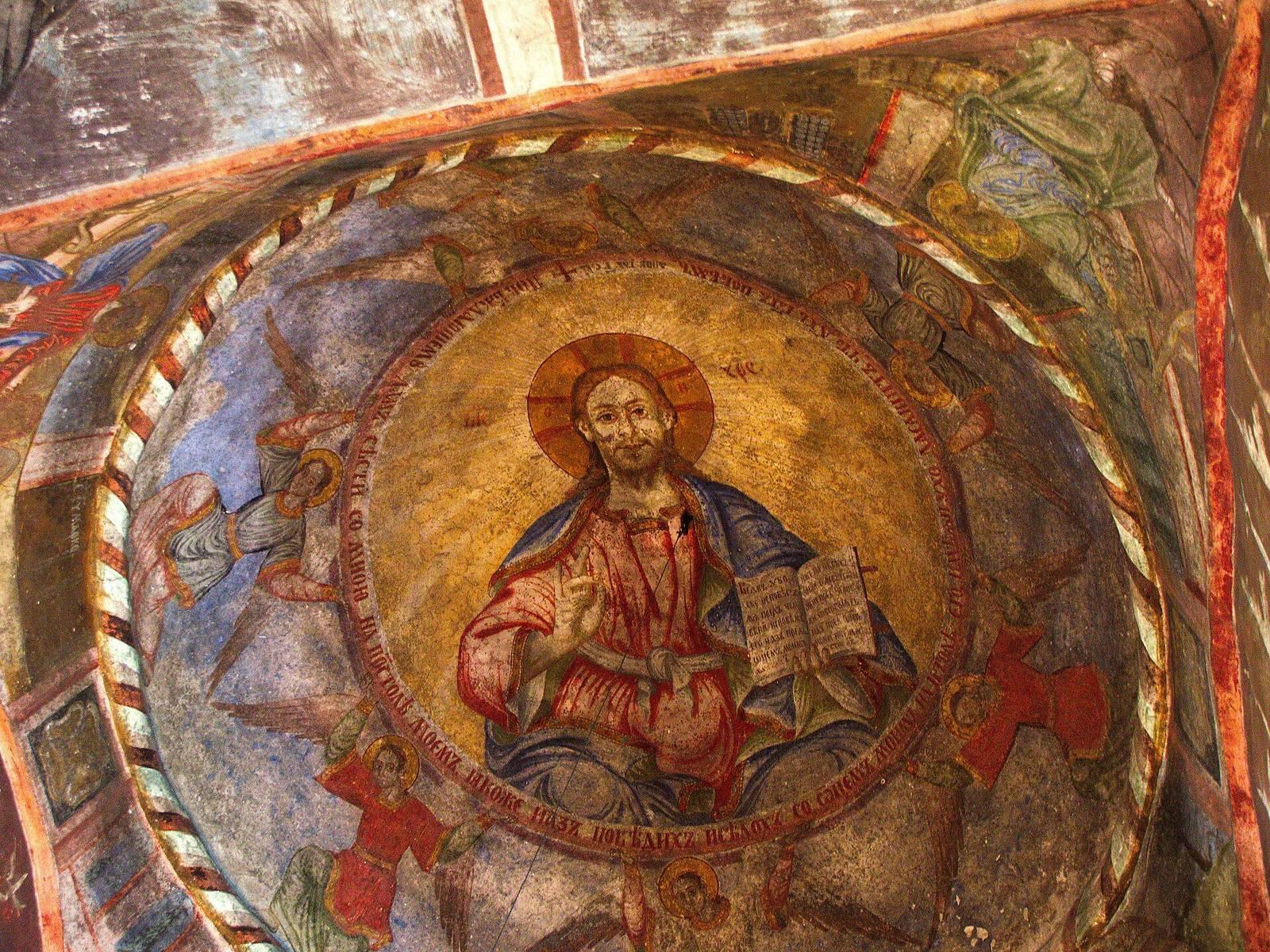
Paintings in the nave, altar area and on the altar screen date to 1844 and are by Živko Pavlović of Požarevac. Nikola Janković painted the vestibule. Their restrained approach reflects strict religious and artistic choices, with a few Baroque elements, under the influence of Maksimović’s deep religious outlook. An altar fresco shows an angel binding a priest’s hands because he is unworthy and unprepared to lead the church’s liturgy.
The church’s annual feast is the Presentation of Christ in the Temple, commemorating Jesus’ presentation at the Temple and observed on 15 February.
Other buildings and collections
Enclosing wall
A wall enclosing the monastery complex dates to 1845.
Residences and vineyard estate
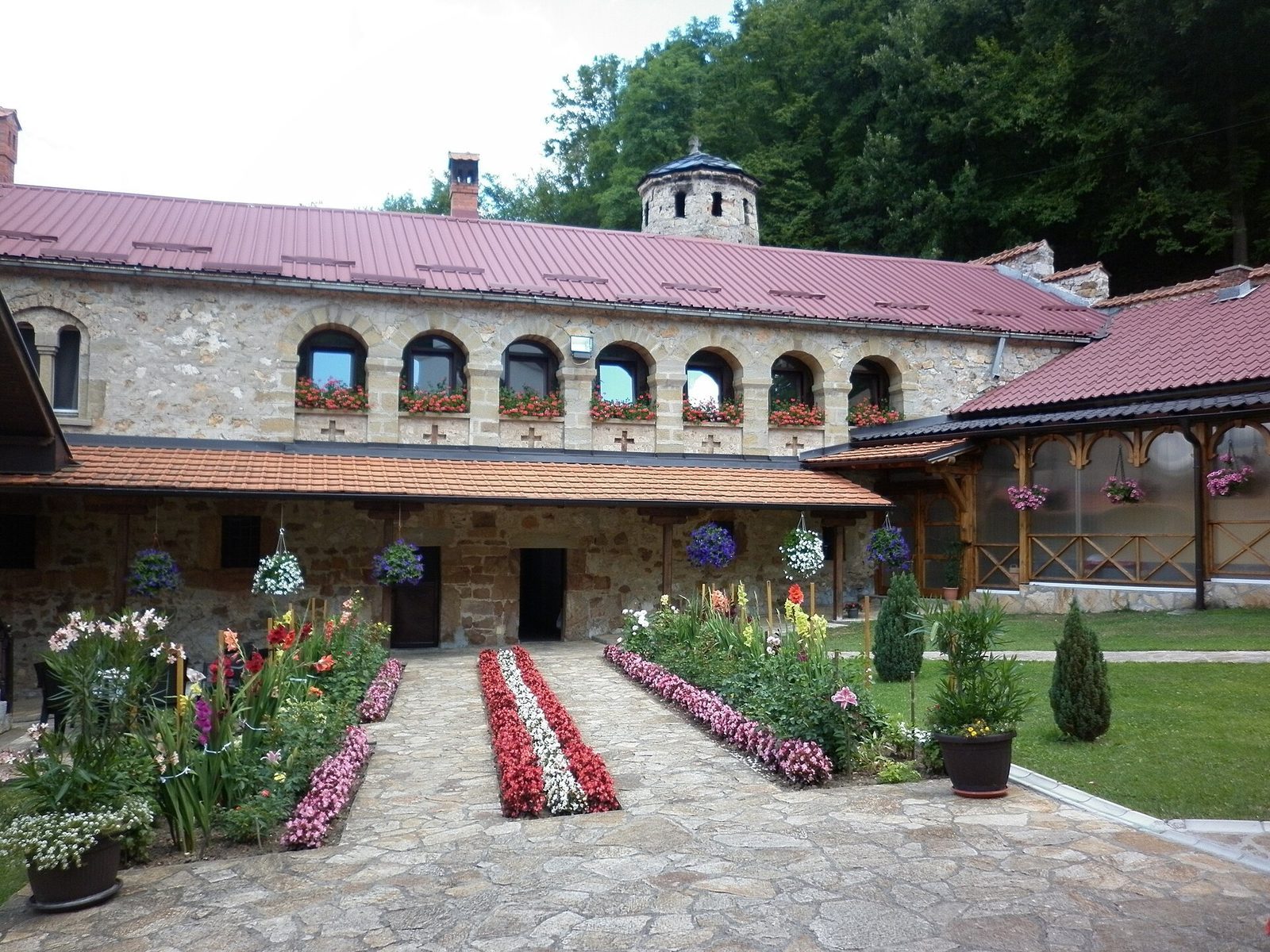
Most of the monastery residences and the vineyard estate at Pakovraće date from the period when Maksimović was Bishop of Užice. A monastic dependency is also located at Pakovraće.
Later residence and chapel
A large residence was built within the precinct at a later date, with an attached chapel dedicated to the Protection of the Mother of God. Its feast, an Orthodox observance commemorating the Virgin Mary’s protection of the faithful, is held on 14 October.
Treasury and manuscripts
The monastery treasury includes a Gospel given as a gift from Russia, an etching depicting the monastery, books and icons. The monastery also has seventeenth-century baptismal fonts and a collection of manuscripts.