Speckseite: A Prehistoric Menhir in Aschersleben, Germany
Site at a Glance
- Popularity
- Very Low
- Country
- Germany
- Primary era
- Stone Age
- Eras represented
- Stone Age, Bronze Age
- Civilizations
- Unclassified
- Site type
- Burial
- Remains
- Burial Mound
On this page5 sections
History
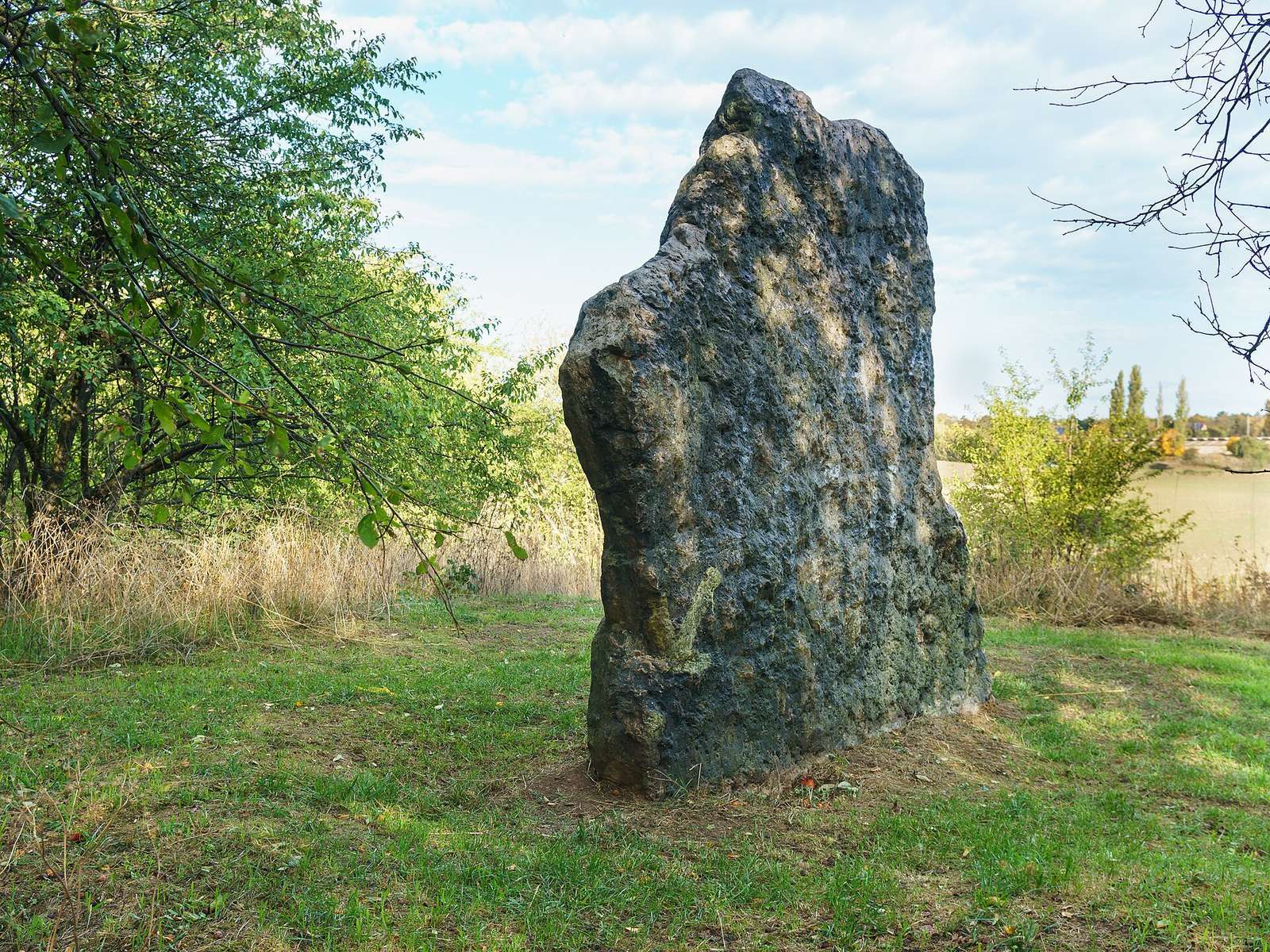
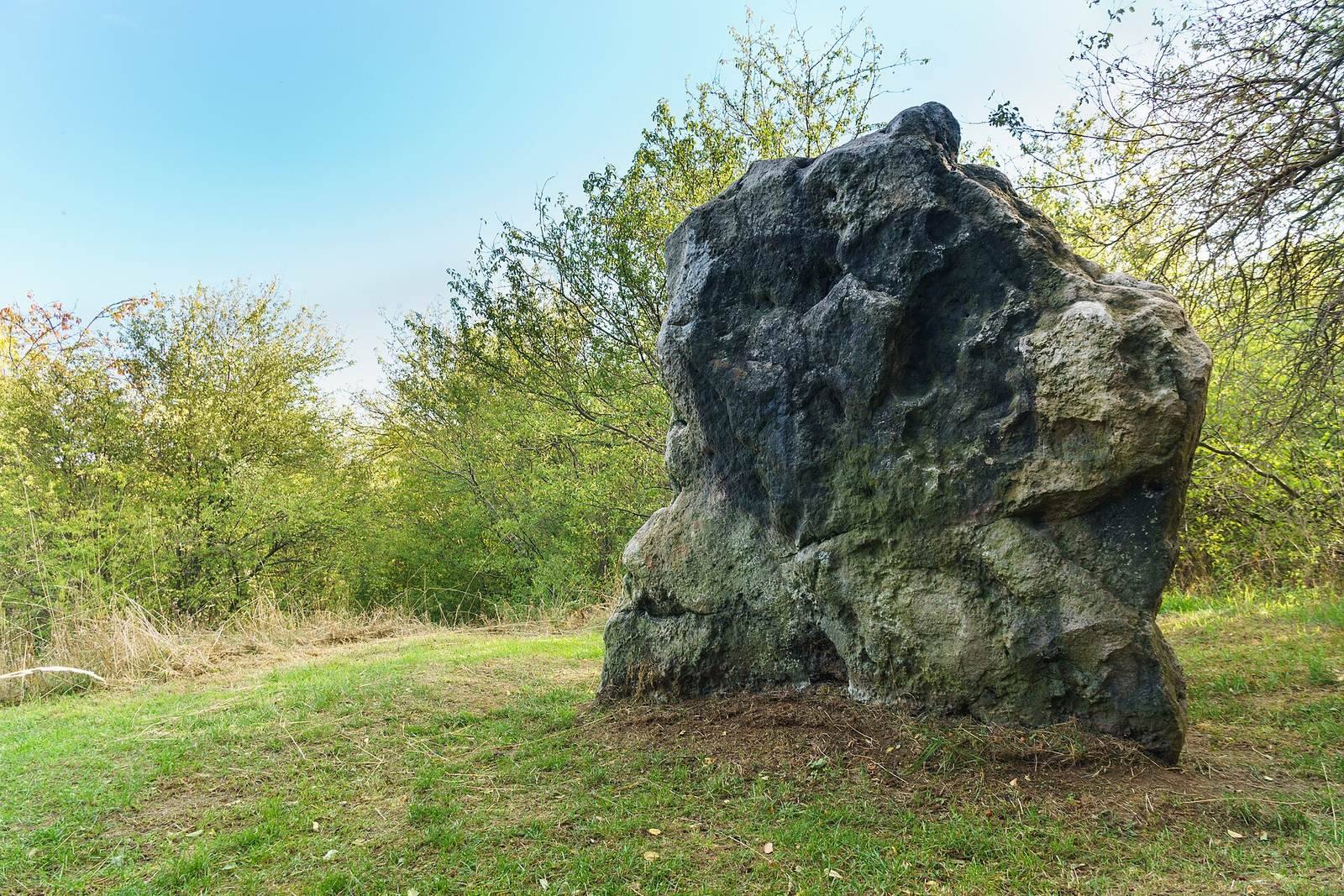
The Speckseite is a prehistoric menhir, or large upright stone, in southeastern Aschersleben, Germany. Its history includes a burial beneath the stone, medieval use as a court site, and later traditions linked to the nails embedded in its surface.
Prehistoric evidence
Excavations at the stone in 1885 and 1932 examined a grave directly beneath it. The burial can be dated only broadly to the Late Neolithic or Early Bronze Age. Finds from the surrounding area span the Linear Pottery, Baalberge, Bernburg, Corded Ware, Bell Beaker, and Únětice cultures, archaeological cultures of prehistoric Europe. Other nearby finds belong to the Middle Bronze Age, the La Tène period, a later Iron Age culture of central and western Europe, and the Middle Ages.
Medieval and later history
Regional courts serving local districts were held at the site during the Middle Ages, and other graves in the surrounding area date from that period. The stone was toppled several times and raised again in 1575 and 1720. Its name is thought to refer both to its shape and to its gleaming surface.
Stories of the nail-driving custom
Local tradition reflects a belief that stones softened during thunderstorms, making it possible to drive nails into them to appease pagan gods. In a later version of the custom, travelling journeymen were expected to prove their skill by hammering nails into the stone without bending them. Young carters and horse drivers who failed could be beaten and made to try again until they succeeded or paid to be released.
Another telling describes two journeymen seized by bullies and threatened with death unless they drove a nail into the stone without bending it. After praying to God, they passed the test and gained enough strength to drive their captors away.
Remains
The menhir crowns an artificial burial mound built on a natural rise. It is an irregular slab of lignite quartzite, a type of stone, oriented approximately north to south. The stone measures 190 cm high overall, with 90 cm projecting above ground, 190 cm wide, and 20 cm deep. Numerous nails are embedded in its broad faces, particularly the western one. A record from the 1950s placed most of the nails on the southern side, a difference that suggests the stone may have been turned later. Directly beneath it is a stone-packed grave.