Solapur Bhuikot Killa: A 14th-Century Fort in India
Site at a Glance
- Popularity
- High
- Country
- India
- Primary era
- Medieval
- Eras represented
- Medieval
- Civilizations
- Unclassified
- Site type
- Military
- Remains
- Fort
On this page5 sections
History
Solapur Bhuikot Killa is a fort in India whose construction is dated to the 14th century, during Bahmani rule. It served as a refuge for successive dynasties and changed hands among regional and imperial powers.
Hindu and Bahmani foundations
The fort’s history reaches back to a stronghold built under Hindu kings. The Bahmani dynasty, a ruling house in the Deccan, is associated with its 14th-century construction. Mahmud Gawan, a prominent Bahmani statesman, is credited with adding a second fortification around the earlier stronghold. He served as diwan, a senior minister in the court of Sultan Mahmud Shah.
Contested rule and marriage alliances
After Bahmani rule, the fort came under the Adil Shahi dynasty of Bijapur and the Nizam Shahi dynasty of Ahmednagar, followed by Mughal rule, the Nizam of Hyderabad, and the Marathas. In 1523, while Bijapur controlled the fort, Burhan Nizam Shah of Ahmednagar married a daughter of Ismail Adil Shah of Bijapur. Ismail had promised the fort as her dowry but refused to hand it over after the marriage. The dispute led to war, and Burhan Nizam Shah was defeated.
In 1552, the fort was given to Chand Bibi, an Ahmednagar princess, in connection with Ali Adil Shah. Hadiya Sultan, Ali’s sister, married Murtaza Nizam Shah, who gave the fort to the Bijapur sultan as dowry.
Mughal and Maratha periods
Mughal emperor Aurangzeb spent much of his time in the area around the fort during his reign. In 1818, Bajirao Peshwa, the Maratha chief minister, and Chhatrapati Pratap Singh Bhosale, the sovereign ruler of Satara, stayed at the fort for a month. The Archaeological Survey of India, the national agency responsible for archaeological research and monument protection, maintains the fort.
Remains
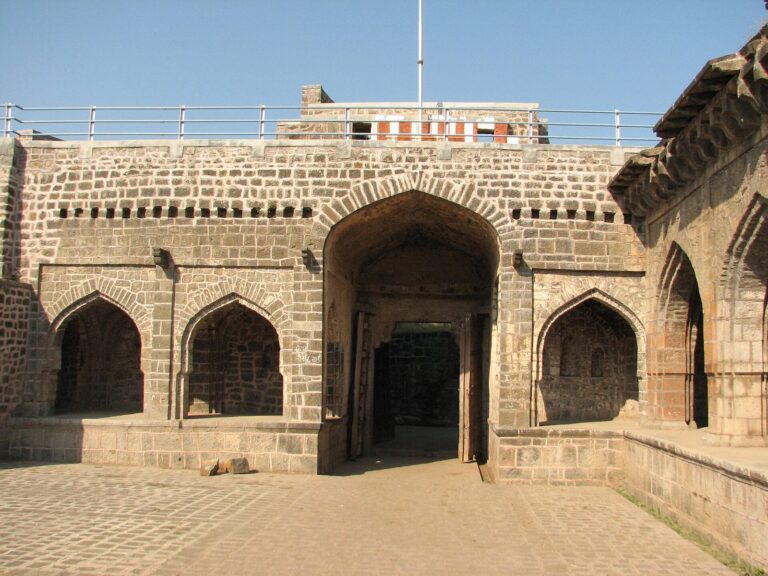
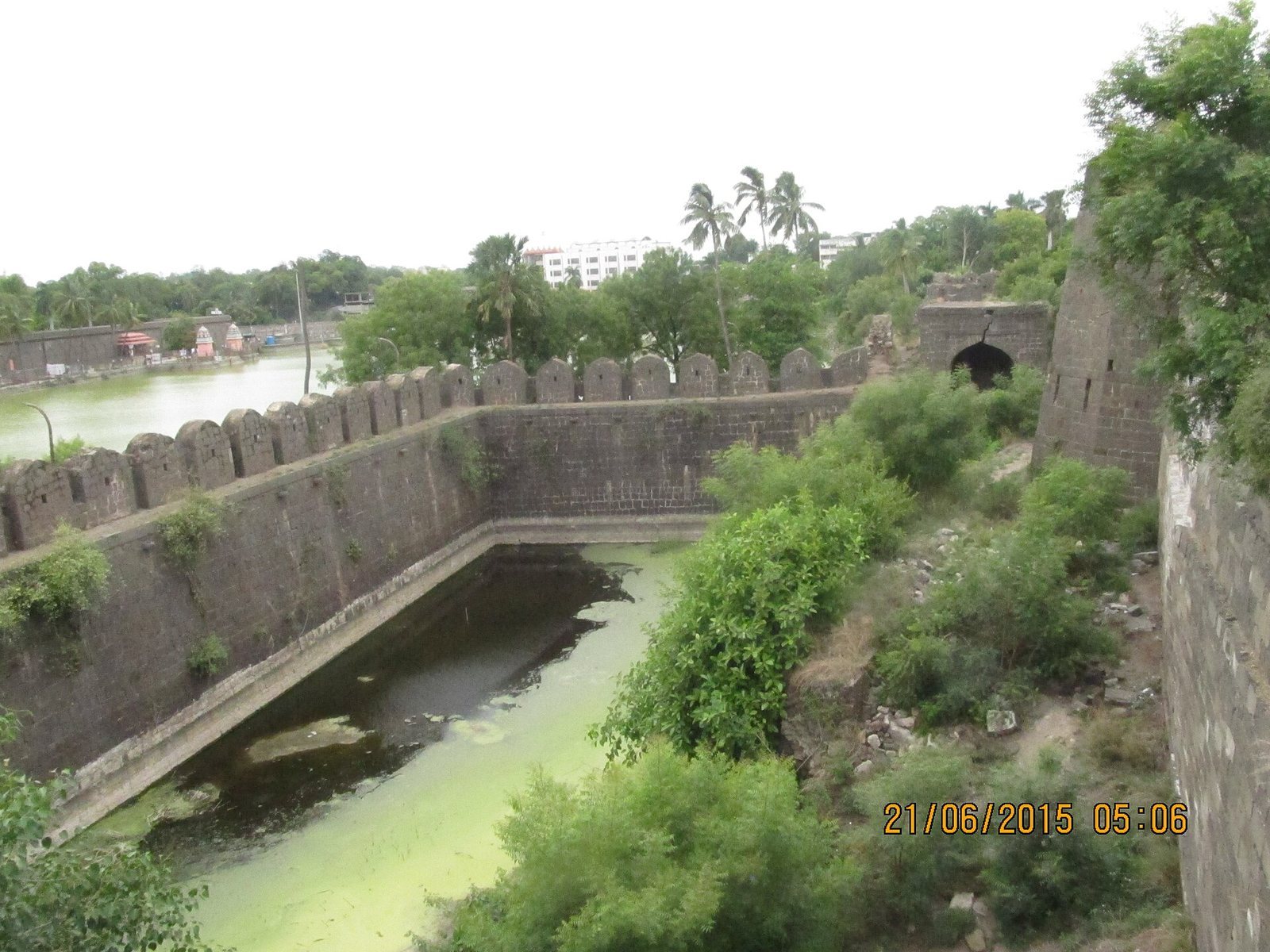
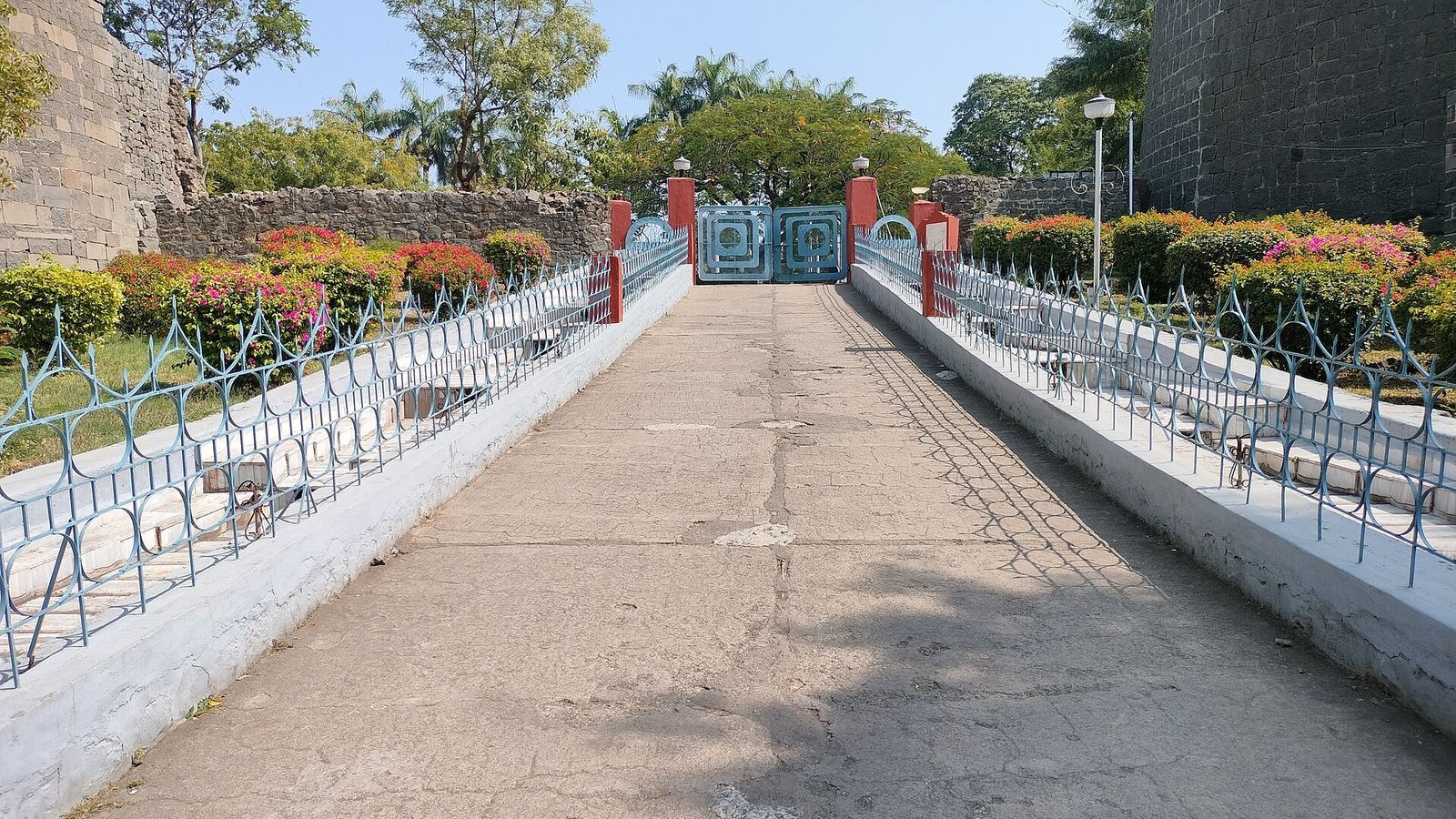
The fort stands on land beside Siddheshwar Lake, a setting reflected in the name Bhuikot Killa, meaning a land fort. Its defenses include two lines of fortification, a feature associated with Bahmani-era building. The main entrance is Hatti Darwaja; the site also has a north gate and a Mahakali Gate.
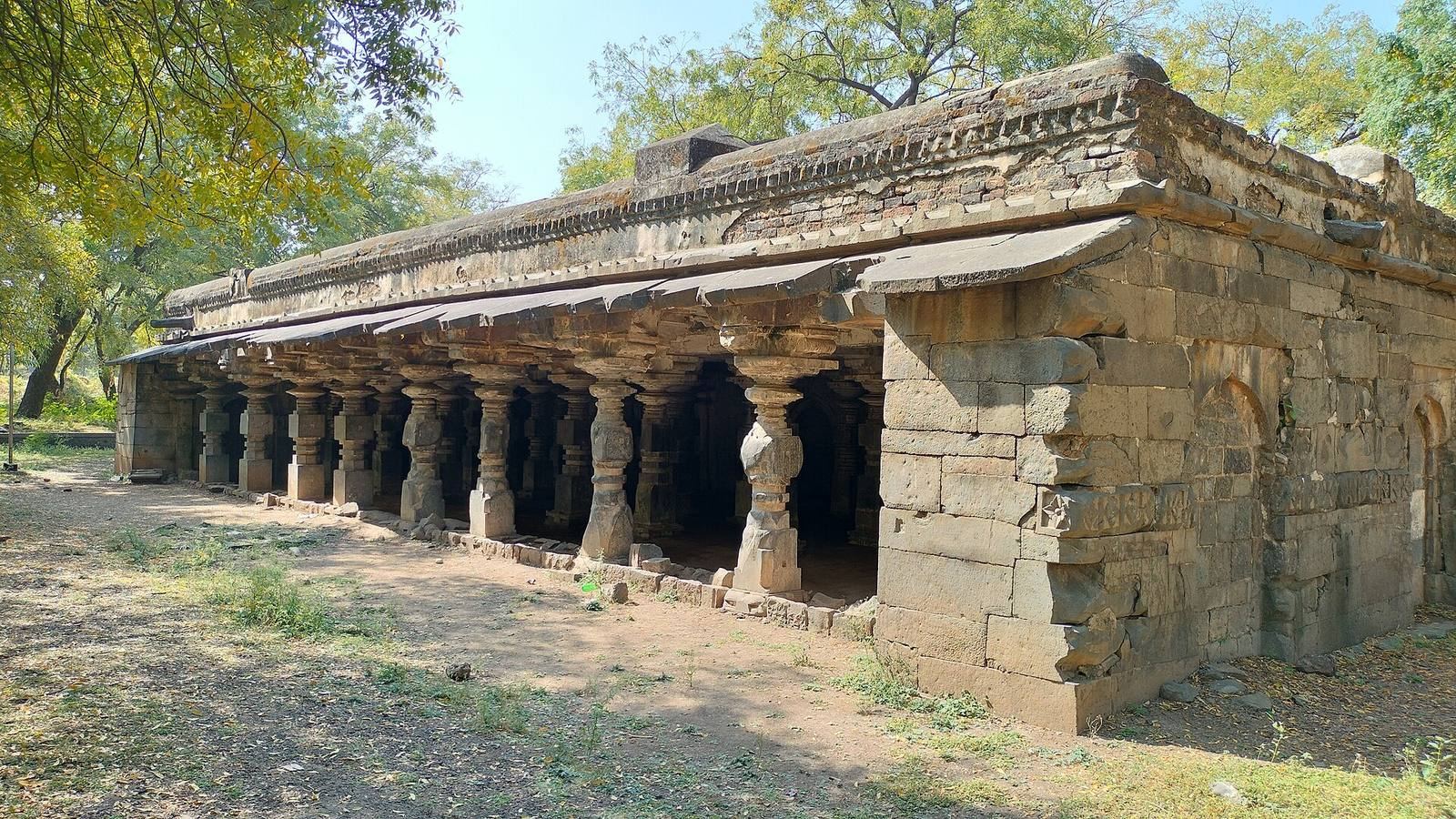
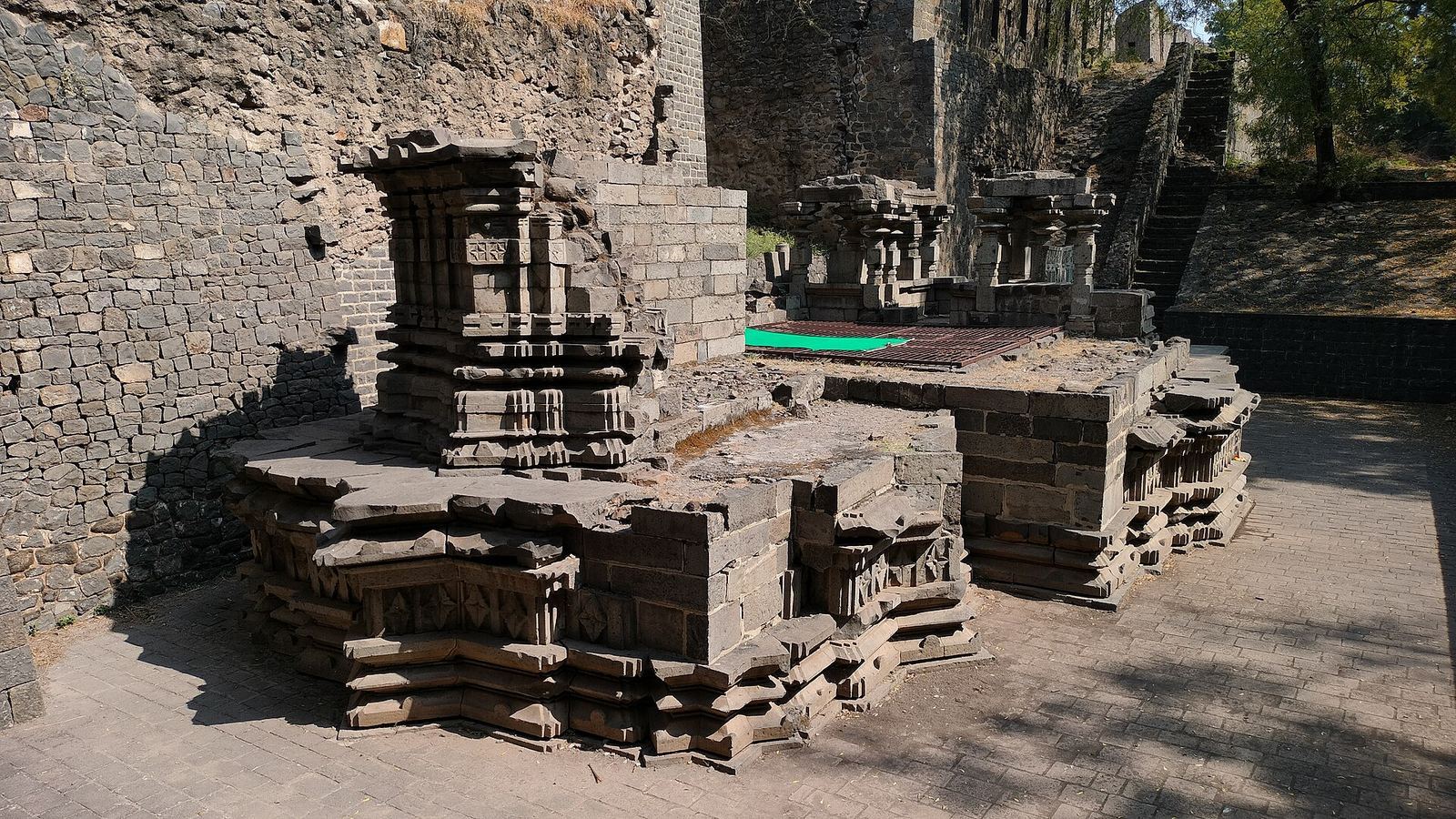
Religious buildings within the fort include a temple to Shani, a Hindu deity, and a ruined temple to Shiva. The latter has an underground Shiva Linga, a symbolic form of the Hindu god. A Mahakaleshwar temple, dedicated to a form of Shiva, and a mosque with a carved ceiling and several pillars are also among the remains.
An octagonal well inside the fort contains a small pond. Siddheshwar Temple and Hutatma Bagh are beside the fort, near the lake. The surviving complex is now in ruins.