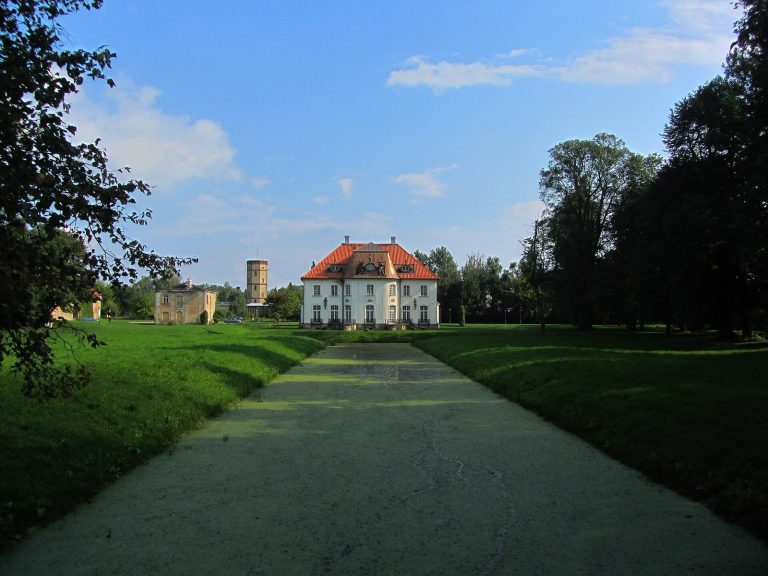
Smulscy’s Manor in Bielsk Podlaski: A Historic Estate and Residence
Site at a Glance
- Popularity
- Low
- Country
- Poland
- Primary era
- Modern
- Eras represented
- Early Modern, Modern
- Civilizations
- Polish–Lithuanian Commonwealth, Russian
- Site type
- Domestic
- Remains
- Manor House
On this page12 sections
History
Smulscy’s manor is a historic estate and residence in Bielsk Podlaski, Poland. After the royal castle in Bielsk burned in 1564, a manor at Hołowiesko became the residence of the royal starosta, an official who administered a district. The property later formed part of the Hołowiesko and Lada estates.
Royal residence and Branicki estate
In the 1730s, the Mazovian Confederation, a political association of nobles, damaged the estate while supporting King Stanisław Leszczyński during the War of the Polish Succession, a conflict over the Polish throne. Hetman Jan Klemens Branicki, a senior military commander in the Polish-Lithuanian Commonwealth, ordered a new manor in 1743 to 1746. Architect Jan Henryk Klemm carried out the work while Branicki held the Hołowiesko and Lada estates. A view of the manor survives in the Glinka Papers, an archival collection associated with historian Jan Glinka.
A new fence was built in 1759, and an outbuilding and farm buildings had been added before 1760. Work in 1775 included buildings in a style associated with Courland, a historic region on the eastern Baltic coast in present-day Latvia. A stable followed in 1779, and the outbuilding was altered in 1787. Izabela Branicka, the sister of King Stanisław August Poniatowski, spent summers at Hołowiesko in 1773, 1776, and 1778. A menagerie, or collection of animals, was mentioned there in 1780. By the end of the eighteenth century, the manor no longer served as the royal starosta’s seat. After the partitions of Poland, when neighboring powers divided Polish territory, the Prussian treasury took over the estate.
The Smulski family and estate
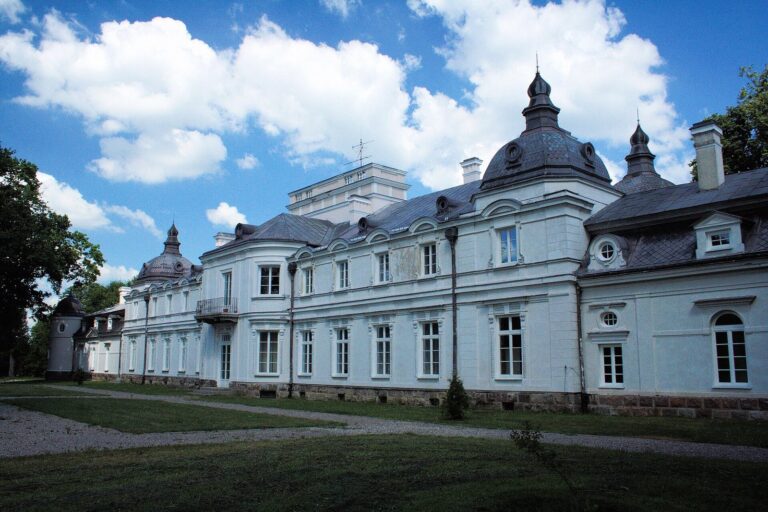
Colonel Adam Smulski, who was of Tatar ancestry, acquired the property in 1878 and built a new manor. Ownership later passed to his son, General Aleksander Smulski (1858–1925), and Aleksander’s wife, Katarzyna Horwat. Their daughter Julia, known as Lili (1888–1963), and her husband, Captain Karl von Dehn (1877–1932), then inherited it. Of Baltic German descent, Karl lived at the manor with Julia after 1922 and died there in 1932. The estate’s land was divided between 1931 and 1934. After Julia’s death, Eugeniusz Wasilewski inherited the manor.
War, imprisonment, and later use
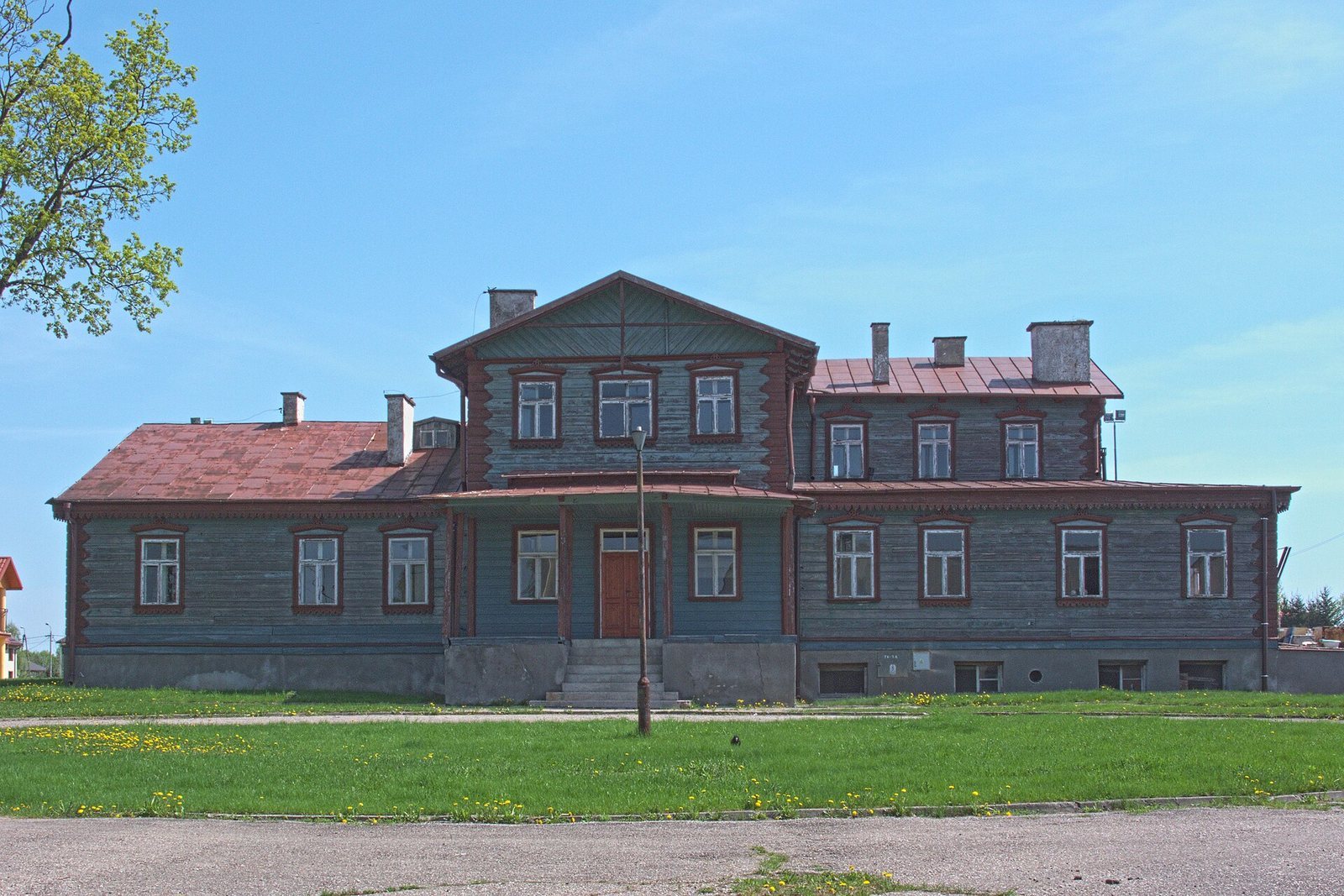
A nearby farm-administration building, constructed around the turn of the twentieth century, was used by the Gestapo, Nazi Germany’s secret state police, as a prison from 1942 to 1944. In July 1943, residents of Bielsk held there were taken away and shot in Pilicki Forest. In autumn 1944, the NKVD, the Soviet Union’s internal security and political-police agency, established another prison on the grounds of the former German prison. Detainees from Bielsk County were taken to labor camp no. 45 in Ostashkov; some may also have been sent to a labor camp in Stalinogorsk.
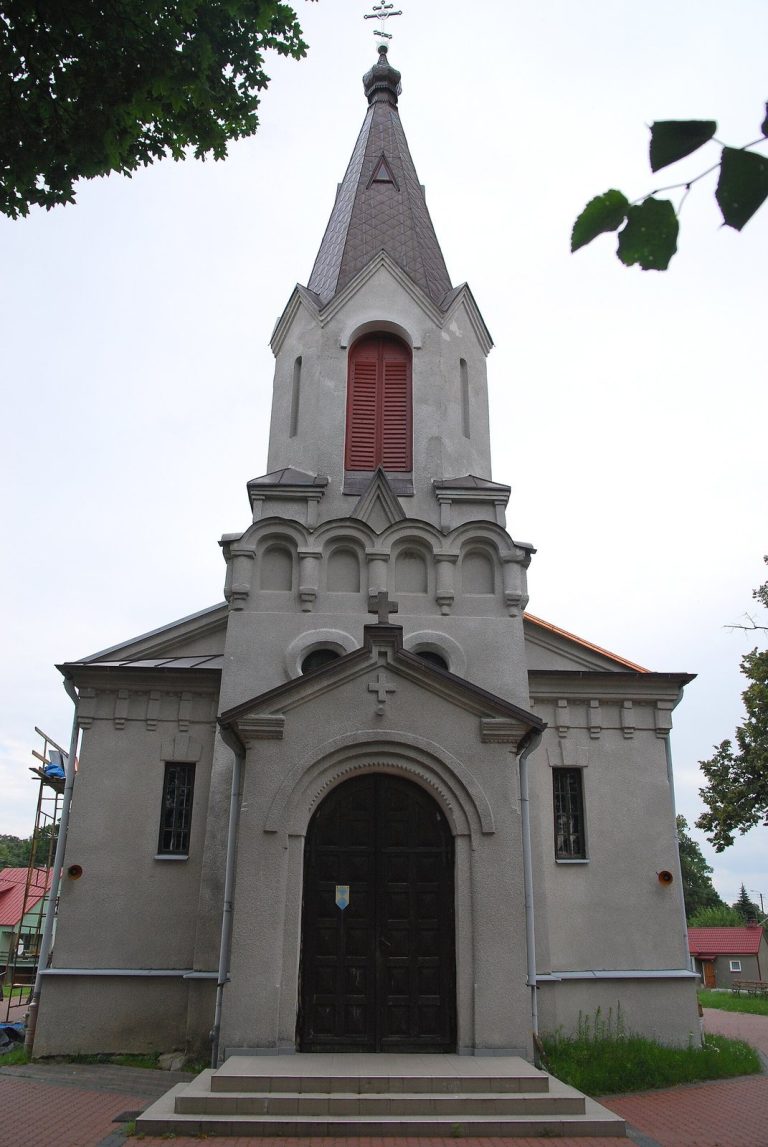
The manor was nationalized in 1945 and used by an agricultural school. The Polish Tourist and Sightseeing Society took it over in 1985 and renovated it in 1987 to 1988 for use as a tourist hostel. It entered the register of monuments in 1988, passed to the city in 1998, and was purchased by a Roman Catholic parish in 2002.
Remains
The estate was arranged around an enclosed palace and garden, with administrative and agricultural buildings in the surrounding grounds. Its later garden had canals and ponds, while the manor built for Adam Smulski belongs to a later phase of the property’s layout.
The Hołowiesko estate
Palace and garden
In 1715, a fence enclosed the manor and garden. The entrance gate had hinged doors and two smaller pedestrian gates fitted with iron ring handles. The palace had 35 windows, a shingle roof, and large masonry cellars beneath it. Beside the palace was an Italian-style formal garden, a layout associated with geometric design and symmetry.
Administrative and farm buildings
Opposite the palace stood an older administrative building and a granary with a cellar. Other structures on the estate included a ruined tower, stable, barn, brewery, cowshed, pantry, and pigsty.
Later garden
The later garden was in the Baroque style and included canals and ponds.
Smulski-era remains
The manor and family tombstones
The manor built by Adam Smulski is at Hołowieska 7. Ruined tombstones belonging to the Smulski family, former owners of the estate, lie in its southern part.
Farm-administration building
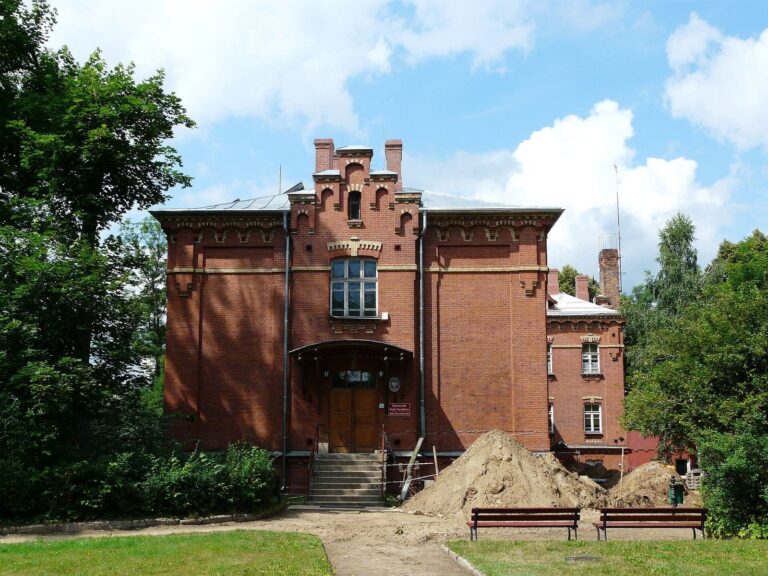
A separate former farm-administration building stands nearby. It dates from around the turn of the twentieth century.