Site of Old Hannastown: Westmoreland County’s First Seat
Site at a Glance
- Rating
- 4.6
- Popularity
- Low
- Country
- United States
- Primary era
- Early Modern
- External website
- Open
- Eras represented
- Early Modern, Modern
- Civilizations
- British
- Site type
- City
On this page14 sections
History
Site of Old Hannastown, also known as Historic Hanna’s Town, is an eighteenth-century settlement near Greensburg, Pennsylvania, United States, established around 1769 by settlers of European origin. Its foundation followed the 1768 Treaty of Fort Stanwix, which altered land claims and enabled Pennsylvania to distribute warrants west of the Allegheny Mountains. Robert Hanna acquired 337 acres in what was then Bedford County and founded the settlement along the Forbes Road, a major route across Pennsylvania.
Settlement and county government
Robert Hanna moved to the settlement with his wife, Elizabeth, and their daughter Jane. Their daughters Elizabeth, Susanna, and Margaret were later born there. The family operated a tavern, while Robert Hanna sold lots to people moving west across the Allegheny Mountains. His position along the Forbes Road helped the settlement develop as a place of travel, trade, and administration.
Hanna served on Bedford County’s first court in April 1771 and later became one of Westmoreland County’s first justices. Westmoreland County was created from Bedford County on February 26, 1773. Hanna became one of the trustees responsible for choosing the new county seat and argued for his settlement because of its central position between Pittsburgh and Ligonier. Arthur St. Clair favored Pittsburgh, but Hanna’s Town was selected as Westmoreland County’s first seat.
The settlement also became the location of the first English courts west of the Allegheny Mountains. Under the county charter, Robert Hanna’s house hosted elections and court proceedings until a formal courthouse and jail could be provided. The first county quarter session, a county court session, met there on April 6, 1773. Hanna served as a justice, while Arthur St. Clair became the county’s first prothonotary, the senior clerk responsible for maintaining official legal records.
By 1774, county authorities had established a jail, whipping post, and pillory, a public punishment device that restrained a person’s head and hands. No formal courthouse was built, so courts continued to meet at Hanna’s house. The settlement’s population included many families of Scots-Irish descent and enslaved people of African descent. In 1782, seventeen-year-old Amynta was recorded as being held in bondage by tavernkeepers Charles and Sarah Foreman.
The Pennsylvania–Virginia dispute
From 1773 to 1779, Hanna’s Town stood within the contested region of southwestern Pennsylvania. Virginia’s Governor Lord Dunmore sought to annex the area and, in January 1774, authorized John Connolly to raise a militia and seize Pennsylvania courts. Arthur St. Clair had Connolly arrested at Hanna’s Town on January 24, 1774. After his release, Connolly returned with 150 militiamen and arrested several Westmoreland County justices.
Robert Hanna and James Cavet were arrested and jailed for three months on February 22, 1775, after refusing to support the Virginia courts. Virginia agreed in 1779 to return most of the disputed territory to Pennsylvania. During the 1770s and early 1780s, Hanna’s Town rivaled Pittsburgh in size, population, and political influence.
Revolutionary War and destruction
After the Battles of Lexington and Concord in April 1775 opened the American Revolutionary War, Hanna’s Town became a center of civic and military activity in western Pennsylvania. On May 16, 1775, colonists from Westmoreland County drafted the Hanna’s Town Resolves, a local declaration of resistance to British rule and willingness to take up arms. Robert Hanna was imprisoned during the Pennsylvania–Virginia dispute and did not take part in drafting the declaration.
A county militia formed at Hanna’s Town, and other militias trained there before some were sent to larger forces fighting British troops and Native American groups with varying allegiances and involvement. The town’s courts and military activity made it a strategic target. Fighting in the western theater intensified in 1781 and 1782, while the British maintained a station at Fort Niagara and the Continental Army operated from Fort Pitt as the headquarters of the Western Department.
At approximately 2 p.m. on July 13, 1782, between 100 and 300 Seneca warriors accompanied by a small British contingent attacked and destroyed Hanna’s Town. Historians theorize that the Seneca warrior and diplomat Sayenqueraghta planned the attack, possibly with Seneca chief Guyasuta and British Indian Department captains John Powell and Robert Lottridge Jr. One possible motive was retaliation for Daniel Brodhead’s invasion of Haudenosaunee territory, which had been supported by the Westmoreland County militia. The Seneca are one of the Haudenosaunee, or Iroquois Confederacy, nations.
Residents sought refuge in the settlement’s stockade fort. Two residents were killed, including thirteen-year-old Peggy Shaw, who was shot while rescuing a young boy. Several Seneca warriors were also killed or wounded. During a related attack on Miller’s Station, about 2.5 miles away, Elizabeth Hanna and her daughter Jane were captured during a wedding celebration, taken to Fort Niagara, and later released.
Loss of the county seat and preservation
Robert Hanna tried to retain the county seat after the 1782 destruction, and courts continued to meet at Hanna’s Town for several years. Reconstruction was slow, and the absence of a formal courthouse left the permanent county seat unsettled. On December 10, 1785, Pennsylvania selected Newtown after three commissions considered Hanna’s Town, Pittsburgh, and Newtown. A courthouse and jail were ready by July 1, 1786. Newtown was renamed Greensburg in 1786, and its first court session took place on January 7, 1787. Hanna’s Town never fully recovered from the attack.
The Hanna property was purchased by John Steel in 1826. His son, William Steel, divided it into Hannastown Courthouse Farm, which contained the historic village site, and Hannastown Farm. The properties remained in agricultural use for more than a century. The Steel family raised beef cattle at the courthouse farm, and Judge John Steel built a farmhouse there around 1910.
The Westmoreland Historical Society and Westmoreland County began acquiring and developing part of the property as a historic site during the 1960s. The county acquired 183 acres in 1969, while the historical society directed archaeological investigations and reconstruction. Excavations began under Jacob L. Grimm, who had previously led work at Fort Ligonier. His team identified Hanna’s Tavern, and a 1970 University of Pittsburgh field school led by James Richardson III identified Foreman’s Tavern. More than fifty years of investigation have recovered an estimated one million artifacts and located the foundations of several structures.
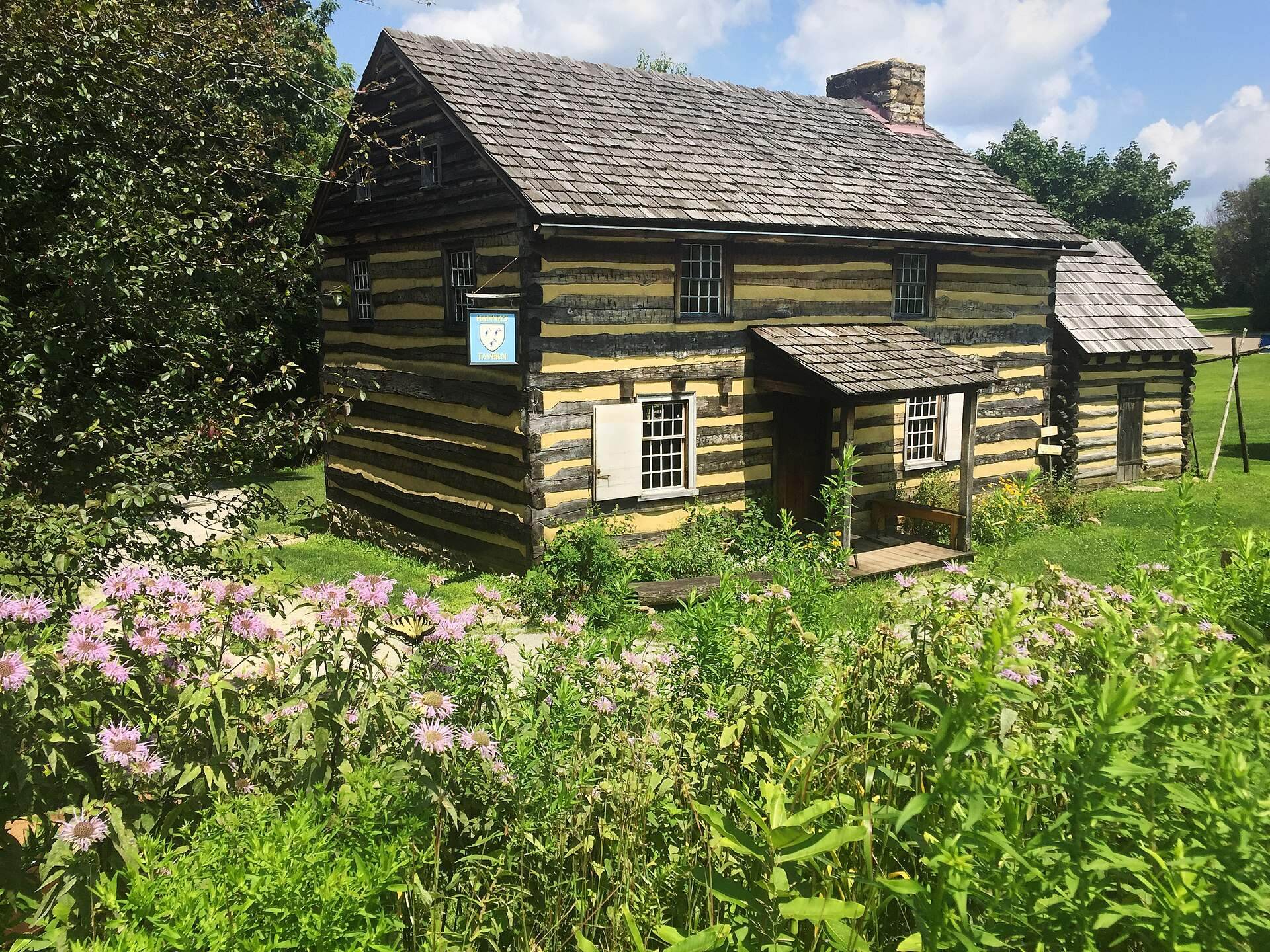
Hanna’s Tavern was reconstructed with historic techniques in 1973 during Westmoreland County’s bicentennial observance. The site was added to the National Register of Historic Places on January 26, 1972, and preserves approximately 180 acres of Robert Hanna’s original 337-acre property. The Westmoreland History Education Center, completed in 2019, contains an exhibit gallery, research library, and museum collections. The Westmoreland Historical Society moved its headquarters there that year and oversees historical interpretation and programs.
Remains
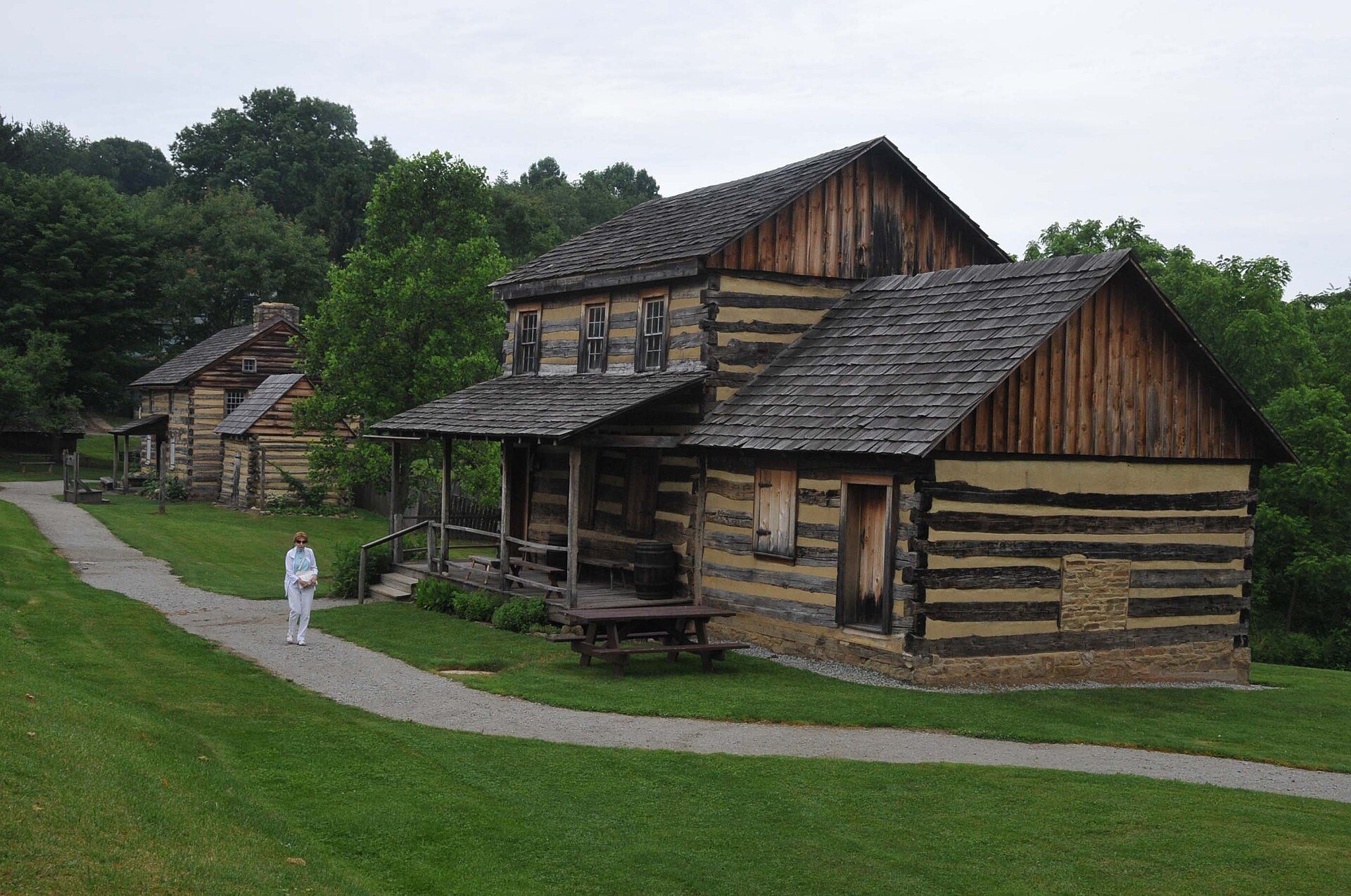
The historic site preserves approximately 180 acres of the original property and combines archaeological remains with reconstructed and relocated buildings. At its height, Hanna’s Town included more than thirty log houses, three taverns, a jail, a stockade fort, a blockhouse, and numerous barns, stables, and other outbuildings. The surviving features present the settlement as a county seat, agricultural community, and defended frontier town.
Reconstructed and relocated buildings
Hanna’s Tavern
Hanna’s Tavern was reconstructed in 1973 using historic construction techniques. Archaeological work located the foundation of the original tavern, which belonged to Robert Hanna’s family and formed part of the settlement’s early commercial setting. The reconstructed building represents one of the town’s three taverns and is part of the present historic site.
Log houses and farm structures
Several eighteenth-century log houses have been relocated to the site. Log houses in Hanna’s Town were required to measure at least 18 feet square. The historic area also includes a blacksmith shop and a wagon shed containing an authentic late-eighteenth-century Conestoga wagon, a large covered Pennsylvania wagon used to transport people and goods overland.
Westmoreland History Education Center
Completed in 2019, the Westmoreland History Education Center contains an exhibit gallery, research library, and museum collections. Its facilities form part of the modern interpretation of the archaeological site.
Defensive and archaeological features
Stockade fort and blockhouse
A first fort was built at Hanna’s Town in 1774 during the Pennsylvania–Virginia conflict. In the settlement’s later period, residents took refuge in a stockade fort and blockhouse during the attack of July 1782. A stockade fort was an enclosed defensive position made principally from upright wooden stakes, while a blockhouse was a fortified timber building designed for defense. The present site includes reconstructions of both features.
Archaeological foundations
Archaeological investigations have identified the foundations of Hanna’s Tavern, Foreman’s Tavern, and several other structures. These remains are preserved within the wider historic property, where more than fifty years of fieldwork have recovered an estimated one million artifacts. The foundations provide the physical evidence for the settlement’s buildings alongside the reconstructed features.
County-government installations
Robert Hanna’s house served as the setting for county elections and court proceedings. The settlement’s government installations also included a jail, whipping post, and pillory. The historic site preserves the setting of these functions, although no formal courthouse was constructed during Hanna’s Town’s period as county seat.