Shrine of Our Lady, Bradstowe: A Coastal Shrine and Chapel in Broadstairs
Site at a Glance
- Rating
- 5
- Popularity
- Very Low
- Country
- United Kingdom
- Primary era
- Medieval
- Eras represented
- Medieval, Early Modern
- Civilizations
- English, Norman
- Site type
- Religious
- Remains
- Chapel
On this page9 sections
History
The Shrine of Our Lady, Bradstowe was a chapel and shrine dedicated to the Virgin Mary on the cliffs at Broadstairs, United Kingdom. Tradition places the shrine and chapel there before 1070, while another dating places the chapel at least as early as the 1350s. In 1070, St Peter’s, then a wooden Saxon church, was rebuilt in stone and flint as the second church established under Minster-in-Thanet.
Early chapel and maritime use
The chapel and shrine became familiar landmarks to local sailors. Passing ships dipped their topsails in salute, a custom believed to help ensure a safe voyage. The chapel also served as a coastal beacon, warning ships of nearby hazards. By about 1514, Trinity House, the British maritime institution responsible for aids to navigation, had assumed those beacon duties.
In 1514, the crew of the Henry Grace à Dieu, an English royal warship moored nearby, attended a service at the chapel. The ship was then the newest and largest addition to the King’s Fleet. The service is credited with inspiring the Royal Navy practice of visiting seaside towns to “show the flag” and strengthen naval morale.
Storm damage and rebuilding
A multi-day storm in the 1520s drove a surge into Viking Bay, destroying the shrine and severely damaging the chapel. Shipwright George Culmer rebuilt the chapel and replaced the shrine. In 1601, Sir John Culmer, who owned the chapel and its estate, ordered another restoration. The work reused much of the earlier building material but gave the chapel a different appearance. Joel Culmer became its first pastor, or congregational minister, that year.
Later uses and legacy
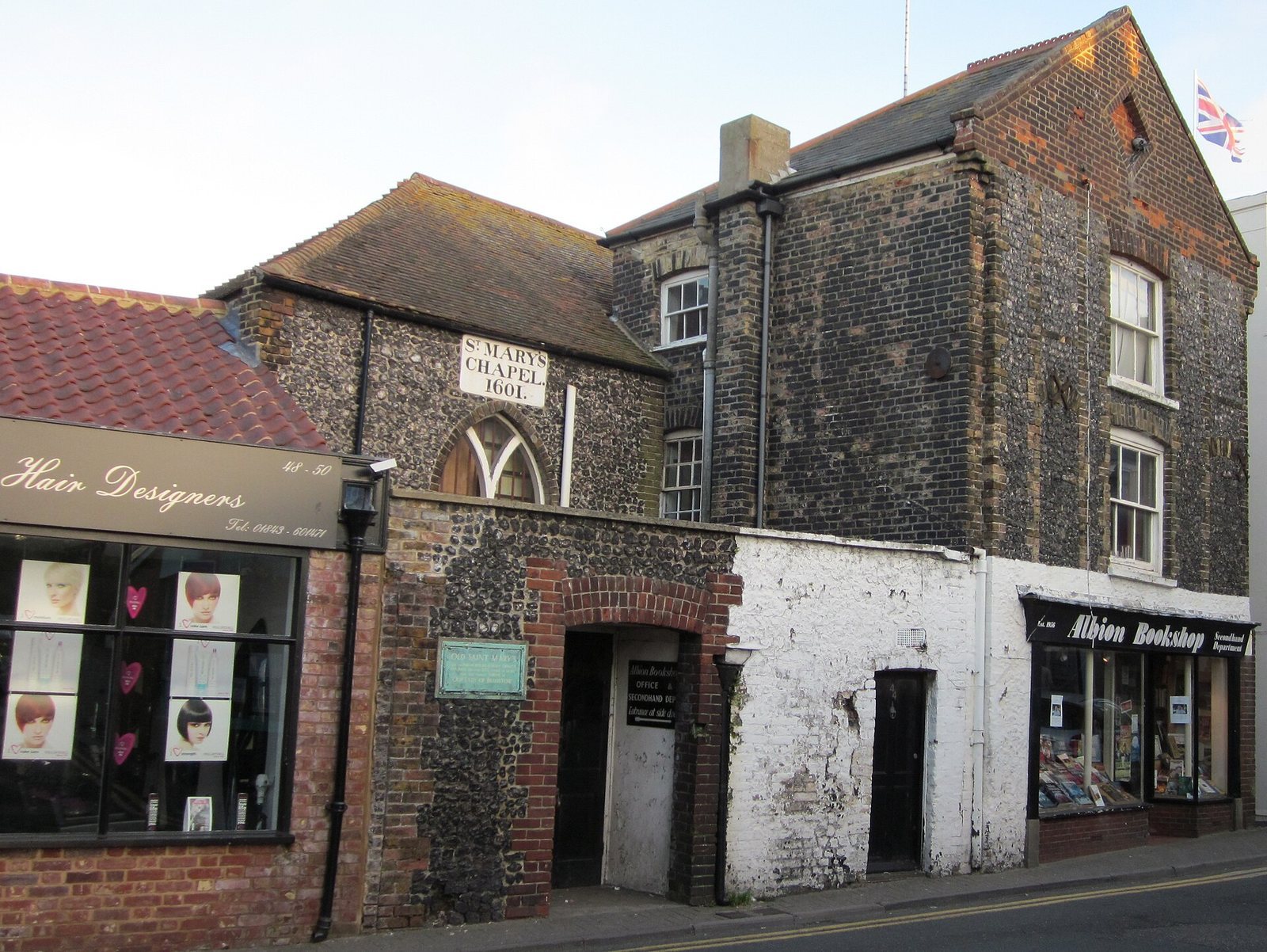
The chapel was rebuilt again in 1825. A Baptist congregation used it in the 1830s. After Congregationalists, a Protestant tradition, built a new place of worship in 1871, the front part of the old chapel was used by a blacksmith and a greengrocer. The Plymouth Brethren, another Protestant group, used the building in 1924; in 1926 it became a parish room for the Anglican Holy Trinity Church. It was later used as a bookstore and a pub.
The shrine is now at Holy Trinity Church in Broadstairs, not far from the original chapel. It also gave its name to the Roman Catholic Church of Our Lady Star of the Sea, designed by British architect Giles Gilbert Scott in 1930 and built inland at 17 Broadstairs Road in St Peter’s.
Remains
The chapel stood on chalk cliffs near Broadstairs harbour. Its surviving structural remains are incorporated into a modern façade at the original site on Albion Street, where it meets Alexandra Road.
Chapel and shrine features
Chapel fabric and towers
Sections of old walling, a doorway, and a window survive within the modern frontage. The former chapel had two towers that served as landmarks for sailors, and a wooden cross stood at the cliff top.
Beacon and harbour access
In medieval times, a blue-glass lantern in the chapel cast light out over the sea, giving the building the name Chapel of Blue Light. Chapel Stairs, on Albion Street, marks where steps cut into the chalk led down to the harbour.
Shrine image
The original shrine included a painted wooden statue of the Virgin Mary. In the Culmer Chapel, a statue derived from the Virgin’s figure stood on a tall column facing the sea. The shrine was probably moved inside the chapel around 1601. Sailors called the image the “Weeping Virgin”: condensation on its face in hot weather was understood as a warning of approaching storms. The shrine is now at Holy Trinity Church in Broadstairs.