Shigatse Dzong: A Tibetan Fortress and Former Royal Seat
Site at a Glance
- Country
- China
- Primary era
- Early Modern
- Eras represented
- Early Modern, Modern
- Civilizations
- Chinese, Tibetan
- Site type
- Military
- Remains
- Citadel
On this page7 sections
History
Shigatse Dzong is a Tibetan fortified complex in Shigatse, China, built as a stronghold and royal seat. Its founding date is uncertain: 1439 is given as an establishment date, while construction is also placed in the 16th century under the Tsang kings and attributed to Karma Phuntsok Namgyal, the second figure in the Nyak family line. The family ruled Tibet from 1565 to 1642. Shigatse, also called Samdrubtse, was the capital of Tsang and a seat of the kings of Ü-Tsang. Nearby Tashilhunpo Monastery was founded in 1447 by Gendun Drup, the First Dalai Lama. It became the traditional seat of successive Panchen Lamas and one of the Gelug order’s six major monasteries.
Conquest and political change
In 1642, Mongol ruler Gushi Khan’s forces captured Samdrubtse and defeated the Tsang ruler, who was taken prisoner and killed. Gushi Khan installed the Fifth Dalai Lama, Ngawang Lobsang Gyatso, as Tibet’s supreme ruler. His territory extended from eastern Tibet to Ladakh. After Nyak rule ended that year, the capital moved to Lhasa.
The political change was bound up with rivalry between the Sakya and Gelug, two Tibetan Buddhist orders. Tashilhunpo came under the Gelug, also called the Yellow Hat order, which controlled Central Tibet. The Panchen Lama exercised authority from Shigatse.
Garrison and local government
In the first half of the 18th century, the dzong was converted into a military garrison by the Chinese. In 1791, Gurkha forces invaded Tibet and sacked Shigatse. A combined Tibetan and Chinese army drove them back to the outskirts of Kathmandu. The Gurkhas then agreed to keep the peace, pay tribute every five years, and return goods taken from Tashilhunpo. In the 19th century, the dzong served as the residence of the governor of western Tibet.
Shigatse was the traditional seat of the Panchen Lamas, but until the Chinese arrived in the 1950s, the Panchen Lama’s temporal authority covered three small districts and not the town itself. A dzongpön, a local governor responsible for the fortress and its district, administered Shigatse and was appointed from Lhasa.
Destruction and reconstruction
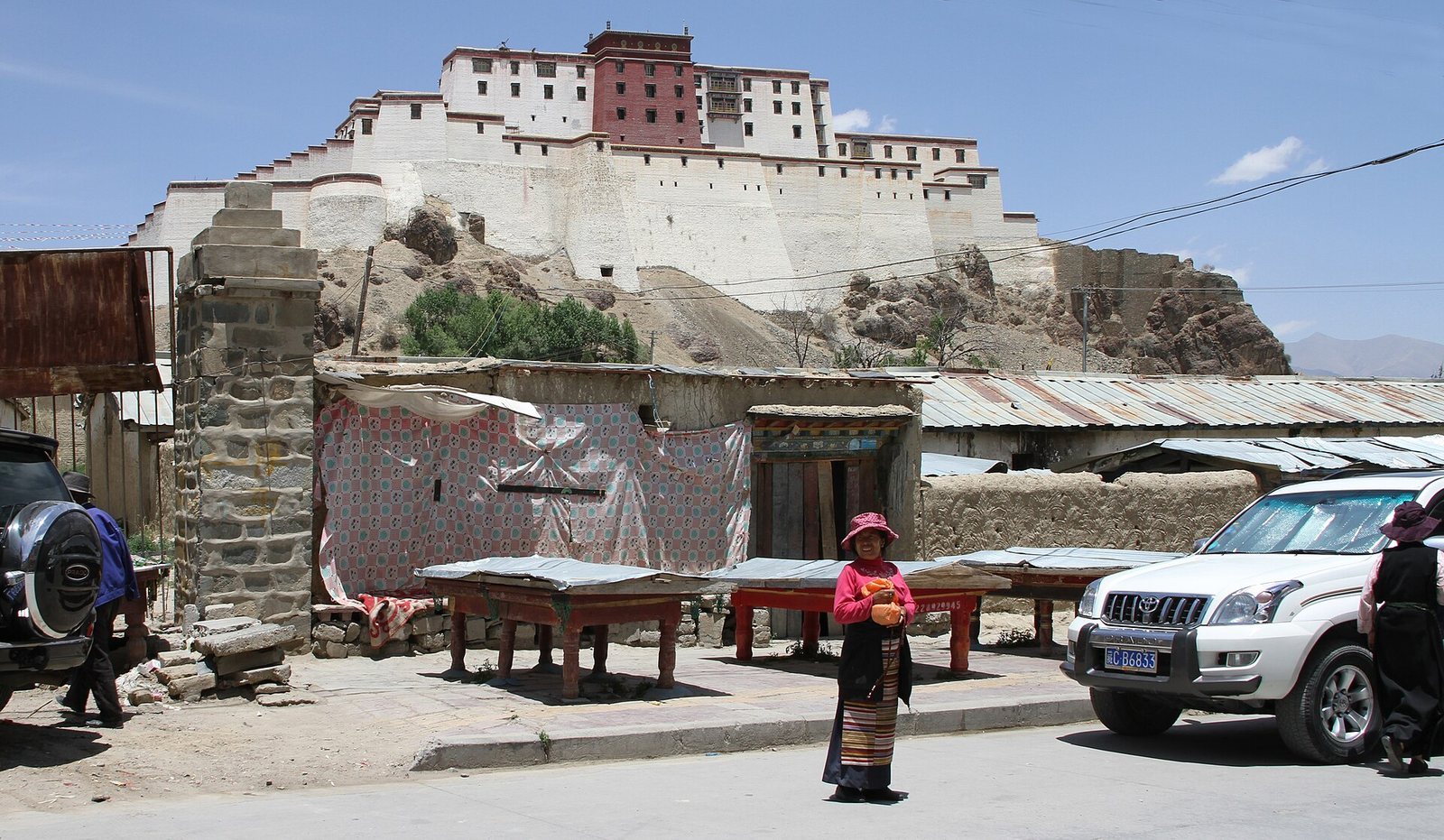
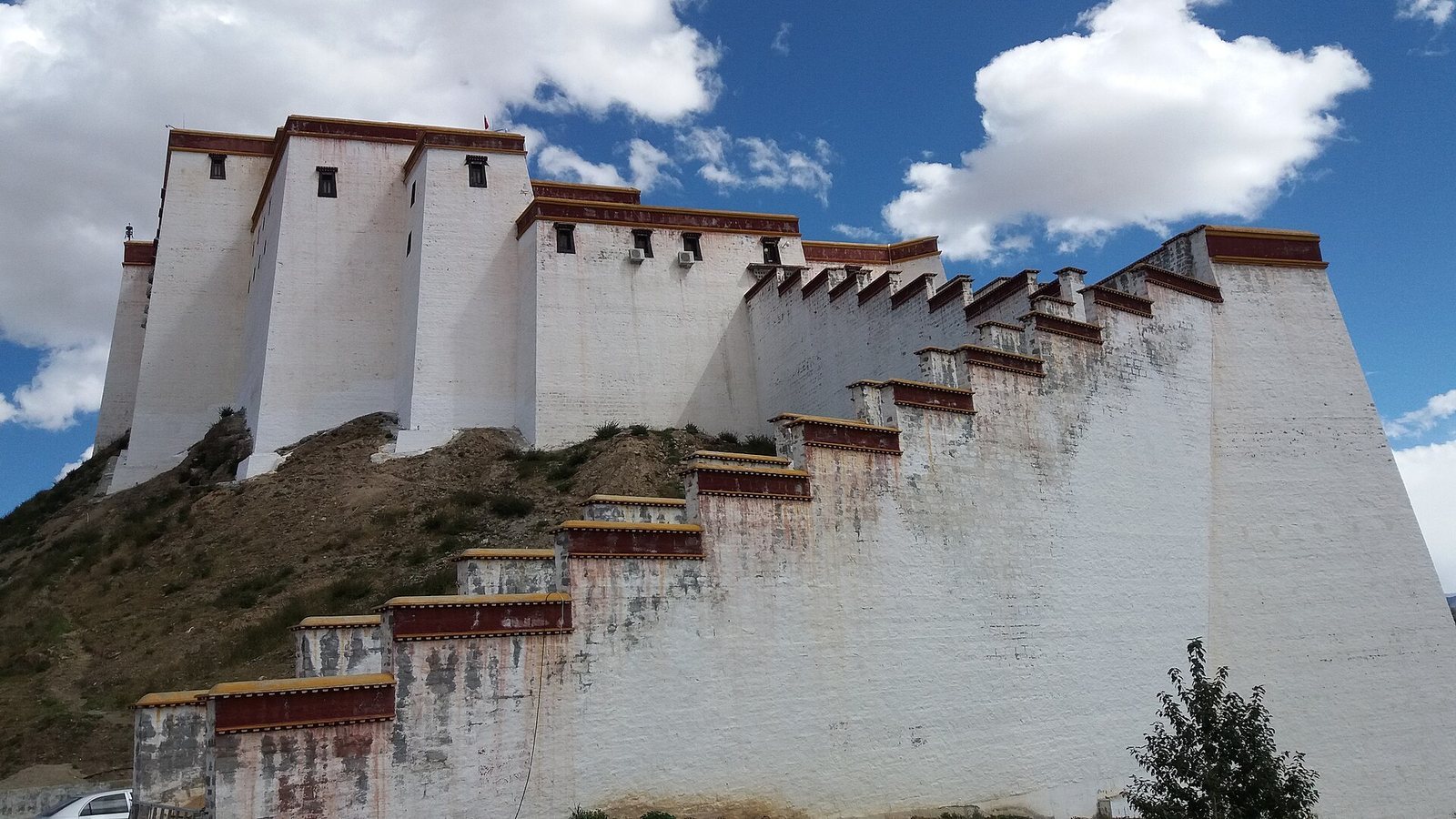
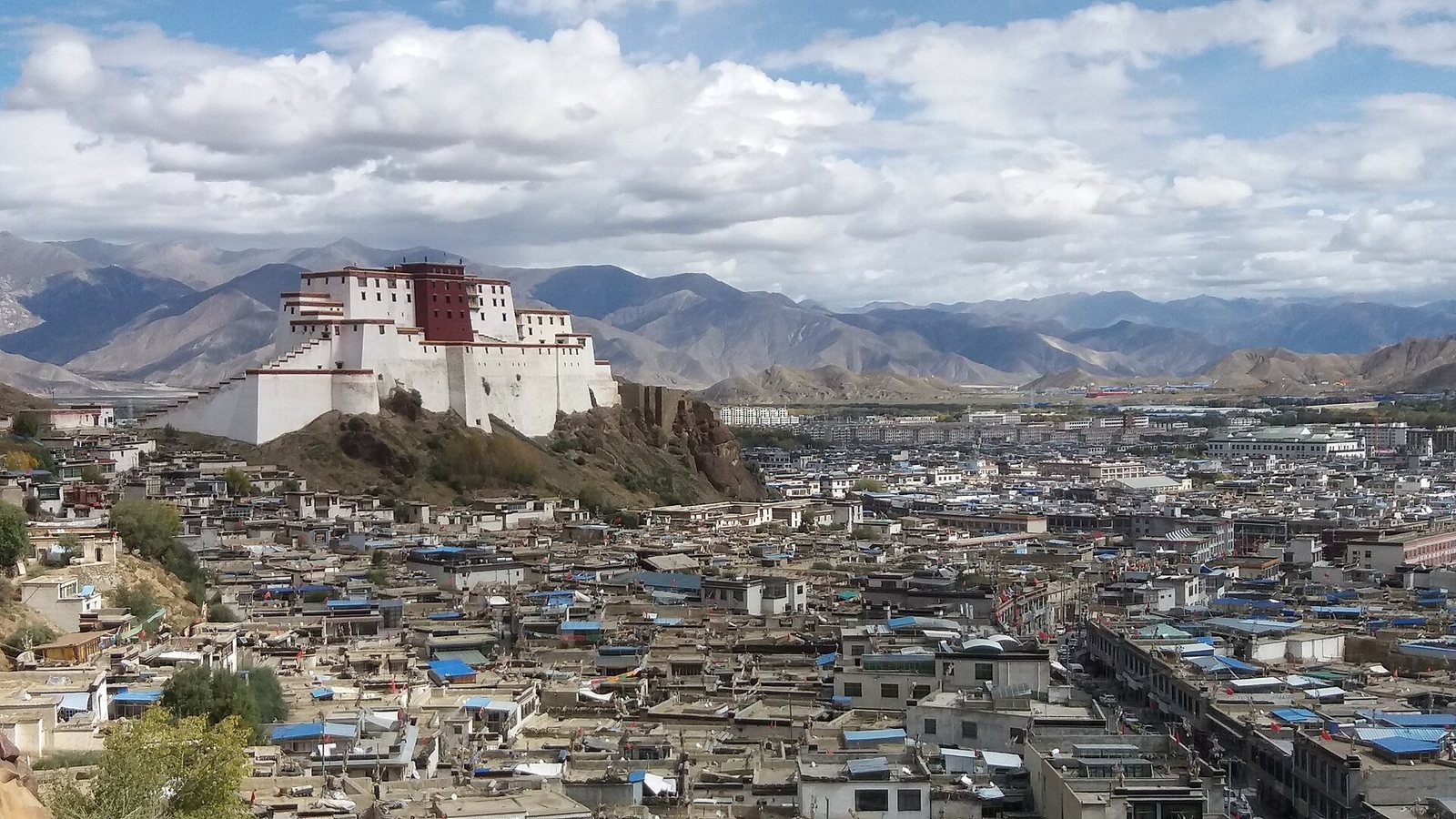
The dzong was destroyed after the 1959 Tibetan uprising and dismantled stone by stone in 1961 during the Cultural Revolution. Only a few ramparts remained. It was reconstructed on the same site from 2005 to 2007, using old photographs and plans prepared by the architecture department of Tongji University. The rebuilt complex became a museum of Tibetan culture, while the modern city of Shigatse developed around the fort’s base.
Remains
The reconstructed fortress
The dzong occupies a hilltop about 3,860 metres above sea level, at the meeting of the Yarlung Tsangpo, also known as the Brahmaputra, and the Nyang Chu. Its position overlooks Shigatse and Tashilhunpo Monastery, which lies near the hill’s base. The original fortress had turret-like defenses at either end and a central Red Palace; it was a smaller architectural prototype of the Potala in Lhasa. The reconstructed complex is smaller than the former dzong. Its structure is made of cement and concrete, with natural stone facing on the exterior.
The pilgrimage circuit
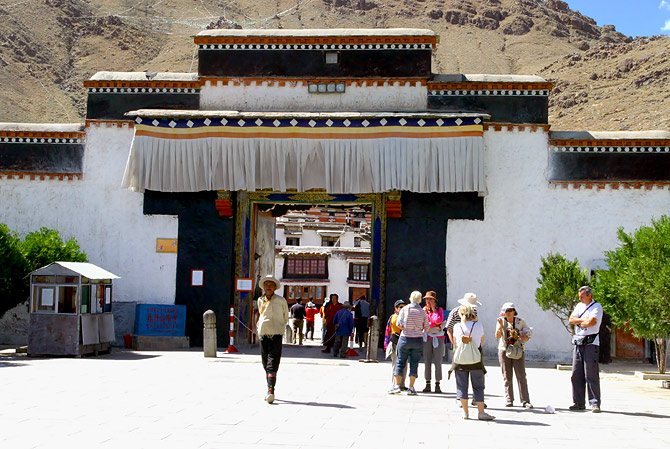
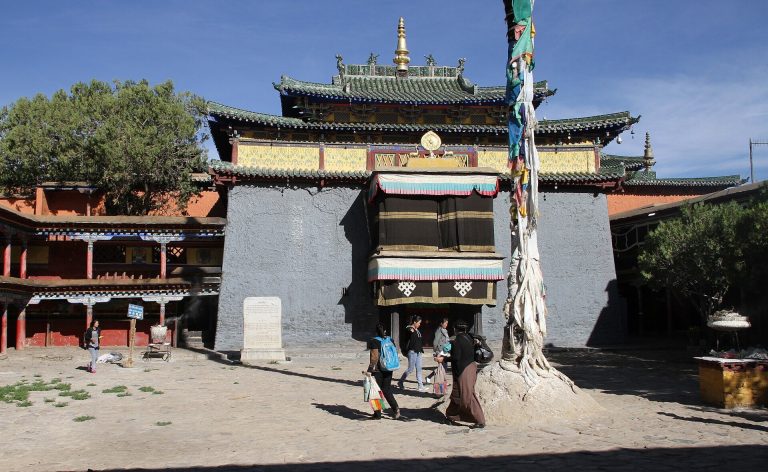
A clockwise kora, a ritual circuit for pilgrimage or meditation, begins at Tashilhunpo, passes the dzong, and returns to the monastery through town. A 90-metre boundary wall at Tashilhunpo leads north to prayer wheels, then uphill to another row. The circuit passes a large Tibetan Buddhist stupa and the small, maroon-coloured Gyelwa Jampa Temple before reaching sacred rocks. Pilgrims rub against the stones and offer incense, roasted barley flour, or fermented drink at a sacred fireplace. Farther along, a stone display structure shaped like a cinema screen holds a large Tibetan Buddhist painting during Tashilhunpo’s annual festival in the fifth Tibetan month, around late July. The route then forks toward the dzong, passes a Mani temple, and returns through town to the monastery entrance.