Great Wall of Qi: An Ancient Chinese Defensive Complex
Site at a Glance
- Country
- China
- Primary era
- Bronze Age
- Eras represented
- Bronze Age, Iron Age
- Civilizations
- Zhou
- Site type
- Military
- Remains
- Wall
On this page5 sections
History
The Great Wall of Qi is an ancient defensive complex in present-day Shandong, China, built by the state of Qi. Its oldest surviving sections date to the Western Zhou dynasty, and construction continued into the Warring States period, when the fortifications defended Qi against rival states. It is regarded as China’s oldest surviving Great Wall and is sometimes figuratively called the “father of the Great Wall.”
Origins and disputed dates
Qi emerged on the Shandong Peninsula in the eleventh century BC. One proposed start date for the wall is 685 BC, during the rule of Lord Huan of Qi. That date relies on the Guanzi, a collection of political and administrative writings, but the relevant passage was probably composed no earlier than the Warring States period. It therefore does not reliably establish that construction began in the seventh century BC.
A second proposed date, 555 BC, connects an invasion by Jin with a fortification described in the Zuo Zhuan, a narrative history of the Spring and Autumn period. The Shui Jing Zhu, a geographical commentary on waterways, later identified that fortification with the Great Wall. The earlier text neither calls it a Great Wall nor describes other works along Qi’s southern frontier, so the identification remains uncertain.
The Xinian, a history preserved on bamboo strips, says Qi first built its Great Wall in 441 BC, after Jin leader Zhao Huanzi allied with Yue to invade. The text was composed in Chu no later than 370 BC, and its final sections recount events from 450 to 395 BC. Archaeological evidence places the wall’s earliest surviving sections earlier than this account.
Warring States defenses
Construction continued during the Warring States period, an era of conflict among competing states. The wall helped defend Qi against Jin and Yue, and later against neighboring states including Ju, Lu, and Chu. The Bamboo Annals, a chronicle, and inscriptions on the Piao Qiang bronze bells record battles along the wall in 404, 365, and 350 BC. The bells were found in Luoyang between 1928 and 1931.
Conquest and abandonment
In the third century BC, after Qin conquered the other states, Qi surrendered without a battle and was annexed. The lands along the wall became interior territory, reducing its military purpose, and its defenses were abandoned.
Remains
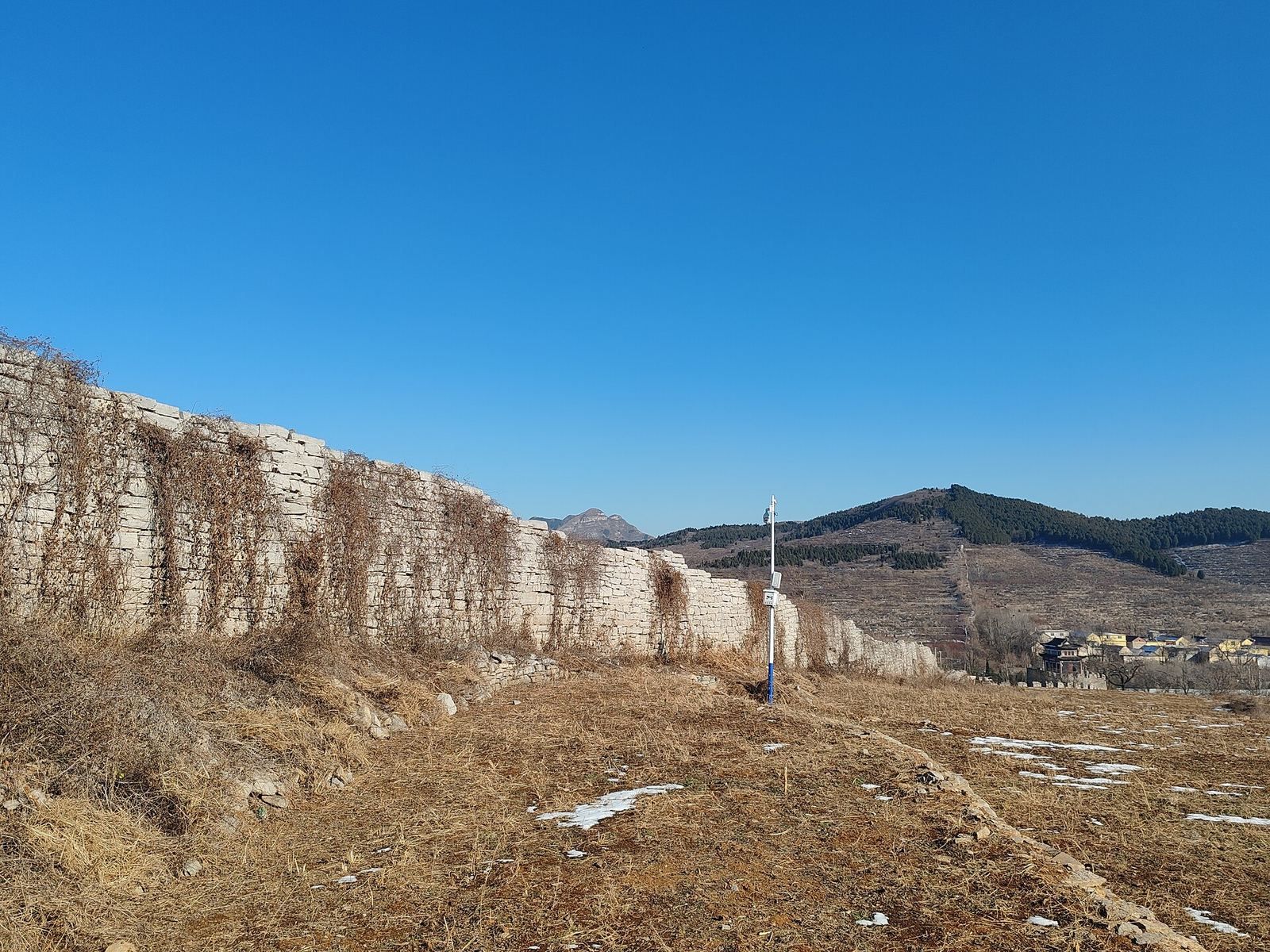
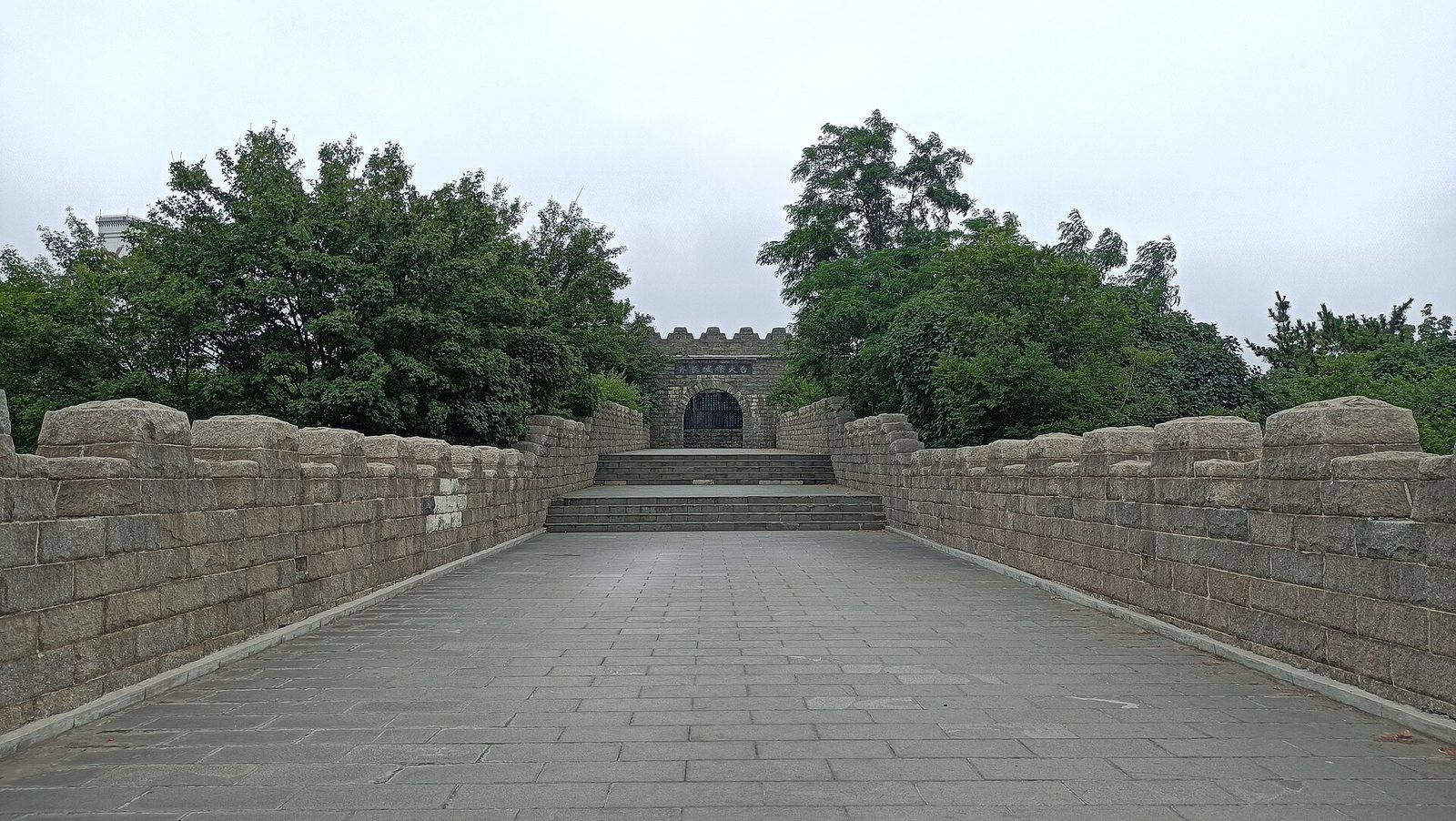
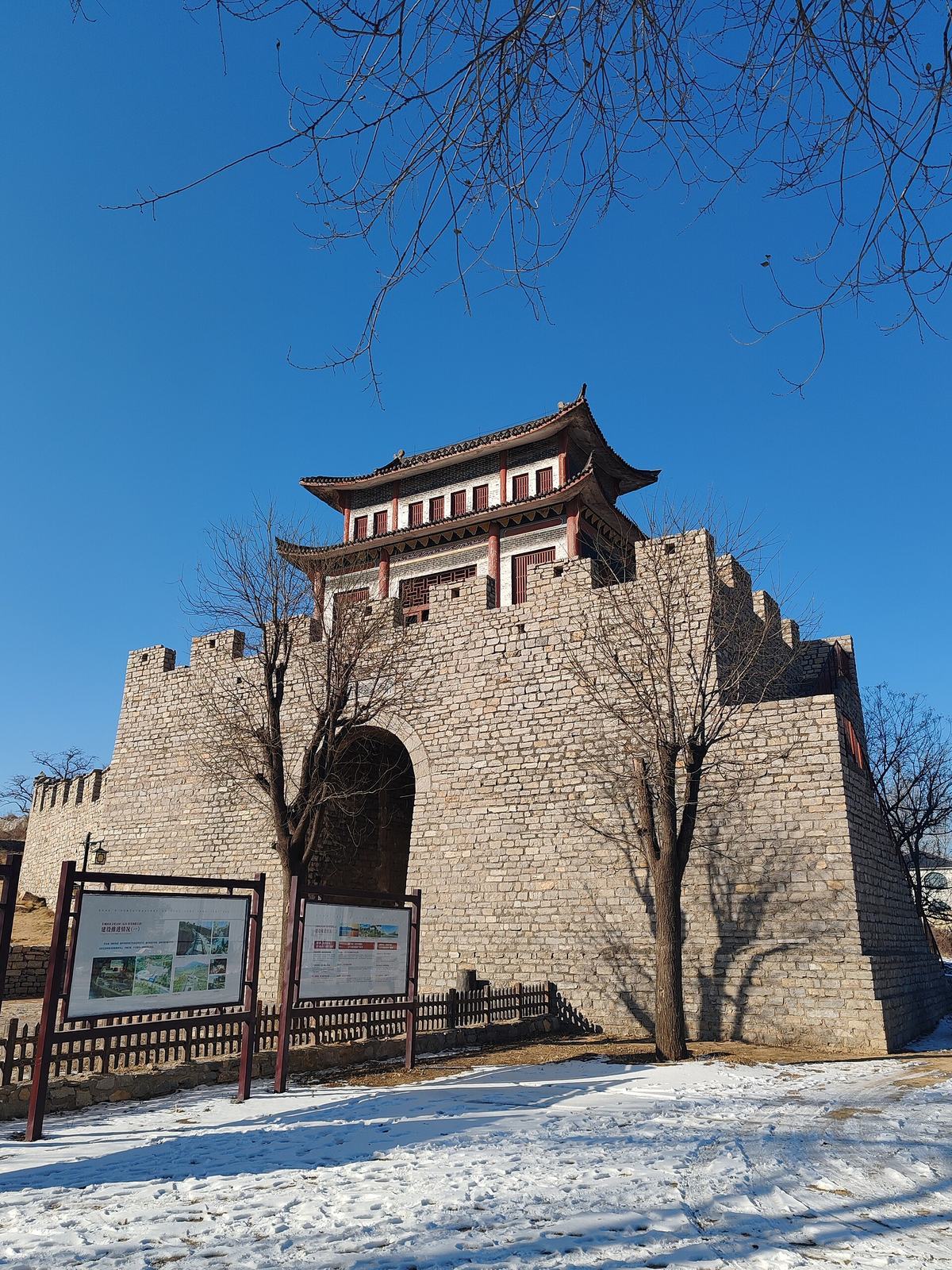
The Great Wall of Qi is a defensive complex in which stretches of wall connect fortifications. Its route begins at Guangli village, in present-day Changqing District of Jinan, and follows mountain ridges through central Shandong to the Yellow Sea at present-day Qingdao. It also crosses the present-day areas of Tai’an, Zibo, Weifang, Linyi, and Rizhao. The full route is estimated to extend about 600 kilometres, and large sections remain visible.
In 2024, excavation at Guangli exposed a section whose oldest remains date to the Western Zhou dynasty. This finding places construction there earlier than the 441 BC starting date given by the Xinian.