Seton Castle: Robert Adam’s Georgian House on the Site of Seton Palace
Site at a Glance
- Popularity
- High
- Country
- United Kingdom
- Primary era
- Early Modern
- Eras represented
- Early Modern
- Civilizations
- British, Kingdom of Scotland
- Site type
- Domestic
- Remains
- Castle
On this page7 sections
History
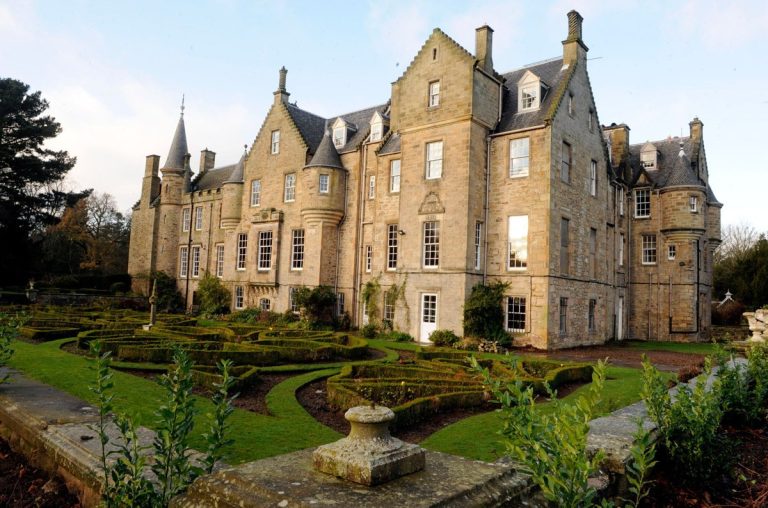
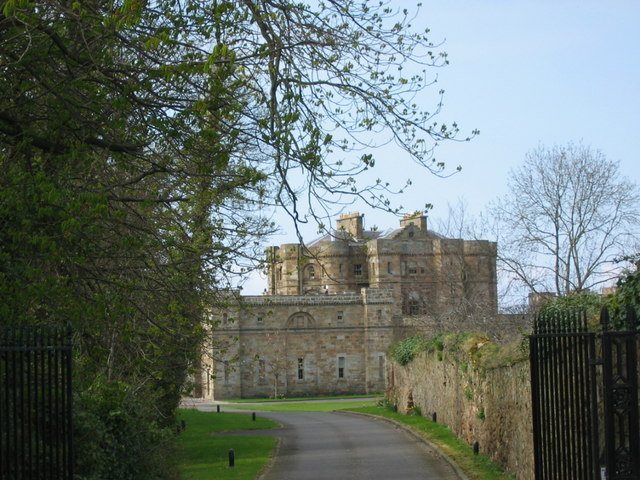
Seton Castle is an 18th-century Georgian house in the United Kingdom, designed by Scottish architect Robert Adam in a castle-like style. Georgian architecture is associated with the reigns of George I through George IV, and Adam was known for neoclassical design.
Seton Palace
The earlier Seton Palace stood on lands of Seton and Winton, which came into the Seton family’s possession in the 12th century. The palace’s foundation date is unknown. It belonged to the Earls of Winton and was burned by an English army in May 1544, after the army had burned Edinburgh. The palace was later restored.
Seton Palace served as a retreat for Mary, Queen of Scots, and welcomed royal guests. Mary and her second husband, Lord Darnley, honeymooned there, and she returned after his murder. James VI and Charles I also visited. By the 17th century, the palace was regarded as one of Scotland’s most magnificent.
Damage and replacement
During the 1715 Jacobite Rising, an attempt by supporters of the Stuart claim to regain the British throne, Seton Palace was damaged and burned. George Seton, 5th Earl of Winton, a Jacobite noble, lost the estate after the rising. The York Building Company, which acquired forfeited Scottish estates, took possession, and the palace fell into decline. It was in ruins by 1780.
In summer 1789, Lieutenant Colonel Alexander Mackenzie commissioned Adam to design a new mansion on the site. Demolition of the palace began that year, and the new house was built from 12 November 1789 to summer 1791. Thomas Russell received the building contract, and Adam’s working drawings were complete by December 1789. The project was Adam’s final work in Scotland. Building the house also required moving Seton village farther away.
Later ownership and restoration
After Mackenzie’s death in 1796, the Earl of Wemyss acquired the estate, which remained in the Wemyss family for more than two centuries. For a period, the family rented it to the Stevenson family of Prestonfield House. The property was known as Seton House from the 1920s and took the name Seton Castle again in 2012; it is also called Seton Hall.
Mary McMillan bought the property in 2003, when it was in poor condition, and undertook a major restoration. Stephen Leach acquired it in 2007 and carried out further renovations before selling it in 2019. Seton Castle became a Category A listed building in 1971, Scotland’s highest category for buildings of national or international importance. The gardens entered Scotland’s Inventory of Gardens and Designed Landscapes in 1987.
Remains
The Georgian house
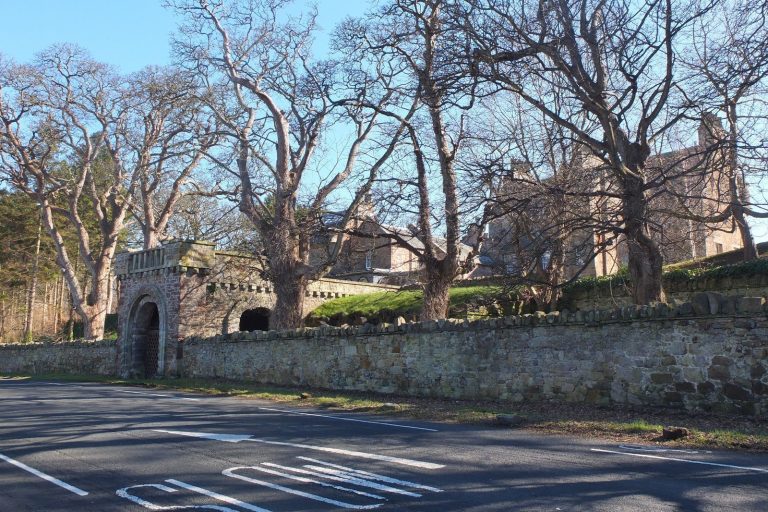
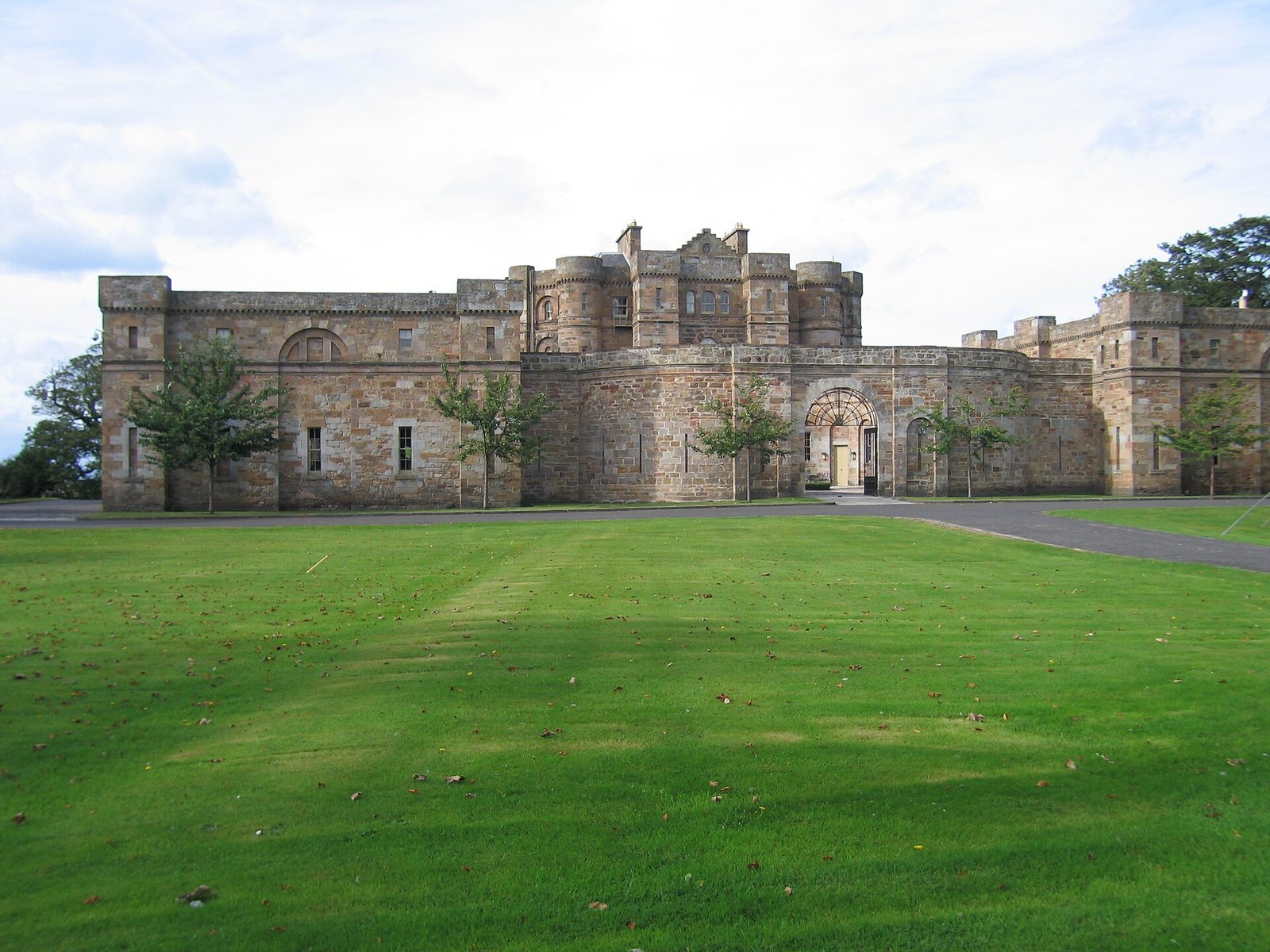
The house has shaped towers around a curved wall that encloses a courtyard, with a central archway forming its entrance. Thick screen walls connect the main block to the wings, while a further fortified screen links the wings and encloses the entrance court. Stone from Seton Palace was reused in the new building. The house has classical interior details, including original Corinthian pillars with capitals decorated with acanthus leaves and a cantilevered stone staircase, projecting from supports on one side, in the reception hall. In 2019, the mansion measured 18,196 square feet (1,690.5 square metres) on a 13.5-acre property, which also included working stables and a private tavern.
Palace remains and grounds
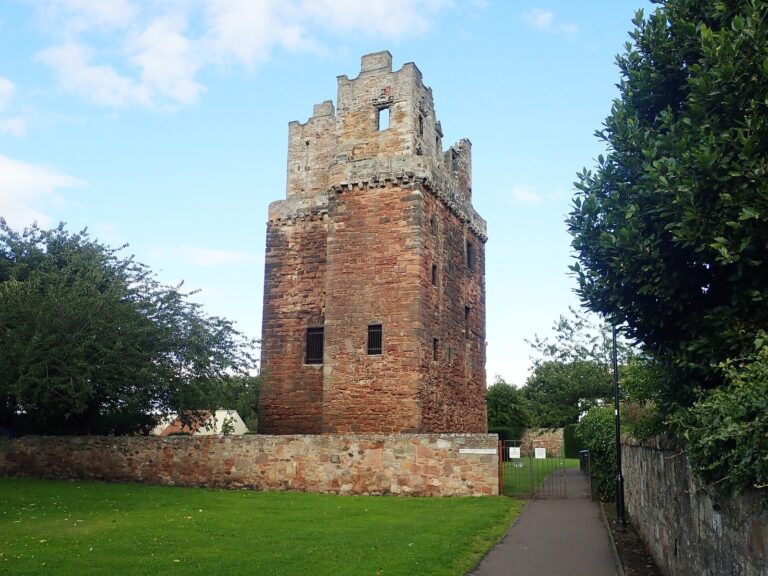
A vaulted ground-floor section of Seton Palace survived the clearance of the old building. The palace’s formal gardens date from the 16th and 17th centuries, and their walls were described as the remaining features of the original palace complex in 1987. The palace chapel and its park and garden grounds also remained after the palace was demolished. The property adjoins Seton Collegiate Church, a church served by clergy organized as a college rather than a monastic community.