Sellenbüren / Ofengüpf: Medieval Hill-Castle Site in Switzerland

Site at a Glance
- Rating
- 3.6
- Popularity
- Very Low
- Country
- Switzerland
- Primary era
- Medieval
- Eras represented
- Medieval
- Civilizations
- Holy Roman Empire
- Site type
- Military
- Remains
- Castle
On this page9 sections
History
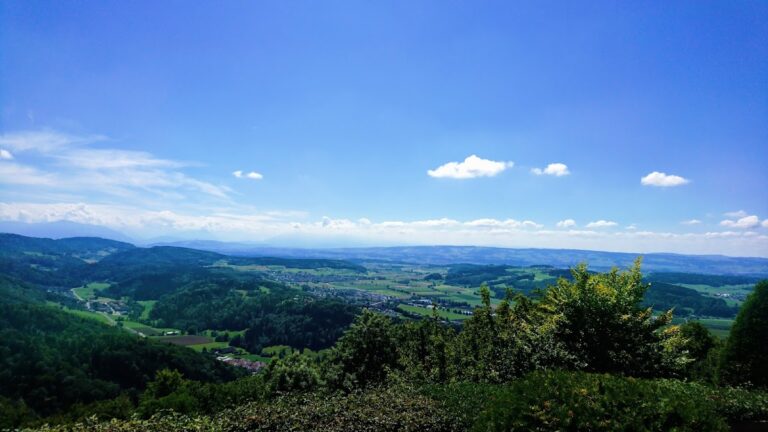
Sellenbüren / Ofengüpf is a medieval hill-castle site in Switzerland, near Sellenbüren in the municipality of Stallikon. Established in the eleventh century, it occupied elevated ground on the western flank of the Uetliberg and was abandoned during the twelfth century. A hill castle was a fortified settlement or residence placed on high ground for defense and control of its surroundings.
Earlier occupation
A Bronze Age complex preceded the medieval settlement. The Bronze Age was the prehistoric period when bronze tools and weapons became widely used in central Europe, many centuries before the medieval period.
The medieval castle
The castle is attributed to the free lords of Sellenbüren, members of the medieval lower nobility. Their ancestral castle may instead have stood on the Uetliburg, another hilltop castle site associated with the Uetliberg. Sellenbüren / Ofengüpf may therefore have housed the lords’ service personnel or served as a refuge.
The castle is not mentioned in medieval written sources, leaving its history only partly understood. Excavation evidence indicates that its inhabitants deliberately cleared the complex before it was burned. The settlement appears to have been abandoned in an orderly manner during the twelfth century, rather than simply falling into disuse over a long period.
Excavation and protection
The first and only excavation took place in 1950 and 1951. It established the character of the site and recovered a small group of objects that helps define its medieval occupation. Sellenbüren / Ofengüpf is listed as a Class B Swiss cultural property of regional significance.
Remains
The castle occupied the Ofengüpf, where a sharp ridge descending westward from the Uetliberg summit toward the Reppischtal broadens into a plateau. The medieval complex was arranged across northeastern and southwestern plateaus, with a raised area between them that has produced no evidence of construction. Today, the site survives through earthworks and archaeological remains rather than as a standing castle.
Buildings and water supply
Wooden buildings
On the northeastern plateau, a wooden building stood on a stone base. Postholes on the southwestern plateau indicate further buildings in that part of the complex. Together, these remains show that the castle’s structures were distributed across more than one level of the plateau.
Cistern
The excavation also revealed a cistern, a structure used to collect or retain water. Its presence formed part of the castle’s practical infrastructure and provided a means of storing water within the settlement.
Defensive works and finds
No traces of a stone ring wall were found. The enclosure was probably defined instead by a palisade, a defensive barrier made from upright wooden stakes. Remains of neck ditches survive to the northeast, south, and west, together with rampart traces that mark the castle site’s defensive boundaries.
The small assemblage recovered during excavation includes pottery sherds, horseshoe fragments, arrowheads, two keys, a knife, and a belt buckle. A finely decorated spur adds further evidence of the activities and equipment associated with the medieval occupants.