Seeburg Kreuzlingen: A Historicist Castle on Lake Constance


Site at a Glance
- Rating
- 4.7
- Popularity
- Medium
- Country
- Switzerland
- Primary era
- Modern
- Eras represented
- Early Modern, Modern
- Civilizations
- Swiss
- Site type
- Domestic
- Remains
- Castle
On this page7 sections
History
Seeburg Kreuzlingen is a castle in Kreuzlingen, Switzerland, on the Swiss shore of Lake Constance. Built in 1598 by Jakob Atzenholz-Zollikofer von Tattenwiler of Constance, it began as a small residence and later became the summer home of the abbots of the Kreuzlingen Augustinian monastery. The building is designated a Swiss heritage site of national significance.
Residence and monastic summer retreat
The original residence, known as Neuhorn, was a simple building constructed for Jakob Atzenholz-Zollikofer von Tattenwiler. Its later use by the abbots connected the lakeside property with the Augustinian monastery, a religious institution belonging to the Augustinian tradition. In 1633, Seeburg burned out completely. Abbot Augustin I Gimmi oversaw its restoration, completed in 1664.
Seminary and canton ownership
From 1833, Seeburg housed the Thurgau teacher-training seminary. Its first director was Johann Jacob Wehrli, a Swiss educator known for his work in teacher training. The seminary remained at Seeburg until the abolition of the monastery in 1848 transferred the property to the Canton of Thurgau. The canton moved the seminary to the former monastery’s convent buildings in 1850 and sold Seeburg in 1852.
Historicist remodelling and civic ownership
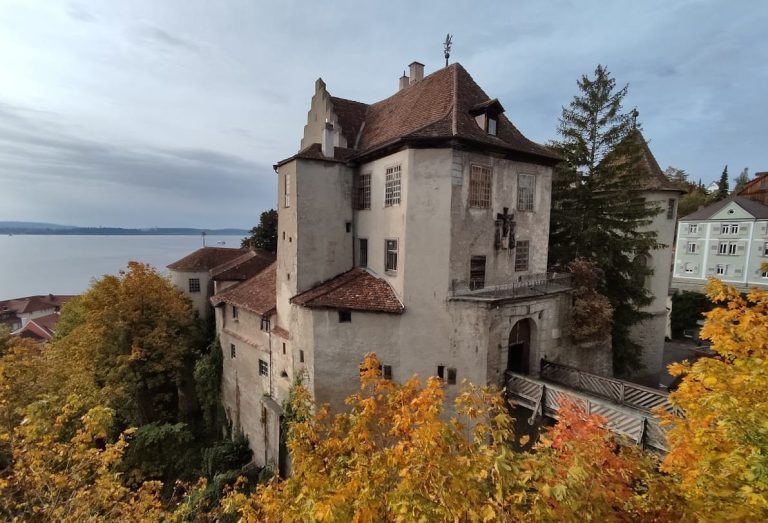
Gottfried Ferdinand Amman acquired Seeburg and remodelled it in 1870 as a historicist castle. Historicism was a nineteenth-century architectural approach that adapted and recombined forms associated with earlier historical styles. The plans were prepared by Ernst Georg Jung, a Swiss architect based in Winterthur.
Georg Gottfried Volkart-Ammann acquired the castle in 1907 from his brother-in-law, August Ferdinand Ammann. He withdrew as a partner of Gebrüder Volkart AG and later bequeathed Seeburg to his three daughters. In 1958, after Kreuzlingen’s voters approved the purchase by a majority of twenty-eight votes, the castle and park became city property.
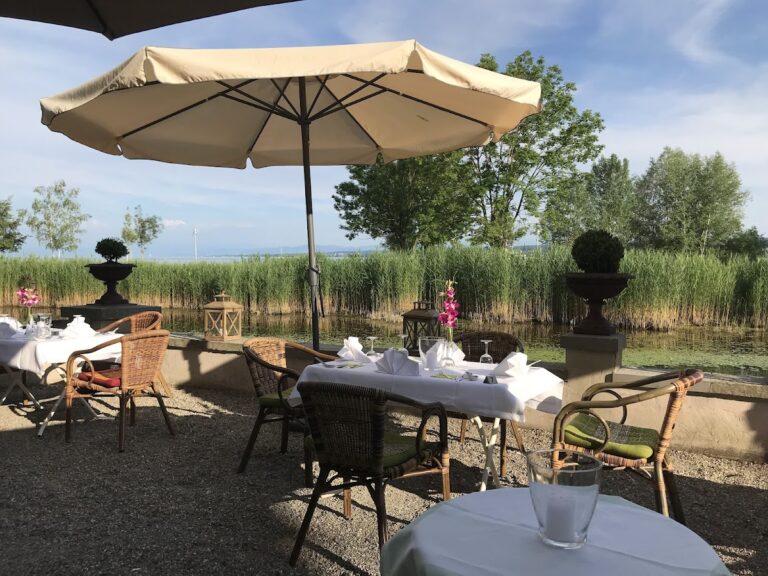
Extensive renovation took place from 1982 to 1984 through the Ernst Oberhänsli architectural firm, with Jürg Ganz responsible for cantonal heritage conservation. A restaurant was integrated into the castle in 1993, and since 2016 all of its rooms have been used for restaurant and event functions. Since 1990, the See-Burgtheater Kreuzlingen has presented professional open-air performances in Seeburg Park immediately east of the castle. Founded by Hans-Ruedi Binswanger and Gregor Vogel, the theatre company stages adaptations of established plays, novels, and other literary works during the summer.
Remains
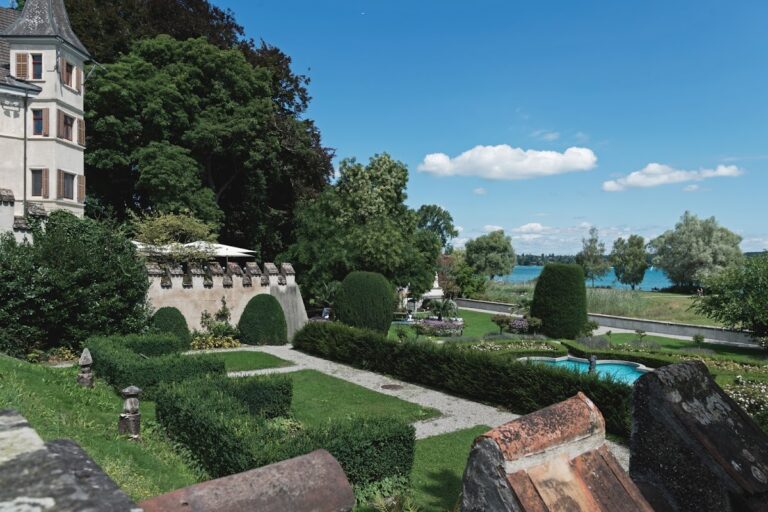
Seeburg stands within Seeburg Park on the Swiss side of Lake Constance. Until land reclamation extended the lakeshore in the 1960s, the castle stood directly beside the lake. The surviving complex combines the earlier residence’s simple beginnings with the historicist appearance created by the 1870 remodelling, while the park provides the setting for the castle and the open-air theatre east of it.
The castle
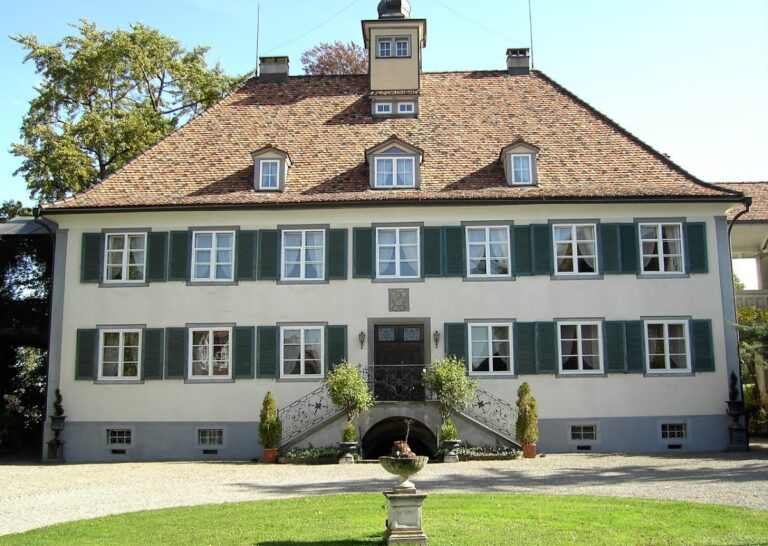
The 1598 building was a simple cubic structure with a gabled roof and a square surrounding wall. Its present appearance derives from Gottfried Ferdinand Amman’s 1870 remodelling in the historicist style. The building now contains rooms used for restaurant and event functions, including the restaurant established within the castle in 1993.
Seeburg Park
August, Gottfried Ferdinand Amman’s son, designed Seeburg Park between 1894 and 1895. The park extends immediately east of the castle and includes the open-air stage used by the See-Burgtheater Kreuzlingen for its summer performances.
Nearby sites