Sankt Martin im Innkreis Castle: A Baroque Aristocratic Residence
Site at a Glance
- Popularity
- Medium
- Country
- Austria
- Primary era
- Early Modern
- Eras represented
- Early Modern
- Civilizations
- Habsburg, Habsburg Austria, Holy Roman Empire
- Site type
- Domestic
- Remains
- Castle
On this page14 sections
History
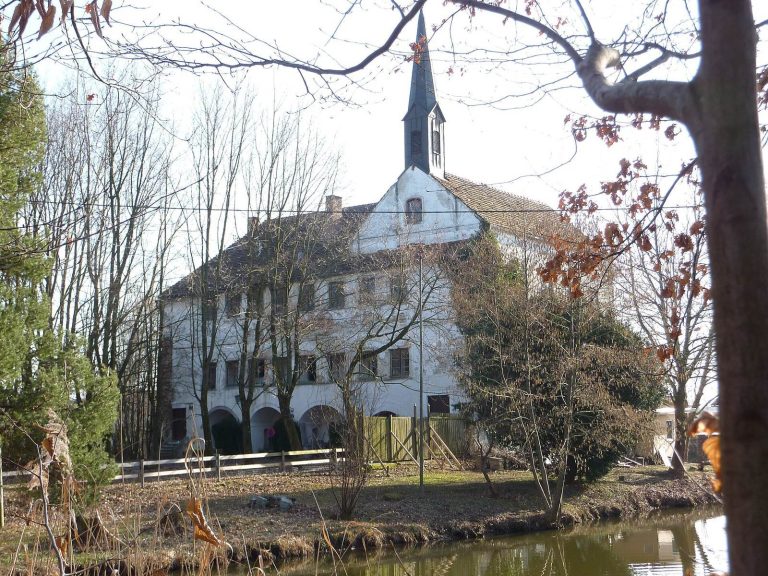
Sankt Martin im Innkreis Castle is a Baroque aristocratic residence in Austria, rebuilt to its present appearance in 1726 after a fire. It is also known as Arco-Zinneberg Castle and was formerly called Altschwendt. The estate was first recorded in 1150 as the property of the Schwenter family.
The Schwenter and Trennbach families
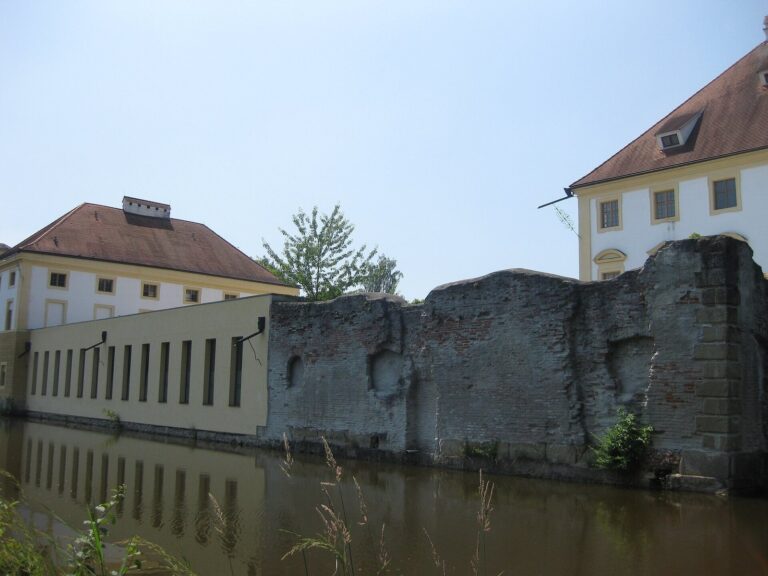
The Schwenters held the estate until their last known member, Hans der Schwenter, died in 1417. In 1430, Ortolf von Trennbach acquired a wooden manor surrounded by a pond. Urban von Trennbach was born there and spent his youth at the manor before becoming bishop of Passau, a senior Christian cleric who led the historic Catholic diocese in Bavaria.
The Trennbach family line ended in 1584. Urban entrusted the property’s management to Christoph Pienzauer, who held that responsibility until 1606. In 1575, Maria Stocker, born into the Trennbach family, brought the property into the Tattenbach family through her second marriage, to Veit von Tattenbach of Hausbach. Veit and his son drowned in a shipwreck in 1593 while travelling on pilgrimage to the Holy Land. After a Trennbach heir received compensation, the castle passed to the Tattenbach-Rheinstein family. Hans Ardolf, also known as Johann Adolf, became its owner.
Tattenbach ownership and destruction
Johann Adolf was deeply disliked by his dependents. During the Upper Austrian Peasants’ War, a peasant uprising in Upper Austria in 1626, they set fire to the castle. It was rebuilt, then burned again that year. The old building was not reconstructed; its successor was a substantially larger stone residence. Johann Adolf’s nephew, Count Gottfried Wilhelm von Tattenbach-Rheinstein, inherited the property and was popular with his subjects. The family had become barons, a rank of nobility, in 1620 and imperial counts, counts within the Holy Roman Empire, in 1637.
Baroque rebuilding and inheritance
Imperial Count Ferdinand Josef, the next heir, was shot dead by hired killers on 3 October 1712 in a forest near Hart bei Sankt Peter. An unsubstantiated rumor accused his son of arranging the killing to secure the inheritance sooner. The property passed to Max Franz, who greatly enlarged the estate. A fire damaged the castle in 1723, and rebuilding was completed in 1726, giving it its present appearance.
Max Franz’s only son, Joseph Ferdinand von Tattenbach, died childless in 1802 despite having married twice. The property then passed to Heinrich Christian Joseph Ignaz of the Wolf line of the Tattenbachs. He died without an heir in 1821 and left the estate to his cousin, Count Maximilian von Arco-Valley. The pond around the castle was drained in 1854. In 1865, Countess Maria Arco-Valley married Sir Acton, a member of the elected lower house of the United Kingdom’s Parliament, in the castle chapel.
Twentieth-century use and ownership
After the Second World War, the Spanish Riding School, an institution for classical riding and the training of Lipizzaner horses, was housed at the castle. Later owners included Maximilian and Ferdinand von Arco-Valley. Ferdinand died in 1968 and was succeeded by his adopted son Ulrich-Philipp von Arco-Zinneberg, who died in 1980.
Remains
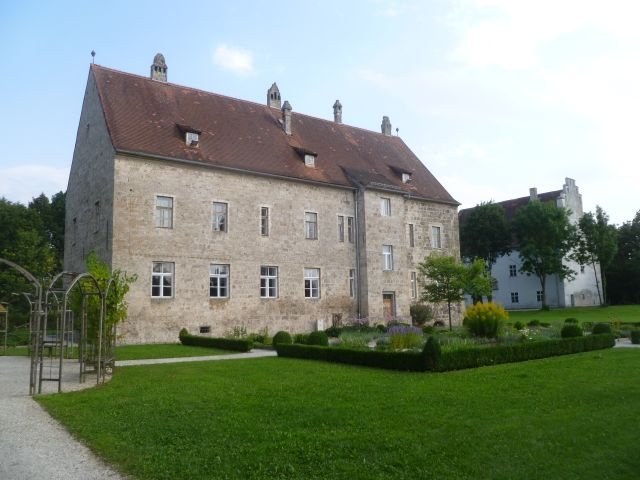
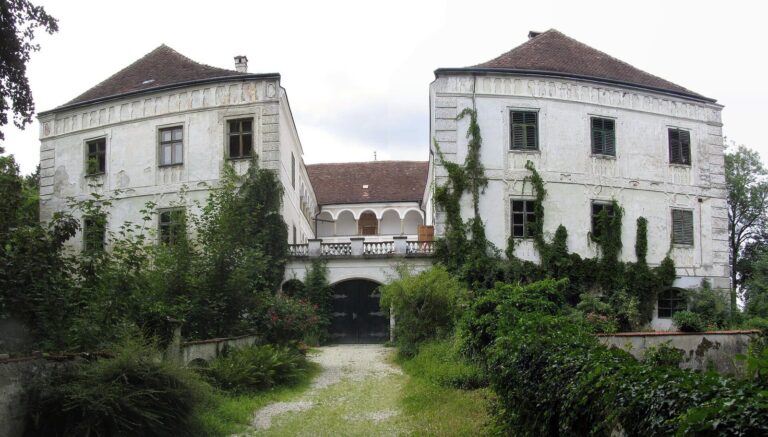
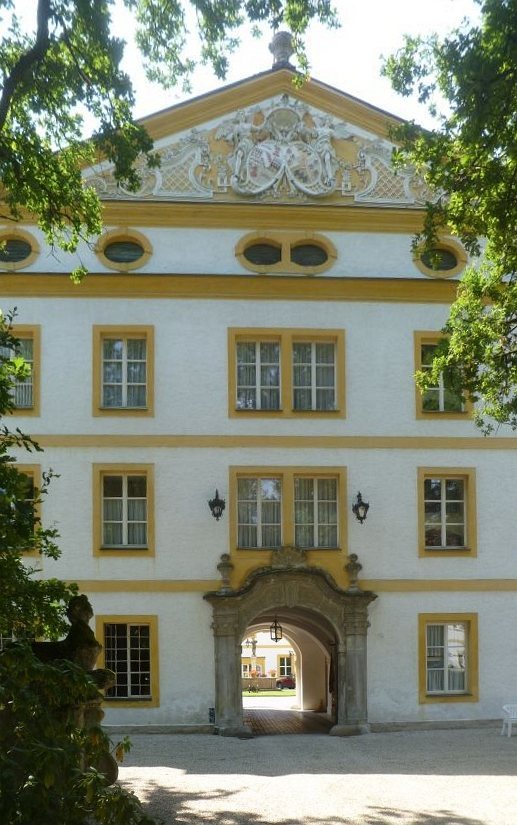
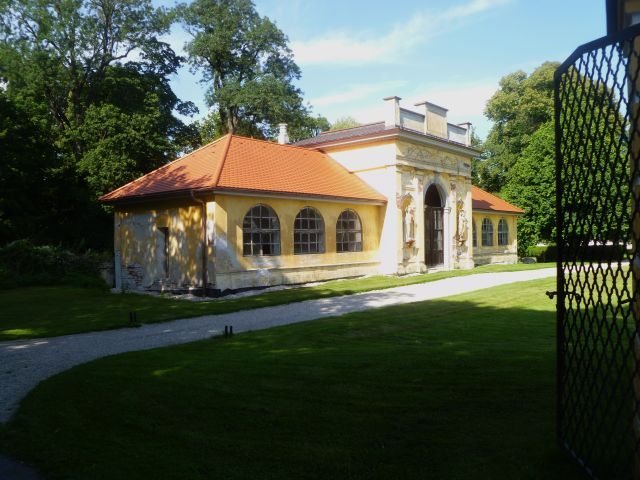
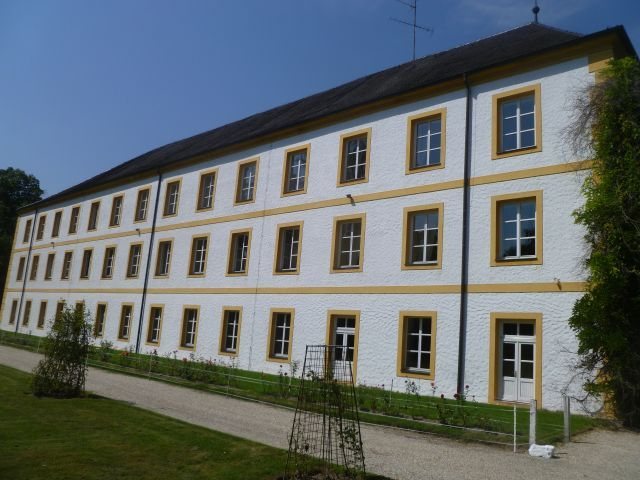
The castle stands in a park enclosed by a wall on three sides and bordered by the Antiesen River on the fourth. Its massive, four-sided main building has three floors and a smooth façade. The grounds also contain a chapel, garden features, and several service and riding buildings.
Castle and grounds
Main building
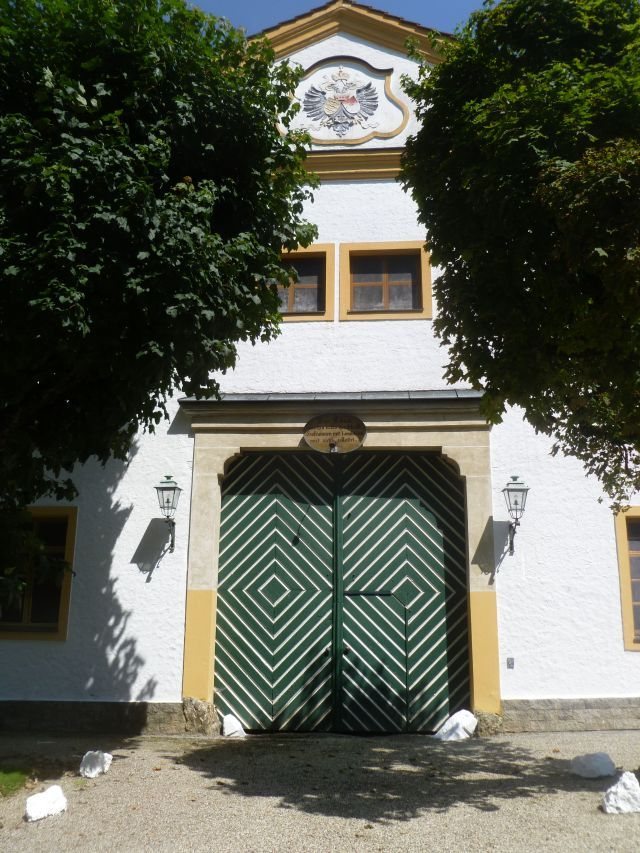
Ochre-colored horizontal bands divide the floors, while rendered blocks in the same color emphasize the corners and frame the windows. A simple gate opens into the courtyard.
Courtyard and garden
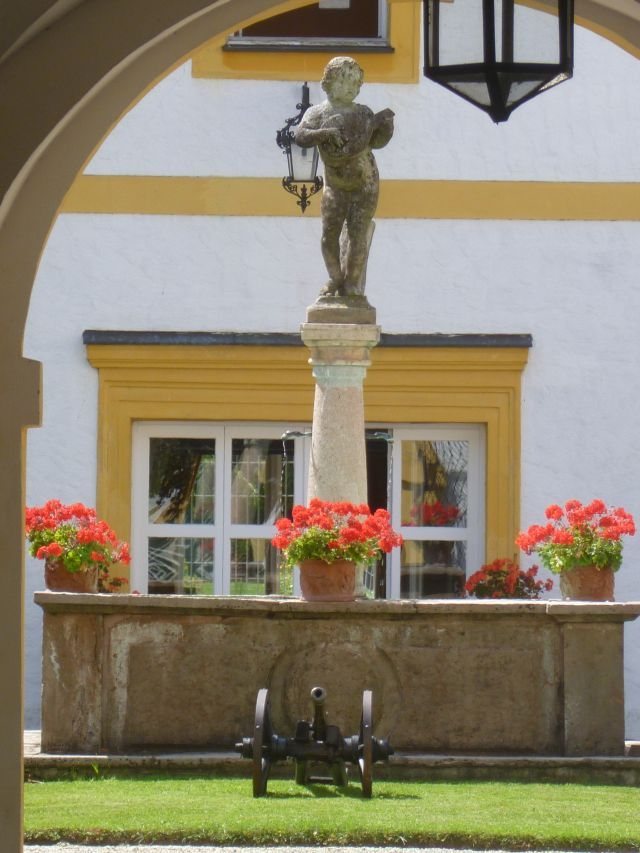
A fountain in the garden depicts a youth playing a mandolin. A separate garden figure stands in front of the castle.
Service and riding buildings
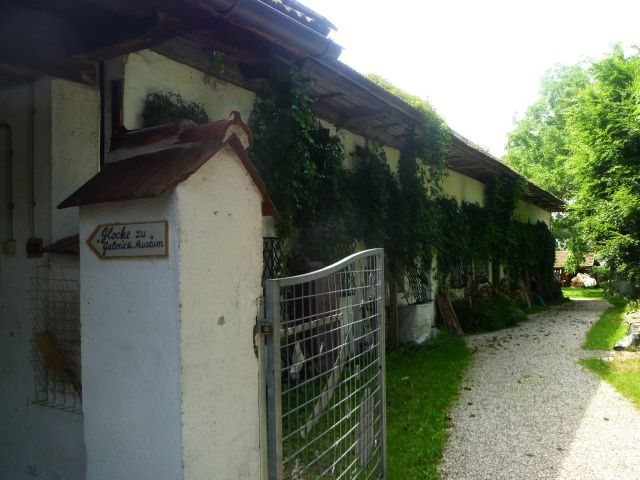
A service building lies to the right of the approach. Behind it are a riding facility and a riding inn. The grounds also include a side wing and a garden pavilion.
Chapel and interiors
Castle chapel
The Baroque chapel, dedicated to Saint Florian, dates to 1726. Florian was an early Christian martyr venerated as a patron saint of firefighters.
Decorated rooms
Rooms on the first floor have elaborate stucco decoration, with colorful allegorical scenes set into panels. In 1926, furnishings from Aurolzmünster Castle were transferred here when the Arco-Valley family sold that estate. Some built-in columns and balconies were moved as well. Several interior rooms and oil paintings were restored in 1970.
Former courtyard sculpture
A bronze figure of Bacchus, the Roman god of wine and revelry, by Dutch sculptor Adriaen de Vries was formerly kept in the courtyard. Christie’s auctioned it in December 2014, and Amsterdam’s Rijksmuseum, the Netherlands’ national museum, acquired it for €22.5 million.