Schloss Reichartshausen: An Abbey Wine Estate in Germany
Site at a Glance
- Rating
- 5
- Popularity
- Very Low
- Country
- Germany
- Primary era
- Early Modern
- Eras represented
- Early Modern, Modern
- Civilizations
- Electorate of Mainz, German, Holy Roman Empire, Kingdom of Prussia
- Site type
- Domestic
- Remains
- Manor House
On this page8 sections
History
Abbey estate and residence
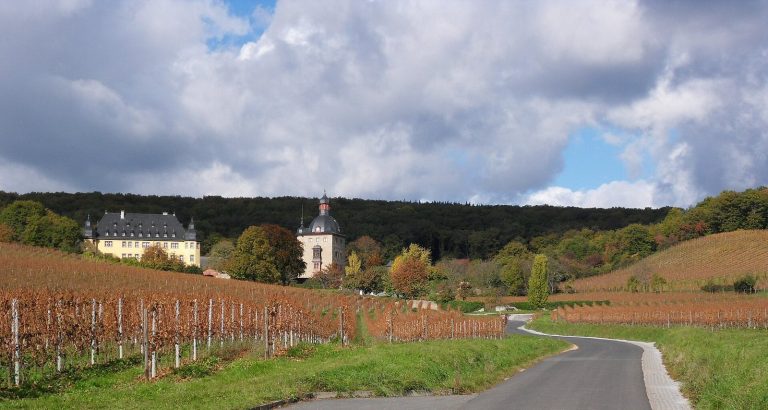
Schloss Reichartshausen is a historic wine estate in Oestrich-Winkel, Germany. Beginning in 1152, the estate and the nearby Pfaffenberg vineyards served Eberbach Abbey, a Cistercian monastery whose community supported itself through farming and trade. Reichartshausen became the abbey’s largest center for transferring and storing wine. Its harbor was the starting point for the abbey’s yearly journey to its residence in Cologne, an important event in its financial calendar.
After the Thirty Years’ War (1618–1648), a major European conflict, Abbot Hermann Hungrighausen, head of the abbey, had a residence built at the estate from 1737 to 1740. It provided the abbey with a second home.
Secularization and private ownership
Eberbach Abbey was dissolved in 1803 under the Final Recess of the Imperial Deputation, an imperial settlement that reorganized German territories and secularized church holdings. The estate first passed to Nassau-Usingen. In 1804, Friederike of Anhalt-Köthen, daughter of Duke Friedrich August of Nassau, commissioned a remodeling in the Classical style, which drew on ancient Greek and Roman art. In 1807, her mother, Duchess Louise of Waldeck, received Reichartshausen as a gift from her husband.
After Louise’s death, Count Erwein of Schönborn bought the estate and vineyards in 1817, enlarged the buildings, and laid out a park reaching toward the Rhine. In 1873, the buildings were sold to Countess Louise von Benckendorff, born Croÿ, who was a court lady to Marianne of Prussia, a Prussian princess. The Pfaffenberg vineyard site remained with the Schloss Schönborn winery.
Winery and modern use
From 1889, August Wilhelmj, the estate’s authorized business representative, developed it into a winery using the latest technical methods. Reichartshausen became the center of his internationally known wine-trading business, and Wilhelmj also redesigned its park.
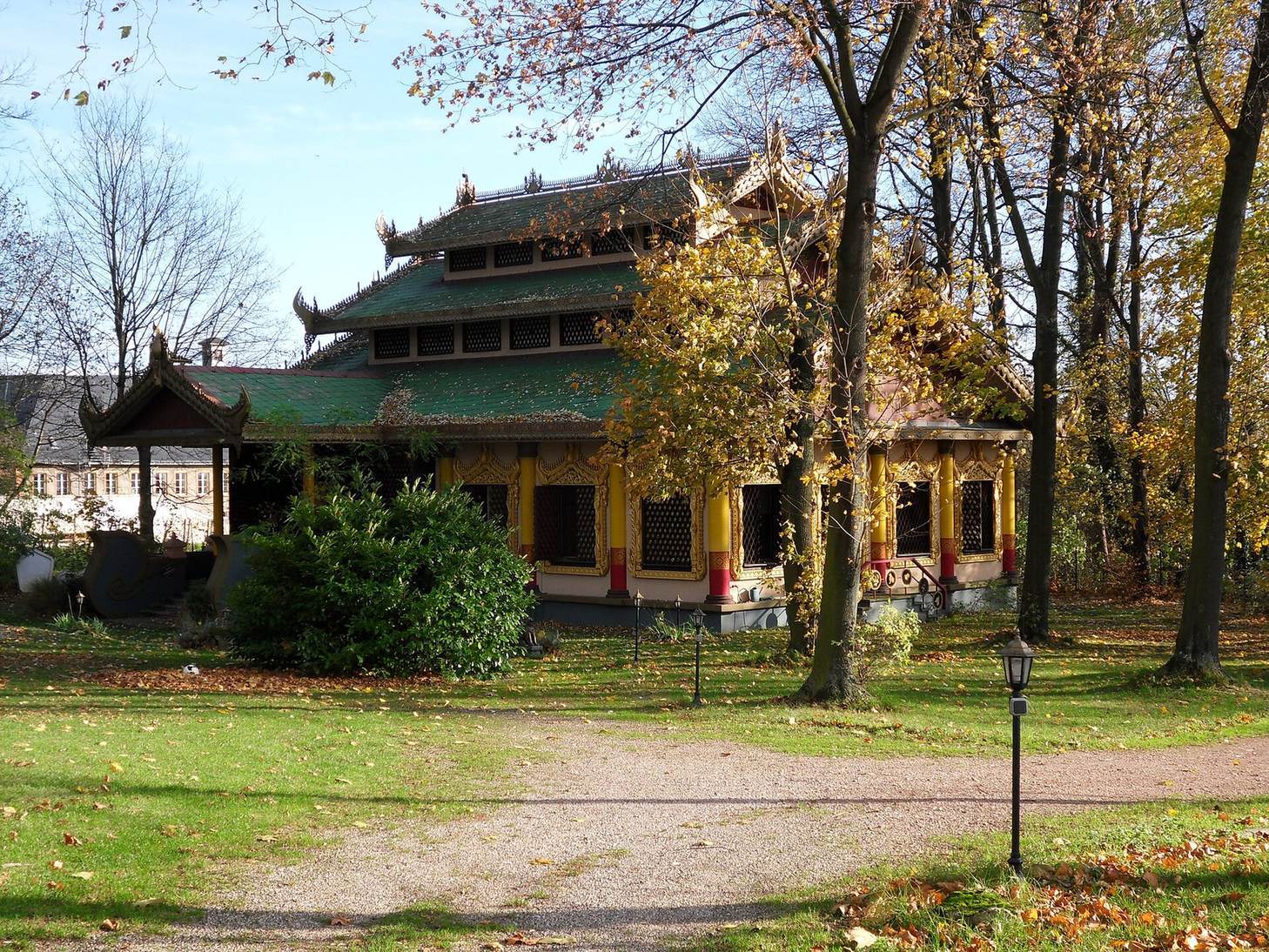
Fritz Werner Werkzeugmaschinen owned the estate from 1970 to 1980 and restored it for representational use, largely returning its buildings to their 1740 forms. The company also ran a machinery factory in nearby Geisenheim, then the Rheingau’s largest employer. In 1971, Myanmar’s government gave the company a Burmese tea house built on the grounds. The tea house later passed to Ferrostaal Industrieanlagen.
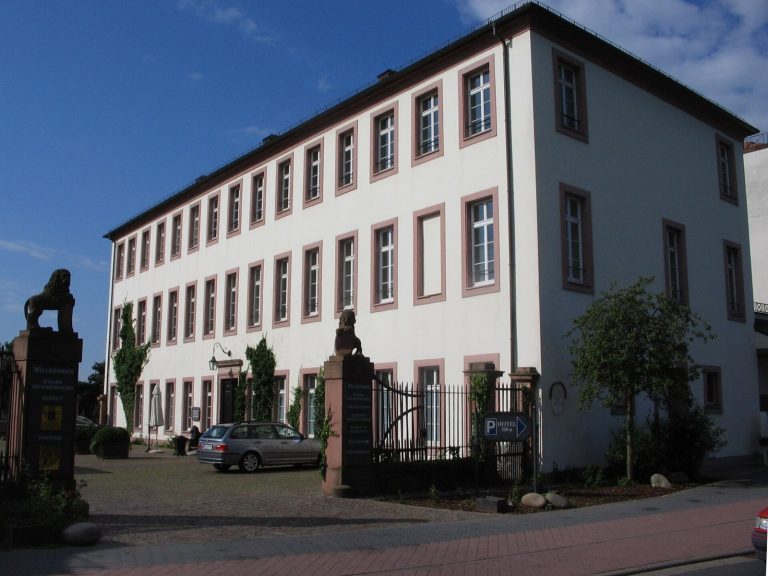
Since 1980, the estate, apart from the tea house on its separate plot, has housed EBS Business School, part of EBS University of Business and Law. The Walter-Leisler-Kiep-Center, named for a German politician and business executive, was added in 2000.
Remains
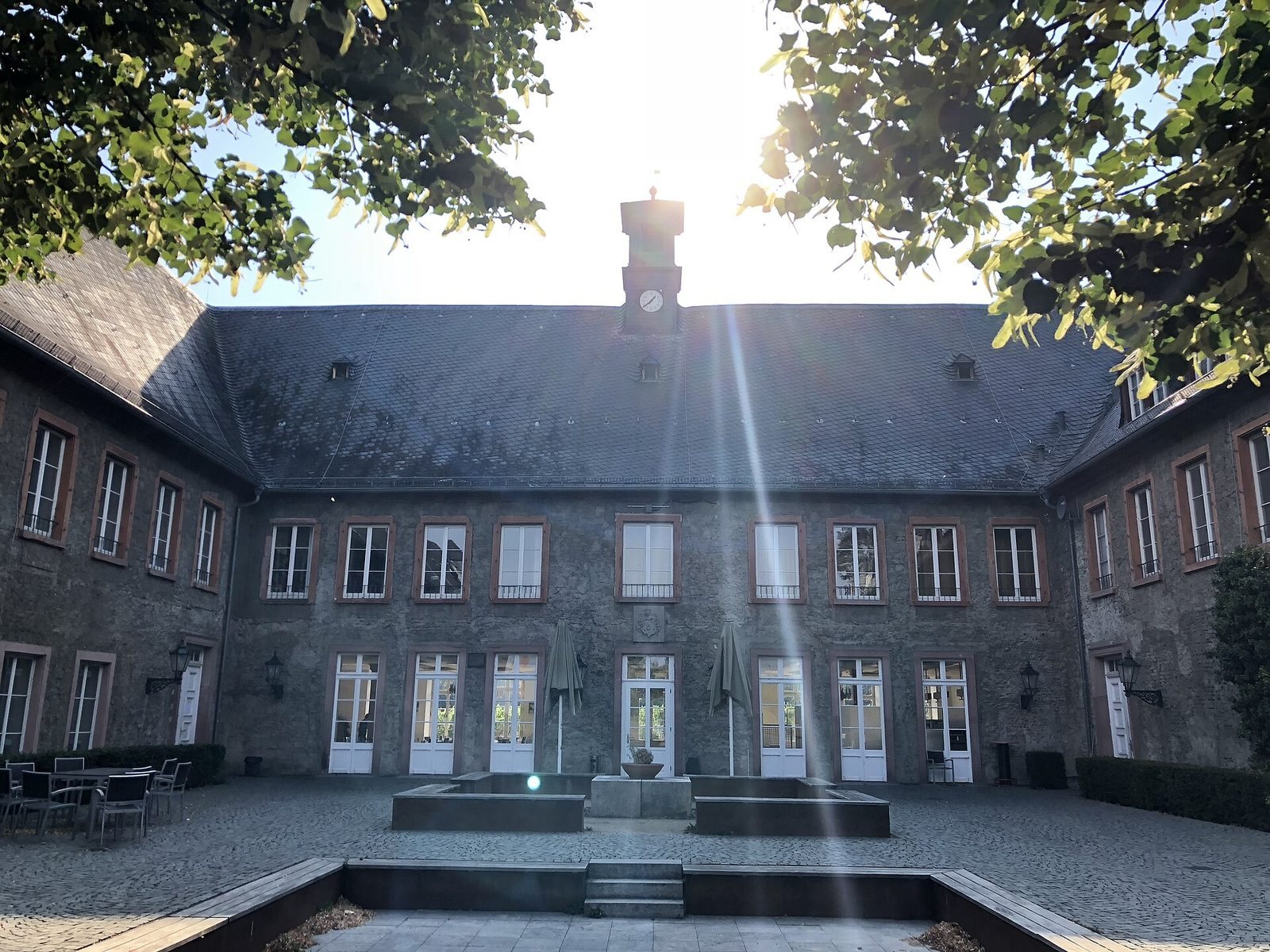
The estate stands among vineyards between Oestrich and Hattenheim, near the Rhine. It is beside the old east–west road through the Rheingau, now the L 3320; the B 42 runs between the property and the river. The main building group is arranged in a U around a courtyard.
Wings and courtyard
The complex includes north and south wings and part of a west wing. The courtyard was later covered to create a winery cellar, with a terrace and an exterior staircase.
Ancillary and service structures
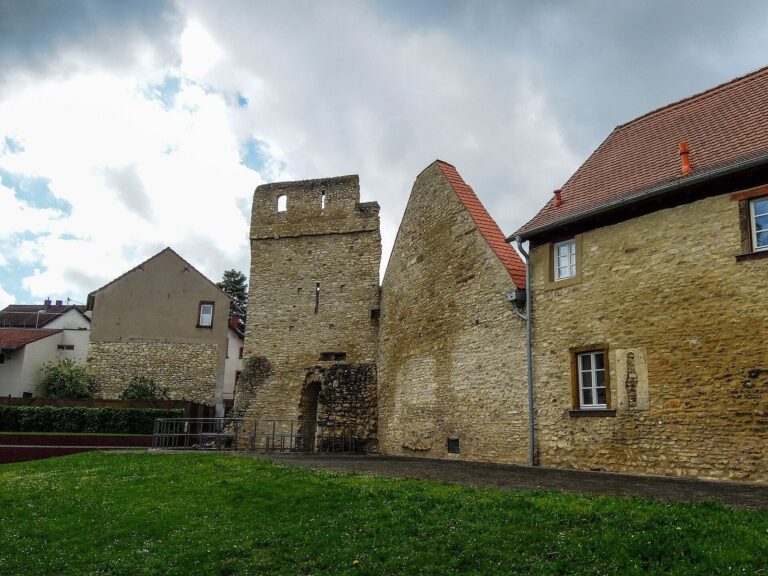
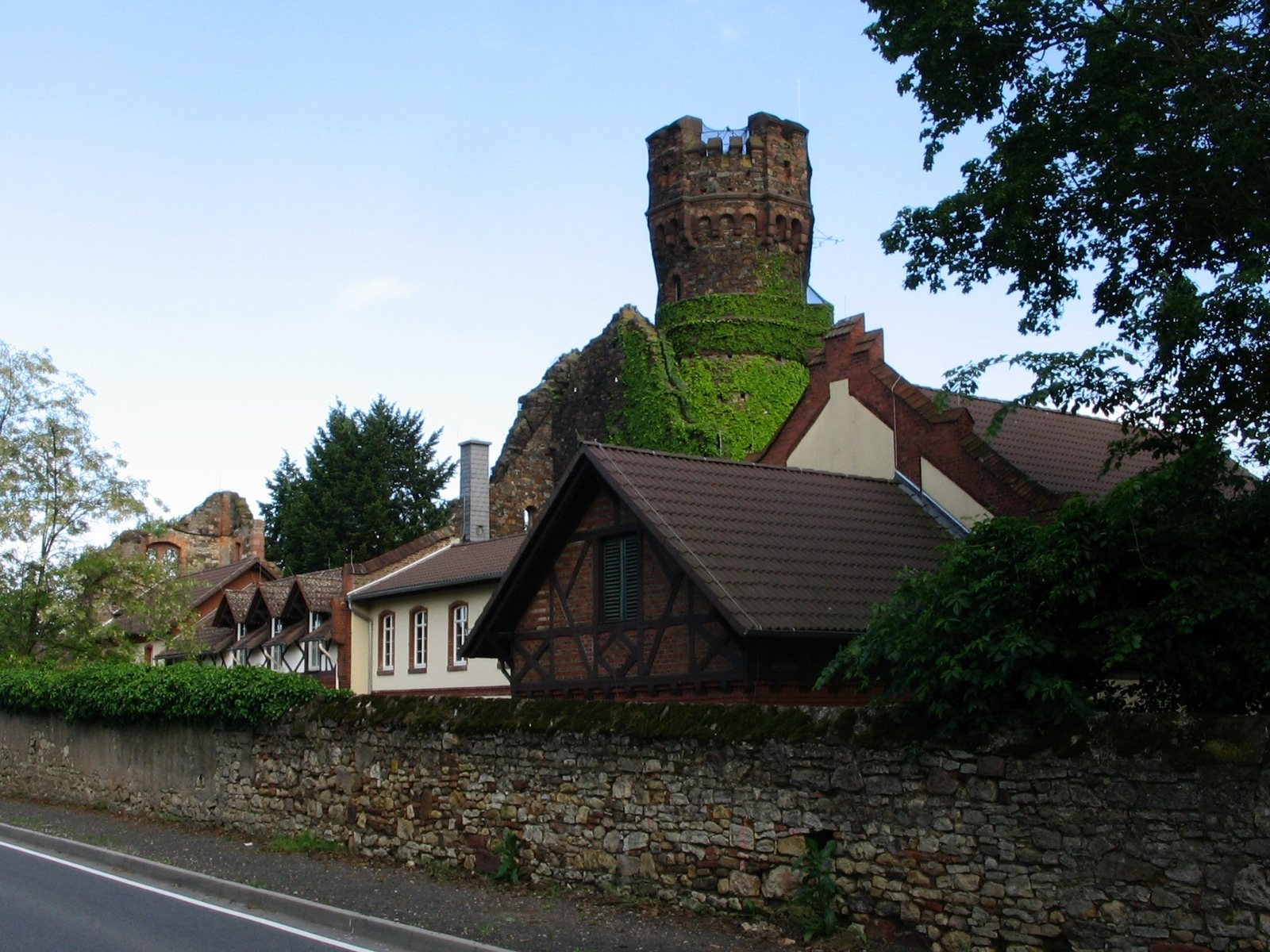
An ancillary building stands along the northern road frontage. An artificial castle ruin associated with it contains a water tower. The estate also had a separate power plant and service buildings.
Tea house and later addition
The tea house is a separate building on its own plot. Its design reproduces the entrance hall of the royal palace in Mandalay, and the building was made for Montreal’s 1967 World’s Fair before being erected at Reichartshausen. The Walter-Leisler-Kiep-Center forms an addition to the estate complex.