Hollwinkel Castle: A Medieval Border Fortress and Water Castle
Site at a Glance
- Popularity
- Medium
- Country
- Germany
- Primary era
- Medieval
- Eras represented
- Medieval, Modern
- Civilizations
- Holy Roman Empire
- Site type
- Domestic
- Remains
- Castle
On this page9 sections
History
Foundation and border conflicts
Hollwinkel Castle is a water castle, a stronghold defended by surrounding water or water-filled ditches, in Germany’s Alsweder lowland. Established at the end of the thirteenth century, it served as a border fortress for the Diocese of Minden, an ecclesiastical territory whose bishop also held political authority. The Holle family, driven from the Hildesheim region, is believed to have founded it. Bishop Otto I of Minden is said to have granted the later castle as a fief, property held under a feudal agreement.
From around the beginning of the fifteenth century, the castle belonged to the von Schloen family, also known as Gehle. In 1459, during a feud with Osnabrück, the stronghold was besieged and shelled while serving as Minden’s western outpost. The attackers did not capture it. Its defenses included three moats.
War and political change
During the Thirty Years’ War, a major European conflict fought from 1618 to 1648, Swedish forces besieged Hollwinkel. The castle held out, and the besiegers eventually withdrew to nearby Ellerburg. In 1648, the Diocese of Minden was secularized, transferring its territorial authority from church rule to secular government. Its lands became the Principality of Minden under Brandenburg-Prussia.
Changes in ownership and residence
The von Gehle family died out in 1758, and the castle passed to its feudal lord, Frederick II of Prussia. That year, the king transferred it to Baron von Asseburg for 50,000 thalers. In 1776, with the king’s consent, von Asseburg sold the property for 70,000 thalers to Baron von der Horst, a Prussian state minister from Haldem.
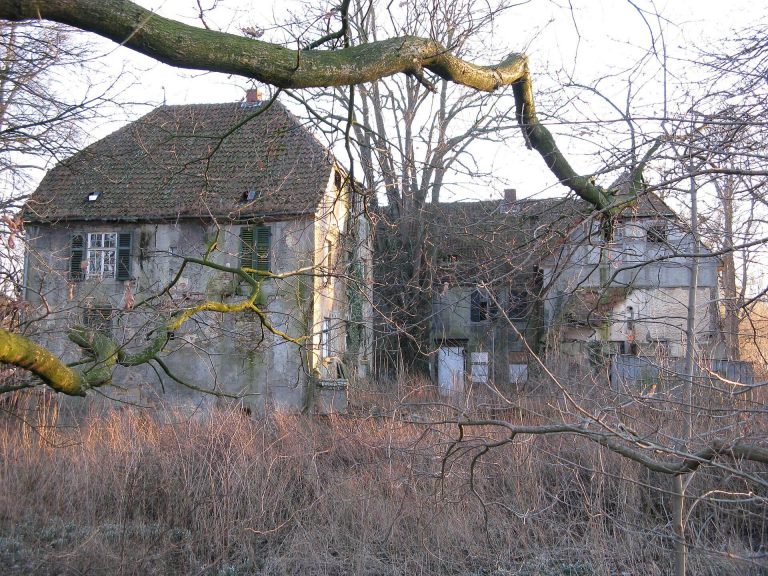
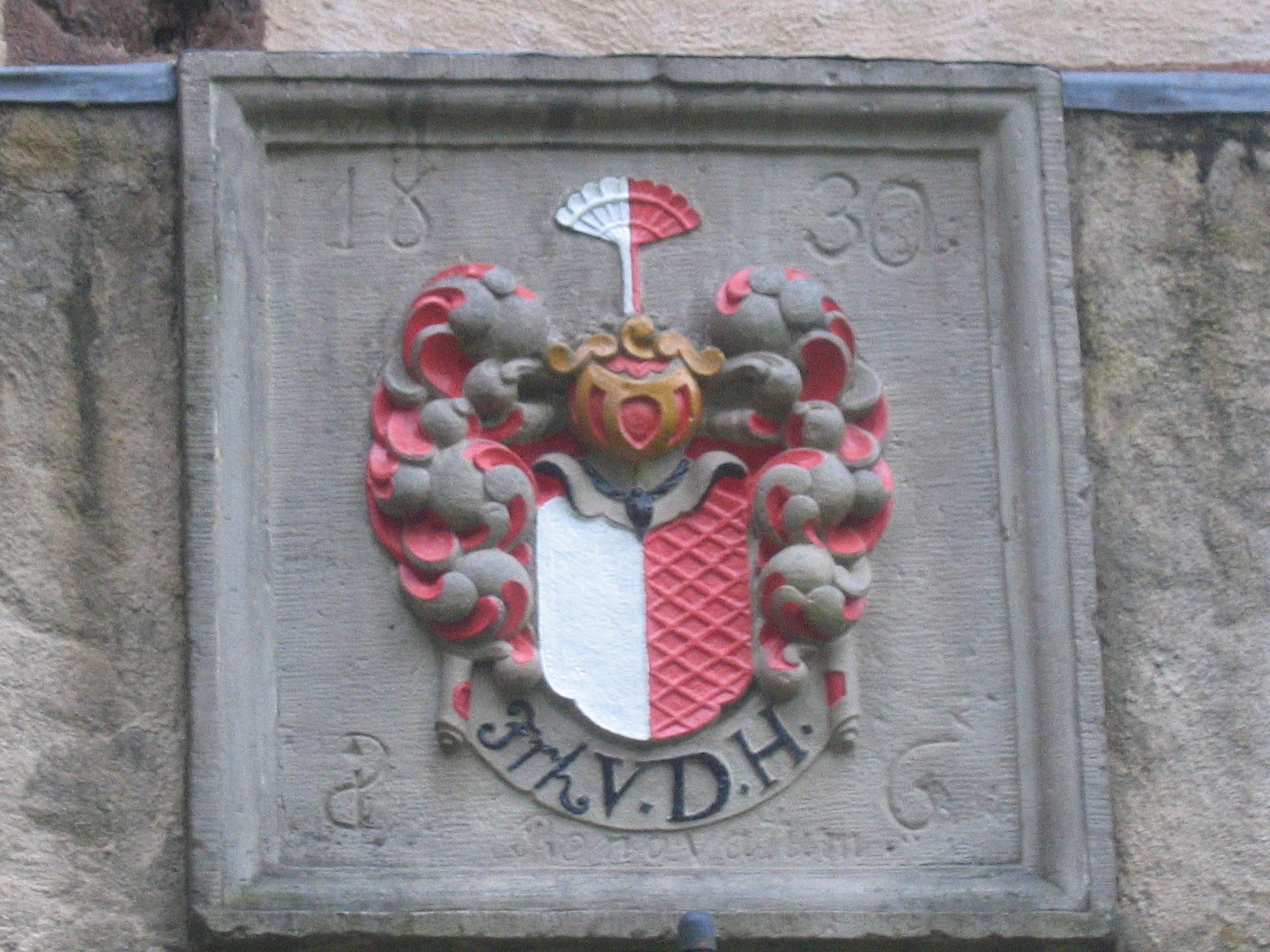
The estate remained unoccupied from 1791 to 1830. After the von der Horst family sold its former residence, Haldem Castle, Hollwinkel became its principal home in 1830 and continues in that role.
Administration and modern use
In the 1840s, the estate was separated from the municipality of Alswede and made an estate district, a local administrative unit organized around a landed estate. The district was dissolved on 1 October 1928, and Hollwinkel was incorporated into the municipality of Hedem.
After the Second World War, refugee families lived in the castle. It now contains apartments and offices, while remaining the von der Horst family’s principal residence. Since 2011, the family has also operated a woodland burial ground on the estate, where urns are buried beneath trees.
Remains
Castle layout and water system
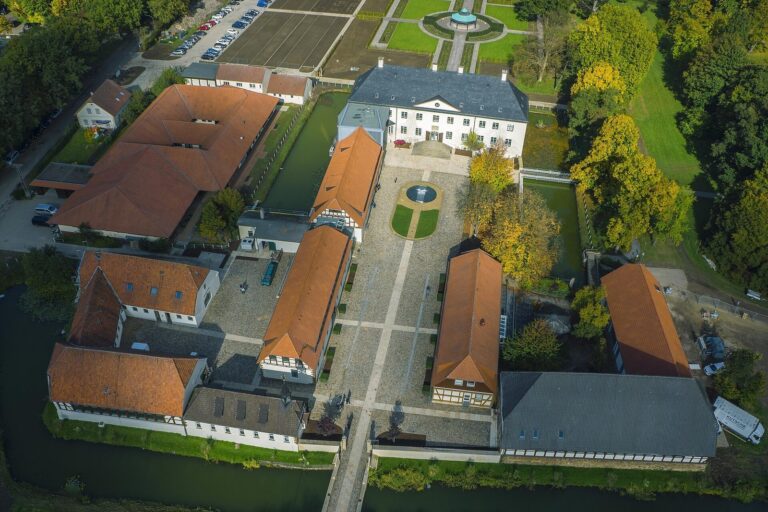
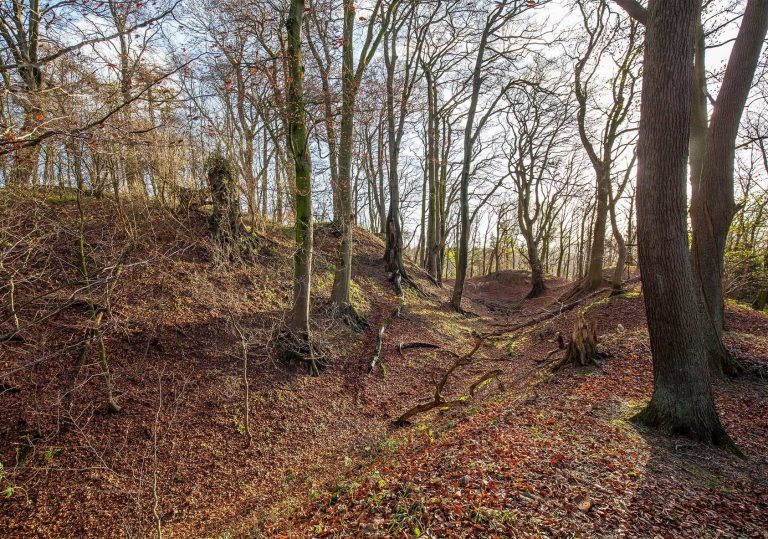
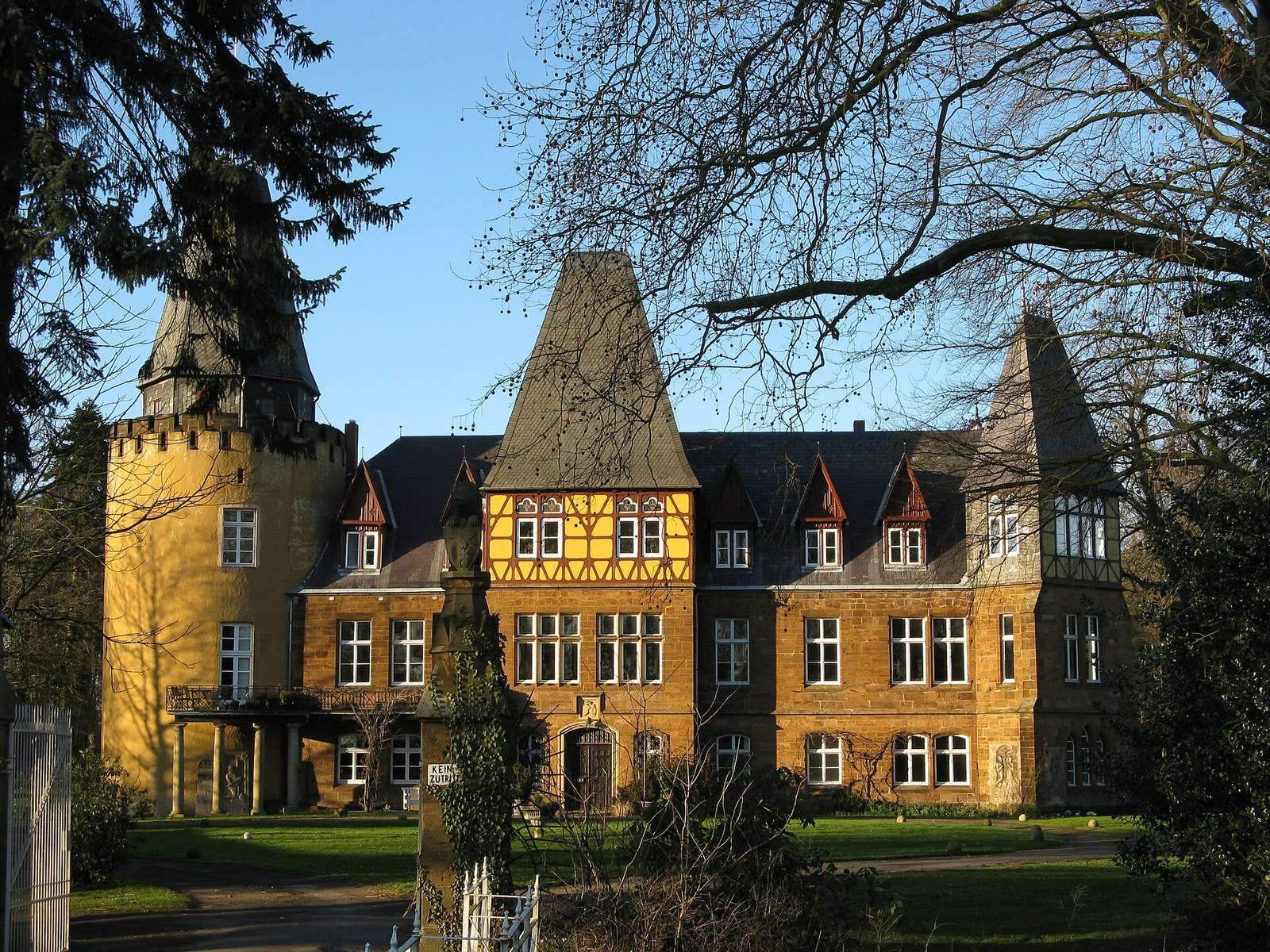
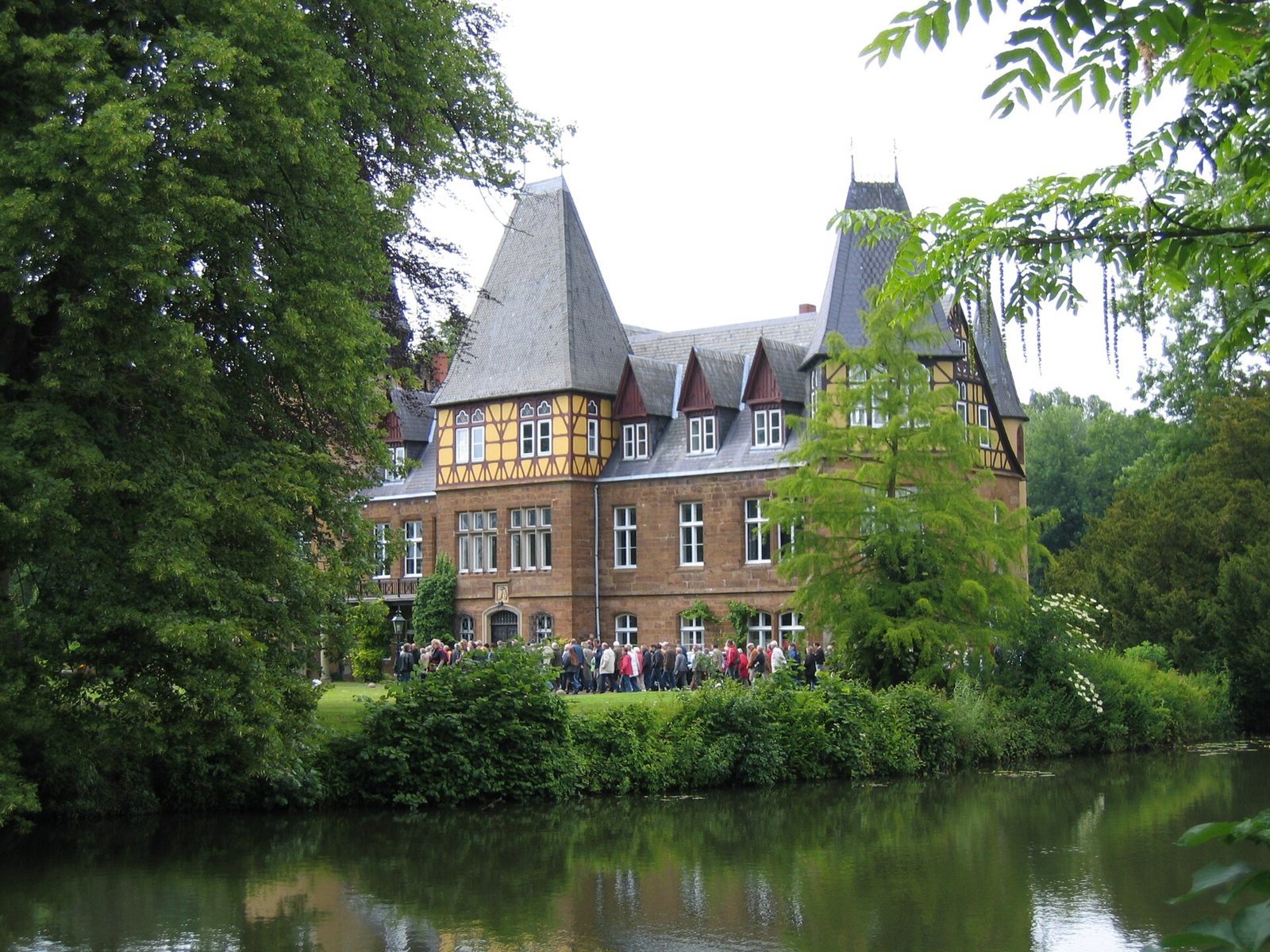
The castle is a four-wing complex enclosed by a moat, with building fabric from several periods. Its water defenses were altered after the Second World War, when the Große Aue river was rerouted; it now flows west of the castle. Stone balls associated with the 1459 conflict were found in the moat in 1871.
Building fabric and construction phases
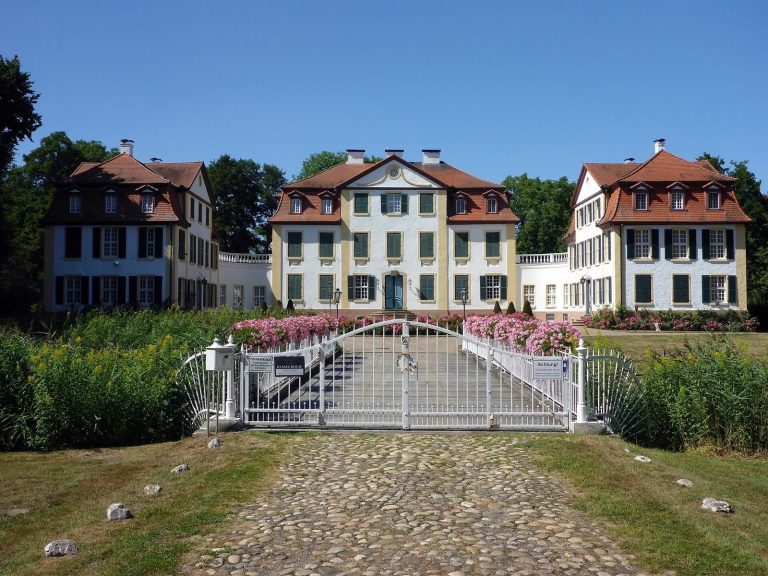
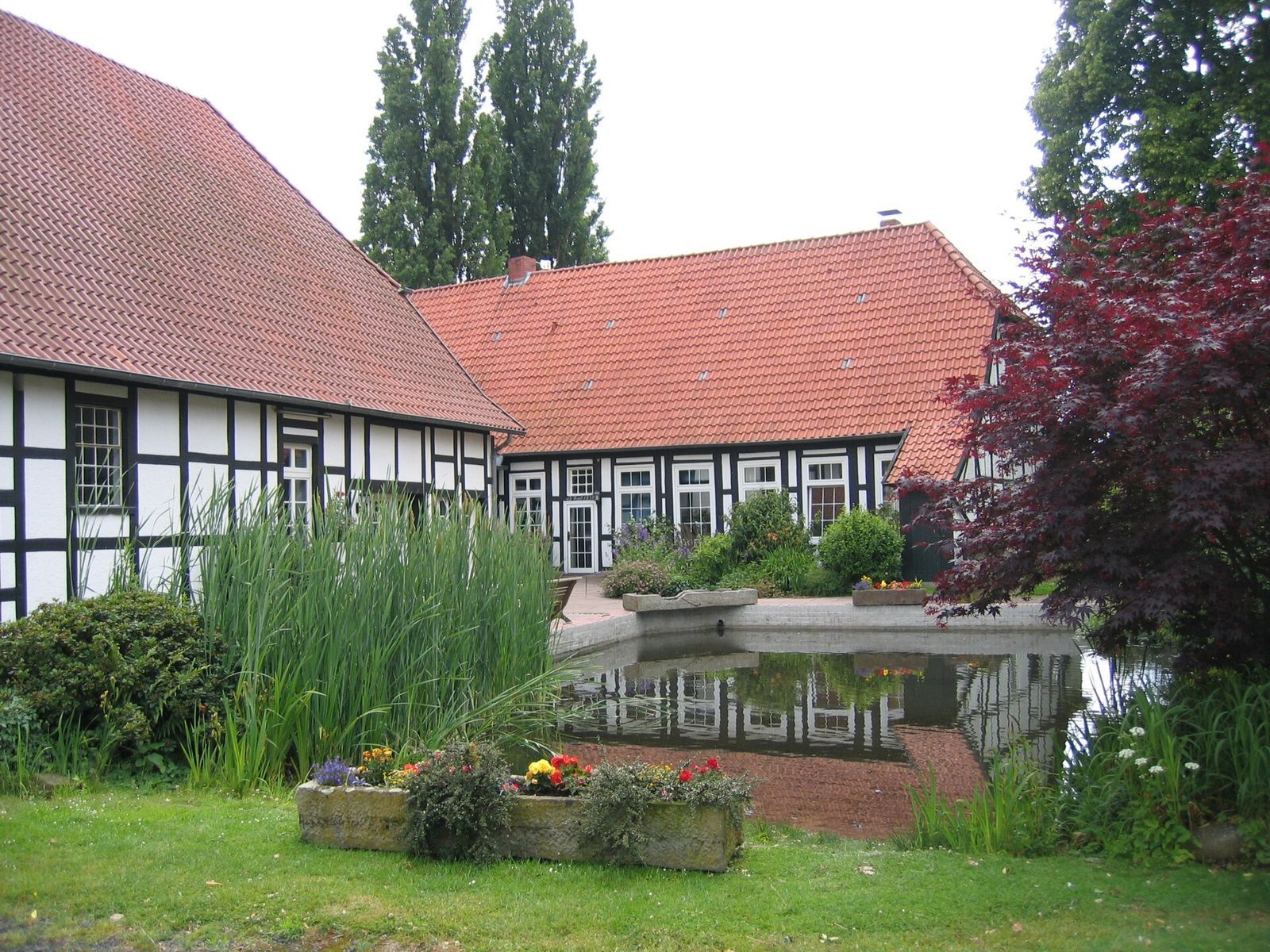
Part of the complex uses half-timbering, a method with a visible timber frame and infill between its structural members. A massive, round corner tower on the castle’s left side dates to the fourteenth century. Major rebuilding took place in 1504, followed by alterations in 1652, 1667, and 1735. The latest major building work was carried out from 1870 to 1873. The castle has more than 2,000 square metres of residential floor space.
Park and estate landscape
The castle stands south of the Mittelland Canal. The canal runs about 100 metres north of the old park boundary, and its construction separated the hereditary burial ground from the park. A 200-metre chestnut avenue leads toward the enclosed castle, passing outlying buildings that include half-timbered houses. The estate’s forest has belonged to the castle for more than 200 years. Its current land includes 80 hectares of woodland and 90 hectares of arable ground.