Sant’ Antonio Abate Church: A Baroque Roman Catholic Church in Lugano
Site at a Glance
- Popularity
- Low
- Country
- Switzerland
- Primary era
- Early Modern
- Eras represented
- Early Modern, Modern
- Civilizations
- Swiss
- Site type
- Religious
- Remains
- Church
On this page12 sections
History
Sant’ Antonio Abate Church is a Roman Catholic church in central Lugano, Switzerland. Built by the Somaschi between 1633 and 1651 on the site of an earlier church, it is Baroque in style and remains a place of worship dedicated to Anthony the Great, an early Christian ascetic associated with the development of monastic life.
Medieval settlement and Somaschi college
A settlement of the Humiliati, a medieval Catholic religious order, occupied the area in the thirteenth century. When Pope Pius V suppressed the order in 1571, its church and adjoining buildings passed to the Clerics Regular of Somasca, a Catholic order commonly called the Somaschi. They established a college on the site.
Construction of the college’s school building began in 1608, and the institution became well known. The Italian poet and novelist Alessandro Manzoni studied there from 1796 to 1798 under Francesco Soave, an educator and philosopher.
Church construction and decoration
Between 1633 and 1651, the Somaschi replaced the earlier church with the present building. Pietro Ruspini undertook further work from 1667 to 1676. The interior arrangement took shape in the early eighteenth century, and in 1734 the brothers Antonio Francesco and Giacomo Antonio Giovannini received a commission to paint illusionistic architectural decoration on the walls.
Educational change and later work
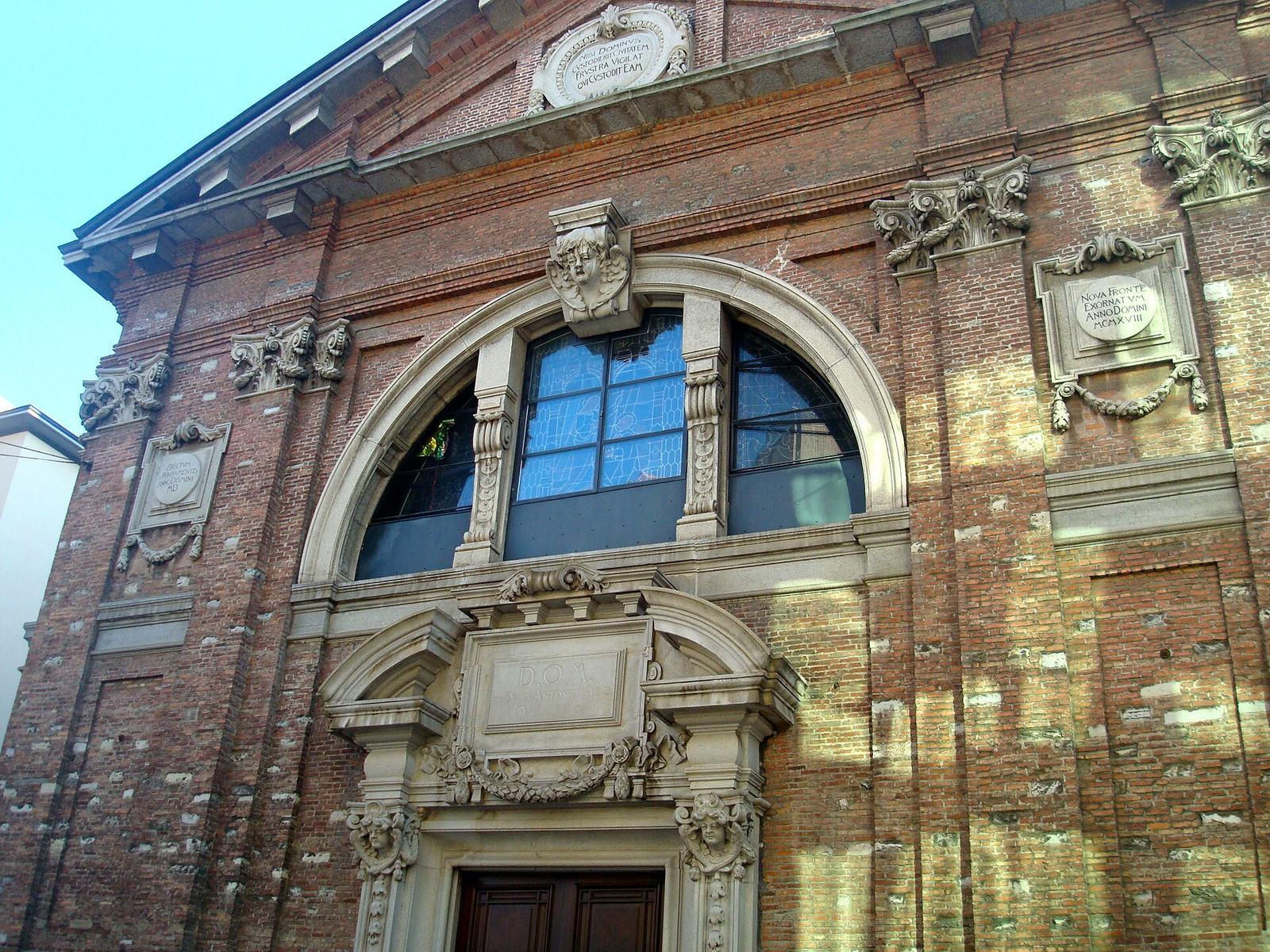
The college was suppressed in 1852, and its building became the first home of the cantonal lyceum and gymnasium. In 1906, the seventeenth-century school building was demolished to make way for Via Massimiliano Magatti. Its monumental portal and two smaller doors were saved. The sacristy was demolished in 1908 and rebuilt in the years that followed. A bell tower was added in 1914–1915, and a neo-Baroque façade designed by Giuseppe Bordonzotti was completed in 1918.
Twentieth-century work included masonry consolidation and the restoration of interior decoration from 1965 to 1975. From 1998 to 2003, the Ticino cantonal cultural-heritage office carried out conservation investigations and architectural surveys. Work in the 2010s included cleaning stone surfaces, upgrading building systems, and improving interior lighting. The church remains in use for Roman Catholic worship, follows the Roman Rite, and belongs to the Diocese of Lugano.
Remains
Exterior and surviving college fabric
Church front and sacristy
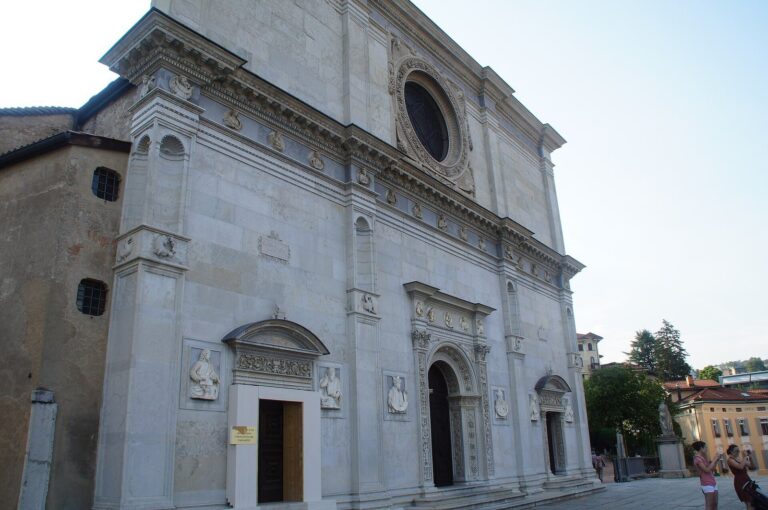
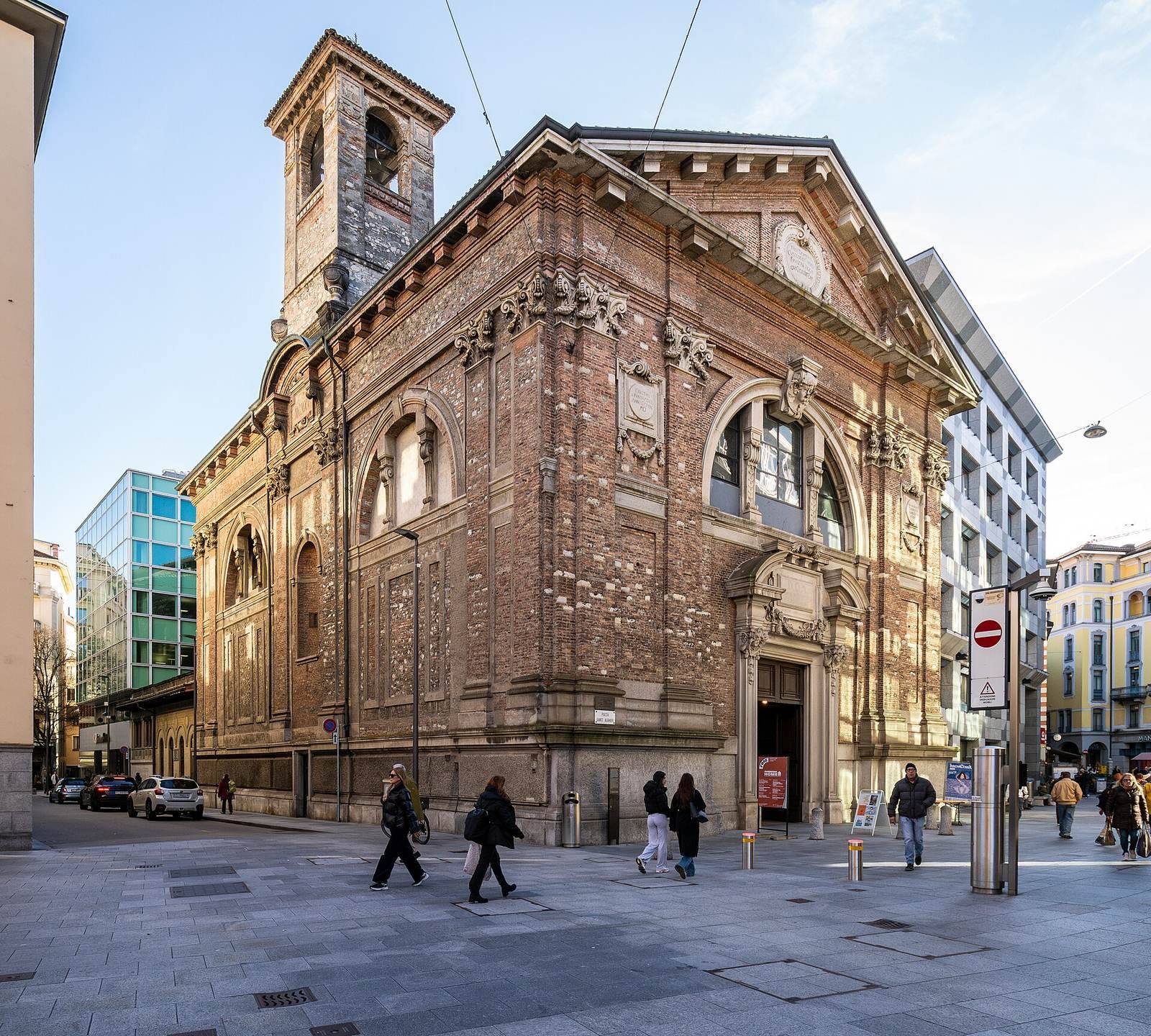
The church faces Piazza Dante. Its Baroque building has later neo-Baroque features, including a two-level façade with pilasters and a crown shaped with scrolling curves. A plaque on the sacristy, dated 1923, commemorates Manzoni’s attendance at the Somaschi college from 1796 to 1798.
School portal
The monumental portal and two smaller doors rescued from the demolished school building were installed in the boundary wall behind the Palazzo degli Studi.
Interior
Nave and presbytery
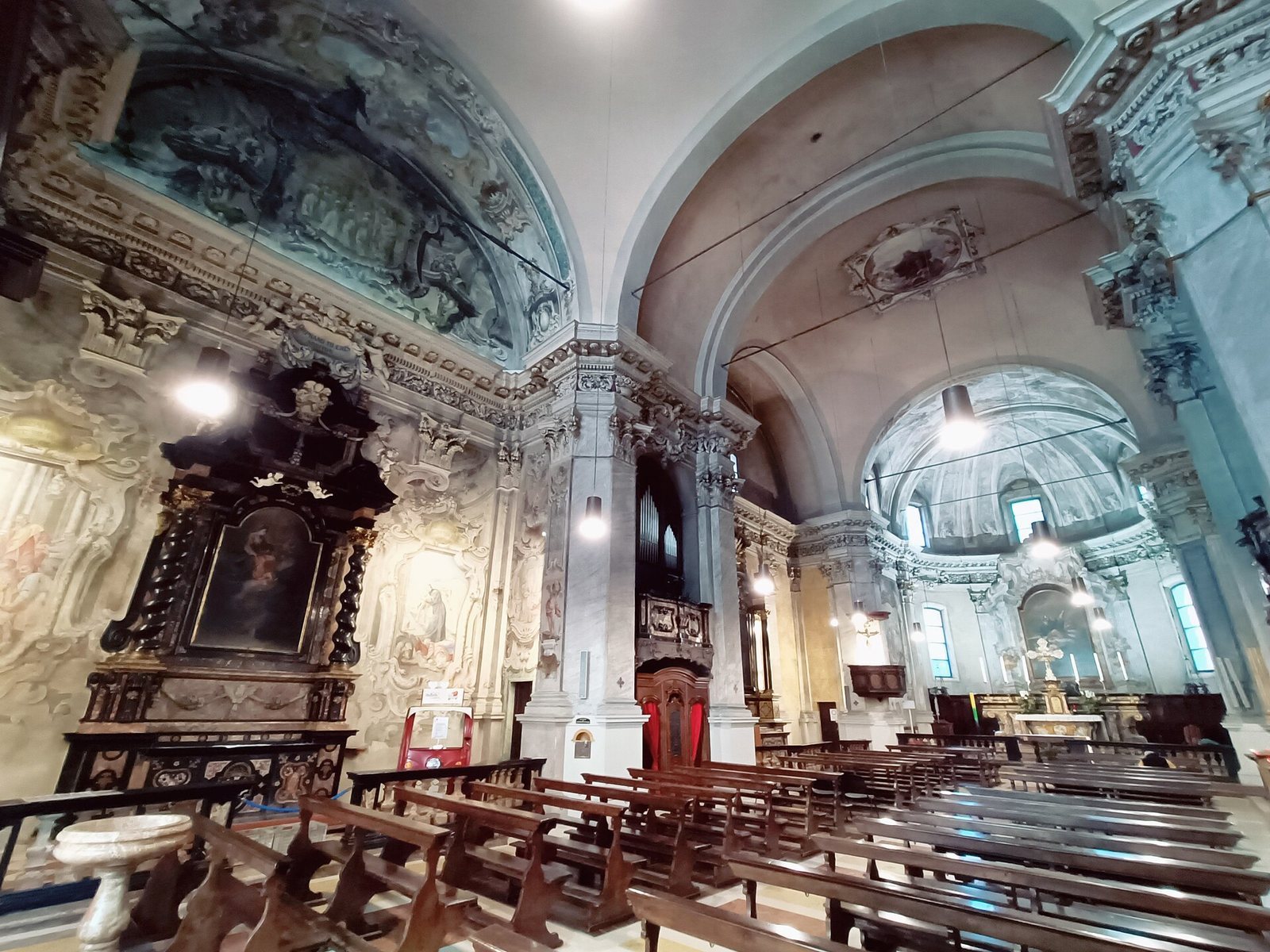
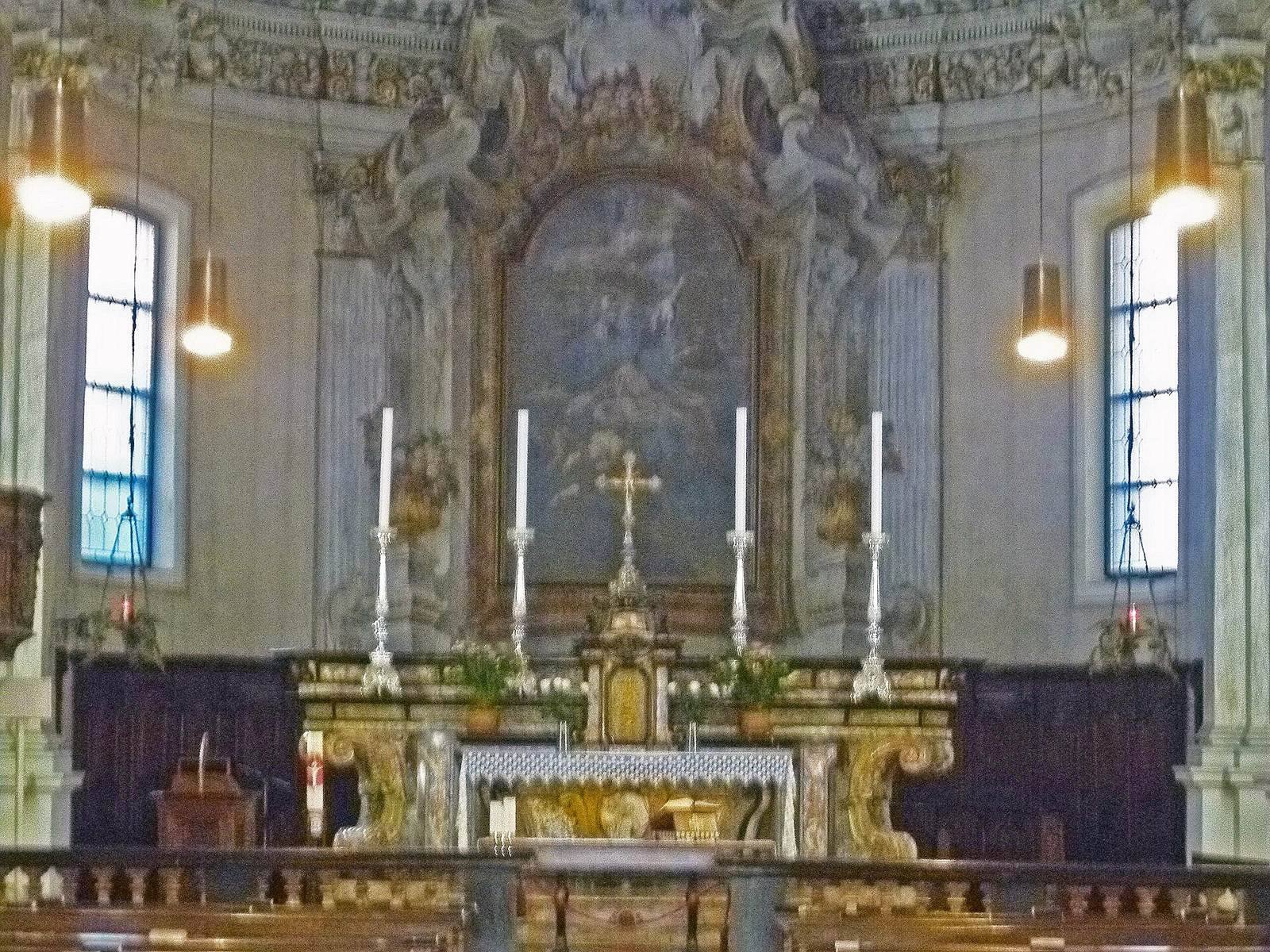
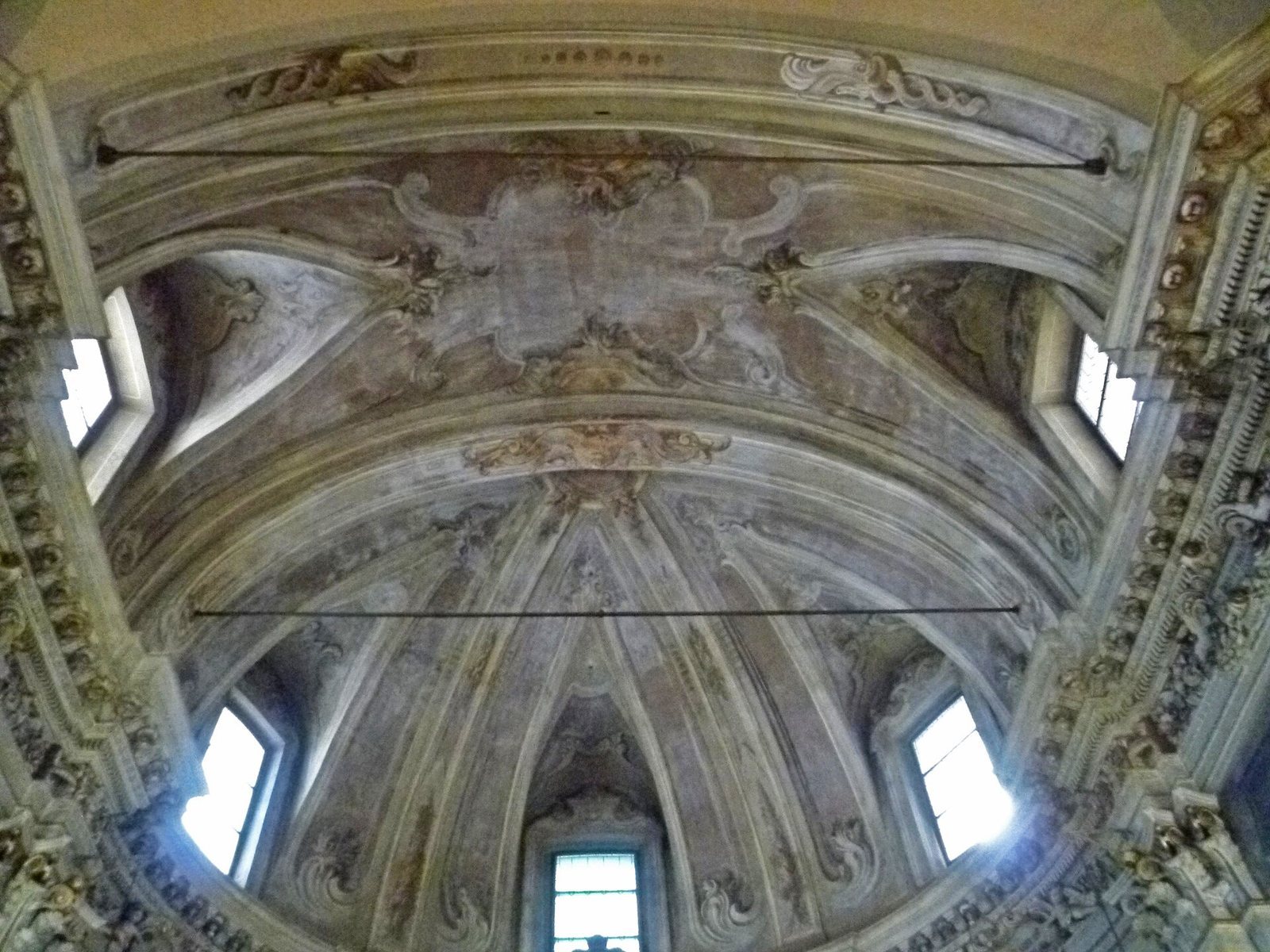
The church has a single nave with side chapels. Stucco decoration in the interior was begun in 1652 by Luca Corbellini and G. B. Bellotto, then continued in 1683 by G. Rossi. The raised presbytery contains a marble high altar. Its high-altarpiece, attributed to Giuseppe Antonio Petrini, depicts the Glory of Saint Anthony the Abbot; frescoes showing episodes from the saint’s life are attributed to Francesco Maria Bianchi. The stone elements of the altars are attributed to the Buzzi of Viggiù and date to the first half of the eighteenth century. Wall paintings by the Giovannini brothers use perspective to make flat surfaces appear to have three-dimensional architectural forms.
Side chapels
In the first chapel on the right is Giuseppe Antonio Petrini’s The Passing of Saint Joseph, dated 1715–1716. The first chapel on the left is dedicated to Saint Jerome Emiliani, the sixteenth-century priest who founded the Somaschi. It contains a Madonna and Child with Saint Jerome Emiliani, attributed to Petrini and generally dated 1729–1745, as well as 1749 frescoes of episodes from Jerome Emiliani’s life by Giuseppe Antonio and Giovanni Antonio Torricelli. The second chapel on the right holds Petrini’s 1744 painting Saint Anne, the Virgin and Saint Joachim.
Organ
The Mascioni opus 988 organ, installed in 1975, is housed in historic cases on the two side galleries. It has electric action, two keyboards with 61 notes each, and a concave-radial pedalboard with 32 notes.