Sanctuary of Minerva: An Ancient Place of Worship in Breno, Italy
Site at a Glance
- Rating
- 4.4
- Popularity
- Medium
- Country
- Italy
- Primary era
- Classical
- Eras represented
- Classical, Modern
- Civilizations
- Italian, Roman
- Site type
- Religious
- Remains
- Temple
On this page10 sections
History
The Sanctuary of Minerva at Spinera, in Breno, Italy, was a place of worship from at least the fifth century BCE. A Roman temple dedicated to Minerva, goddess of wisdom, crafts, and warfare, was added in the early first century CE after Roman political and cultural practices spread through Val Camonica.
Early sanctuary and Roman temple
The earlier indigenous shrine had stone enclosures and a paved area for ritual fires. The Roman temple was built beside it and enlarged during the Flavian dynasty, which ruled from AD 69 to 96. Minerva’s separation from Jupiter and Juno, unlike their customary association in Roman worship, has been interpreted as an adaptation of Roman religion to the earlier local cult, linking Minerva with indigenous deities.
Christianization, reuse, and abandonment
As Christianity spread in the fourth century CE, Minerva’s worship and the sanctuary were gradually abandoned amid late Roman imperial persecution of pagan worship. A violent fire destroyed the sanctuary in the fifth century. A small port later developed on the Oglio River, and temple materials were carried to nearby settlements for reuse. In the thirteenth century, a flood buried the area in debris, after which the site was permanently abandoned.
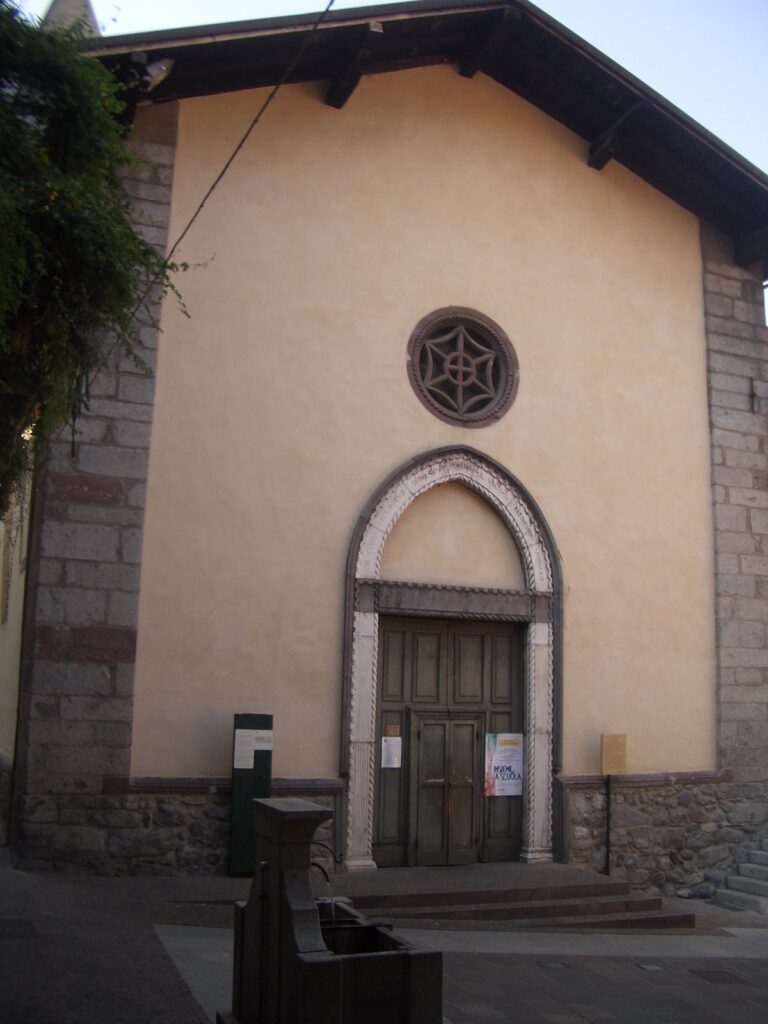
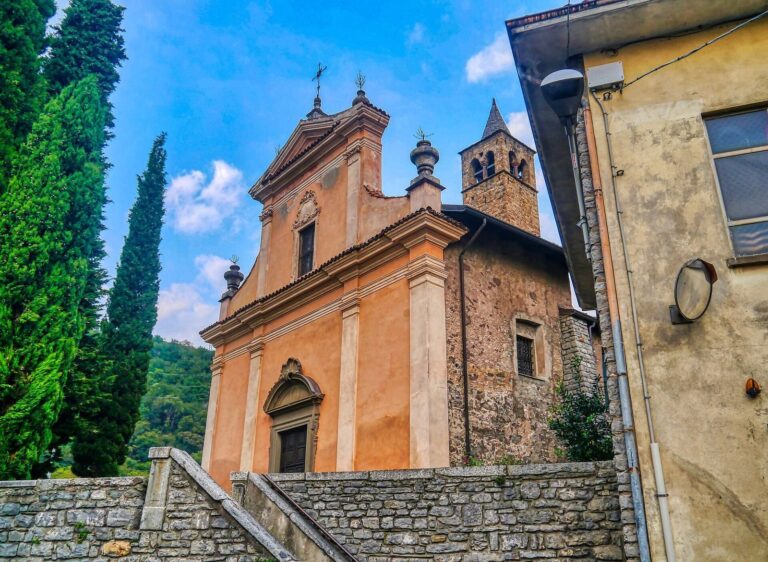
Although the temple was eventually forgotten, local names retained a memory of it. A nearby bridge was called the Bridge of Minerva, while a sixteenth-century church dedicated to the Virgin Mary was locally known as the Church of Minerva, apparently because it stood near the temple.
Rediscovery and conservation
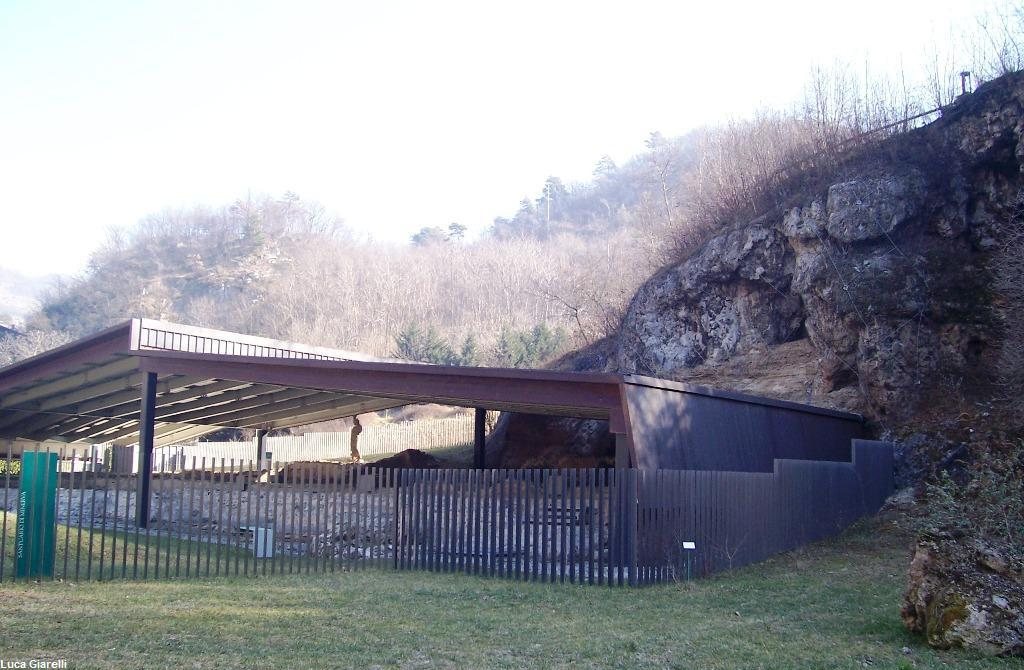
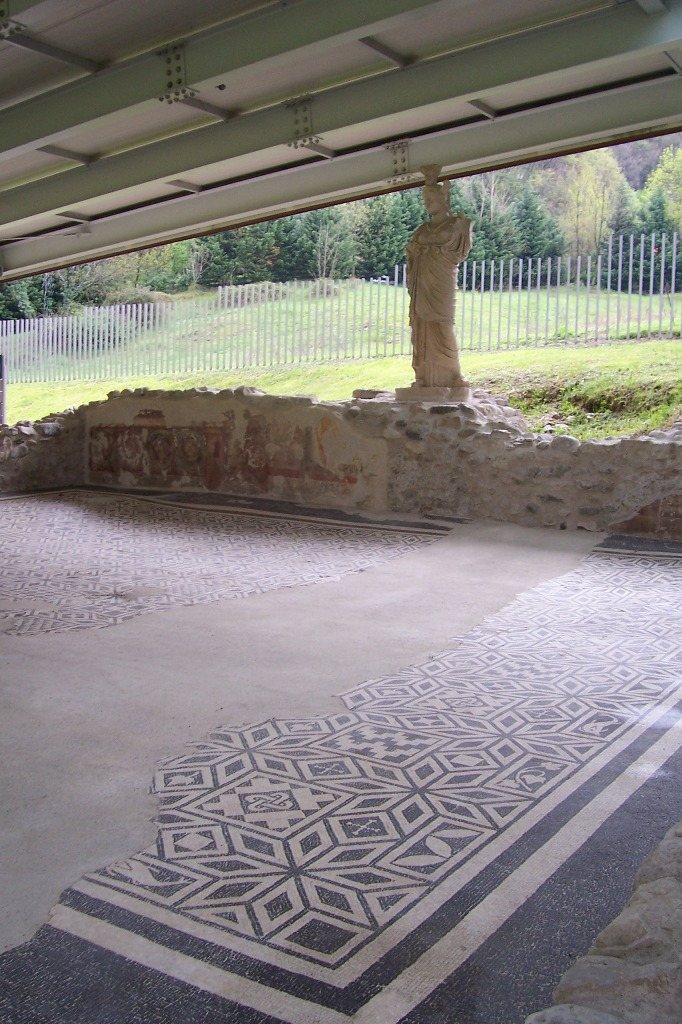
Excavation for public utility pipes uncovered the temple in 1986. Archaeological excavations continued until 2003. Conservation work began in the early 2000s, and a protective roof and interpretive routes helped turn the site into a museum, which opened in 2007.
Remains
The Roman complex stands on a rocky outcrop beside the Oglio River, opposite a natural cave that once held a spring. A row of rooms was built against the rock, while two wings with covered colonnades extended toward the river to enclose the temple courtyard. The river once washed the courtyard; today it runs at a lower level and some distance away. The spring reportedly dried after construction of the SS 42 highway bypass.
Roman temple complex
Courtyard and rooms
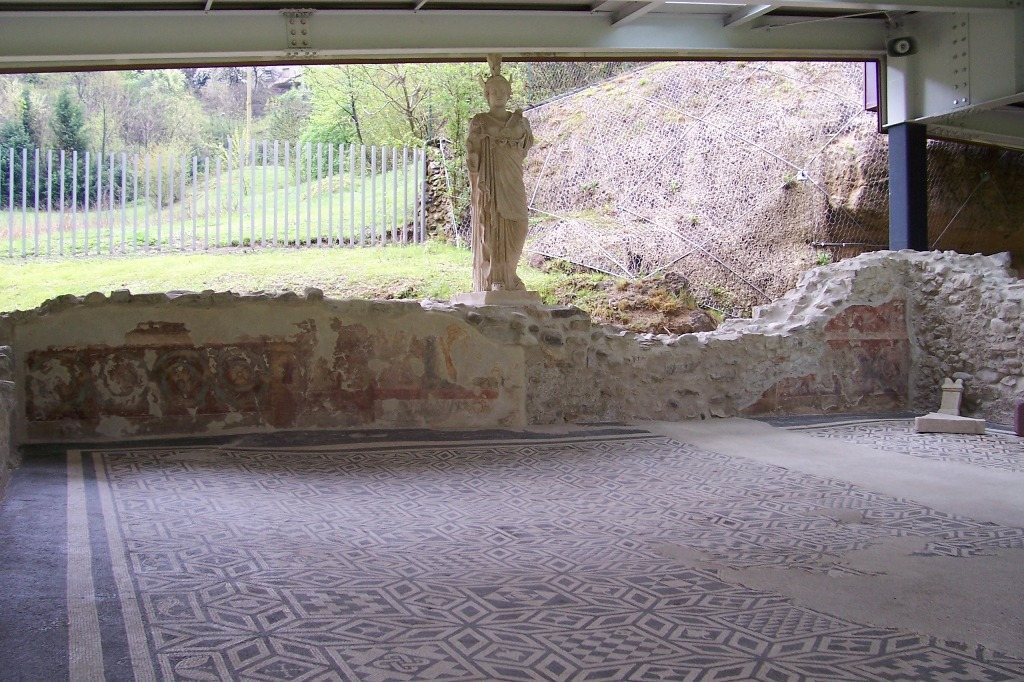
A short flight of steps led from the courtyard to the temple’s entrance porch and central rooms. The floors were laid with mosaics, and the walls were painted with frescoes. Flood deposits helped preserve the wall paintings.
Cult statue and water features
The principal hall had an elevated niche for the statue of Minerva. The statue was forcibly decapitated after a fire in the fifth century. Found in 1988, it also lacks its arms and part of its legs. It is a Roman copy, made from Pentelic marble, of a Greek statue from the fifth century BCE. The original is exhibited at the National Archaeological Museum of Valle Camonica in Cividate Camuno; a replica of Minerva Hygeia is installed at the sanctuary for illustrative purposes. Hygieia was a Greek goddess associated with health. Side rooms contained fountains and basins, linking water with the goddess’s worship.
Floors and offerings
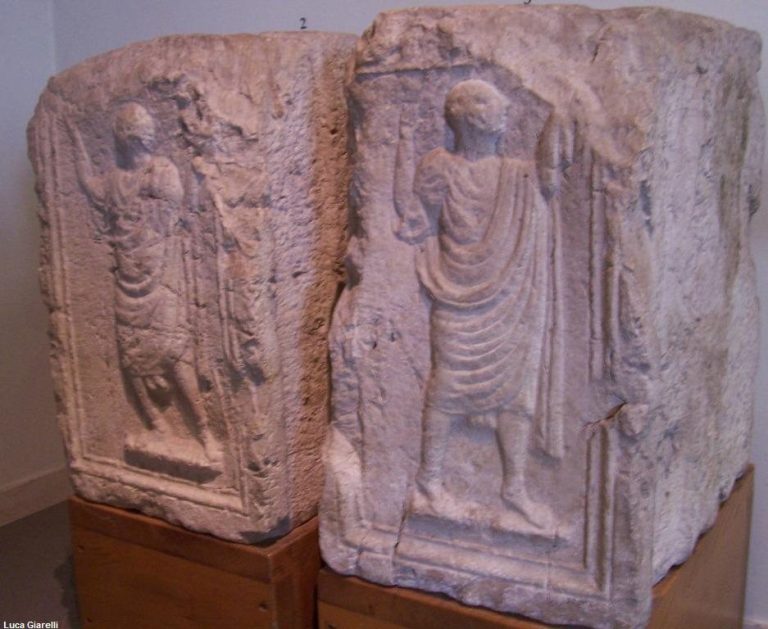
Finds from the floors and basins include pottery fragments, marble and terracotta devotional figurines, inscriptions, brooches used to fasten clothing, coins, and jewelry. Remains of columns and votive altars also survive.
River landing
Remains of a small house lie near the former landing. People living there earned their living by selling building materials salvaged from the temple.