Sanctuary of the Assumption of the Blessed Virgin Mary: A Parish Church in Careno, Italy
Site at a Glance
- Popularity
- Low
- Country
- Italy
- Primary era
- Medieval
- Eras represented
- Medieval, Early Modern, Modern
- Civilizations
- Duchy of Parma and Piacenza, Holy Roman Empire
- Site type
- Religious
- Remains
- Church
On this page16 sections
History
The Sanctuary of the Assumption of the Blessed Virgin Mary is a Roman Catholic church in Careno, a hamlet of Pellegrino Parmense, Italy. Dedicated to the Assumption, the Catholic belief that Mary was taken body and soul into heaven at the end of her earthly life, it is one of Parma’s historic parish churches. Its Romanesque origins, in the medieval architectural style, probably date to 1044. Today it serves as a parish in the Diocese of Fidenza’s Vicariate of Salsomaggiore Terme, a grouping of parishes within a diocese.
Romanesque foundation and medieval parish
A foundation inscription names Ghirarde as the person who arranged the original place of worship’s construction. This name may refer to the nobleman Gherardo da Cornazzano. Although the chapel formally belonged to the Diocese of Piacenza, it remained under the authority of the Bishop of Parma.
The earliest known written reference is from 1230, when the Chapel of Careno was described as dependent on the nearby parish church of Serravalle. The church may have been rebuilt to roughly its present dimensions during the 13th century.
Gothic and Baroque transformations
A major remodeling around the middle of the 15th century gave the church its Gothic character, another medieval architectural style. The work included a reorganization of the building and frescoes on its walls.
Growing numbers of worshippers and pilgrims prompted the construction of two matching exterior porticoes in the early 18th century. In the decades that followed, painters added Baroque decoration, an ornate early-modern style, to the nave vaults.
Marian devotion and restoration
The church’s 17th-century wooden statue of the Madonna dei matti is venerated as a protector of people with nervous illnesses. A high altar rebuilt in 1836 provided a setting for the statue. Each year, it is carried in a procession on 15 August, the Feast of the Assumption.
On 29 January 1902, Francesco Magani, Bishop of Parma, began the process of raising the church’s status to that of a Marian sanctuary. Restoration work around the middle of the 20th century affected the facade, apse area, and high altar. More extensive restoration and structural consolidation began in 2005. The church returned to worship on 31 March 2007.
Remains
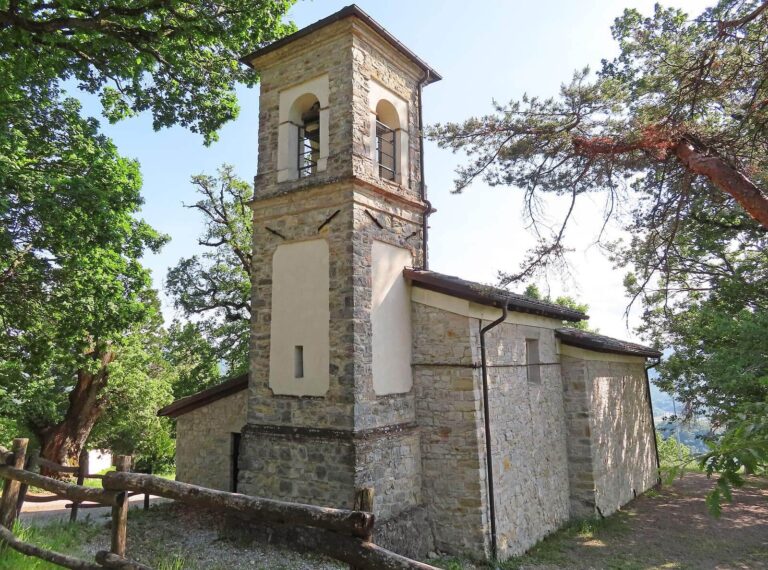
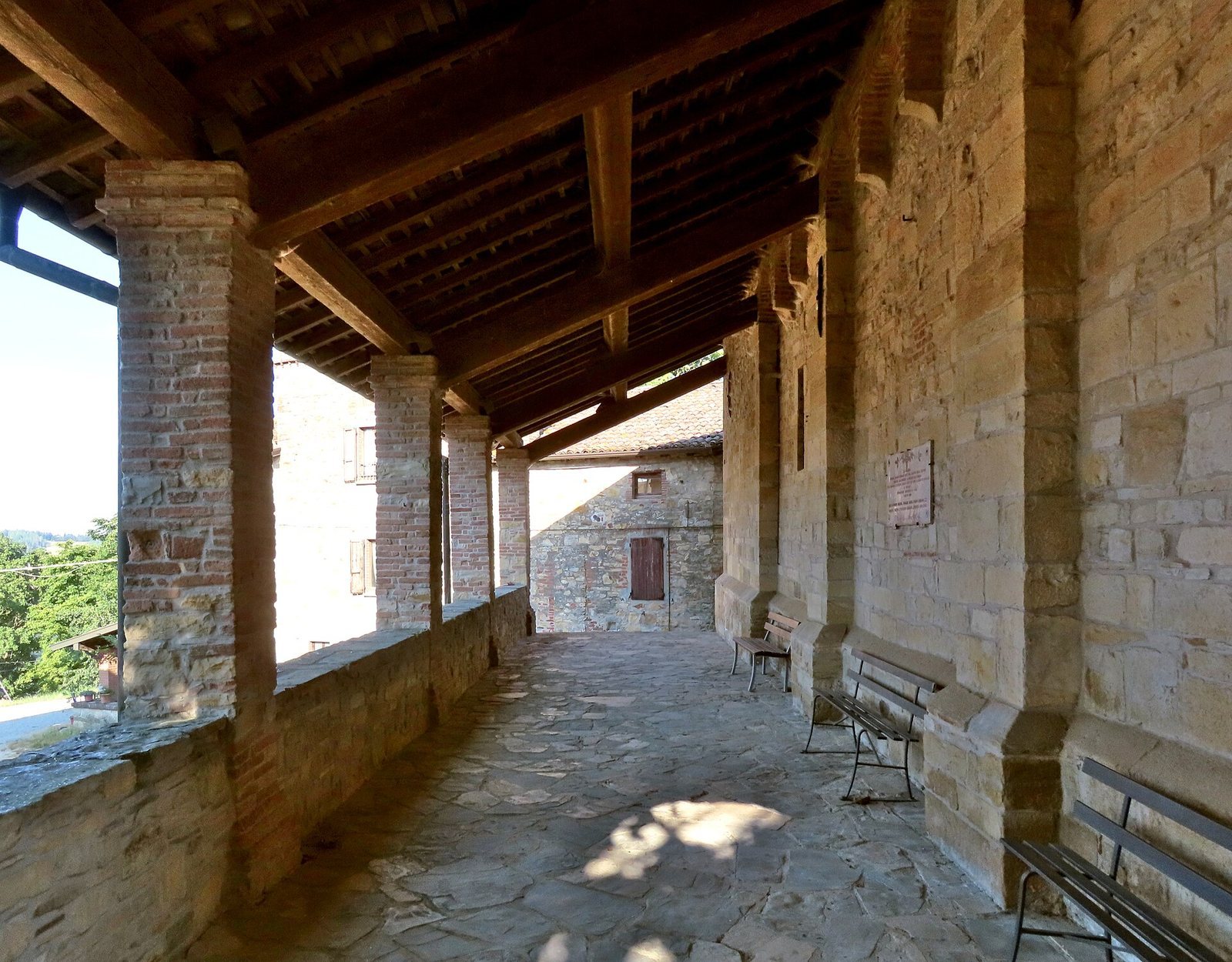
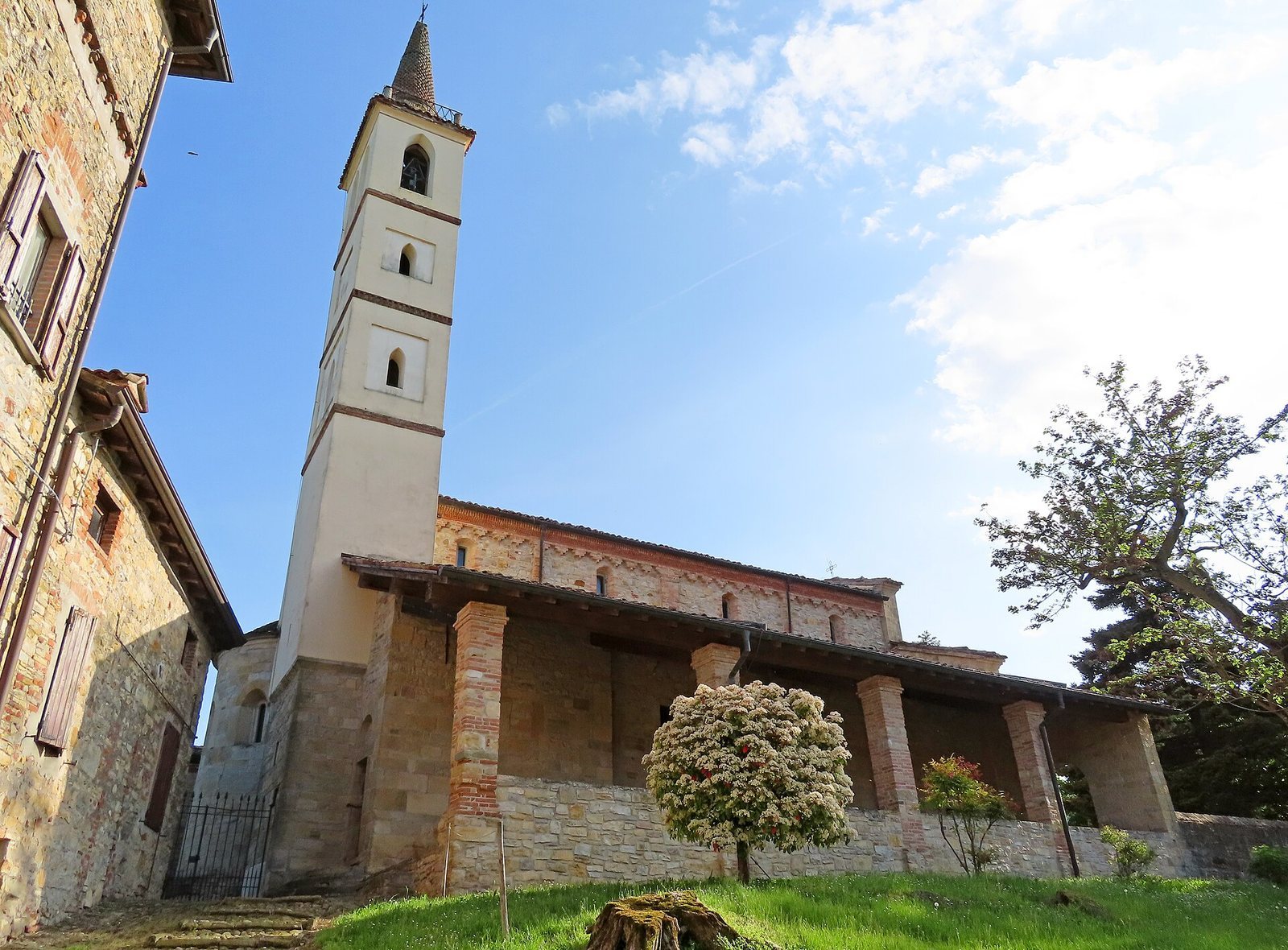
Set on a hillside, the church has a central nave between two side aisles, a west-facing entrance facade, and a sanctuary ending in an eastern apse, or rounded recess. A covered portico runs along each side. The Romanesque stone exterior contrasts with later interior vaulting, paintings, and altars.
Exterior
Facade
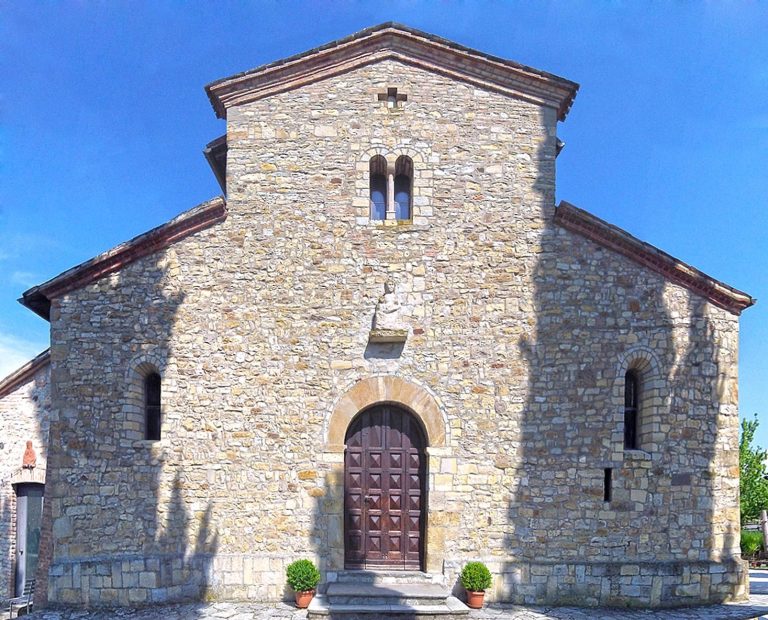
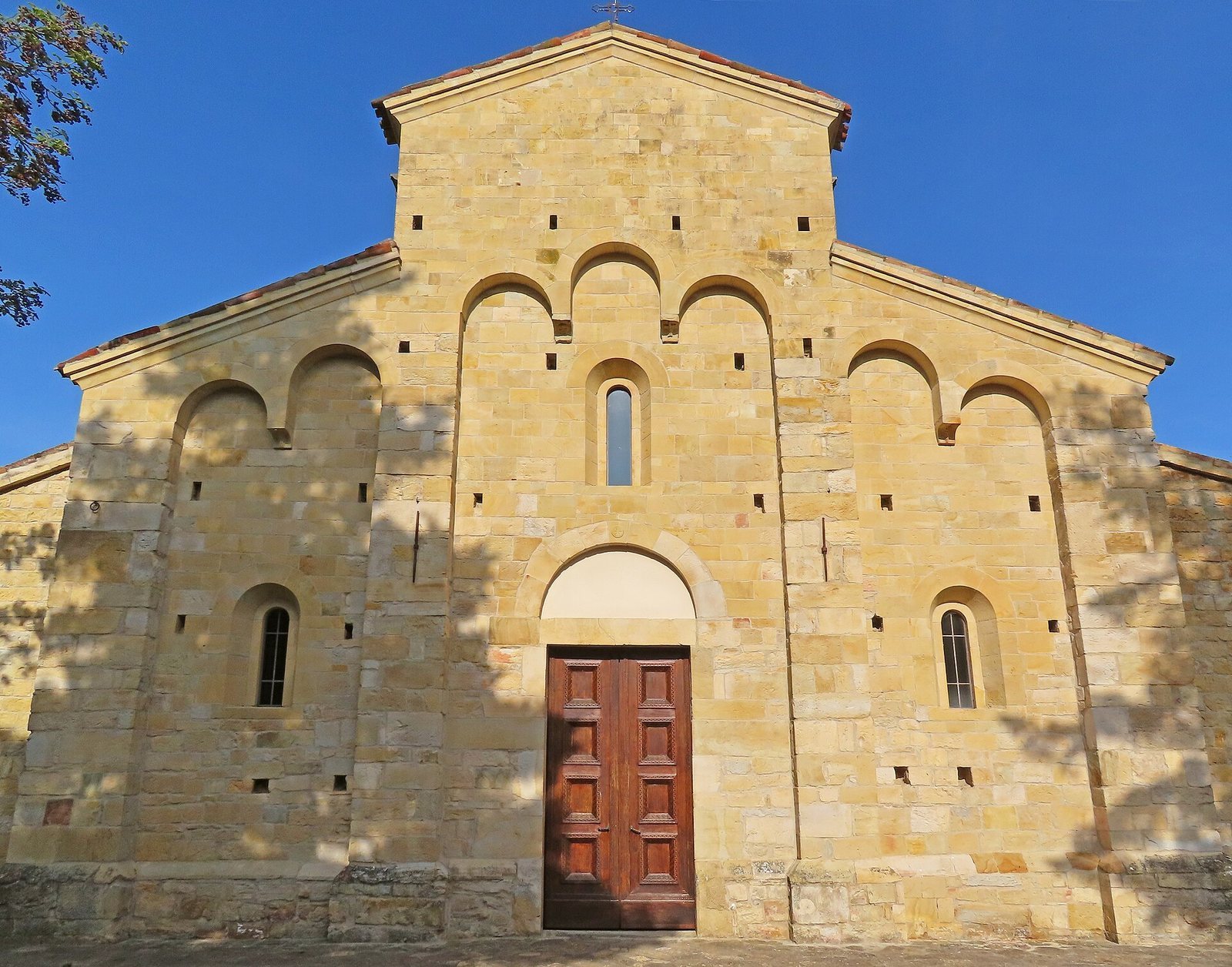
Squared stone blocks face the facade, which is divided symmetrically into five sections. Deep pilasters divide the raised central section into three parts and support a row of small arches beneath the roofline. The broad entrance has a foundation inscription on its stone lintel, the horizontal block above the doorway, and a semicircular panel overhead. A carved Flower of Life design occupies the arch’s keystone, the central stone at its crown. Above the entrance is a large round-arched window with flared sides; similar, smaller windows appear in the sections beside it. Two more round-arched openings give access to the side porticoes.
Side porticoes and upper nave
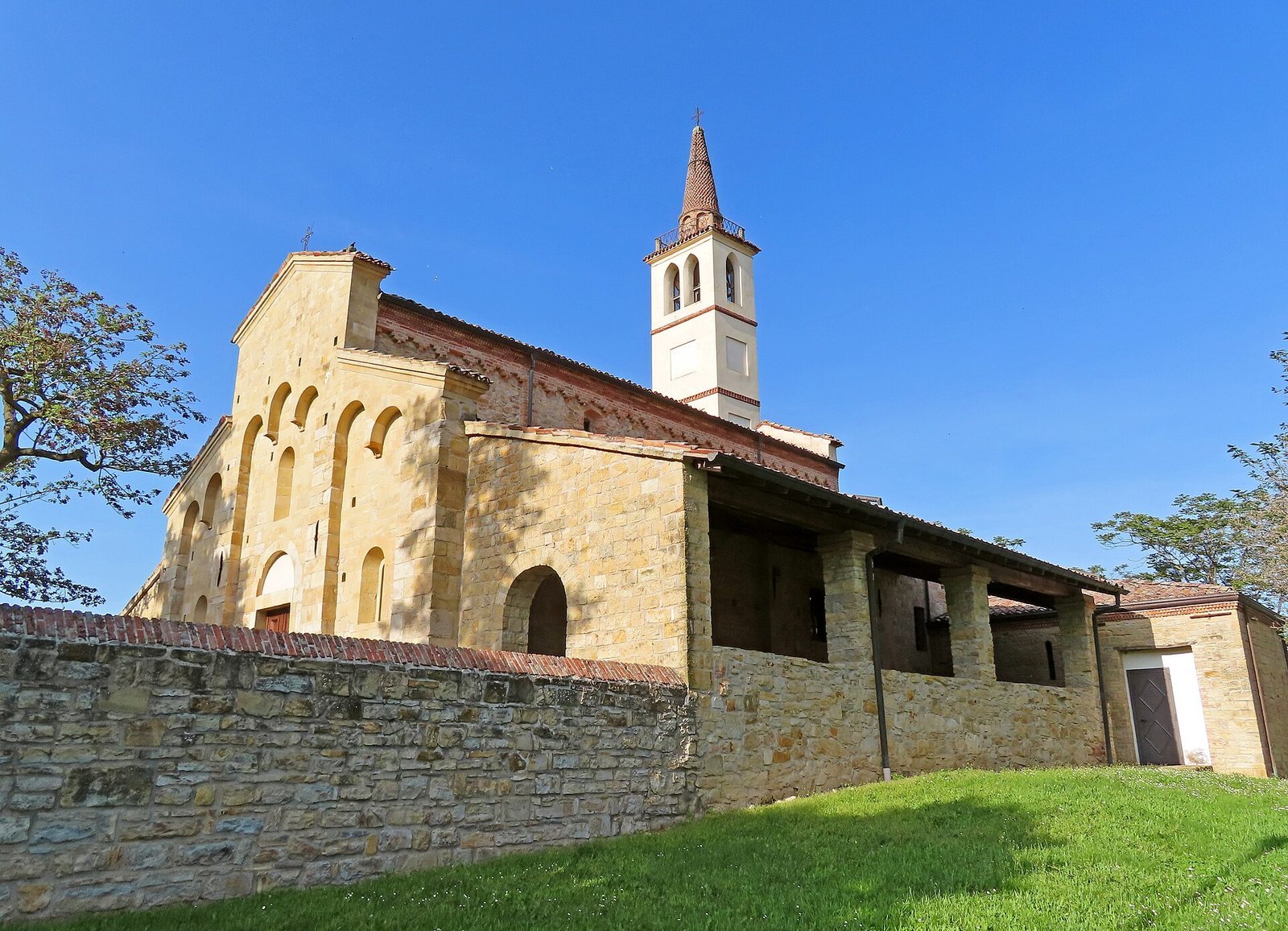
The matching porticoes are supported by square pillars. Along the raised central nave, narrow windows are separated by pilasters, and a sawtooth cornice runs along the upper edge.
Apse and bell tower
The central apse, dating to the 15th century, has three small round-arched windows with flared sides. A tall, plastered bell tower stands beside it.
Interior
Nave and vaulting
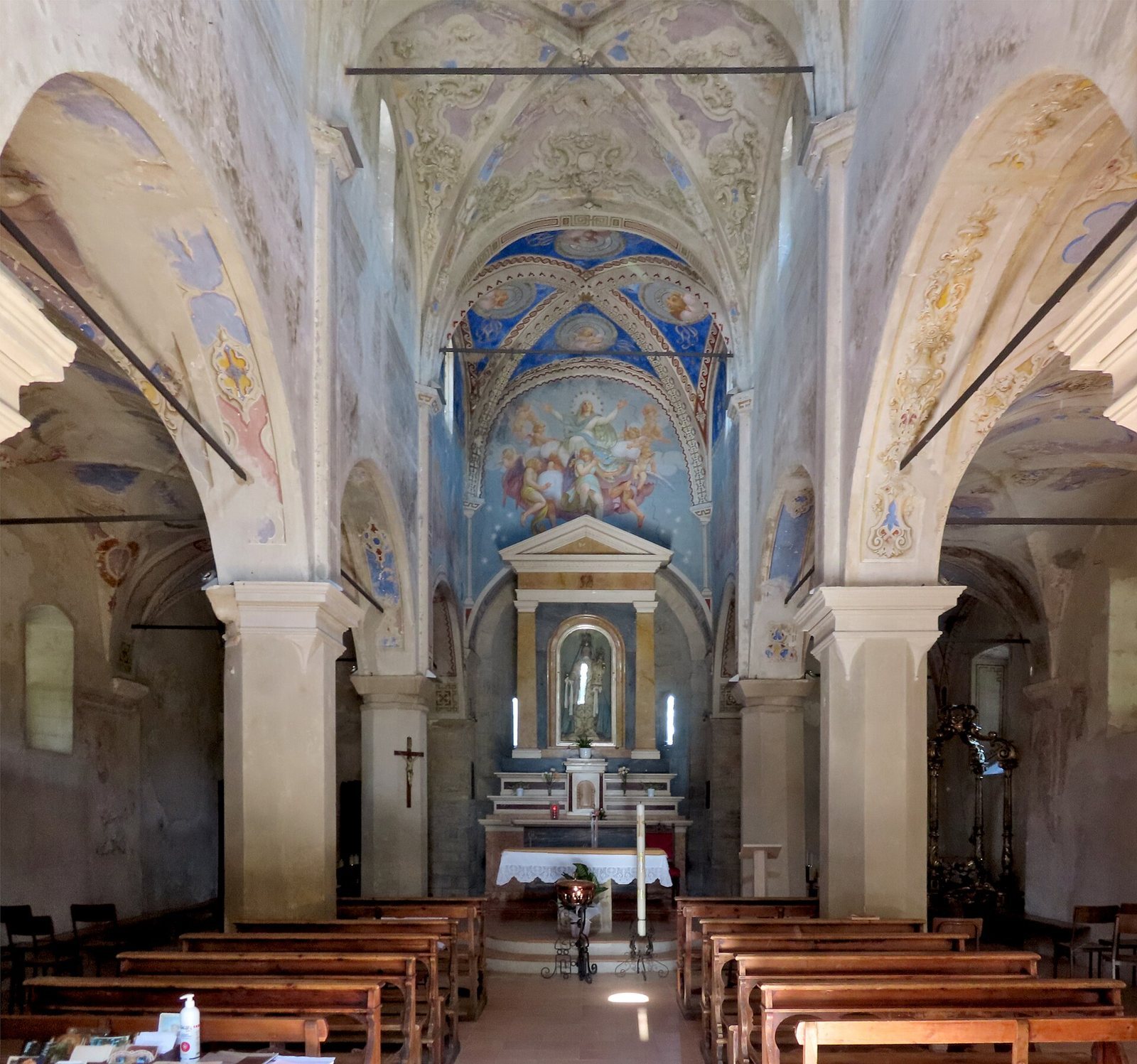
Round arches divide the broad nave from the side aisles. They rest on octagonal terracotta pillars topped by low capitals, or column tops, in the Doric style. Intersecting curved sections form the vaulted ceilings, with ribs across their centers. Baroque frescoes cover the vault surfaces.
Wall paintings
Fragments of 15th-century Gothic frescoes survive on the side walls. Their subjects include Saint Roch, a Christian saint associated with caring for people during plague; two female saints; and God the Father within an almond-shaped frame. Numerous images of the Virgin and Child may have been offerings made in devotion to Mary.
Altars and movable artworks
Two side altars from the 18th century have richly decorated Baroque altarpieces. The Neoclassical high altar, a design drawing on ancient Greek and Roman forms, features a monumental altarpiece of red Verona marble. Attached Doric-style columns support its triangular pediment, and the wooden Madonna dei matti statue stands within it. A late-17th-century oil painting of Saint Michael driving out a demon is also displayed in the church; Saint Michael is the archangel traditionally shown opposing evil.
Burials and earlier remains
Burials beneath the floor
Excavation beneath the church floor revealed 11 burials, including graves in bare earth, wooden and stone coffins, and burial chambers. The bare-earth grave is probably the oldest, dating to the 13th century; wooden coffins were more numerous, and stone coffins more numerous still. Two shared chamber tombs extend across the full width of the central nave. Following excavation, the graves were filled with inert sand and covered with protective geotextile fabric before a supporting slab for the new floor was laid.
Earlier church fabric
The excavation also uncovered the foundations of the original apse and traces of earlier floor surfaces.