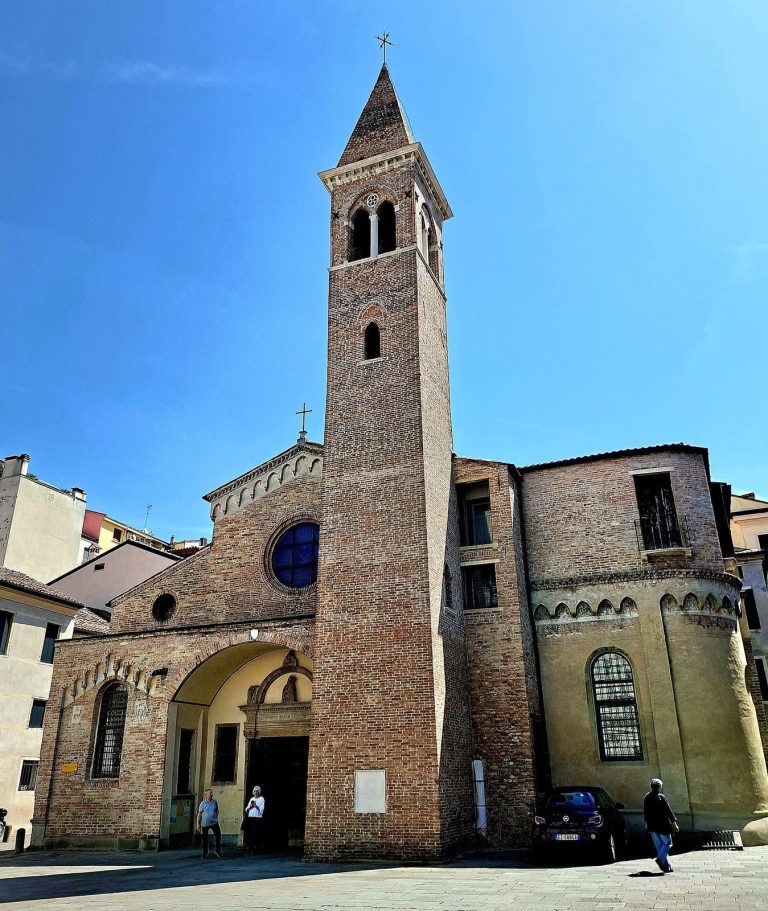
San Prosdocimo: A Medieval Church and Military Cathedral in Padua
Site at a Glance
- Rating
- 4.8
- Popularity
- Very Low
- Country
- Italy
- Primary era
- Medieval
- Eras represented
- Medieval, Early Modern
- Civilizations
- Holy Roman Empire, Venetian
- Site type
- Religious
- Remains
- Church
On this page8 sections
History
San Prosdocimo is a medieval religious building in Padua, Italy, with Renaissance and Mannerist features. It belonged to a Benedictine monastery of nuns, a women’s religious community organized according to the Rule of Saint Benedict, and remains associated with Blessed Eustochio Lucrezia Bellini. The church’s construction history is uncertain: its beginning is linked either to the twelfth century or to 1455, while its completion is dated to 1698.
The Benedictine monastery and Eustochio
Lucrezia Bellini was born in the monastery in 1444 to Giacomo Bellini and Maddalena Cavalcabò, who is described as one of its nuns. At the age of seven, Lucrezia was brought back to the convent. In 1461 she took the Benedictine habit and adopted the religious name Eustochio. She died on 13 February 1469, aged 25, and came to be regarded as holy. Blessed is a Catholic title for a person formally recognized as worthy of veneration, without necessarily being canonized as a saint.
Accounts of miracles followed Eustochio’s death. They included the report of a sweet fragrance from her body that remained near her tomb for many years. When her remains were examined on 16 November 1472, her body was found incorrupt after more than three years of burial without a coffin. It was dressed in a new monastic habit and placed in another tomb before being solemnly transferred to the church on 14 November 1475. Her cult was officially recognized by Pope Clement XIII in 1760. Her body remained at San Prosdocimo until 11 September 1806, when it was moved to the left chapel of the church of San Pietro.
A clear and plentiful flow of water appeared at the place of Eustochio’s first burial on 6 January 1473. It was regarded as miraculous and was believed to heal illness when the sick person possessed the faith and disposition needed to receive grace. Local tradition also connected the water’s abundance or scarcity with harvest prospects and events in Padua. The flow ceased in 1806, shortly before Eustochio’s body was transferred from San Prosdocimo.
From suppression to military cathedral
Napoleonic suppressions brought the monastery’s religious life to an end. The nuns were expelled, and the church was deconsecrated in 1806. It was then used as a military bakery and warehouse, changing the building’s function from monastic worship to military storage and production.
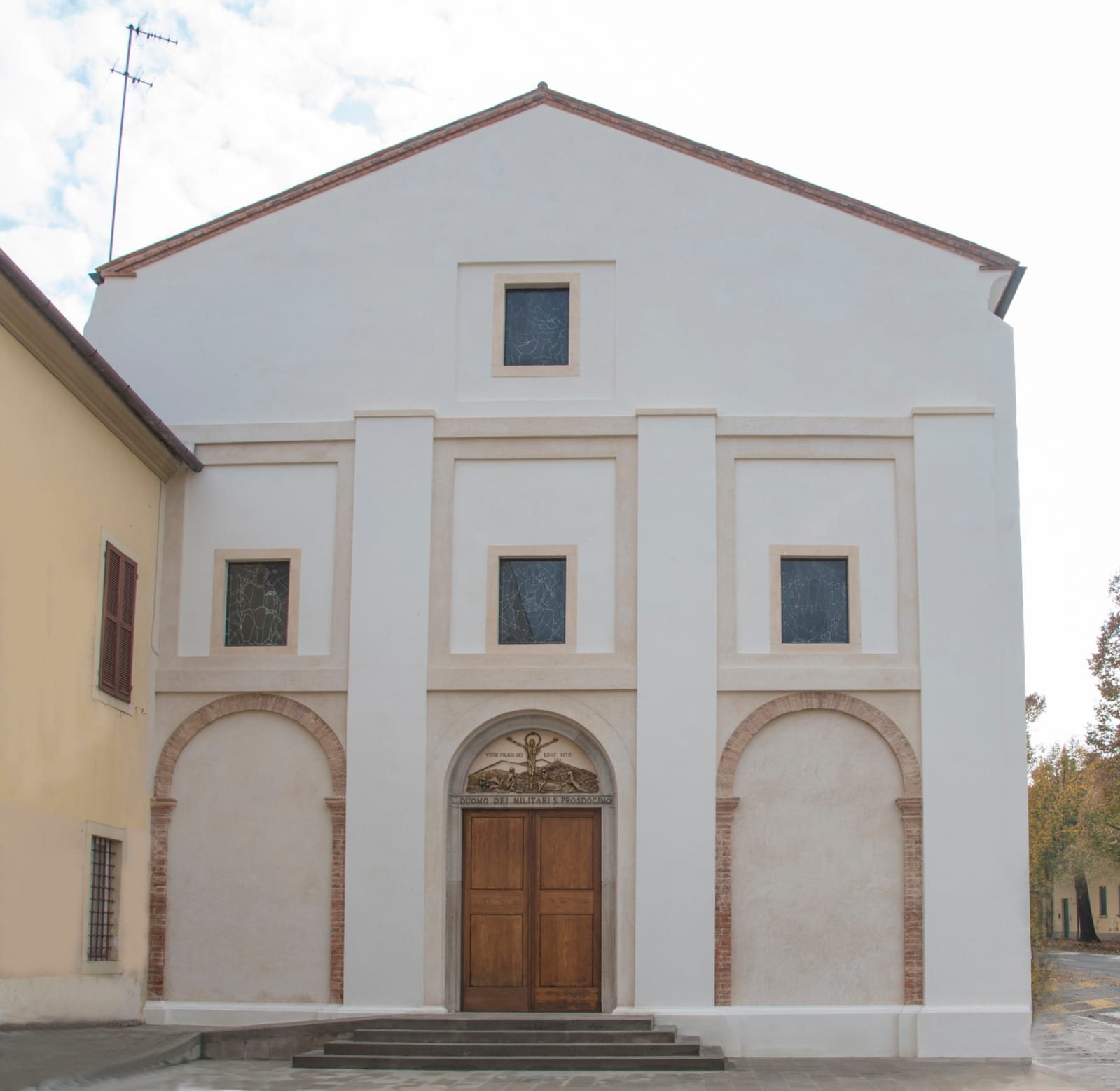
Restoration returned San Prosdocimo to religious use in 1990. On 10 April of that year, Military Ordinary Giovanni Marra reconsecrated it as the Military Cathedral of San Prosdocimo. The church became a parish dependent on the Military Ordinariate of Italy, the Catholic jurisdiction responsible for pastoral care among members of the Italian armed forces and their communities. Its infrastructure was placed under the northern operational military command, whose military chaplain served the parish.
The church closed after the earthquakes of 2012. Restoration was followed by its formal reopening on 5 November 2019, when Military Ordinary Santo Marcianò led the ceremony with Francesco Trolese, emeritus abbot of the Basilica of Santa Giustina, and Giuliano Zatti, vicar general of the Diocese of Padua, among the concelebrants. A concelebrant is a priest or bishop celebrating Mass together with other clergy. The altar was reconsecrated during the ceremony, which included 25 concelebrants, among them the military chaplains of Veneto.
A recorded healing at the church
San Prosdocimo was also associated with a healing attributed to Blessed Marco d’Aviano, a seventeenth-century Capuchin friar and preacher. After preaching at the church on the Feast of the Assumption on 15 August 1676, he returned on 8 September at the nuns’ request for the Feast of the Nativity of Mary.
A paralysed nun named Vincenza had been bedridden for thirteen years. The nuns carried her into the church on a stretcher so that she could hear Marco d’Aviano’s sermon. After he recited the Litany of Loreto and blessed her, she declared that she had been healed. He then instructed her to climb and descend a nearby staircase, which she did with ease.
Remains
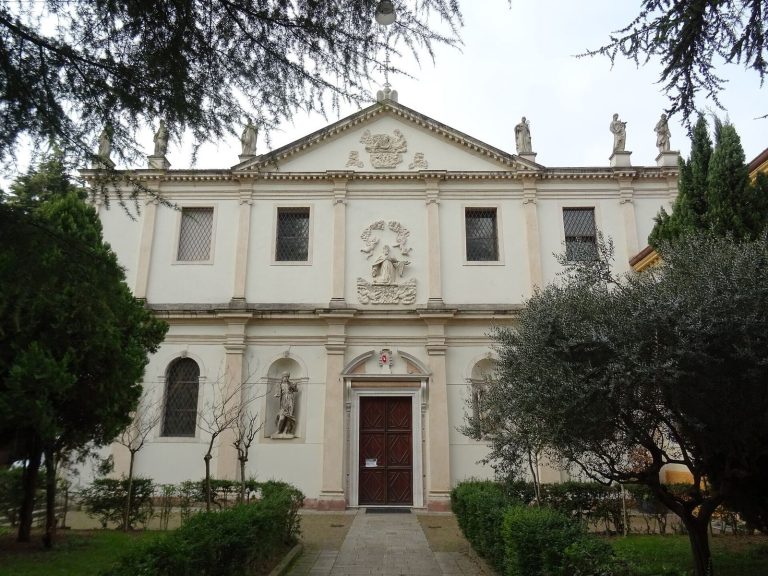
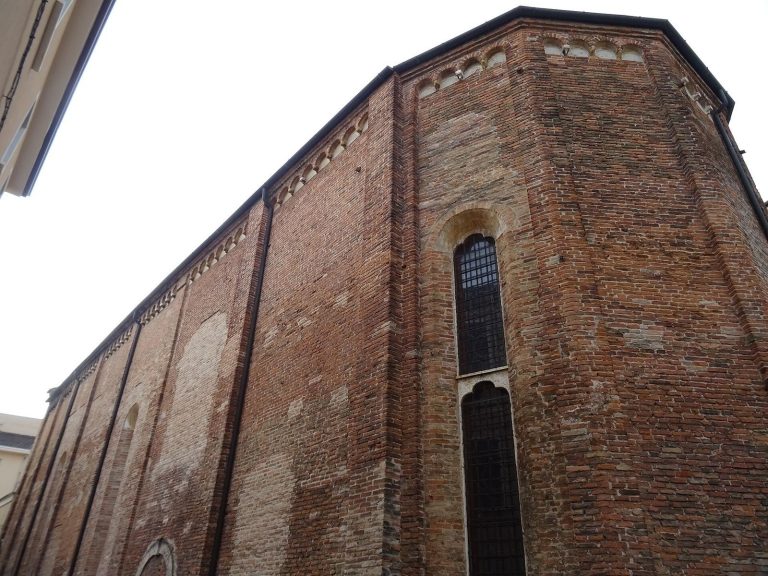
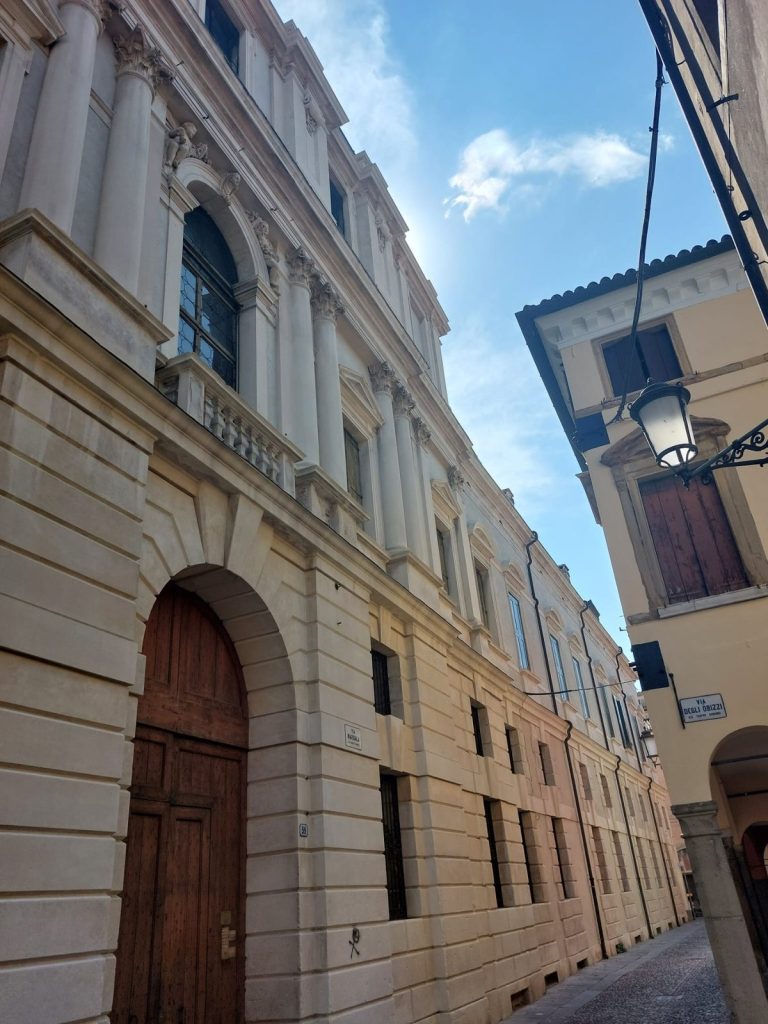
San Prosdocimo faces the street formerly known as contrà di San Giovanni alle Navi, now Via San Prosdocimo. The adjacent Benedictine monastery remains standing. The church preserves a medieval building history within a form described as incorporating Renaissance and Mannerist architectural features. Its recorded construction beginning is associated either with the twelfth century or with 1455, and its completion is given as 1698.
Memorial and altar furnishings
Ark of Blessed Eustochio
Near the altar stands a marble ark bearing the inscription BEATAE EUSTOCHIO PADUANE. It served as the tomb into which Eustochio’s body was solemnly transferred in 1475, giving the church a permanent memorial connected with the Benedictine nun whose life and cult shaped its religious history.
Altar relics
The altar contains relics identified as bones of Saint Anthony of Padua, Saint Leopold Mandić, Blessed Francesco Faà di Bruno, Blessed Rafaela Ybarra de Vilallonga, and Blessed Marie-Léonie Paradis. These relics remain part of the church’s present devotional furnishings.