San Giovenale: An Etruscan Settlement near Blera, Italy
Site at a Glance
- Popularity
- Medium
- Country
- Italy
- Primary era
- Iron Age
- Eras represented
- Bronze Age, Iron Age, Classical, Medieval
- Civilizations
- Etruscan, Papal States
- Site type
- City
On this page8 sections
History
Early settlement and Etruscan period
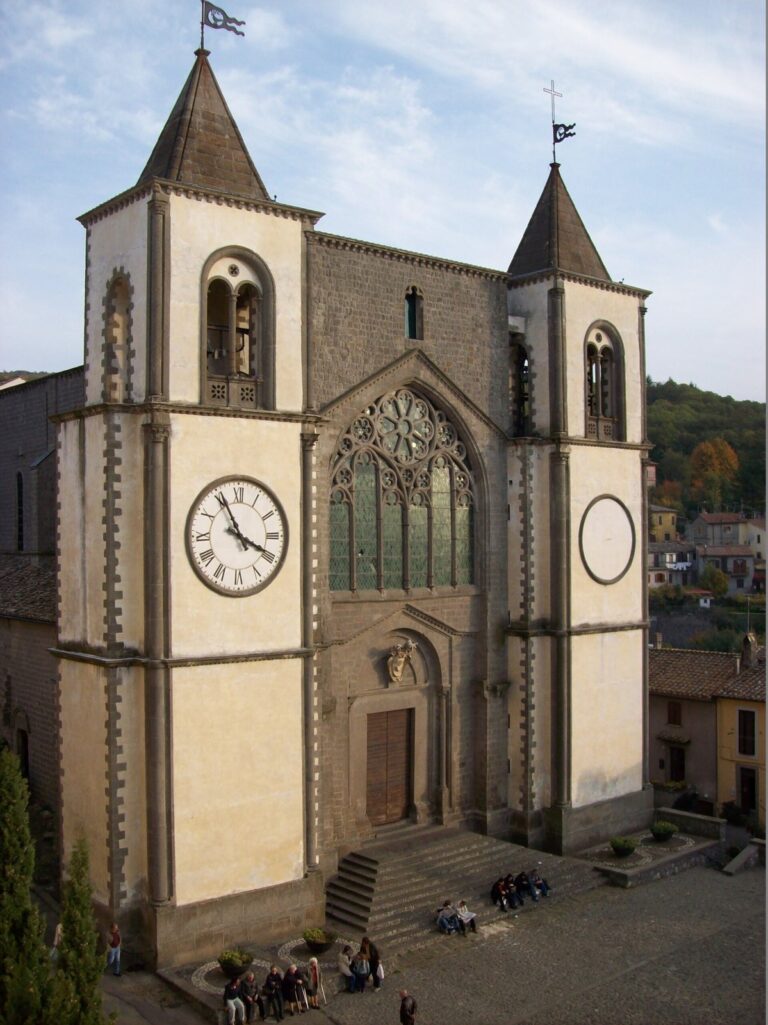
San Giovenale is an ancient settlement near Blera, Italy. Its ancient Etruscan name is unknown; its modern name comes from the remains of a medieval chapel dedicated to Saint Giovenale. Italic peoples, broadly the peoples of ancient Italy, and Etruscans, an ancient people of central Italy, occupied the site during the Bronze and Iron Ages. A Villanovan settlement preceded the Etruscan center. Villanovan culture was an early Iron Age culture associated with the development of Etruscan civilization, and material from the Etruscan center dates to the sixth century BCE. The settlement was abandoned during the Roman period.
Medieval occupation
In the thirteenth century, the Di Vico, a noble family of central Italy, built a castle here to control the road between Viterbo and Tolfa.
Archaeological investigations
A German archaeological mission investigated San Giovenale in 1914. The Swedish Institute of Classical Studies in Rome, a research institution devoted to classical studies, excavated the site from 1956 to 1965. King Gustaf VI Adolf of Sweden, who reigned from 1950 to 1973 and had a strong interest in archaeology, took part. Excavations at San Giovenale and Acquarossa, another Etruscan settlement, provided important evidence for understanding how small and medium-sized Etruscan communities were organized. Some excavated finds are now exhibited at the National Etruscan Museum at Rocca Albornoz in Viterbo.
Remains
Settlement and dwellings
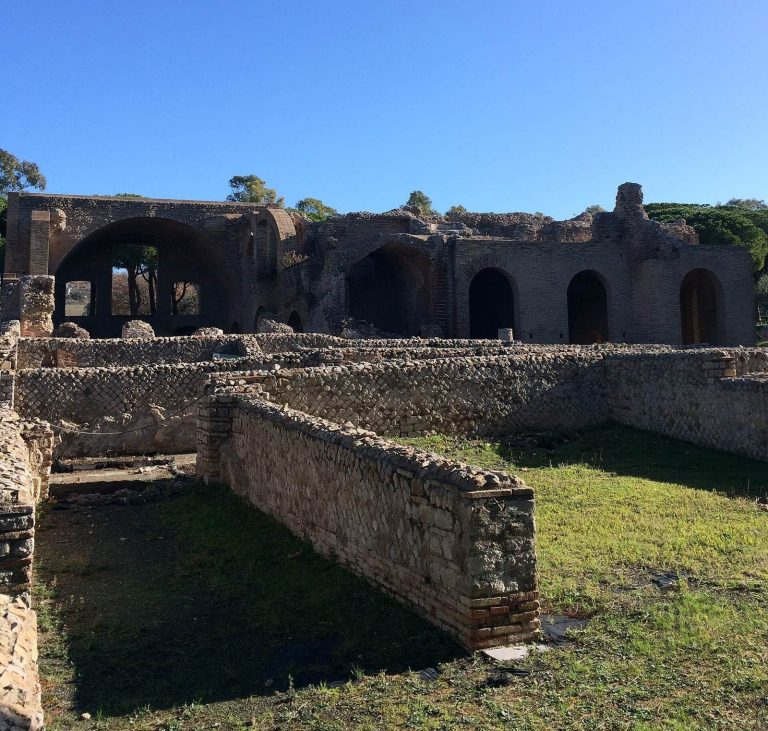
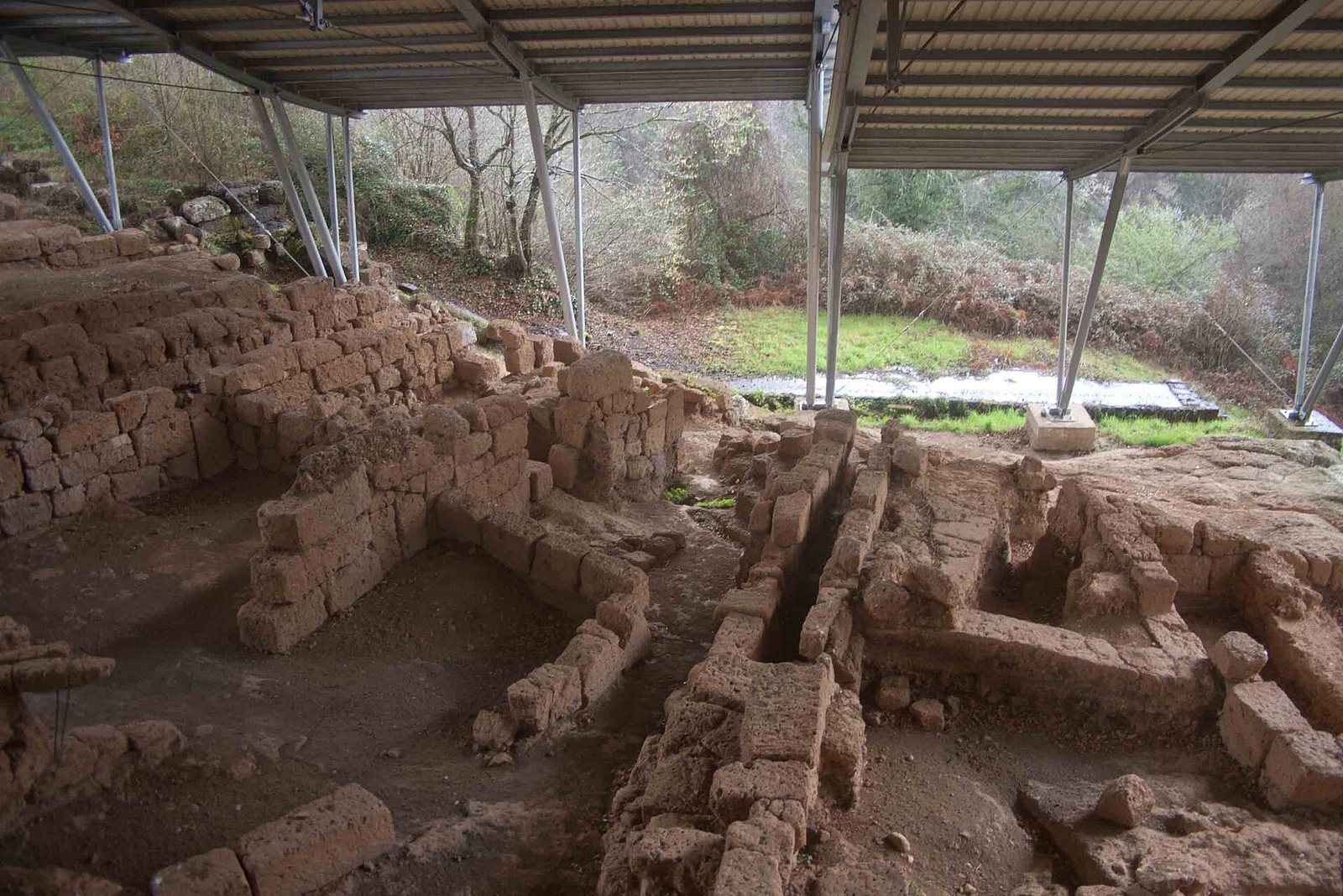
The settlement occupies a high plateau divided into the Acropolis, the elevated part of an ancient settlement, and the Borgo. The Borgo contains remains of Etruscan houses and workshops. Excavations covered Areas A to F on the Acropolis, the Borgo, and a bridge over the Pietrisco. Remains of two successive hut phases include earlier oval huts with roofs of straw and clay, followed by rectangular huts. Foundations, wells, and hearths also survive among the settlement remains.
Burial grounds and road
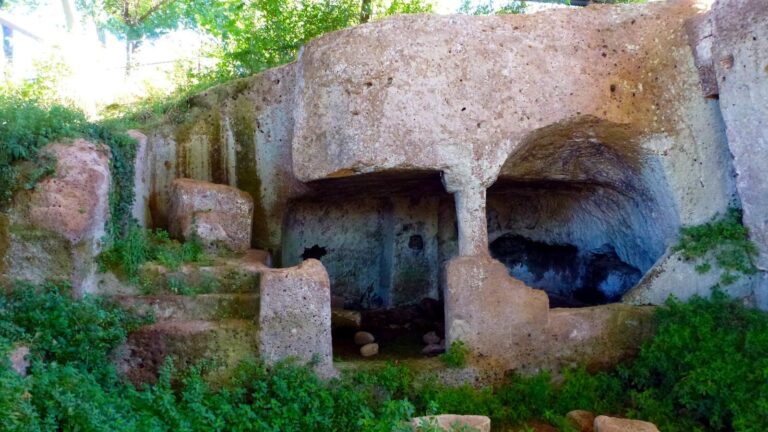
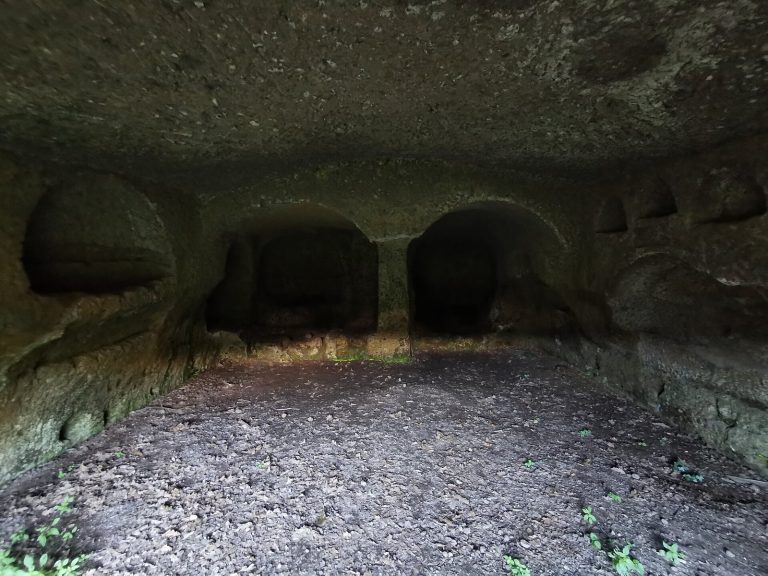
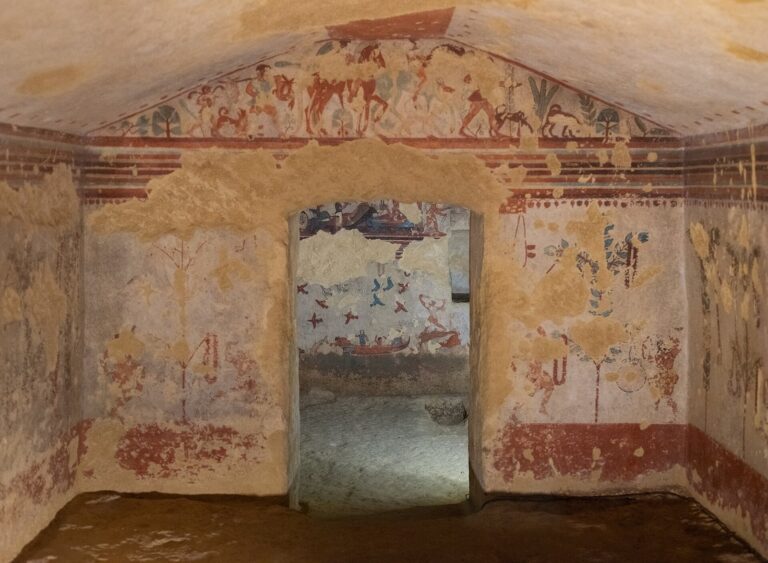
Several small burial grounds lie along the slopes of the settlement hill, at Grotta Tufarina, Porzarago, Castellina, Montevangone, Pontesilli, and Vignale. Their tombs include cube-shaped forms, burial mounds, and tombs cut into rock, dating to the seventh and third centuries BCE. The visible Etruscan road known as Tagliata delle Poggette linked the burial grounds with the Acropolis.
Medieval remains
Remains of the chapel dedicated to Saint Giovenale and of the Di Vico castle are present in the area.