Saltaire United Reformed Church: Saltaire’s First Public Building
Site at a Glance
- Rating
- 4.6
- Popularity
- Medium
- Country
- United Kingdom
- Primary era
- Modern
- Eras represented
- Modern
- Civilizations
- British
- Site type
- Religious
- Remains
- Church
On this page6 sections
History
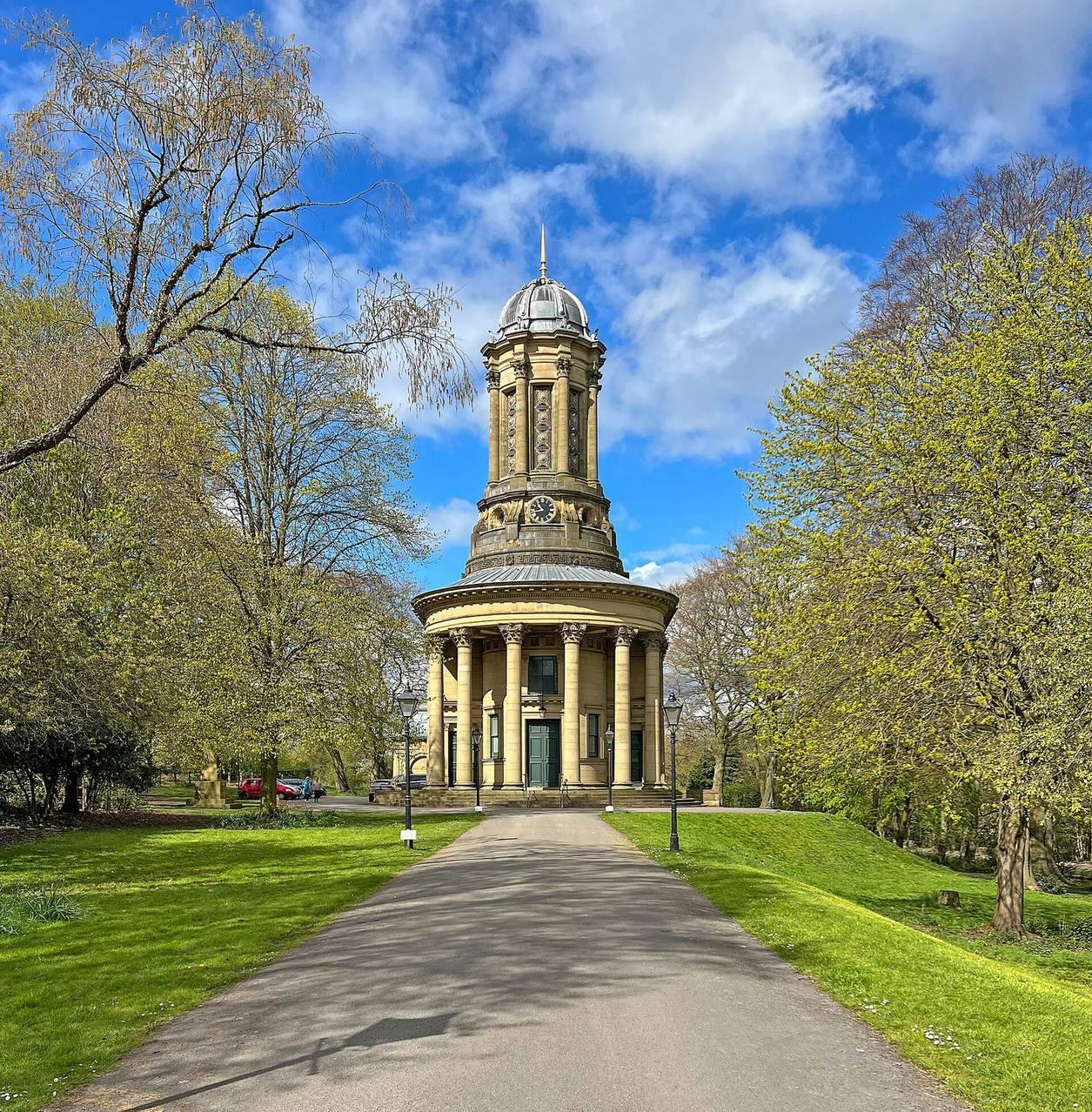
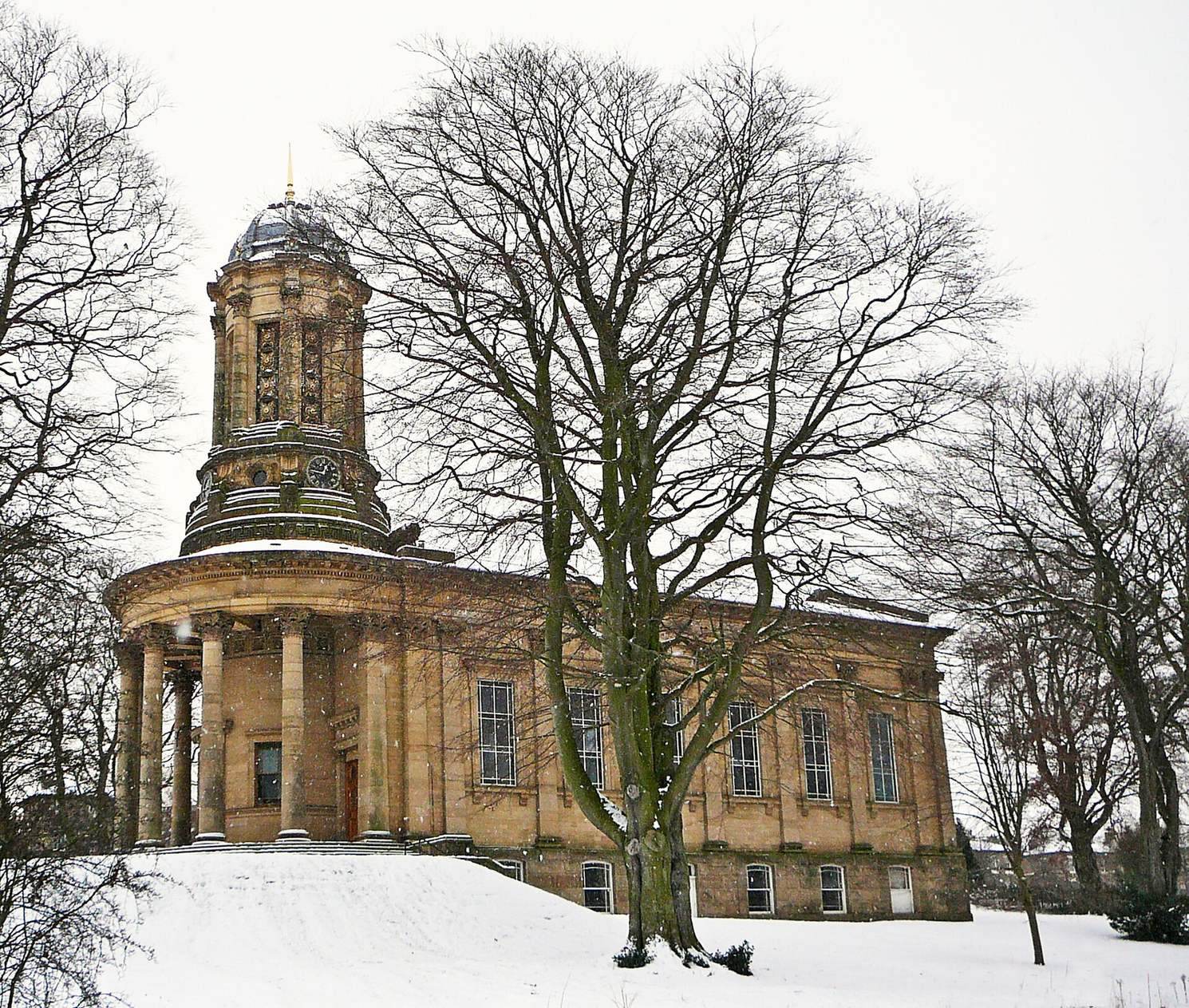
Saltaire United Reformed Church is a church in Saltaire, West Yorkshire, United Kingdom, built in 1858–1859 in the Italianate Classical style as the first public building of Titus Salt’s model village.
Foundation and opening
Originally called Saltaire Congregational Church, it was commissioned by Titus Salt, a nineteenth-century English industrialist and philanthropist who belonged to the Congregational Church. Salt donated the land and paid £16,000 toward construction.
Caroline Salt laid the foundation stone in 1856, and the church opened in 1859.
Later history and preservation
Sir Titus Salt was buried in the church’s mausoleum, a burial chamber, in 1877. In 1972, after Congregational and Presbyterian churches in England and Wales merged, the church adopted its present name and became part of the United Reformed Church, a Protestant denomination.
Storm Dennis damaged the ceiling in February 2020, causing part of it to collapse. Repairs were completed by the end of 2022. The church received Grade I listing in 1966, a designation for buildings of exceptional interest, and is within the Saltaire World Heritage Site, recognized by UNESCO for its cultural importance.
Remains
Designed by the Bradford architectural partnership Lockwood and Mawson, the church was built by local firms. John Ives’s firm carried out the woodwork and carvings, while Moulton Brothers undertook the masonry. Local stone, finished as ashlar (carefully shaped blocks with smooth faces), forms the building’s exterior.
Exterior
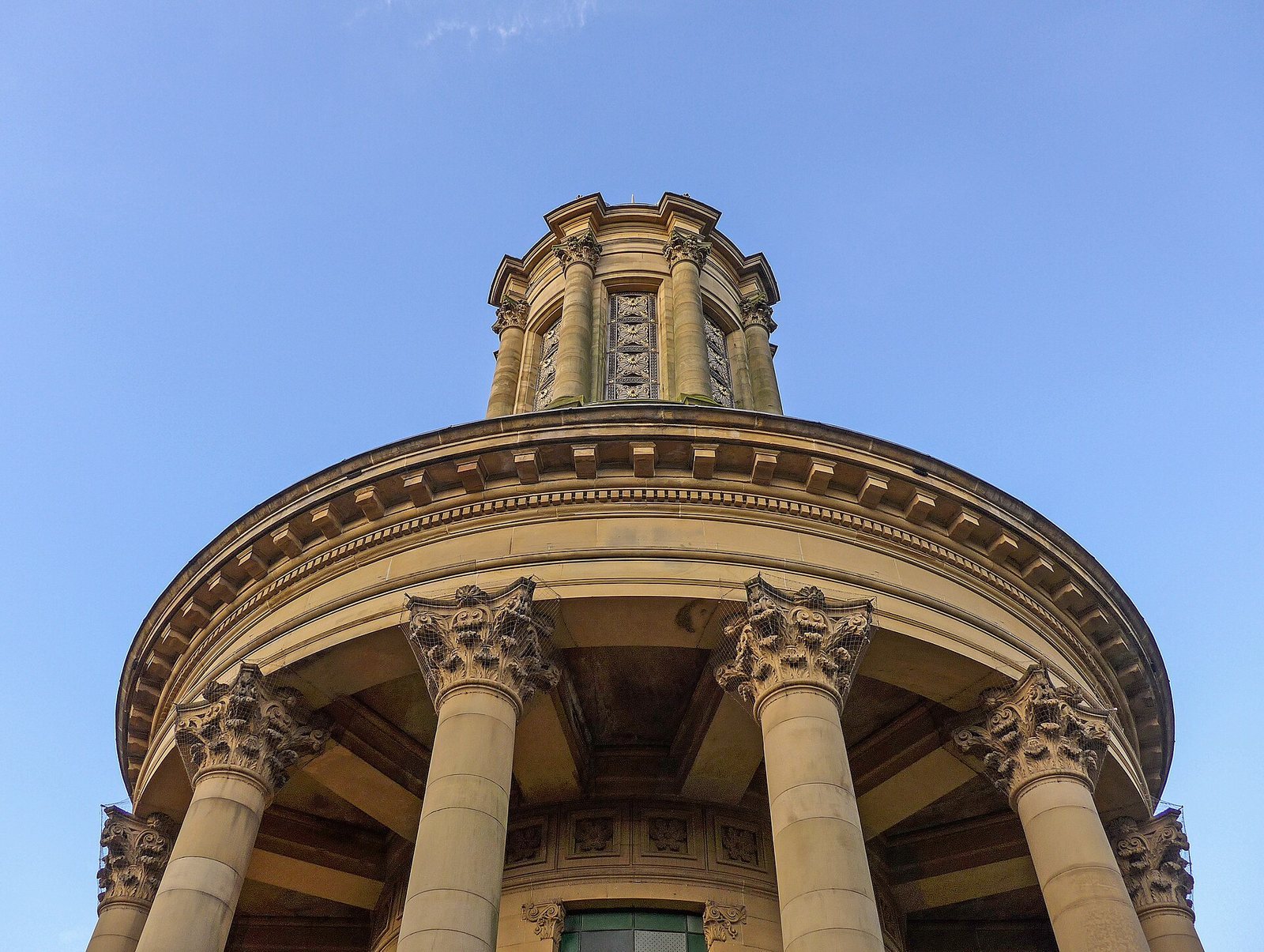
The aisleless church has a Welsh-slate roof and large, plain windows. At its west end, a semicircular portico, a roofed entrance supported by columns, sits beneath a round tower with a clock on each of its four sides. Above the tower, columns arranged in an octagon support a dome.
Interior
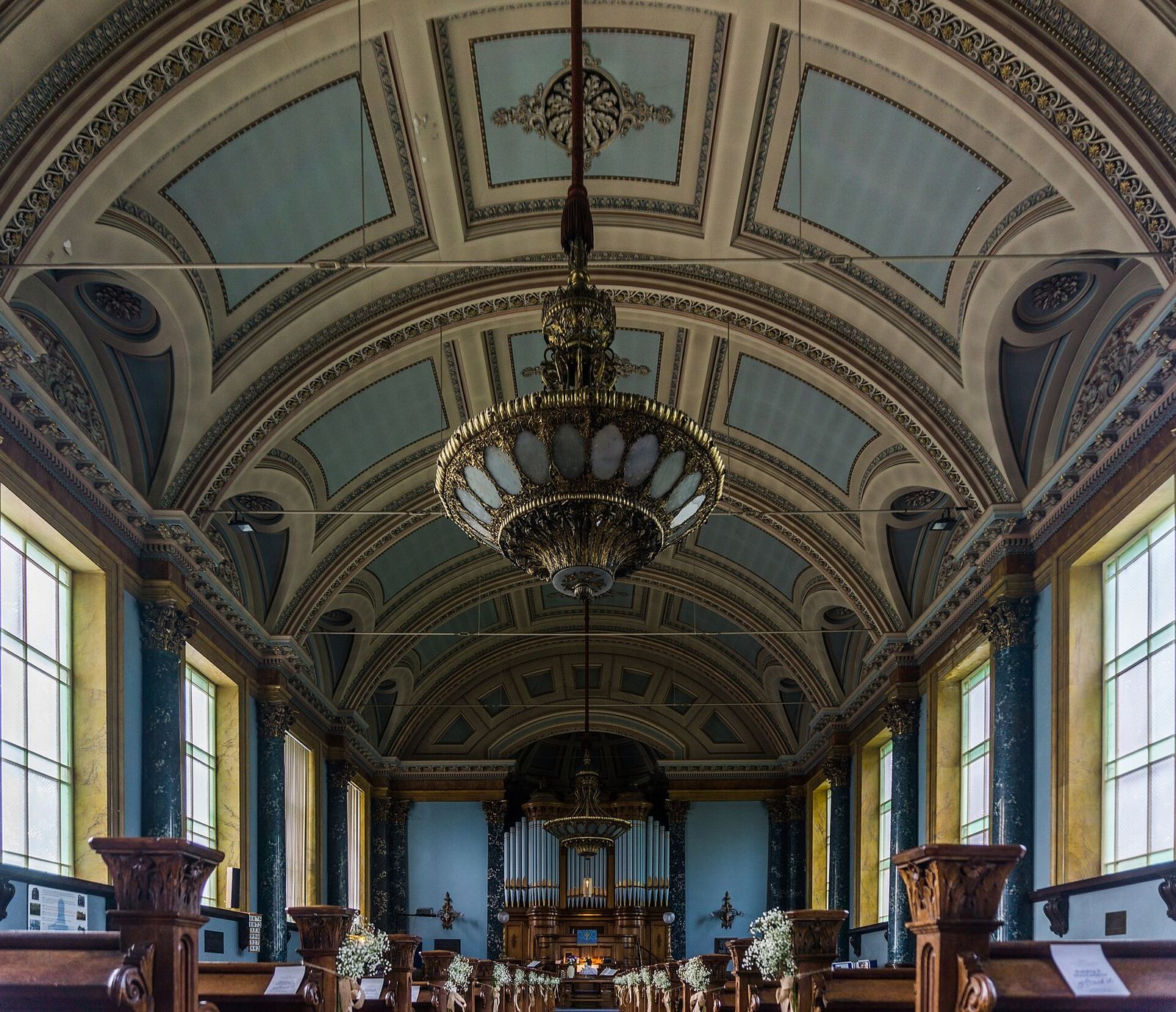
The nave, the main body of the church, has a pair of large chandeliers hanging along the centre of its ceiling. They were originally lit by gas. The organ, built by the Huddersfield firm Conacher and Co, was installed in 1890 and has since been rebuilt twice. The Salt family mausoleum stands on the south side of the nave.