Saint Demetrius Cathedral, Vidin: A Bulgarian Orthodox Cathedral
Site at a Glance
- Rating
- 4.8
- Popularity
- Medium
- Country
- Bulgaria
- Primary era
- Modern
- Eras represented
- Early Modern, Modern
- Civilizations
- Bulgarian, Ottoman
- Site type
- Religious
- Remains
- Cathedral
On this page9 sections
History
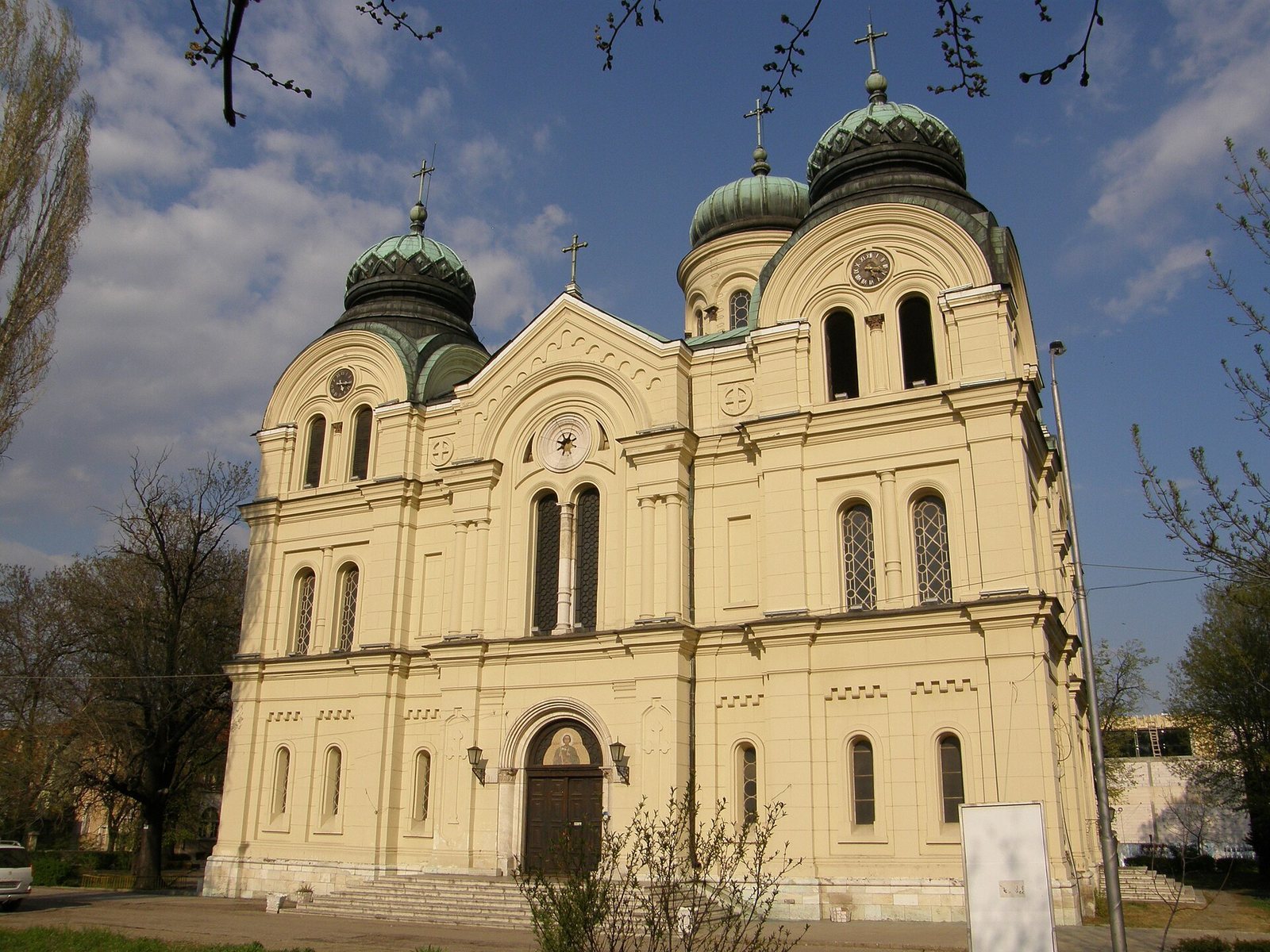
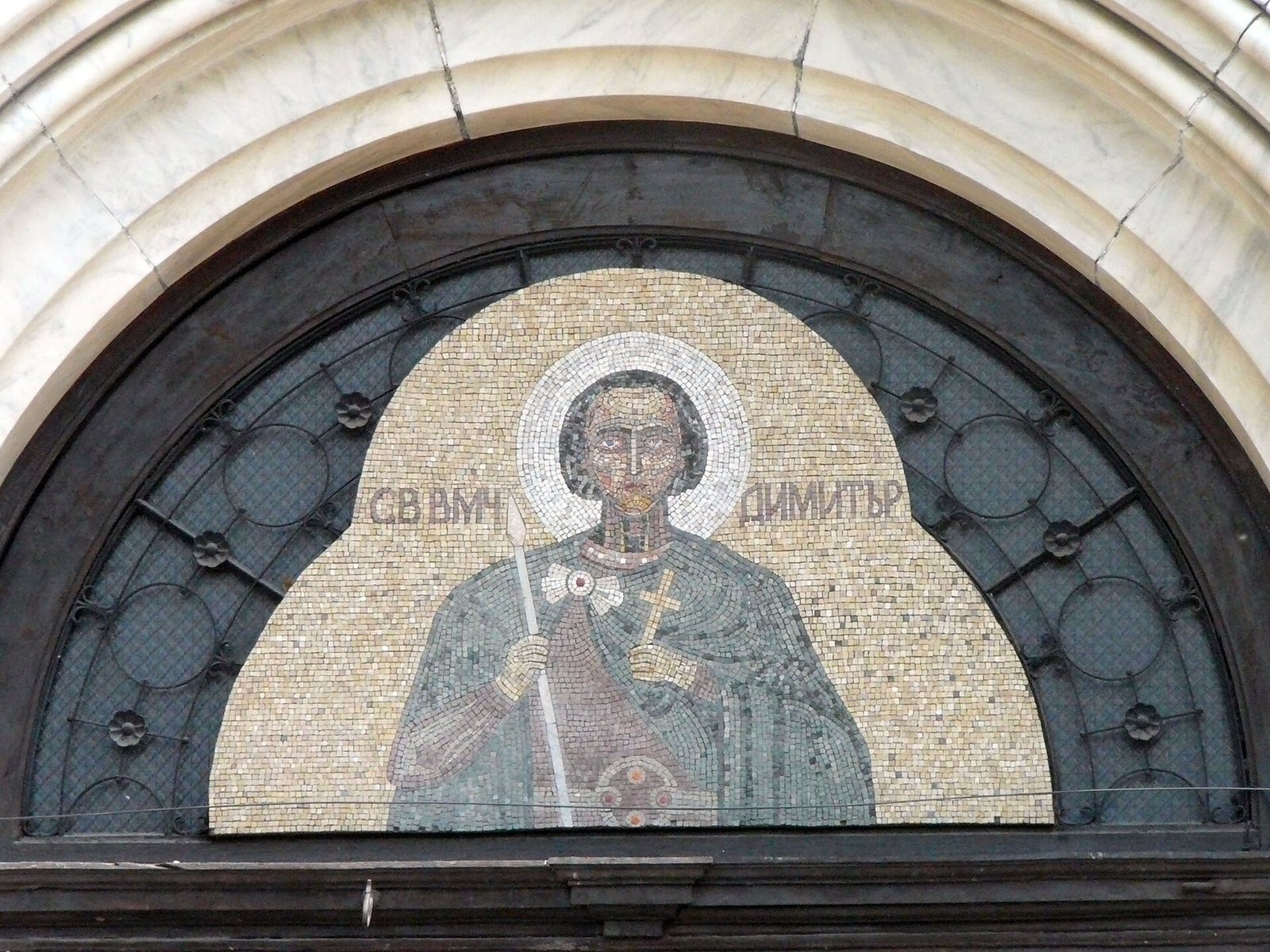
Saint Demetrius Cathedral, Vidin, is an Orthodox church in Bulgaria, on a site where a church stood outside the fortified district by the late seventeenth century. Dedicated to Saint Demetrius of Thessaloniki, a Christian martyr revered in Eastern Orthodox tradition, the church became a center of Bulgarian cultural life. Its present building was rebuilt on the same site and completed in 1926.
Church outside the fortified town
After 1718, Vidin became a frontier town of the Ottoman Empire. Regulations barred Bulgarians from living within its fortified district. Residents with houses or shops there had to sell them and build new homes beyond the defenses. These homes could not be made of stone and had to stand a prescribed distance from the fortifications.
The fortress gates closed from 6 p.m. until 7 a.m., preventing people from attending evening and night services at the churches of Saint Petka and Saint Panteleimon during Christmas and Easter.
Bulgarian worship and rebuilding
On 6 December 1868, a solemn service in Bulgarian was held at the church for the first time. The church became a metropolitan church, serving as the seat of a senior bishop, and then the cathedral of Antim I, Metropolitan of Vidin. In 1872, four years later, Antim I was elected the first Bulgarian Exarch, the senior cleric leading a church jurisdiction.
Wear in the earlier church’s wooden structure led to its demolition and replacement on the same site. Guild associations, which pooled craftspeople’s resources, and voluntary contributions from residents supported the work. The foundation stone was laid on 10 March 1885. Gencho Kanev’s interrupted work reached the first cornice, a projecting horizontal molding, before architect Bahnani continued construction.
On 26 October 1890, the church’s feast day, a consecrated altar cloth called an antimension was installed, and the first liturgy was celebrated there. The building was completed and decorated with wall paintings by 1926, when it was solemnly consecrated and opened.
Church status and later history
Saint Demetrius Cathedral remains an active church of the Bulgarian Orthodox Church, within the Diocese of Vidin, a territorial church district. It is recognized as a cultural monument of national importance.
Remains
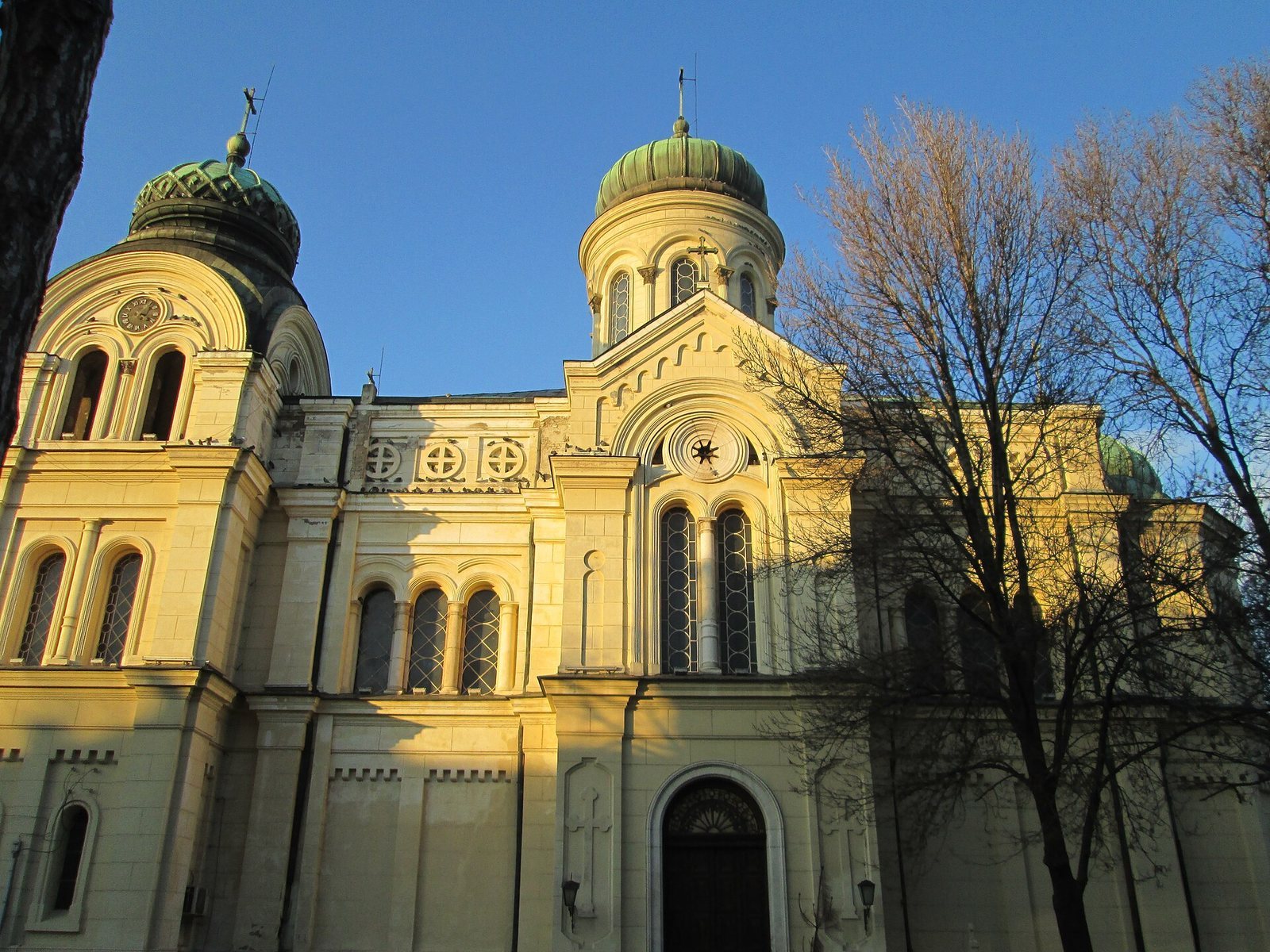
The cathedral is built of brick and building stone. Its several distinct building masses form a unified composition centered on a dome.
Cathedral building
Plan and exterior
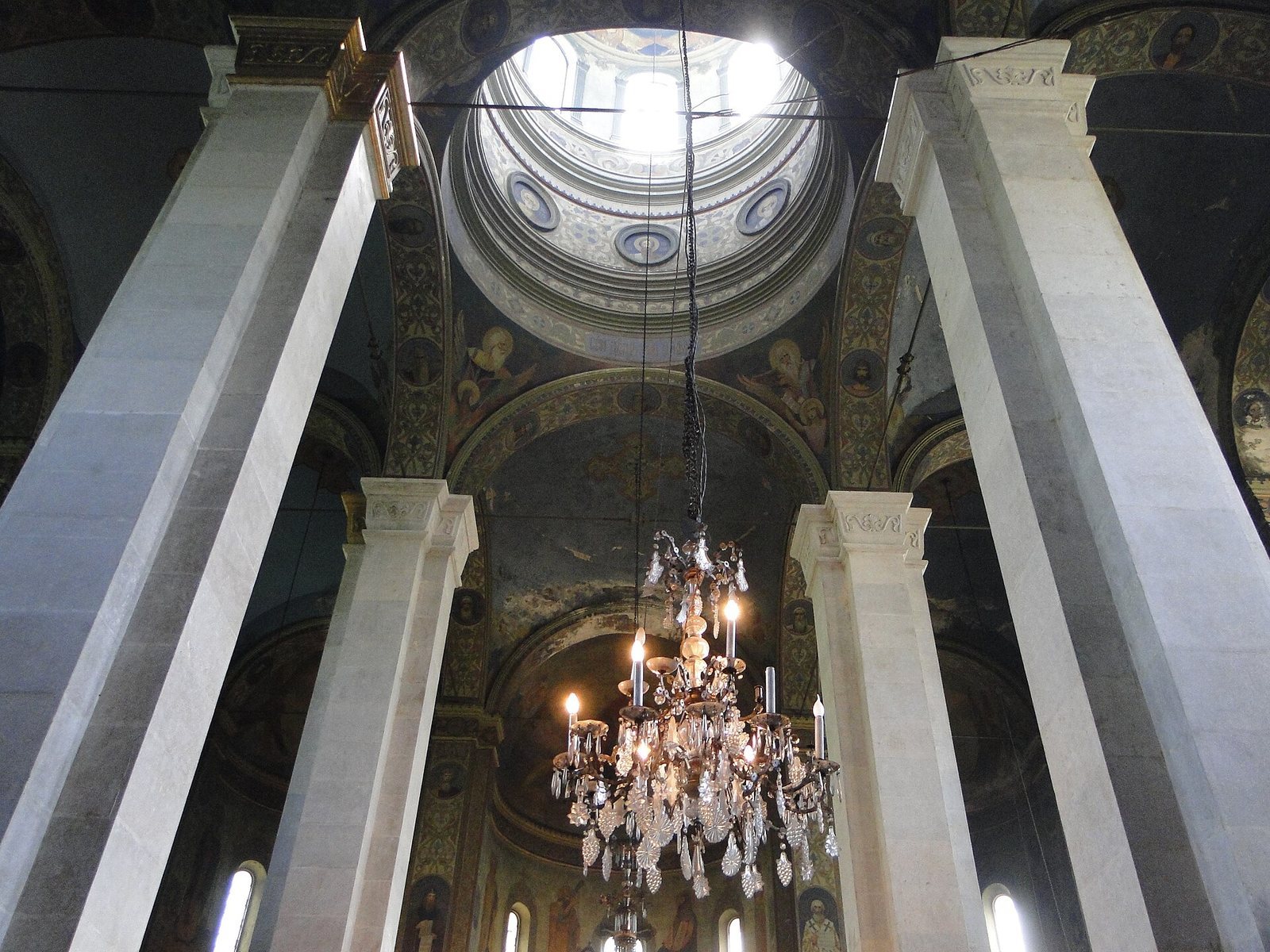
Three lengthwise naves, the church’s principal divisions, cross a transept, the section that runs across them. A dome above their intersection gives the building a cross-domed plan. The central dome rises 33 metres and rests on four freestanding supports. Gencho Kanev’s original design drew on Varna Cathedral, which he built between 1884 and 1886. Kanev planned one bell tower, while Bahnani’s revised design and the completed building have two. The cathedral is the second-largest church in Bulgaria, after Alexander Nevsky Cathedral in Sofia.
Interior
Debar craftsmen from the Filipov family carved the iconostasis, an icon-bearing screen separating the sanctuary from the main worship area, and the church furnishings. The interior has a rich and elaborate overall appearance.
Churchyard
The churchyard contains the grave of second lieutenant Angel Todorov (1864-1885), who was killed defending Vidin in the Serbo-Bulgarian War, an 1885 conflict between Serbia and Bulgaria. It also holds the grave of Kiril (1833-1914), Metropolitan of Skopje and later of Vidin. Naicho Tsanov (1857-1923), chairman of the National Assembly, was buried there before being reburied in the City Garden.