Russian Fort Elizabeth: A Russian-Hawaiian Fortification on Kauai
Site at a Glance
- Rating
- 3.6
- Popularity
- Low
- Country
- United States
- Primary era
- Modern
- External website
- Open
- Eras represented
- Modern
- Civilizations
- Russian
- Site type
- Military
- Remains
- Fort
On this page12 sections
History
Russian Fort Elizabeth is a Russian fortification in the United States, built on Kauai in 1816–1817 under the direction of Georg Anton Schäffer, a German physician and agent of the Russian-American Company. Local Hawaiian workers constructed the fort as part of Schäffer’s attempt to establish a Russian colony, trading facilities, and political influence in the Hawaiian Islands. The fort was named for Empress Elizabeth Alexeievna, the wife of Russian Emperor Alexander I.
The Bering and Schäffer’s mission
The Russian project began after the Russian-American Company ship Bering was wrecked off Kauai in January 1815. High Chief Kaumualiʻi seized the ship and its cargo, valued at 100,000 rubles. Alexander Baranov then sent Schäffer to recover the company’s losses, obtain trading privileges, and establish relations with the Hawaiian rulers.
Schäffer reached Hawaii in November 1815 and initially gained the confidence of Kamehameha I, the ruler who had unified most of the islands into one kingdom. Medical treatment helped him secure land, buildings, fishing grounds, and livestock. After negotiations failed, he sailed to Kauai in May 1816 aboard the Russian-American Company ships Otkrytie and Il’mena.
Kaumualiʻi and the Russian foothold
Kaumualiʻi, the high chief of Kauai and Niihau, sought Russian support against Kamehameha I. In May and June 1816, he agreed to place his territories under the protection of Alexander I. He granted the Russian-American Company a trade monopoly in sandalwood, authorized trading posts, and promised help with the construction of Russian forts. Hawaiian workers were provided for the project.
Schäffer established gardens and buildings for a future trading post and began three forts in Kaumualiʻi’s territories. Russian Fort Elizabeth stood near the mouth of the Waimea River. Fort Alexander and Fort Barclay-de-Tolly were earthworks near the mouth of the Hanalei River, but both were later washed away. Fort Elizabeth formed part of a wider effort to create a Russian commercial and political base in Hawaii.
Schäffer’s plans extended to founding a colony and possibly bringing Hawaii into the Russian Empire. The Russian-American Company had not authorized these actions, however, and the Russian government later rejected the proposed annexation. Opposition from American and European interests, pressure from Kamehameha I, and the departure of most of Schäffer’s American and British employees weakened the Russian position.
Hawaiian control and later use
On 17 June 1817, an armed clash in which three Russians and several Hawaiians were killed ended the Russian presence on Kauai. Schäffer and the men who remained with him left the island. By October 1817, Hawaiian forces controlled the fort, and the Russian flag had been replaced by the flag of the Kingdom of Hawaii.
The Hawaiian Kingdom continued to use the site as Fort Hipo, also called Pāʻulaʻula o Hipo. In 1820, its guns fired a 21-gun salute when Kaumualiʻi’s son, Prince George “Prince” Kaumualiʻi, also known as Humehume, arrived aboard the Thaddeus. Humehume later attacked the fort during a rebellion in 1824. The fort served as a base for his capture, helping preserve the unity of the Hawaiian kingdom.
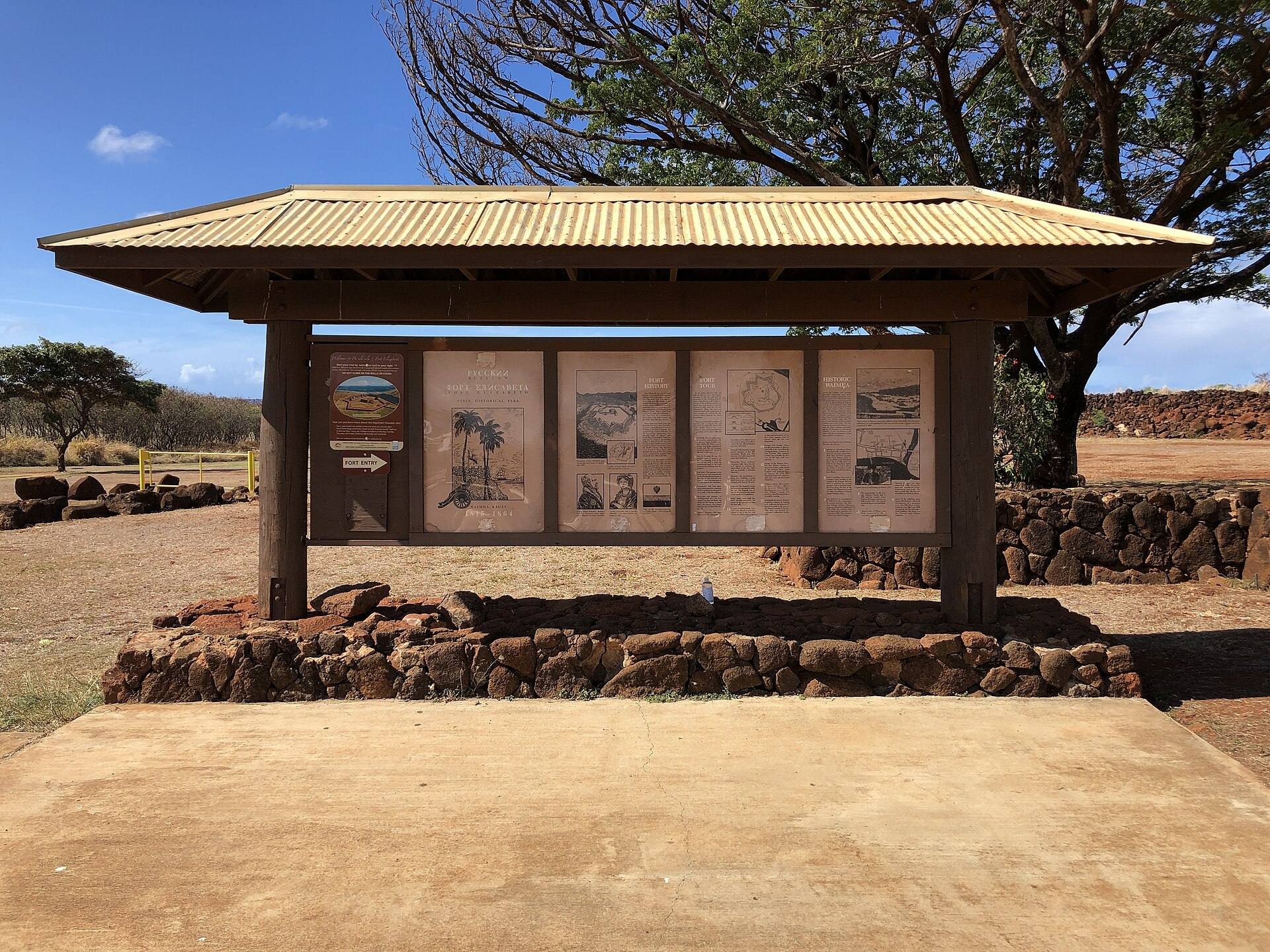
The fort was eventually abandoned after the Hawaiian garrison withdrew. Its armaments were removed during decommissioning in 1864. As one or two cannons were being loaded for sale as scrap metal, they fell into Waimea Bay. Russian Fort Elizabeth became a National Historic Landmark in 1962 and was added to the U.S. National Register of Historic Places in 1966. Its ruins are preserved within a state historical park of about 7 hectares, now associated with the name Pāʻulaʻula State Historical Park.
In 2017, the bicentennial of the fort’s construction was commemorated in Kauai through public and scholarly events focused on preserving the ruins and interpreting Russian-Hawaiian and Russian-American heritage. The principal preservation aim was to develop the remains as a historical and cultural center for research, conservation, and public interpretation.
Remains
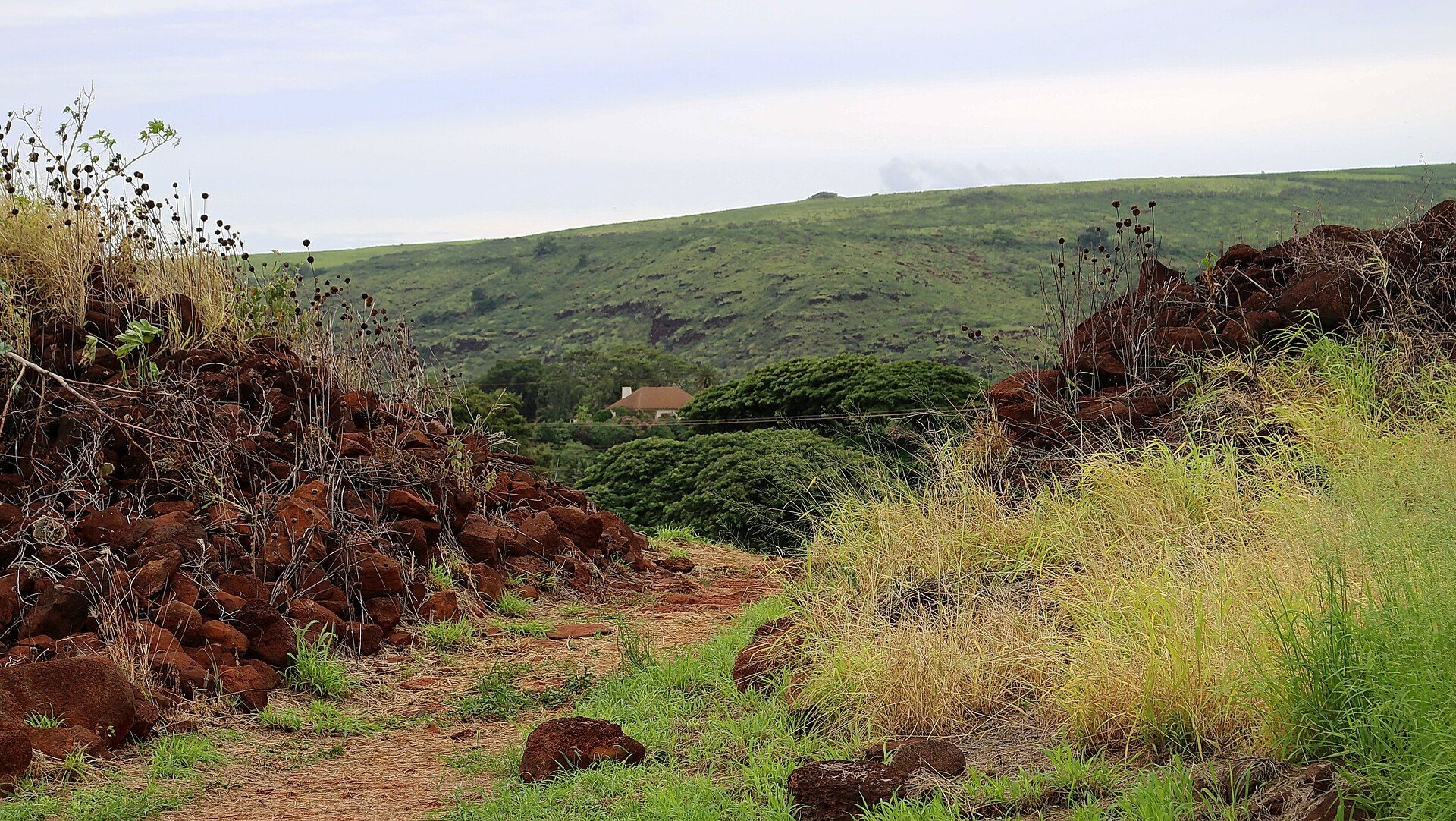
Russian Fort Elizabeth stands on the east bank of the Waimea River near its mouth, overlooking Waimea Bay and southeast of present-day Waimea on Kauai. The fort follows an irregular octagonal plan, meaning that it has eight sides that are not necessarily equal or symmetrically arranged. It measures approximately 90 to 140 meters across and survives as a large stone structure within the historical park.
Fortifications and interior buildings
Stone walls
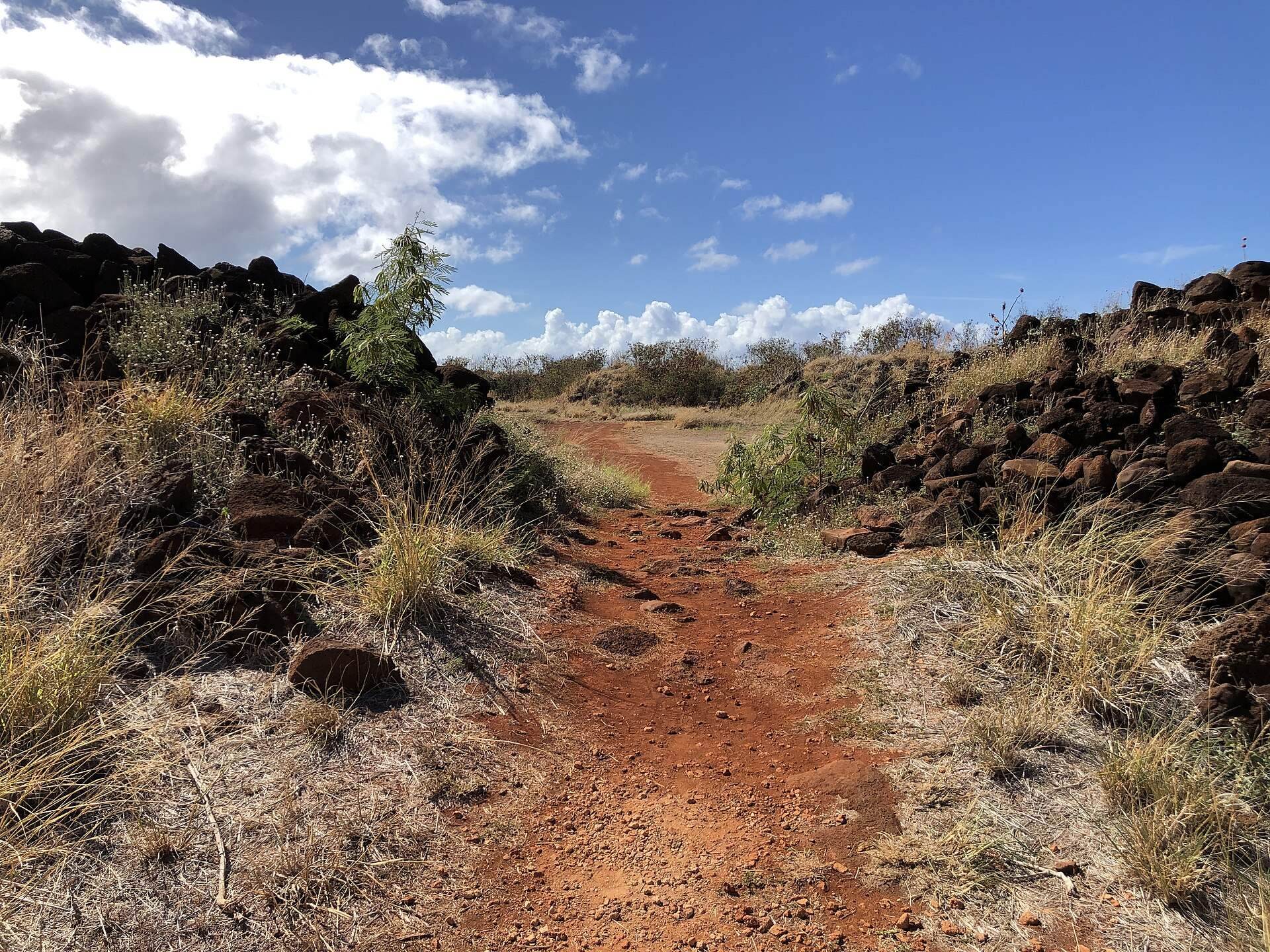
The outer defenses were made from piled stone and rose about 6 meters high. Their thickness is described as approximately 25 to 45 feet. Surviving sections remain in relatively good condition and form the principal visible remains of the fort. The site is also described as the last remaining Native Hawaiian fort in the Hawaiian Islands.
Magazine and barracks
The fort contained quarters for troops and internal buildings, including a magazine for storing weapons and supplies and barracks for the garrison. Foundations of the magazine, barracks, and other buildings remain visible inside the walls. Extensive clearing for later park development probably damaged some archaeological remains and resources.
Russian Orthodox chapel
A small Russian Orthodox chapel stood within the fort. It is described as the first Orthodox Christian church in Hawaii. Another small Russian Orthodox chapel was associated with Fort Alexander near Hanalei, linking the fortifications to the Eastern Christian tradition connected with the Russian Empire.
Weapons and surviving evidence
Armaments
The fort held a substantial collection of weapons. An inventory made after an 1862 survey listed 60 flintlock muskets, 16 swords, twelve 18-pounder cannons, 26 four- and six-pounder cannons, six heavy guns, and 24 small guns. The armaments were removed in 1864, when one or two cannons fell into the waters of Waimea Bay during loading.
Present remains
Only the stone walls survive above ground as the fort’s principal structural remains, while the foundations of the magazine, barracks, and other internal buildings can still be seen inside the enclosure. These surviving elements preserve the outline of the Russian-Hawaiian stronghold and its internal organization.