Kāneiolouma Complex: An Ancient Hawaiian Village
Site at a Glance
- Rating
- 4.2
- Popularity
- Very Low
- Country
- United States
- Primary era
- Medieval
- External website
- Open
- Eras represented
- Medieval, Modern
- Civilizations
- Unclassified
- Site type
- Religious
- Remains
- Sanctuary
On this page7 sections
History
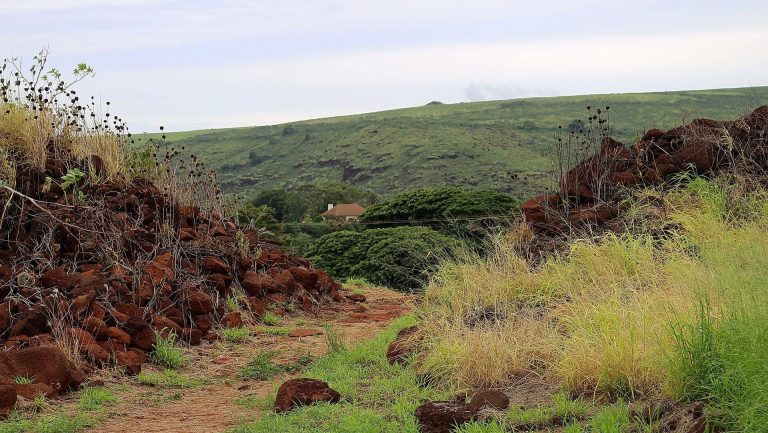
Kāneiolouma Complex is an ancient Hawaiian village in Poipu on the south shore of Kauaʻi, United States. Built in the mid-fifteenth century, it originally covered about 26 acres (11 hectares) and brought together religious, agricultural, aquacultural, residential, and sporting functions. The archaeological site now covers approximately 13 acres (5.3 hectares).
Religious and ceremonial life
Wendell C. Bennett described Kāneiolouma as an important heiau, a Hawaiian temple or sacred ceremonial complex, in 1931. His work drew on published material, accounts from Native Hawaiian elders, and T. G. Thrum’s Tales from the Temples: Hawaiian Annual for 1907. During an archaeological survey in 1959, Henry Kekahuna identified three principal aspects of the village: temple religion, agriculture, and aquaculture, the management of aquatic resources such as fish in ponds.
The central sporting arena was used during the ancient Makahiki festival season. Associated with the god Lono, Makahiki suspended warfare and combined athletic contests, tribute, and religious observances. Boxing, wrestling, spear throwing, and other competitions took place there. The arrangement of seating distinguished general spectators from aliʻi, members of the Hawaiian chiefly class, who occupied higher central positions. Twenty-three kiʻi sites, representing deities, ancestors, or other spiritually important beings, were identified within the village, including eighteen around the game field. Their placement reflected the arena’s sacred purpose.
Restoration and stewardship
The Kāneiolouma Ancient Hawaiian Village Restoration Project began clearing the overgrown site in 1998. The work removed vegetation, introduced native and traditional plants, and restored a fishpond that later attracted birds. Hui Malama O Kāneiolouma, a nonprofit organization, was established in 2003 to conserve and refurbish the village and increase public understanding of its importance as an example of Native Hawaiian culture. In 2010, the organization assumed stewardship through its relationship with Kauaʻi County.
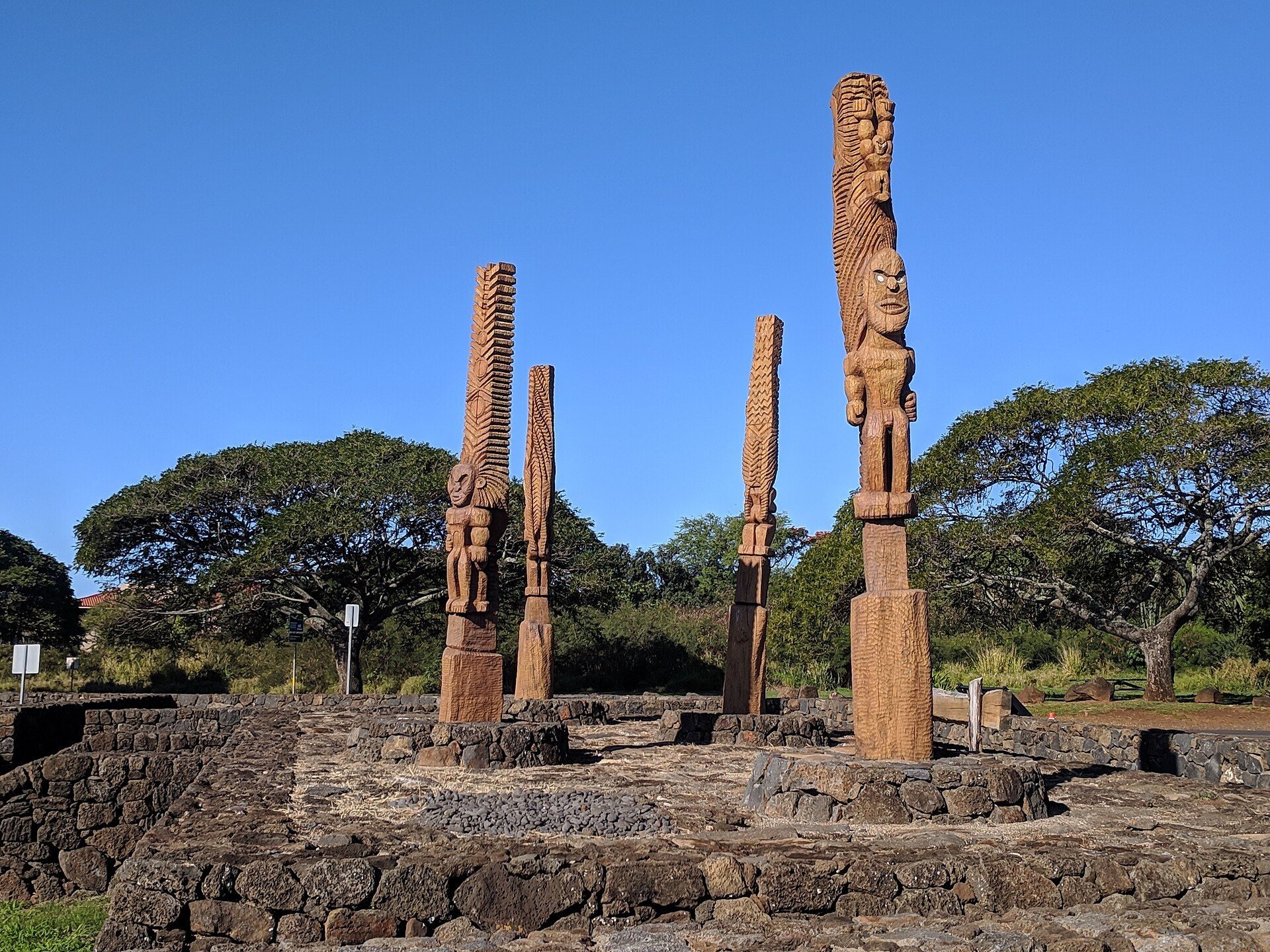
In July 2013, Hui Malama O Kāneiolouma built the Ke Apapalani O Manokalanipo platform and placed four large kiʻi upon it. The figures honor ancestors who understood the movement of celestial bodies and the seasonal signs indicated by the Sun’s position. Interpretive signs followed at the intersection of Poipu Road and Hoowiii Road in 2016.
Remains
Kāneiolouma survives as a 13-acre archaeological village containing taro patches, fishponds, a heiau, shrines, house sites, and a central Makahiki arena. These features represent connected religious, residential, agricultural, aquacultural, and ceremonial uses within the site.
Central sporting arena
The arena occupies the center of the village and was formed as an amphitheater. Higher seating in the middle was reserved for aliʻi, while general spectators had separate seating. Eighteen kiʻi bordered the game field, linking the sporting space to the religious character of the Makahiki ceremonies.
Platform and sacred figures
The Ke Apapalani O Manokalanipo platform carries four kiʻi measuring 16 feet (4.9 meters) in height. They face the cardinal directions and represent Hawaiian deities. Their arrangement expresses the association between the site, ancestral knowledge, the movement of celestial bodies, and seasonal indications from the Sun.
Agricultural and aquacultural features
Taro patches and fishponds formed part of the village’s productive landscape. One fishpond was restored during the modern conservation work. Planting introduced ʻōlulu, kukui, ʻulu, kou, koa, wiliwili, hala, and pua kala, combining restoration of the site with the return of native and traditional species.