Roštejn: A Late Gothic Castle and Renaissance Hunting Lodge in Czechia
Site at a Glance
- Rating
- 4.7
- Popularity
- Medium
- Country
- Czechia
- Primary era
- Medieval
- External website
- Open
- Eras represented
- Medieval, Early Modern
- Civilizations
- Holy Roman Empire, Kingdom of Bohemia
- Site type
- Domestic
- Remains
- Castle
On this page13 sections
History
Roštejn is a late Gothic castle in Czechia, built after 1339 by the Lords of Hradec and first mentioned in 1353. The castle was established on the boundary between the Třešť and Telč estates, probably to protect Telč and the Lords of Hradec’s territorial holdings. The Lords of Hradec belonged to the Vítkovci, a powerful medieval Bohemian noble dynasty whose heraldic emblems were derived from the rose.
Medieval fortress
The castle’s founders were the brothers Meinhard and Ulrich IV of Neuhaus. Its first recorded burgrave, a title for a castle governor or castellan, was Martin of Mutice. Roštejn’s original military purpose declined over time. In 1423, during the Hussite wars, fifteenth-century religious and political conflicts in Bohemia associated with the followers of Jan Hus, the castle was almost destroyed but was not captured.
Renaissance transformation
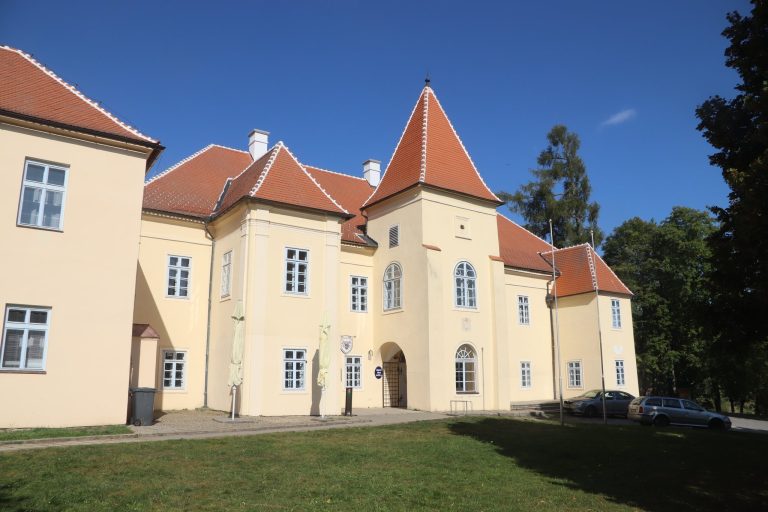
In the second half of the sixteenth century, Zacharias of Hradec rebuilt the medieval fortress in the Renaissance style. Roštejn was converted into a hunting lodge and family retreat, although archaeological and building-historical investigations indicate that hunting may already have formed part of its use during the medieval period. A surrounding game preserve, an enclosed or managed area for maintaining and hunting game animals, is first documented in the sixteenth century and was later used to breed various hoofed species.
Later owners included the Slavata family of Chlum and Košumberk, the Liechtenstein-Kastelkorn family, and the Podstatz-Liechtenstein family. The castle’s name derives from the German form Rosenstein and is associated with the five-petalled rose used in the heraldry of many members of the Vítkovci dynasty, including the Lords of Hradec.
Fire, restoration, and public use
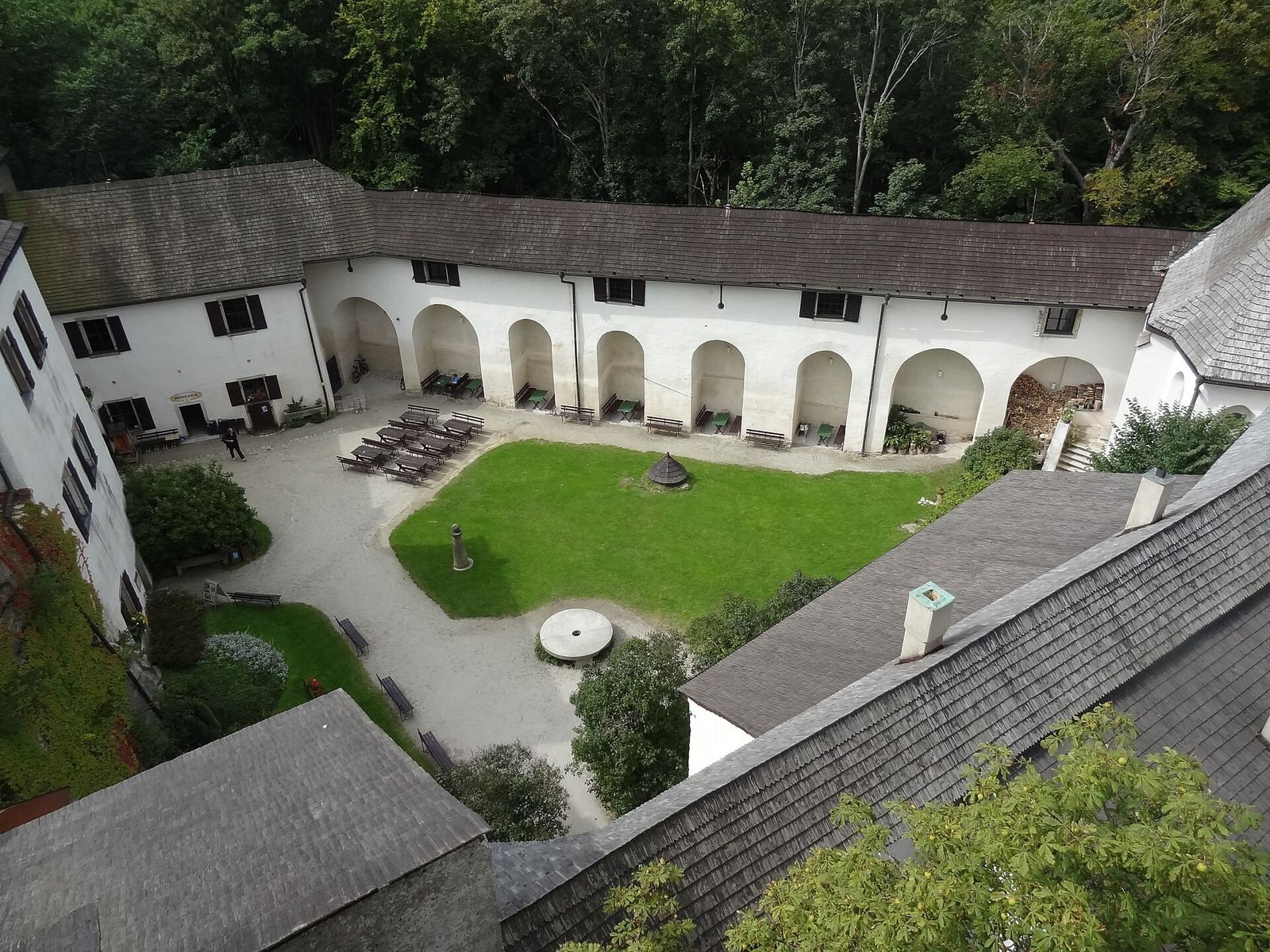
On 12 July 1915, lightning struck the tower and caused a fire that destroyed approximately half of the castle. The courtyard statue of Saint Eustace is one of the few original objects to survive from before the fire. Major repairs began in 1958, and the castle has been open to the public since 1969. Roštejn is owned by the Vysočina Region and administered by the Vysočina Museum in Jihlava.
A tour circuit devoted to ghosts opened in 2008. Further exhibitions opened in 2018 and 2019, presenting Roštejn as a hunting residence and exploring nature, hunting, and game management. Repairs carried out from 2017 to January 2021 restored or conserved important parts of the castle, including deteriorated roof structures, roof coverings, the tower, oil paintings, historic furniture, a stucco ceiling, an altar, and wall paintings. Roštejn is a protected cultural monument and is regarded as one of the best-preserved castles of its type.
Remains
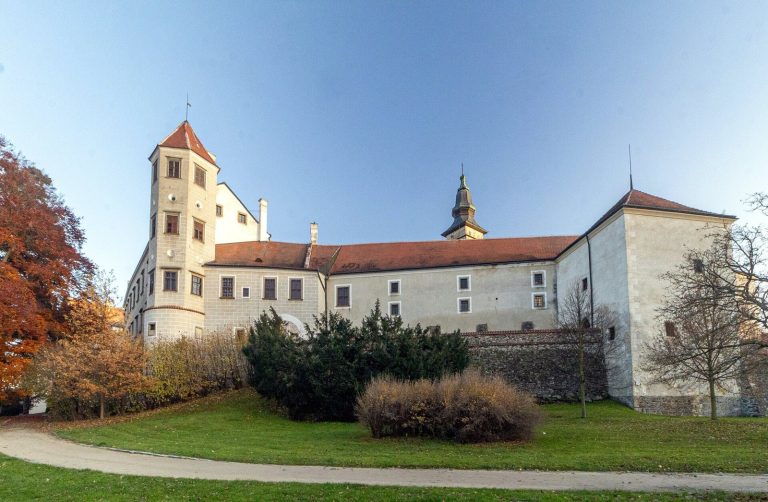
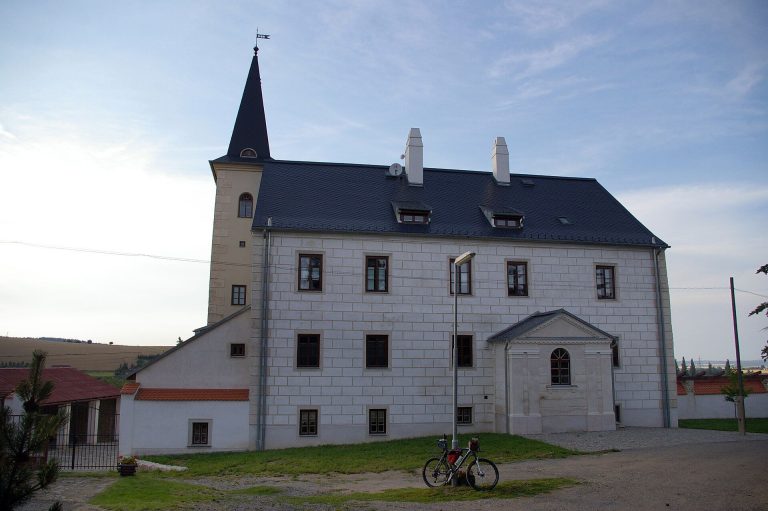
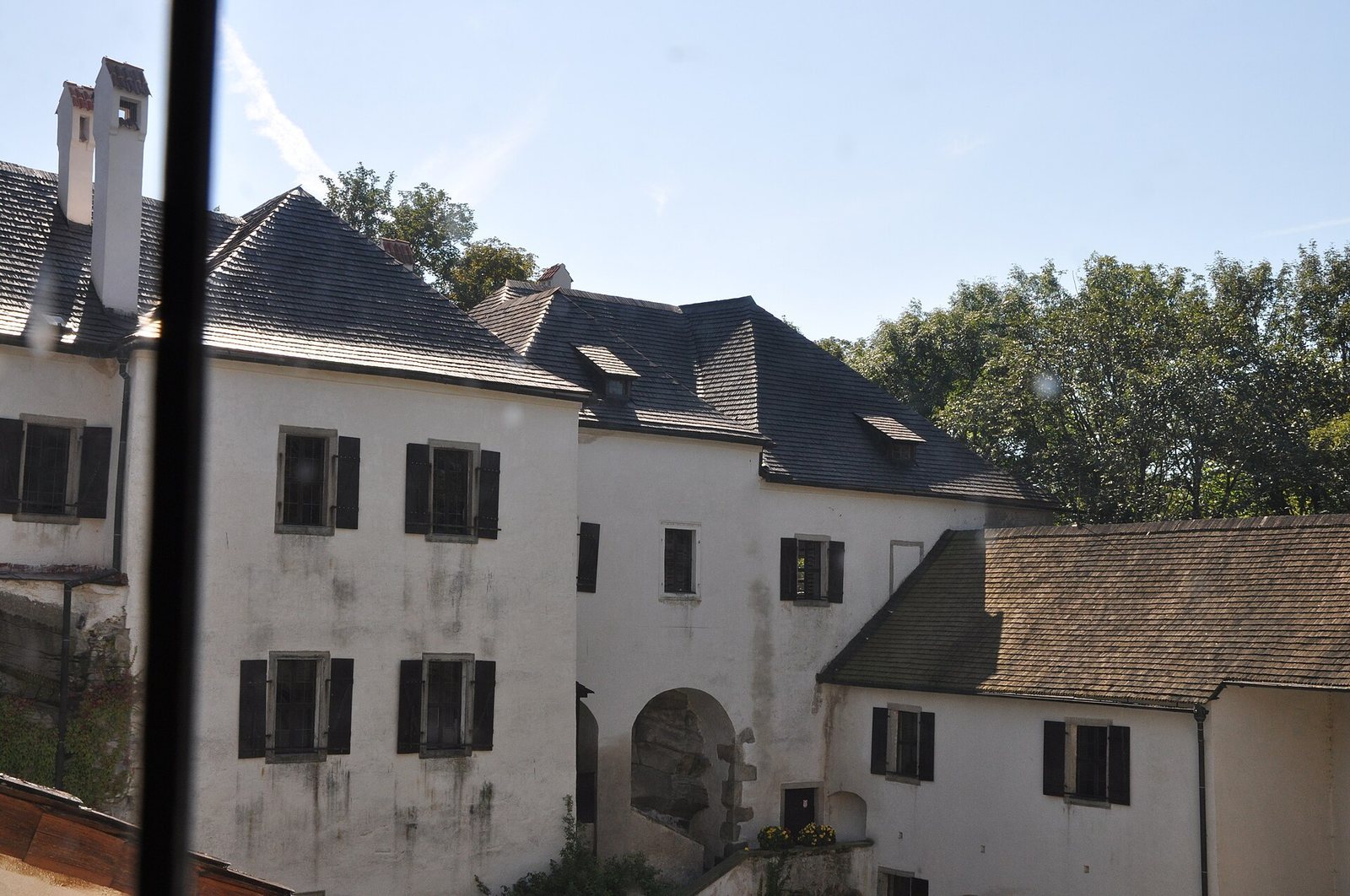
Roštejn stands on a rocky hill at an elevation of 677 metres in the cadastral territory of Doupě, in the Jihlava District, approximately six kilometres north of Telč. Its surviving fabric combines late Gothic and Renaissance forms. The elevated position provides extensive views across the Bohemian-Moravian Highlands, and under favourable conditions the Austrian Alps are visible.
Tower and castle structure
Seven-sided Gothic tower
The castle’s dominant feature is a seven-sided Gothic tower approximately 50 metres high. It remains accessible and provides views extending for several tens of kilometres. The tower was also the point where the 1915 lightning strike began, linking its present form to the fire that destroyed much of the castle.
Interior rooms and religious features
Heraldic Hall
The Heraldic Hall contains valuable late Renaissance paintings of coats of arms on its walls. These paintings belong to the Renaissance character created when the medieval fortress was transformed into a hunting residence.
Botanical Hall
The Botanical Hall contains depictions of plants, including examples from the nineteenth century, together with a large carved nativity scene. The room forms part of the castle’s surviving interior presentation.
Gamekeeper’s study
The gamekeeper’s study is decorated with paintings of horses, reflecting the hunting and game-management associations preserved in the castle’s interiors.
Chapel of Saint Eustace
The castle chapel is dedicated to Saint Eustace, a Christian hunting patron traditionally associated with a conversion experience involving a stag. Saint Hubert later became the more prominent patron of hunters in Western Christian tradition. The courtyard statue of Saint Eustace is among the original objects that survived the 1915 fire.
Former residential rooms
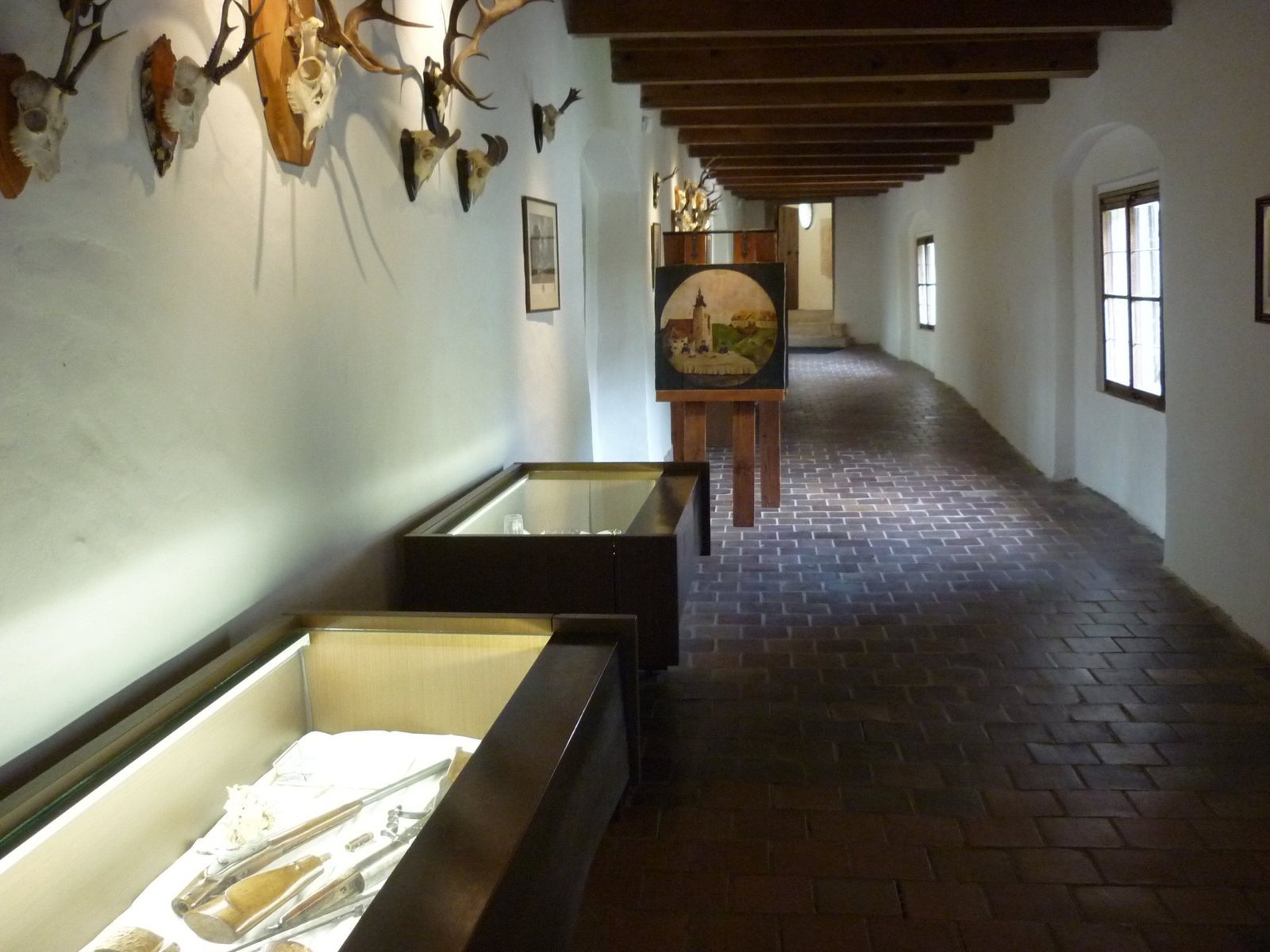
Former residential rooms contain exhibitions of contemporary porcelain, pewter, hunting weapons, furniture, and stoneware. Together with the halls and chapel, these spaces express the castle’s later use as a residence connected with hunting and family life.