Rajgarh Fort: A Defensive Garrison in Rajasthan
Site at a Glance
- Popularity
- Medium
- Country
- India
- Primary era
- Early Modern
- Eras represented
- Early Modern
- Civilizations
- Rajput
- Site type
- Military
- Remains
- Fort
On this page4 sections
History
Rajgarh Fort is a hill fort, a defensive stronghold built on elevated ground, near Rajgarh town in Alwar district, Rajasthan, India. Kachwaha forces began building it under Sawai Jai Singh, a ruler of Jaipur from the Kachwaha Rajput lineage, in the mid-18th century.
Kachwaha construction
Local chiefs from the outskirts of Alwar drew on their knowledge of the terrain and community support during the conflict surrounding the fort’s establishment. Its outcome enabled Jai Singh to use Rajgarh as a defensive garrison and extend Kachwaha influence in Rajasthan.
Naruka rule
In 1771, after Jat rule declined, the Naruka Rajputs, a Rajput clan, took the fort under Raja Pratap Singh Naruka. With British support, Pratap Singh brought Alwar State under his control. Treaties facilitated by the British East India Company, a trading company that had expanded into political rule in India, helped the Narukas consolidate their authority.
Rajgarh became Alwar’s capital until the seat moved to Bala Quila, also known as Alwar Fort. During Naruka rule, which lasted from 1771 to 1949, the fort also served as a summer residence for Alwar’s royal family, whose interests were aligned with colonial rule. Today, the Archaeological Survey of India, India’s national agency for archaeological research and heritage protection, owns and maintains the fort.
Remains
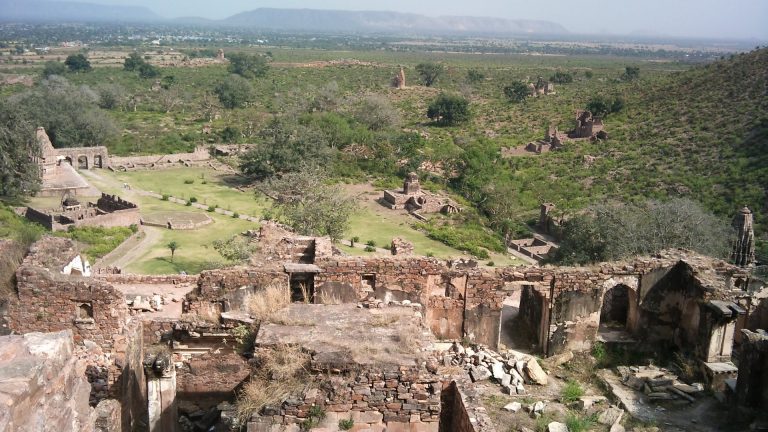
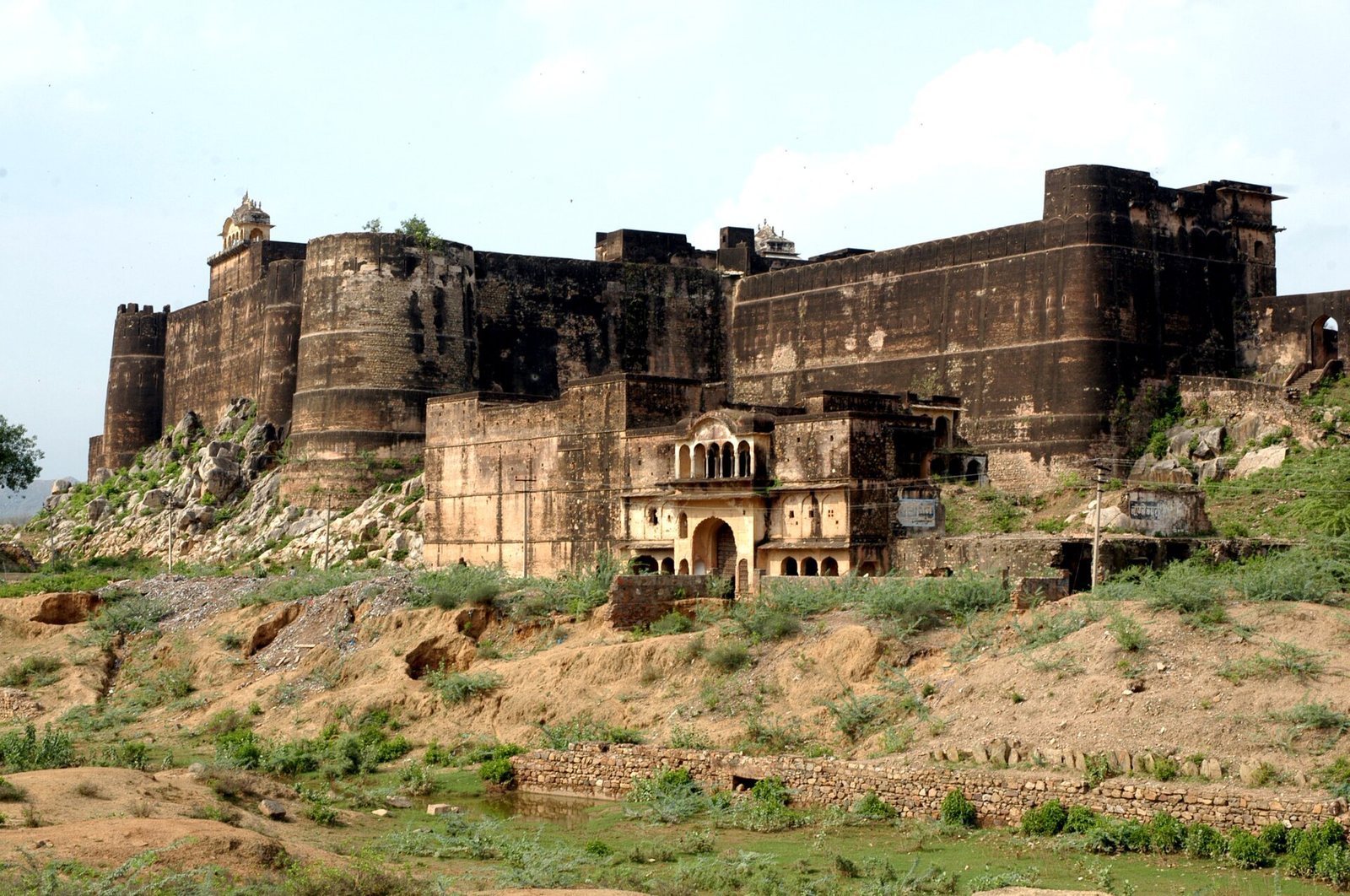
Rajgarh Fort stands in the Aravalli Hills at an elevation of about 479 metres (1,571 feet) and covers approximately 10 hectares. The hilltop fort is now in ruins, with Rajput architectural influences in its surviving fabric.