Rachol Fort: A Defensive Stronghold on the Zuari River
Site at a Glance
- Popularity
- Medium
- Country
- India
- Primary era
- Early Modern
- Eras represented
- Early Modern
- Civilizations
- Portuguese
- Site type
- Military
- Remains
- Fort
On this page6 sections
History
Rachol Fort is a ruined stronghold in Rachol village, Goa, India, built by the Sultanate of Bijapur to defend the Zuari River’s left bank.
Bijapur and Vijayanagara rule
Ismail Adil Shah ruled Bijapur when the sultanate built the fort. In 1520, Krishnadevaraya, emperor of the Vijayanagara Kingdom, captured it and transferred it to the Portuguese Empire in return for protection of southern India from the Mughal Empire to the north.
Portuguese military use
The Portuguese occupied, renovated, and rebuilt the fort, adding two bastions, projecting structures that helped defend the walls, in 1604. During the sixteenth and seventeenth centuries, the fort held 100 pieces of artillery. In 1684, Sambhaji, a Maratha ruler, led forces in a siege. After the fort resisted the attack on 22 April, Dom Francisco de Tavora, Portuguese India’s viceroy, ordered its remodeling. A viceroy governed territory on behalf of a monarch.
Pedro Miguel de Almeida Portugal e Vasconcelos, the 1st Marquis of Alorna, ordered another reform campaign in 1745. The fort’s cannons were later moved to other strongholds, and Rachol ceased to serve as a military post. Since 1983, the Government of Goa, Daman and Diu has protected the fort’s gate as a monument.
Remains
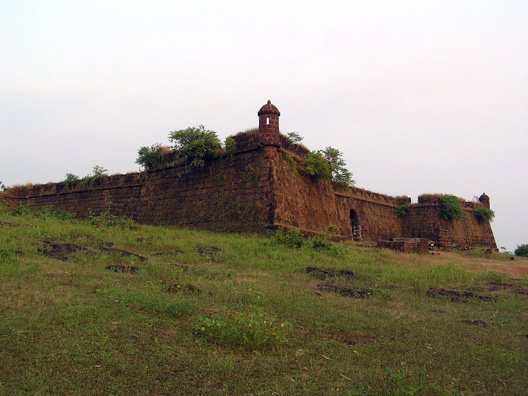
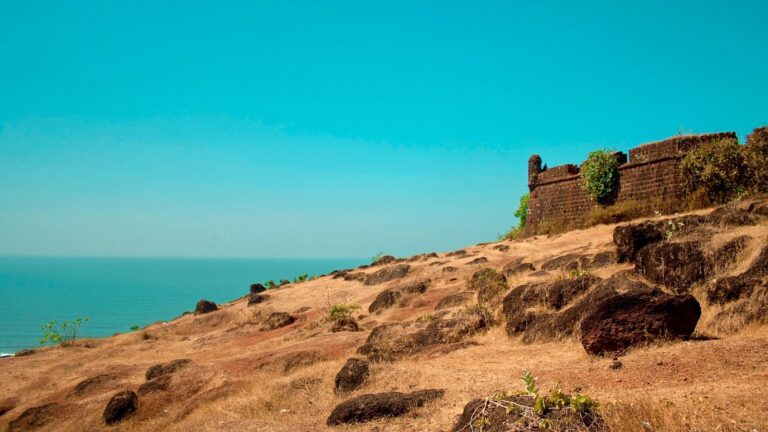
Severely ruined, Rachol Fort retains fragments of its defensive walls and entrance works, arranged around a moat.
Walls, moat and bastions
Sections of the walls and the moat survive as parts of the fort’s defenses. The two bastions added during Portuguese occupation also belonged to this defensive system.
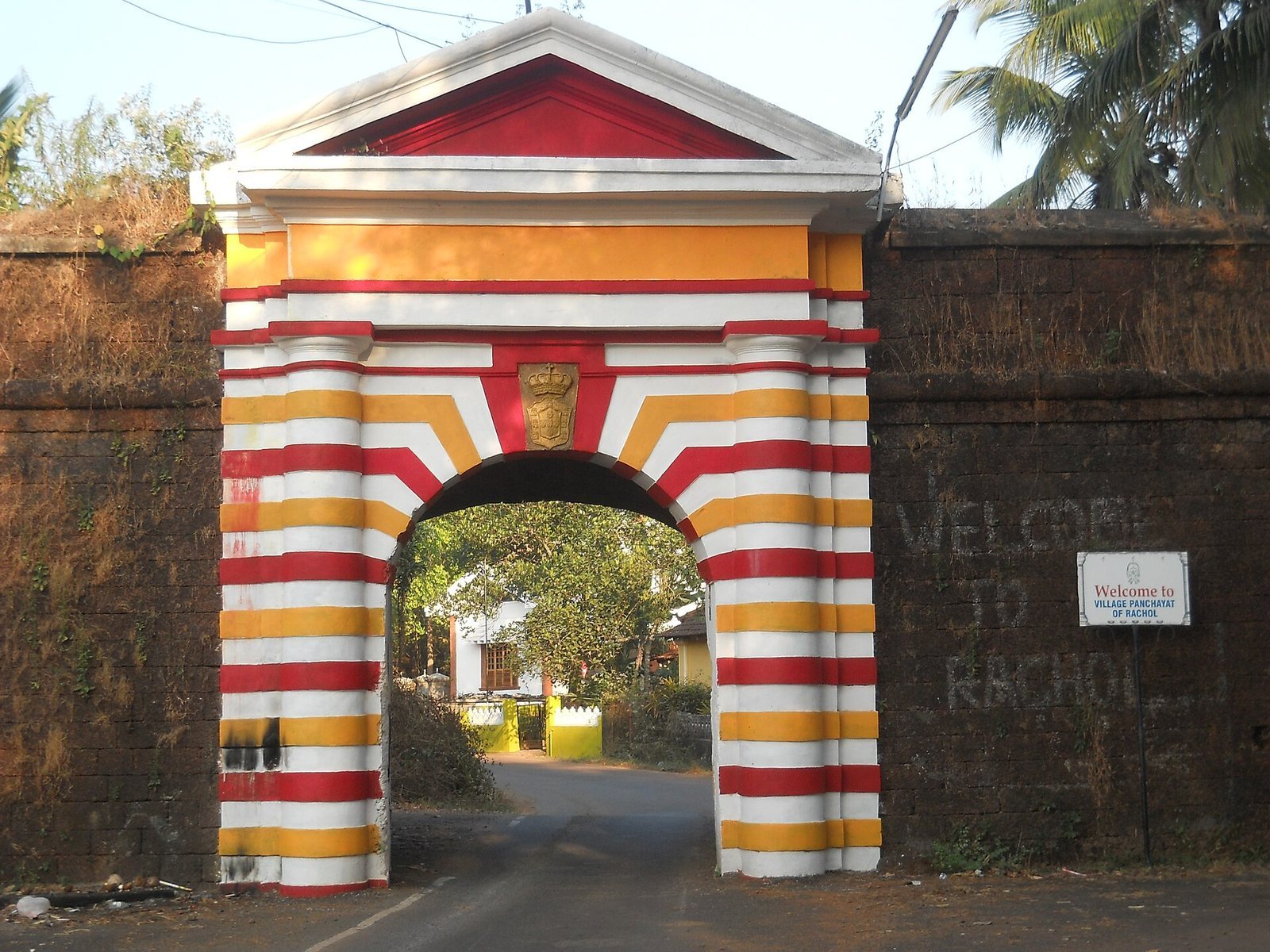
Gate of Arms
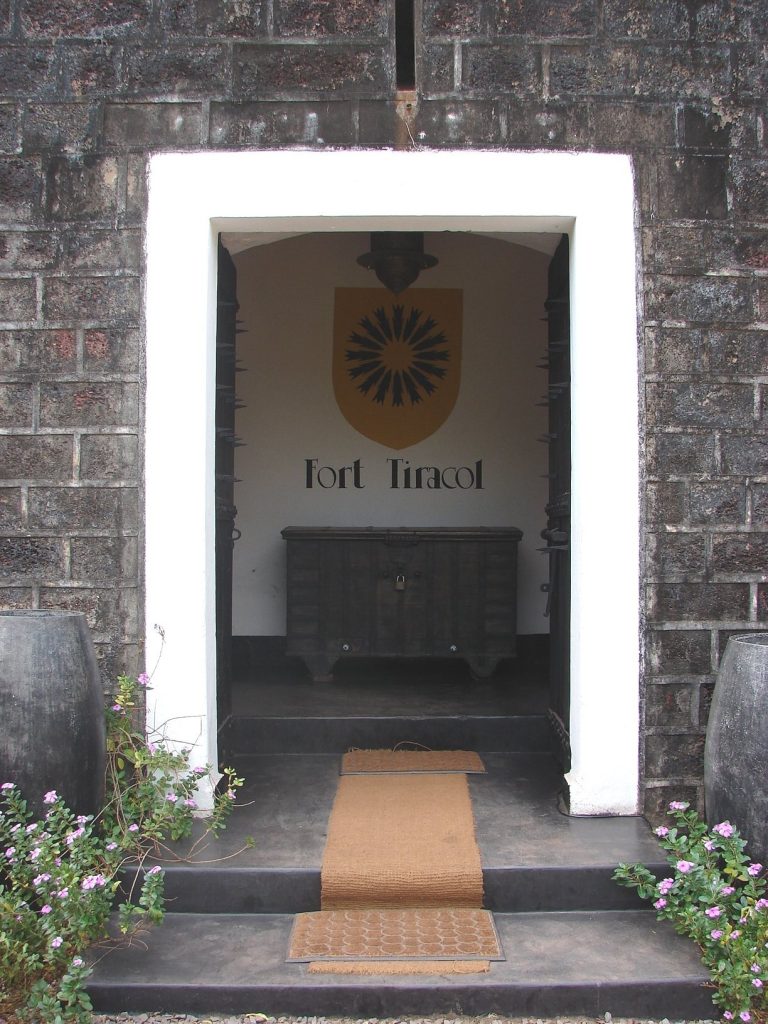
The old Gate of Arms, a fortified entrance, survives among the ruins. It bears the coat of arms of the Portuguese monarchy. An inscription associated with the fort records the Count of Alvor’s order to renovate it after the defense against Sambhaji’s siege on 22 April 1684.