Quiahuiztlan: Totonac City, Fortress, and Funerary Center in Mexico
Site at a Glance
- Rating
- 4.7
- Popularity
- Medium
- Country
- Mexico
- Primary era
- Medieval
- External website
- Open
- Eras represented
- Medieval
- Civilizations
- Aztec, Toltec, Totonac
- Site type
- City
On this page16 sections
History
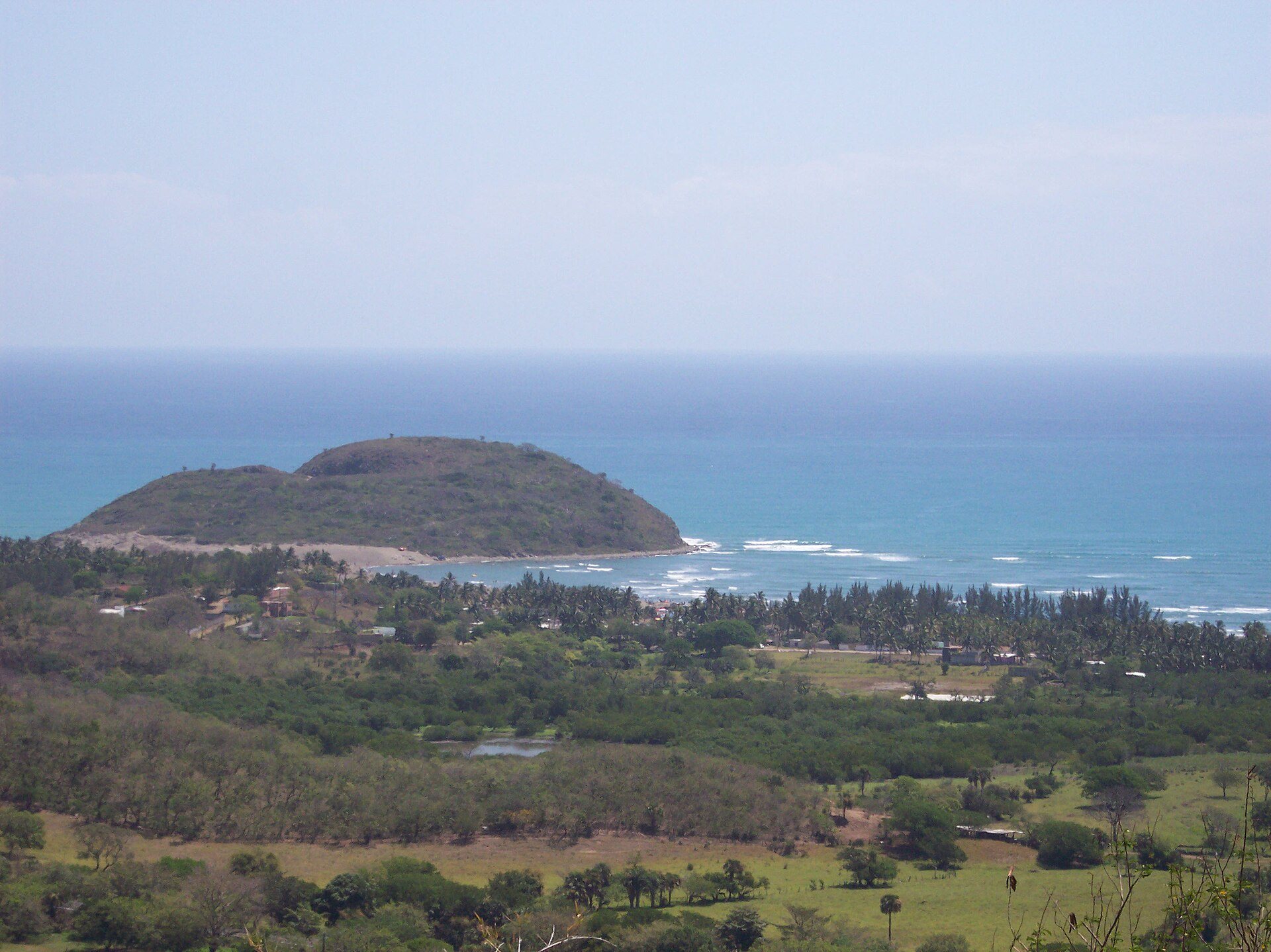
Quiahuiztlan is a Totonac archaeological city in Actopan, Veracruz, Mexico, built on the elevated Cerro de los Metates, also called Cerro Bernal, in the Totonacapan region between the Nautla and Actopan rivers. The city developed as a settlement, funerary center, and fortress, with an estimated population of about 16,000 and defensive walls along the hill’s slopes. Its elevated position made it difficult to reach and provided extensive command over the surrounding coastal landscape.
Origins and the Epiclassic refuge
Human groups occupied the wider central Gulf coast from preceramic times. During the Middle Preclassic period, interaction with the Olmec cultural tradition contributed to the development of characteristic Totonac elements. Teotihuacan influence later enriched Totonac culture during the Classic period, when Teotihuacan was a major Mesoamerican political and cultural power.
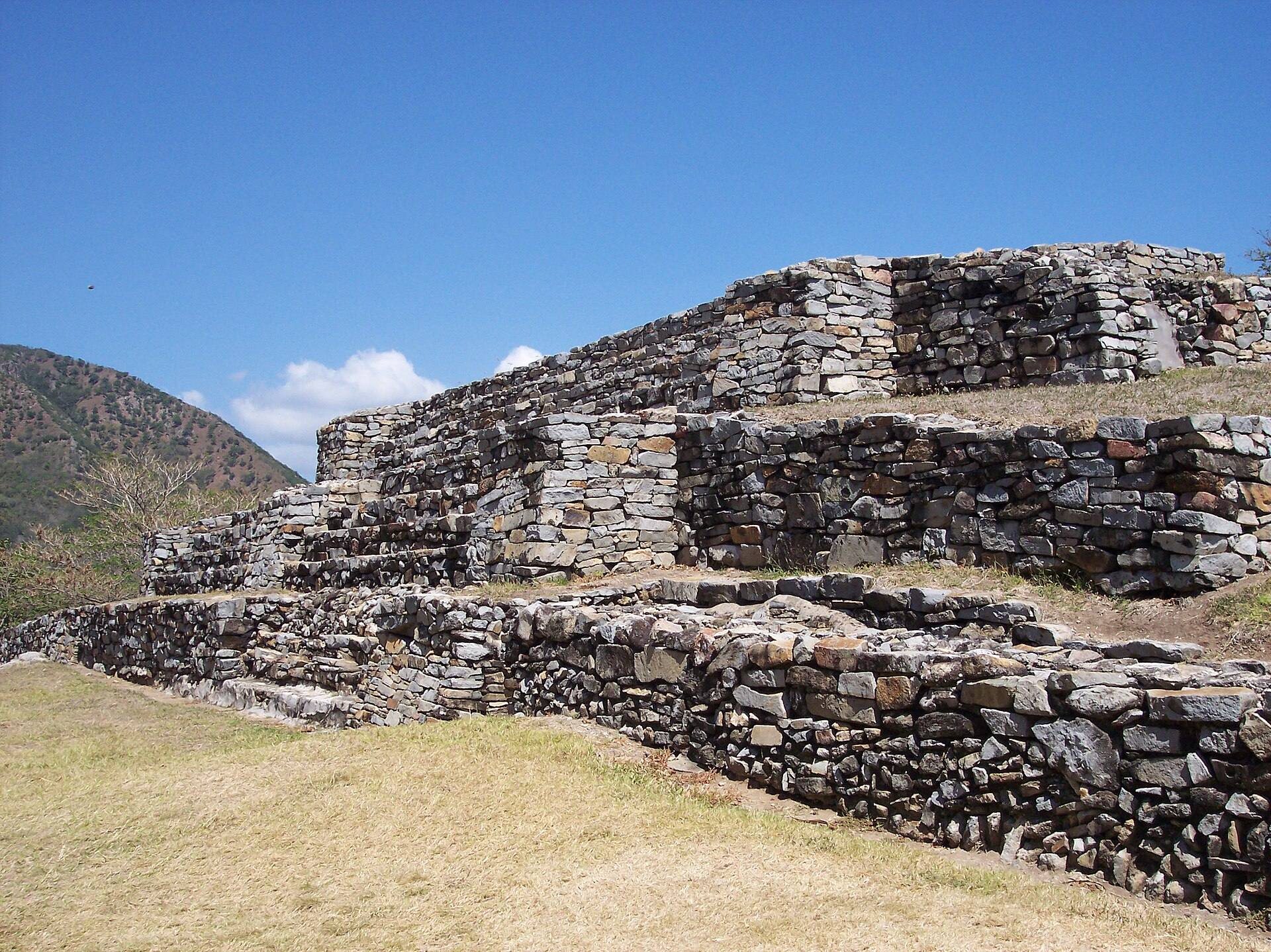
During the Epiclassic, the transitional period between the Classic and Postclassic eras, militarized groups from the north led to the abandonment of more open settlements. Quiahuiztlan’s inhabitants adapted Cerro Bernal as a place of refuge and defense. They terraced sections of the hill to retain soil on cultivated or occupied slopes, while the terraces also acted as barriers against invasion.
Toltec and Mexica control
Quiahuiztlan was invaded and subdued twice by peoples from the Mesoamerican highlands. The first invasion occurred toward the end of the ninth century and brought a strong Toltec presence. Evidence of this phase survives beneath the Eastern Cemetery and in the lower structures of important buildings in the Cemetery Complex.
The second invasion took place in the early fifteenth century and was carried out by the Aztecs, also known as the Mexica, whose empire dominated central Mexico before the Spanish conquest. The upper portions of the principal buildings and the cemeteries with their funerary monuments belong to this later period. Worship associated with the Mexica deities Tlaloc, a rain and storm deity, and Huitzilopochtli, a god associated principally with war and the sun, was introduced during this second invasion.
Spanish arrival and later history
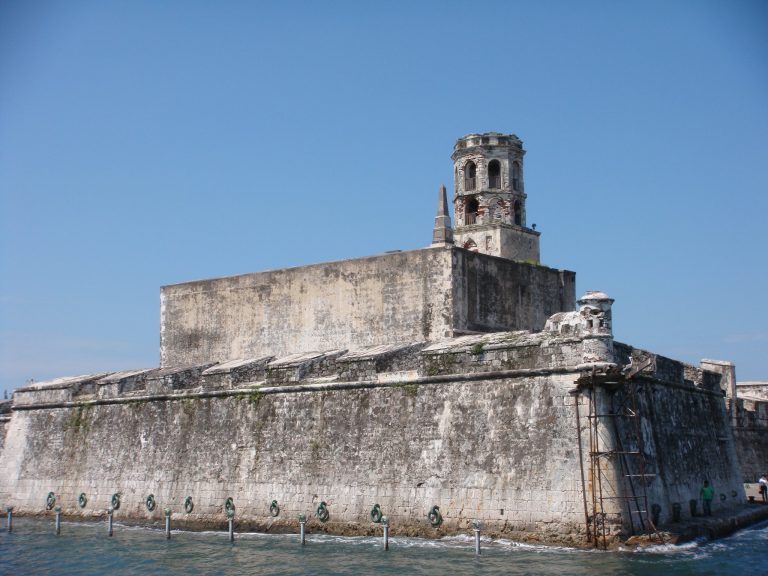
When the Spaniards arrived, approximately 15,000 people lived in the area. The early Spanish expeditions of Juan de Grijalva and Hernán Cortés brought Quiahuiztlan to Spanish attention. During Cortés’s expedition, a church and fortified enclosure were built on the nearby plain and hills around the anchorage, forming Villa Rica de la Vera Cruz, regarded as the first Spanish settlement in Mexico.
An alliance between the Europeans and 30 Totonac communities was concluded at Quiahuiztlan. This agreement greatly facilitated the Spanish conquest of Mexico. Archaeological research indicates that the city was abandoned during the conquest and later repopulated by nomadic tribes.
The name Quiahuiztlan derives from Nahuatl terms meaning “place where rain abounds” or “place of rain.” Cerro de los Metates received its name from the many small metates, or stone grinding slabs used with handstones to process food, that were buried in the hill. Rain erosion has periodically exposed additional examples. Quiahuiztlan is under the care of Mexico’s National Institute of Anthropology and History.
Remains
Hilltop setting and defenses
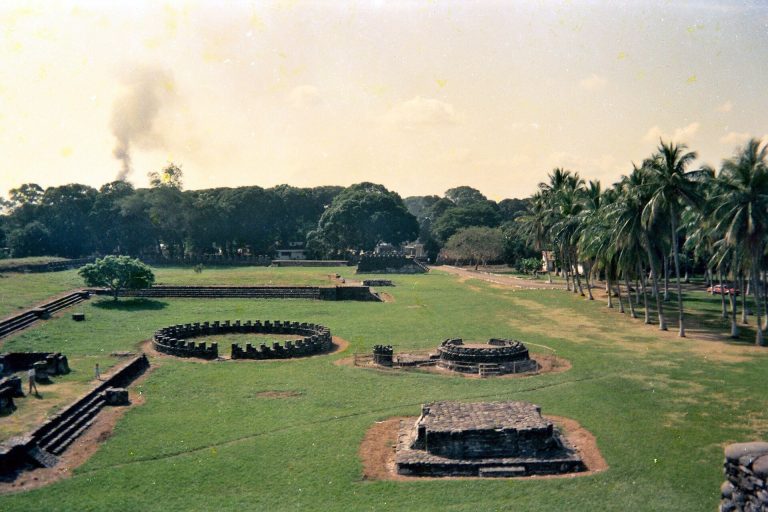
The remains occupy a plateau and elevated slopes on Cerro de los Metates, a strategically positioned coastal hill surrounded by tropical savanna with cacti, shrubs, and medicinal plants. Plazas, terraces, stairways, walls, cemeteries, funerary monuments, and a ballcourt are distributed across the hill. Defensive walls of different dimensions follow the foothills and terraces, combining the city’s settled areas with its defensive landscape.
Stone slabs form the principal building material throughout the site. They were generally used in a natural state and required little special preparation. Construction associated with the early Toltec phase used small, carefully dressed rectangular stones fitted closely into facade blocks and covered with notably hard stucco. The terraces, walls, and changes in elevation helped organize the occupied slopes as well as protect them.
Cemeteries and funerary monuments
Central Cemetery
The Central Cemetery contains two primary-burial tombs and 32 tombs for later burials. A palace with three stairways and side balustrades stands to its west, while the Central Plaza extends toward the sea. The cemetery forms part of the funerary landscape that made Quiahuiztlan both a populated city and an important burial center.
Eastern Cemetery
The Eastern Cemetery lies north of the main complex and contains 23 tombs. Its tombs face west and south rather than toward the sea. The cemetery was built over an earlier structure whose foundations remain and date to around AD 800, providing physical evidence for an earlier phase beneath the later funerary complex.
Northern Cemetery
The Northern Cemetery consists of two rows of tombs, one to the east and the other to the north, for a total of 24 tombs. A descent of approximately 100 steps connects this area with the Eastern Plaza. The cemetery has an extensive view toward the sea.
Funerary sector
The wider funerary sector contains 78 small temple-like structures, approximately 1 to 2 meters high, built over graves. Arranged in groups on low platforms, these monuments have central stairways and enclose rectangular open spaces. Their generally good preservation gives an impression of the form of larger temples, although the extent of modern restoration is uncertain.
The larger temples in the funerary district survive mainly as foundations or other partial remains. A low wall encloses parts of the area containing the tombs and temples. Its form suggests a symbolic boundary rather than a major physical obstacle. The funerary monuments are mausoleum-like structures, meaning built chambers or monuments intended to contain burials.
Plazas, pyramids, and civic buildings
Central Plaza
The Central Plaza contains Pyramid 1, whose facade faces south toward the Peñón. The pyramid is distinguished by its size and decoration. Pyramid 2 faces west, away from the sea, and has a stone set into its summit in a Mexica style. This feature has led to the pyramid’s designation as the Pyramid of Sacrifices.
Eastern Plaza
The Eastern Plaza served as a civic area for government and justice. It contains a pyramid awaiting archaeological recovery and a building divided into two sections by a narrow passage, known as Los Gemelos. The two sections are thought to have been shrines dedicated to Tlaloc and Huitzilopochtli, whose worship was introduced during the second invasion.
Coatepantli
Coatepantli is a structure containing a shrine. It stands at the edge of a terrace with broad visibility and is interpreted as a possible lookout point.
Ballcourt
The ballcourt lies beside a white fig tree and has an I-shaped plan. A ballcourt was a purpose-built space for the Mesoamerican ballgame, with a central playing area and sloping or stepped side elements. At Quiahuiztlan, the court includes side seating or stepped areas, a broad playing alley, low narrow platforms, sloping rebound walls, and court-like expansions at both ends.